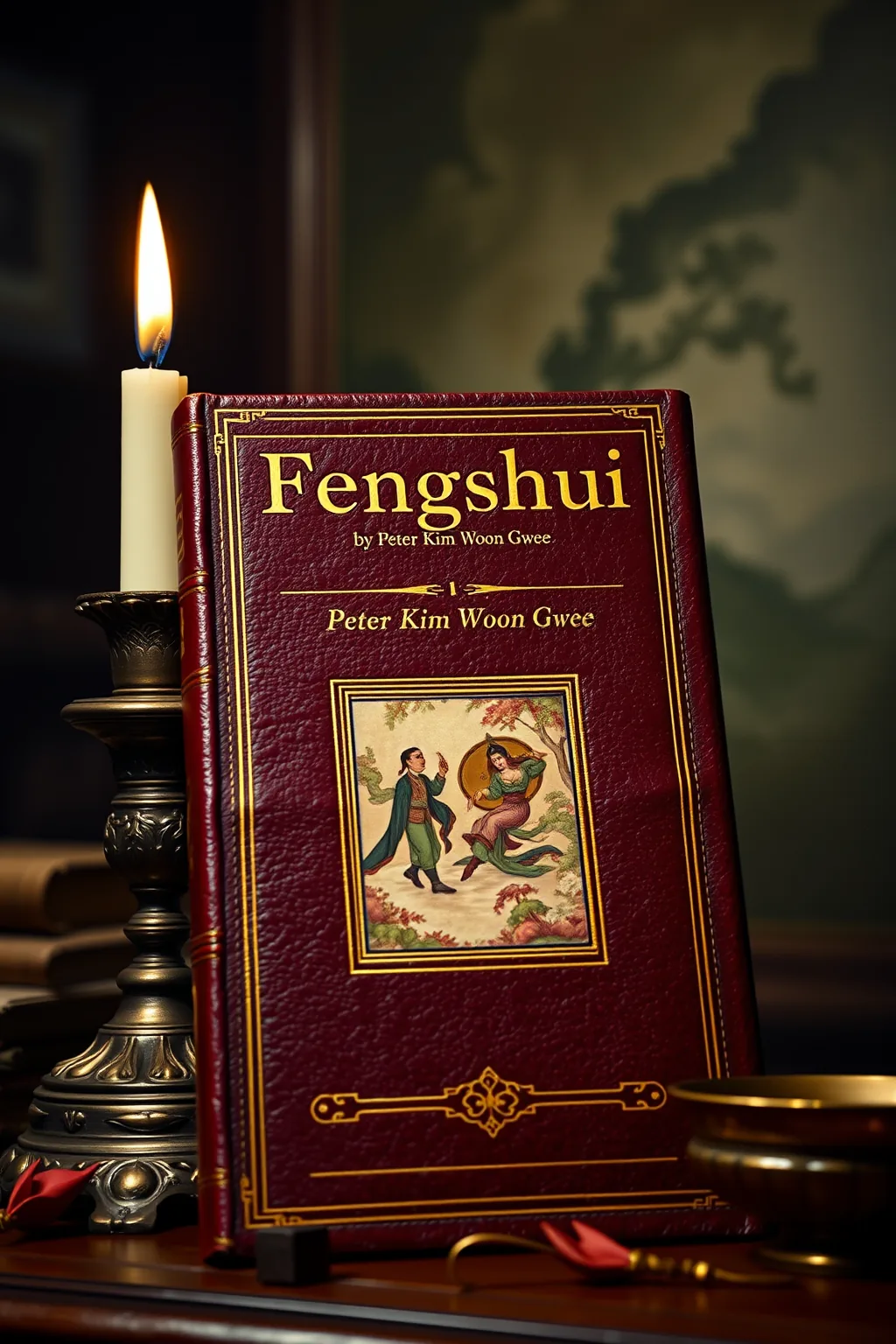
Fengshui
 62
62

Fengshui



Isolde Whitaker, Sacred Texts Editor: Peter Kim Woon Gwee’s 'Feng Shui' is an indispensable compendium for any serious student of esoteric geomancy. It masterfully demystifies the complex principles of Qi flow, elemental interactions, and directional influences, presenting them with clarity and profound insight. Gwee’s authoritative voice guides the reader through the labyrinthine symbolism, revealing the practical applications of this ancient art for modern living. This book is particularly valuable for practitioners seeking to deepen their understanding beyond superficial remedies, offering a philosophical and spiritual grounding essential for truly transformative Feng Shui. A treasure for the discerning seeker.
📝 Description
62
Peter Kim Woon Gwee's 2013 book decodes the ancient Chinese art of Feng Shui.
This book examines Feng Shui, an ancient Chinese practice focused on harmonizing with cosmic energies. It explains how the flow of Qi, or life force, influences our lives and surroundings. The text details the symbolism of key concepts such as the Bagua, the Five Elements, and the principles of Yin and Yang. Understanding these elements, the book suggests, can impact personal well-being, financial success, and spiritual development.
The author presents Feng Shui not just as a set of techniques but as a framework for understanding the connection between the physical world and metaphysical forces. It aims to equip readers with knowledge to improve their living spaces and foster a sense of balance and prosperity. The book is intended for those seeking a deeper comprehension of these principles and a desire to align their personal environments with broader cosmic patterns.
Feng Shui belongs to a tradition of Chinese metaphysical studies that seeks to understand and influence human well-being through environmental arrangement. This practice is rooted in Taoist philosophy, viewing the cosmos as a dynamic system of interacting energies. The book situates itself within this lineage, translating complex concepts like Qi, Yin/Yang, and the Five Elements for a contemporary audience. It reflects a broader esoteric interest in aligning human life with natural and cosmic rhythms, drawing from a long history of geomancy and applied cosmology.
💡 Why Read This Book?
This book is essential for anyone seeking to understand the profound energetic principles that govern our world. It offers a gateway to ancient wisdom, empowering you to transform your living and working spaces into havens of well-being and prosperity. Ideal for spiritual seekers, aspiring practitioners, and those curious about the subtle forces shaping human experience, this text provides the foundational knowledge to consciously influence your environment and destiny.
⭐ Reader Reviews
Honest opinions from readers who have explored this book.
❓ Frequently Asked Questions
What is the core philosophy of Feng Shui?
Feng Shui's core philosophy is the art of arranging environments to harmonize with the flow of Qi (life force energy). It posits that by optimizing these energies, one can enhance health, wealth, relationships, and overall well-being.
How does Feng Shui differ from interior design?
While interior design focuses on aesthetics and functionality, Feng Shui delves into the unseen energetic currents of a space. It uses ancient principles to optimize Qi flow for improved life circumstances, going beyond mere visual appeal.
Can Feng Shui be applied in small spaces or apartments?
Absolutely. Feng Shui principles are adaptable to any space, regardless of size. The focus remains on identifying and optimizing Qi flow within the available layout, even in compact living environments.
What are the Five Elements in Feng Shui?
The Five Elements are Wood, Fire, Earth, Metal, and Water. They represent fundamental energies and phases of transformation, interacting in cycles of creation and destruction, which are central to Feng Shui analysis.
Is Feng Shui a religion?
No, Feng Shui is not a religion. It is a complex system of geomancy and environmental science rooted in Taoist philosophy, focusing on the interaction of humans with their natural and built environments.
🔮 Key Themes & Symbolism
The Dance of Qi
Explore the fundamental concept of Qi, the vital life force that permeates all things. This book illuminates how Qi flows through our environments, influencing our health, emotions, and fortune. Understand the dynamic interplay of energy, learning to identify auspicious and inauspicious currents and how to redirect them for personal benefit. The text studies the subtle manifestations of Qi, from the gentle breeze to the rushing river, and its wide impact on our physical and spiritual well-being. Mastering the flow of Qi is the central to creating harmonious and prosperous spaces.
Elemental Harmony
Discover the profound wisdom of the Five Elements – Wood, Fire, Earth, Metal, and Water. This section unveils their inherent qualities, their dynamic relationships through creation and destruction cycles, and how they manifest in our surroundings. Learn to identify the elemental energies present in your home or office and how to balance them to foster stability, growth, and prosperity. The book provides practical insights into using elemental representations to correct imbalances and enhance specific life areas, offering a tangible pathway to energetic equilibrium.
Cosmic Alignment and Symbolism
Explore the intricate symbolic language of Feng Shui, from the all-encompassing Yin and Yang to the potent Bagua map. Understand how these ancient symbols serve as a compass for reading through the energetic field of your life. The text explores the cosmic connections that influence our earthly existence, revealing how the arrangement of our spaces can resonate with celestial patterns. Learn to interpret the hidden meanings within everyday objects and architectural features, empowering you to create environments that are not only aesthetically pleasing but also energetically aligned with universal forces.
💬 Memorable Quotes
Direct passages from the work, attributed to the author.
“Where Qi flows, life flourishes.”
— This captures the fundamental principle of Feng Shui: the presence and optimal flow of vital energy are essential for growth, health, and prosperity.
“Balance is not a static state, but a dynamic dance.”
— This emphasizes that harmony in Feng Shui requires continuous adjustment and adaptation, much like a dance, rather than a fixed arrangement.
“The unseen forces shape the seen reality.”
— This highlights the metaphysical aspect of Feng Shui, asserting that subtle energies and intentions have a tangible impact on our physical world.
“Wisdom lies in aligning with nature's rhythm.”
— This points to the core of Feng Shui practice: understanding and working in concert with natural cycles and energies, rather than against them.
💡 Key Ideas
Editorial paraphrase of the work's core concepts — not direct quotes.
The house is a mirror of the soul.
This quote suggests that our living spaces reflect our inner state, highlighting the reciprocal relationship between our environment and our psychological well-being.
🌙 Esoteric Significance
Tradition
Feng Shui is a central to Taoist esoteric practices, deeply intertwined with the philosophy of living in harmony with the Tao – the fundamental cosmic order. It is a form of applied metaphysics, seeking to understand and manipulate the unseen energetic currents (Qi) that influence human life and the environment. Its esoteric nature lies in its focus on subtle energies, symbolic language, and the belief that intentional arrangement can affect one's destiny and spiritual evolution.
Symbolism
The symbolism in Feng Shui is rich and many-sided. The Yin and Yang represent dualistic, complementary forces that govern all phenomena. The Five Elements (Wood, Fire, Earth, Metal, Water) symbolize fundamental stages of transformation and interaction. The Bagua, a symbolic octagon, maps these energies onto directions and life aspects. Other symbols, like the Dragon and Phoenix, represent auspicious forces, while specific colors and shapes are used to enhance or mitigate particular energies, all contributing to a complex visual and energetic language.
Modern Relevance
In the modern era, Feng Shui offers a powerful counterpoint to our often disconnected and technologically driven lives. It provides a framework for re-establishing a connection with nature and our environment, fostering mindfulness and intentionality in our personal spaces. Its principles are increasingly recognized for their capacity to reduce stress, enhance productivity, and promote overall well-being. As global consciousness shifts towards holistic approaches to health and sustainability, Feng Shui's emphasis on energetic balance and harmony with the natural world finds renewed and profound relevance.
👥 Who Should Read This Book
This profound exploration of Feng Shui is an essential read for a diverse audience. **Beginners** will find a clear and accessible introduction to the fundamental principles and practices, clarifying this ancient art. **Spiritual seekers** will discover a powerful tool for cultivating energetic balance and alignment in their lives, deepening their connection to the cosmos. **Practitioners** of related disciplines, such as meditation or energy healing, will find valuable insights to enhance their understanding of environmental influences. **Scholars and historians** of esoteric traditions will appreciate the depth of knowledge and historical context provided, offering a comprehensive view of this enduring practice.
📜 Historical Context
Feng Shui, originating in ancient China, emerged from a deep understanding of the natural world and its energetic forces. Its roots can be traced back thousands of years, evolving alongside Taoist philosophy and practices. Initially developed by scholars and mystics to understand the optimal placement of tombs and dwellings for prosperity and longevity, it became an integral part of Chinese culture. During the Han Dynasty (206 BCE – 220 CE), Feng Shui principles were codified, and its influence spread through various dynasties. The practice was deeply intertwined with cosmology, astrology, and the principles of Yin and Yang and the Five Elements. Throughout its history, Feng Shui has faced periods of both widespread acceptance and suppression, particularly during times of political upheaval, yet its core tenets have endured, adapting and re-emerging as a powerful esoteric discipline.
📔 Journal Prompts
Reflect on the dominant elemental energies in your primary living space. How do they make you feel?
Consider a specific area in your home that feels stagnant or energetically 'stuck.' What might be contributing to this feeling?
How does the concept of Qi resonate with your personal understanding of life force or energy?
Identify one symbolic element in your environment and consider its potential energetic impact.
What is one small, intentional change you can make in your space to foster greater harmony?
🗂️ Glossary
Qi (Chi)
The vital life force or energy that flows through all living things and the universe. It is the fundamental concept in Feng Shui, believed to influence health, prosperity, and well-being.
Yin and Yang
Two complementary, opposing forces that represent the dualistic nature of the universe. Yin is associated with passive, dark, and feminine qualities, while Yang is active, light, and masculine.
Bagua
An octagonal map used in Feng Shui to analyze and enhance different areas of a space. Each of the eight trigrams represents specific life aspects and elemental associations.
Five Elements
The fundamental energies of Wood, Fire, Earth, Metal, and Water, which interact in cycles of creation and destruction, influencing the balance and harmony of an environment.
Shu
A traditional Chinese term referring to auspicious or favorable energy; the opposite of Sha Qi (negative energy).
This book appears in 3 collections
🔮 Readers Also Liked
Browse all →









From the “Geomancy” Collection
View all →






More Free Divination & Tarot Books
View all →