Breath, mind, and consciousness
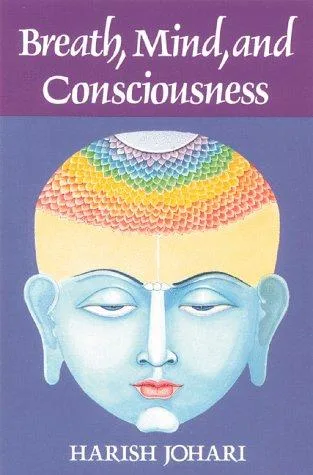
 78
78

Breath, mind, and consciousness
Harish Johari’s "Breath, Mind, and Consciousness" presents a dense, yet remarkably coherent, synthesis of yogic and tantric principles. The strength of the work lies in its clear articulation of the physiological underpinnings of spiritual practices. Johari’s explanation of how specific pranayama techniques directly impact the nervous system, for instance, offers a tangible link for readers accustomed to empirical frameworks. However, the book's sheer breadth can be a limitation; at times, the integration of diverse concepts from different Indian philosophical schools feels less like a seamless weave and more like a comprehensive cataloging. A passage detailing the subtle energetic pathways associated with different breath cycles offers a particularly concrete example of the book's explanatory power. While demanding in its intellectual scope, the work rewards diligent study with a more nuanced understanding of consciousness cultivation. It is a valuable resource for the serious student of esoteric Indian traditions.
📝 Description
78
Harish Johari's 1989 book connects breath, mind, and consciousness through yogic and tantric traditions.
Published in 1989, "Breath, Mind, and Consciousness" examines the links between breathing, mental states, and awareness. Johari draws on yogic philosophy and tantric traditions to present a holistic view of human experience. The book breaks down the subtle energies and physical processes that shape our perception. It includes practical exercises alongside theoretical explanations, making it accessible for those wanting to understand themselves better.
This work is for people interested in applying yogic and tantric principles to personal growth. Yoga and meditation practitioners seeking the science behind their practices will find it useful. Students of comparative religion, Eastern philosophies, or consciousness studies will discover valuable content. Therapists and wellness professionals may also find it helpful for integrating traditional knowledge with modern psychology.
Published in 1989, "Breath, Mind, and Consciousness" appeared as Western interest in Eastern spiritual practices grew. It contributed to the period's trend of Westerners engaging with yogic and tantric teachings. The book acted as a bridge between traditional Indian knowledge and a Western audience. This was also a time of increasing academic study of consciousness and the rise of transpersonal psychology.
💡 Why Read This Book?
• Gain a practical understanding of *pranayama* and its direct effects on mental states, moving beyond abstract concepts to physiological engagement as detailed in the book's sections on breath regulation. • Explore the yogic concept of *chakras* and how breath work, as described by Johari, can influence these energy centers for greater balance and awareness. • Learn about the interplay between *mantra*, *yantra*, and breath control, a unique synthesis Johari presents for focusing the mind and accessing deeper states of consciousness, as outlined in the book's later chapters.
⭐ Reader Reviews
Honest opinions from readers who have explored this book.
❓ Frequently Asked Questions
What is the primary focus of Harish Johari's "Breath, Mind, and Consciousness"?
The book focuses on the interconnectedness of breath, mental activity, and awareness, drawing heavily from yogic and tantric traditions to explain how controlling breath influences consciousness and well-being.
When was "Breath, Mind, and Consciousness" originally published?
The book was first published in 1989, reflecting a growing interest in Eastern spiritual and philosophical systems in the late 20th century.
Does the book offer practical exercises?
Yes, Harish Johari provides practical techniques, particularly focusing on various *pranayama* (breath control) exercises designed to influence mental states and awareness.
What esoteric traditions does the book draw from?
The primary traditions referenced are Yoga and Tantra, ancient Indian systems that explore the body-mind connection and the nature of consciousness through various practices.
Is this book suitable for beginners in meditation?
While it offers valuable insights, the book delves into complex philosophical and physiological concepts, making it most suitable for those with some existing interest or background in meditation or yogic philosophy.
What is *prana* as explained in the book?
*Prana* is explained as the vital life force energy that permeates all existence, which can be consciously regulated and expanded through specific breathing techniques (*pranayama*).
🔮 Key Themes & Symbolism
Prana and Breath Regulation
The work extensively details *prana*, the vital life force, and its direct correlation with breath. Johari explains how specific *pranayama* techniques are not merely physical exercises but sophisticated methods for managing energy, influencing mental clarity, and cultivating emotional equilibrium. The book maps the flow of *prana* through subtle energetic channels (*nadis*) and its connection to the respiratory system, offering a yogic perspective on physiological and psychological health.
Mind States and Consciousness
Central to the book is the exploration of how the mind's fluctuations (*vrittis*) are deeply intertwined with breath patterns. Johari elucidates how conscious control of respiration can lead to a quieting of mental chatter, enabling access to deeper states of awareness. The text outlines a progression from gross mental activity to subtle mental states, ultimately aiming for the realization of pure consciousness, a core tenet of yogic philosophy.
Tantric Energetics and Chakras
Johari integrates tantric cosmology by detailing the *chakras*, or energy centers, within the subtle body. He explains how breath, *mantra*, and visualization can activate and balance these centers, which correspond to different psychological and physical functions. This section illuminates the tantric view of the body as a microcosm of the universe and a vehicle for spiritual transformation.
Integration of Sound and Form
The book addresses the power of *mantra* (sacred sound) and *yantra* (sacred geometry) as complementary tools for focusing consciousness. Johari explains how these elements, when used in conjunction with breath control, can create specific energetic resonances that aid in meditation, concentration, and the manipulation of subtle energies, serving as potent aids in the yogic path.
💬 Memorable Quotes
Direct passages from the work, attributed to the author.
“Breath is the bridge between the body and the mind.”
— This statement expresses the book's core thesis: that the physical act of breathing is not separate from our mental and conscious experience, but rather the fundamental link through which we can influence both.
“The regulation of prana is the key to controlling the mind.”
— This highlights the yogic principle that by mastering the flow of life force energy through breath control (*pranayama*), one gains the capacity to quiet mental disturbances and achieve greater psychological stability.
“Chakras are centers of consciousness as well as energy.”
— This emphasizes the tantric perspective that the body's subtle energy centers are not merely physiological points but also sites where consciousness manifests and can be consciously worked with.
“Mantra and yantra focus the scattered mind.”
— This points to the practical application of sound and visual symbols as tools within yogic and tantric practices to achieve concentration and prepare the mind for deeper states of awareness.
“Consciousness is not something to be attained, but to be uncovered.”
— This reflects a non-dualistic view, suggesting that true consciousness is an inherent state that is obscured by mental conditioning and can be revealed through practice, rather than being an external achievement.
🌙 Esoteric Significance
Tradition
The work is firmly rooted in the traditions of Yoga and Tantra, specifically drawing from the lineages that emphasize the psycho-physiological control of energy (*prana*) for spiritual liberation. It aligns with the tantric view of the body as a microcosm of the universe and a primary vehicle for consciousness exploration, departing from more ascetic yogic paths by embracing the material world as a field for transformation.
Symbolism
Key symbols include the *chakra* system, representing stages of consciousness and energetic distribution within the body; the *nadis* (subtle energy channels), vital conduits for *prana*; and *mantra* (sound vibrations) and *yantra* (geometric diagrams), used as focal points to direct mental energy and influence energetic fields.
Modern Relevance
Contemporary practitioners of yoga, mindfulness, and breathwork often draw on Johari's synthesized approach. His work informs modern somatic therapies and consciousness research that seeks to bridge ancient practices with scientific understanding. Thinkers exploring embodied cognition and the energetic basis of well-being find his integration of breath, mind, and subtle body relevant.
👥 Who Should Read This Book
• Yoga and meditation practitioners seeking a deeper, philosophical understanding of breath control (*pranayama*) and its impact on mental states, as detailed in Johari's physiological explanations. • Students of comparative religion and Eastern philosophies interested in the specific doctrines and practices of classical Indian Yoga and Tantra beyond introductory texts. • Individuals exploring consciousness studies or somatic psychology who wish to integrate ancient frameworks of mind-body connection with modern therapeutic approaches.
📜 Historical Context
Harish Johari’s "Breath, Mind, and Consciousness," published in 1989, arrived at a key moment in the Western engagement with Eastern philosophies. The late 1980s saw a significant influx of Indian spiritual teachings, moving beyond the more generalized approaches of earlier decades. Works like Johari’s provided detailed, system-specific insights into Yoga and Tantra. This period was also characterized by a growing academic interest in consciousness studies, with figures like Stanislav Grof exploring altered states. While mainstream psychology was still largely materialist, transpersonal psychology offered a growing space for exploring these topics. Johari's work offered a practical, yet deeply philosophical, counterpoint to Western reductionist views, contributing to a more nuanced understanding of mind-body integration that was gaining traction through figures like Herbert Benson and his work on the relaxation response.
📔 Journal Prompts
The energetic pathways of prana described in the book.
How specific pranayama techniques influence your vrittis.
The role of chakras in your personal experience of consciousness.
Connections between mantra recitation and mental focus.
The concept of consciousness as something to be uncovered, not attained.
🗂️ Glossary
Prana
The fundamental life force or vital energy that animates all beings and the universe. In the context of the book, it is primarily regulated through breath.
Vrittis
Literally 'whirlpools' or 'fluctuations,' referring to the constant movements and modifications of the mind, such as thoughts, emotions, and perceptions.
Chakra
Energetic centers within the subtle body, often visualized along the spine, associated with different psychological states, physical functions, and levels of consciousness.
Nadis
Subtle energetic channels or pathways through which prana flows in the body, analogous to nerves or meridians in other systems.
Pranayama
The yogic science of breath control and regulation, involving specific techniques to manage the flow of prana for physical, mental, and spiritual well-being.
Mantra
Sacred sounds, syllables, words, or phrases used in spiritual practices to focus the mind, invoke specific energies, or achieve altered states of consciousness.
Yantra
Geometric diagrams or visual symbols used in meditation and ritual, believed to represent cosmic energies or deities, serving as a focal point for concentration.
🔮 Readers Also Liked
Browse all →









More by Harish Johari
All books →





More Free Occult Philosophy Books
View all →