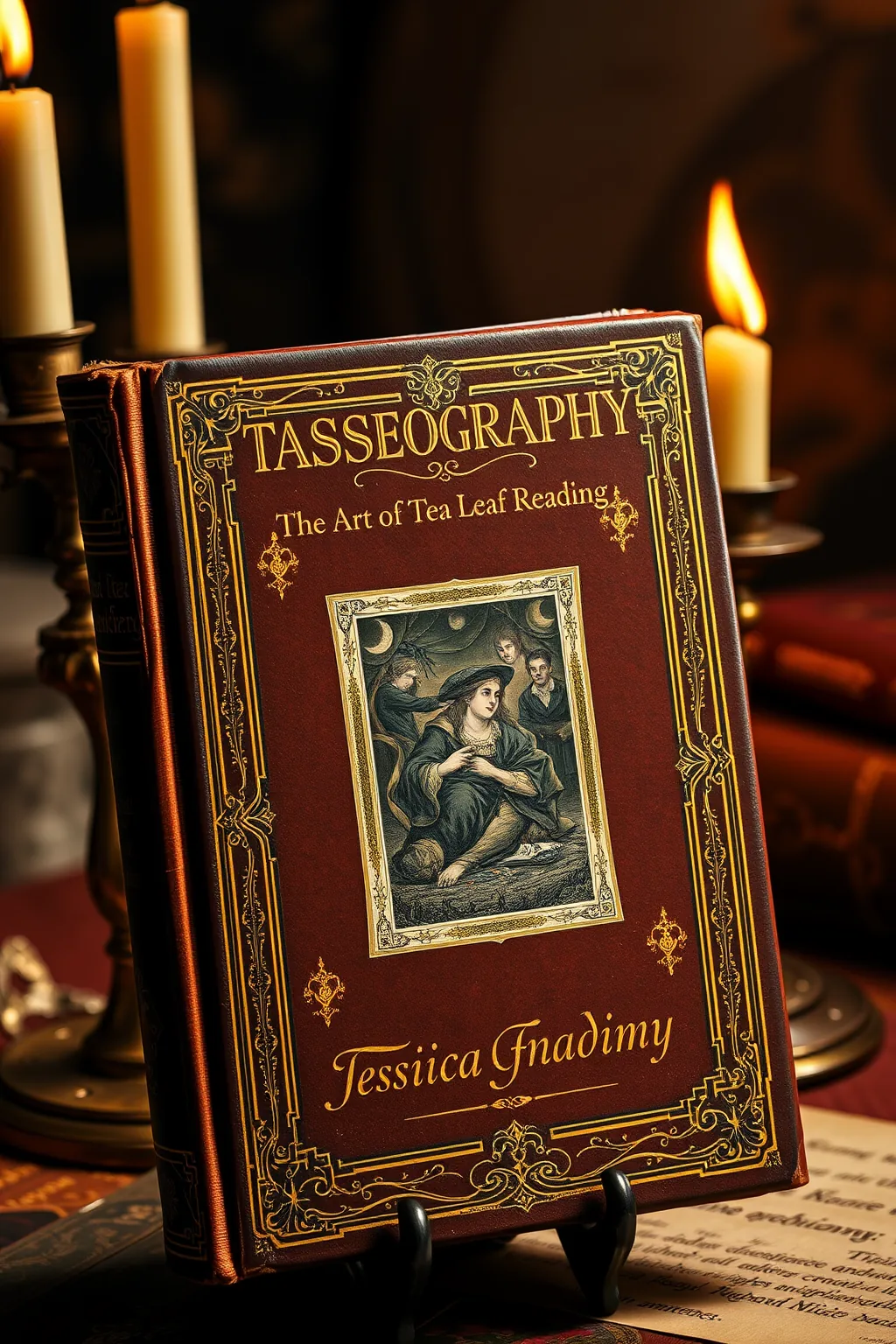
Tasseography - the Art of Tea Leaf Reading
 79
79

Tasseography - the Art of Tea Leaf Reading
Jessica R. Anderson’s Tasseography presents a refreshingly direct approach to a practice often shrouded in mystique. Rather than overwhelming the novice, the work, attributed to the Witches of Thorn and Moon, prioritizes clarity and personal connection. A notable strength is its consistent emphasis on intuition, encouraging readers to move beyond rote memorization of symbol dictionaries. The section detailing the symbolic language of various cup sections—from the rim to the bottom—offers a structured framework that aids in coherent interpretation. However, the book occasionally leans towards overly simplistic explanations of complex symbols, potentially limiting deeper dives for more experienced practitioners. The guidance on preparing the tea itself, a crucial first step, is thorough. Anderson’s work succeeds in making tasseography feel attainable, offering a solid foundation for aspiring readers.
📝 Description
79
Jessica R. Anderson’s 2019 guide demystifies tea leaf reading for modern practitioners.
This book breaks down tasseography into understandable steps, moving beyond rote memorization of symbols. It focuses on cultivating personal intuition to interpret the messages found in tea leaves. The author aims to make this form of divination accessible, presenting it as a tool for self-understanding and symbolic exploration. Readers will find clear instructions and a method that encourages a direct connection to their readings.
The work is intended for those new to tea leaf reading who want a practical starting point. It will appeal to individuals interested in divination, developing intuition, and understanding symbolic systems. Those who appreciate a structured approach, straightforward guidance, and a personal, intuitive method will find it useful. It is also suitable for practitioners of witchcraft or other esoteric paths seeking to add to their divinatory practices.
Tasseography, or tea leaf reading, traces its origins to ancient fortune-telling practices in the Middle East and Asia. Its popularity grew in Europe during the 18th and 19th centuries, becoming associated with spiritualist movements and occult revivals. Anderson’s guide, published in 2019, connects this historical lineage with contemporary interests in divination and self-discovery, offering a modern approach to an age-old practice.
💡 Why Read This Book?
• Gain practical, step-by-step instructions for performing tea leaf readings, moving from brewing the specific tea to interpreting the final patterns left behind, as detailed in the book's core methodology. • Develop your personal intuition by learning to connect with the symbols in your teacup, a technique emphasized throughout the guide to foster a unique divinatory dialogue. • Understand the historical lineage of tasseography, including its rise in popularity alongside tea consumption in 18th-century Europe, providing context for the practice.
⭐ Reader Reviews
Honest opinions from readers who have explored this book.
❓ Frequently Asked Questions
What is the best type of tea for tasseography?
The book recommends using loose-leaf black tea, particularly varieties like Orange Pekoe or English Breakfast. The goal is to leave a sufficient residue for interpretation, so avoid teas with very fine dust or tea bags.
Are there specific symbols I must memorize for tea leaf reading?
While the guide provides common symbols and their meanings, it strongly encourages developing personal intuition. The emphasis is on understanding the *language* of the leaves rather than just memorizing a fixed dictionary of symbols.
Can I use any teacup for reading?
Yes, the book suggests that most standard teacups will work. Ideally, the cup should have a rounded bottom and smooth, clear sides, facilitating easier observation and interpretation of the leaf patterns.
How long does a tea leaf reading session typically take?
A typical session, including brewing, drinking, and interpretation, can take approximately 15-30 minutes. The time spent on interpretation can vary depending on the complexity of the patterns and the depth of insight sought.
What does it mean if the tea leaves are very sparse?
Sparse leaves might indicate a straightforward situation or a period of clarity. The book suggests that the *absence* of certain symbols can be as significant as their presence, requiring careful consideration of the overall pattern.
Is this book suitable for complete beginners with no prior divination experience?
Absolutely. Tasseography - the Art of Tea Leaf Reading is specifically designed as a beginner's guide, offering clear, actionable steps and demystifying the practice for those entirely new to divination.
🔮 Key Themes & Symbolism
Intuitive Symbolism
The book champions the development of personal intuition as the primary tool for interpreting tea leaves. While offering a lexicon of common symbols, it consistently guides the reader to connect with their inner knowing. This approach posits that the 'meaning' of a symbol is often subjective and deeply personal, influenced by the querent's current life circumstances and subconscious associations, moving beyond rigid, universal interpretations.
The Divinatory Cup
Each part of the teacup holds significance in tasseography. The guide details how patterns appearing on the rim, sides, and bottom correspond to different aspects of life or timeframes (past, present, future). Understanding this spatial symbolism allows for a more structured and comprehensive reading, enabling the interpreter to map out the flow of energy or events within the context of the reading.
Accessible Divination
Tasseography is presented as an approachable form of divination, requiring readily available tools—tea and a cup. The book's structure breaks down the practice into simple, learnable steps, making it accessible to those without extensive prior knowledge of esoteric arts. This focus on simplicity aims to empower individuals to engage with divination using everyday objects.
Connecting with the Subconscious
The act of drinking tea and observing the remaining leaves serves as a meditative practice that can quiet the conscious mind. This allows subconscious messages, insights, and intuitive perceptions to surface. The book frames tasseography not just as fortune-telling, but as a method for self-reflection and accessing deeper levels of awareness.
💬 Memorable Quotes
Direct passages from the work, attributed to the author.
“The symbols at the bottom of your cup are whispers from your subconscious.”
— This highlights the book's core philosophy: tea leaf readings are not external prophecies but internal dialogues. The patterns are seen as reflections of the querent's own inner state, thoughts, and feelings, brought to the surface through the divinatory process.
“Brew the tea with intention, drink with awareness.”
— This concise instruction expresses the ritualistic aspect of tasseography. It emphasizes that the process is as important as the outcome, requiring focused mental energy during preparation and mindful engagement while consuming the tea.
“Don't just see a shape; feel its energy.”
— This speaks to the anti-dogmatic approach of the guide. It encourages readers to move beyond a simple symbol lookup and instead engage with the subjective, energetic resonance of the patterns that appear in the cup.
“Your intuition is the most powerful tool in your teacup.”
— Reinforcing the theme of personal connection, this statement elevates the reader's innate perceptive abilities above any pre-written interpretations. It empowers the individual to trust their inner voice during the reading.
💡 Key Ideas
Editorial paraphrase of the work's core concepts — not direct quotes.
The rim offers clarity, the base holds the foundation.
This paraphrased concept illustrates the spatial symbolism within the cup. It suggests a hierarchy or flow of meaning, where symbols near the rim might represent immediate concerns, while those at the base relate to deeper, underlying influences.
🌙 Esoteric Significance
Tradition
This work sits within the broad umbrella of Western Esotericism, specifically connecting to practices of divination and folk magic. While not strictly tied to a single lineage like Hermeticism or Kabbalah, it draws upon the general principle of 'as above, so below'—interpreting micro-patterns (leaves) to understand macro-realities (life). It aligns with the modern resurgence of witchcraft and intuitive practices that often incorporate divinatory tools accessible through everyday means.
Symbolism
Key symbols often interpreted include animals (e.g., a bird signifying news, a dog representing loyalty), common objects (e.g., a key suggesting opportunity or solution), and abstract shapes (e.g., circles indicating completion or cycles). The book guides readers to understand these not just by dictionary definition but by their energetic resonance and placement within the 'landscape' of the teacup, which itself symbolizes the querent's world.
Modern Relevance
Contemporary practitioners of intuitive arts, modern witchcraft, and even self-help focused spirituality find value in tasseography as presented by Anderson. Its accessibility aligns with the trend towards personalized spiritual practices and the integration of divination into daily routines for self-reflection and guidance, echoing the broader interest in mindfulness and symbolic interpretation seen in fields like Jungian psychology.
👥 Who Should Read This Book
• Beginning students of divination seeking a simple, accessible method to start interpreting symbolic patterns, using readily available household items. • Practitioners of modern witchcraft looking to expand their repertoire of divinatory tools beyond tarot or runes, incorporating a practice with historical roots. • Individuals interested in self-reflection and intuitive development who want a concrete practice to hone their inner knowing and explore subconscious messages.
📜 Historical Context
Tasseography, or tea leaf reading, gained significant traction in Europe during the 18th century, coinciding with the burgeoning trade routes that made tea a popular commodity. By the late 19th century, it was embraced by spiritualist circles and occult revivalists, influenced by figures like Madame Blavatsky and the Theosophical Society's interest in ancient divinatory practices. While competing schools of thought like Cartesian rationalism dismissed such practices, tasseography found a niche among those exploring alternative spiritualities. Anderson's 2019 publication, 'Tasseography - the Art of Tea Leaf Reading,' emerges in an era where interest in esoteric practices has seen a resurgence, often facilitated by online communities and accessible literature. It follows in the footsteps of earlier practical guides, such as those by முன்னோடி (Pioneers) like Kathleen Meadows, though it aims for a modern, intuitive approach distinct from purely academic or rigidly traditional interpretations.
📔 Journal Prompts
Reflect on the symbolism of the 'dog' symbol in your recent tea leaf reading.
Consider the placement of leaf patterns near the cup's rim versus its base.
Explore the intuitive feelings evoked by a particular cluster of leaves.
Document the 'intention' you set before brewing your tea for a reading.
Analyze the 'key' symbol's meaning in the context of your current life situation.
🗂️ Glossary
Tasseography
The practice of reading fortunes or insights from the patterns of tea leaves left in a cup after the tea has been drunk.
Querent
The person for whom a divination reading is being performed. In tasseography, the reader interprets the leaves for the querent.
Loose-leaf tea
Tea that is not in pre-packaged bags, consisting of whole or broken tea leaves. Preferred for tasseography as it leaves a clearer residue.
Symbolism
The use of images, shapes, or objects to represent ideas or qualities. In tasseography, the patterns formed by tea leaves are interpreted symbolically.
Intuition
The ability to understand something immediately, without the need for conscious reasoning. Central to the book's approach to interpreting tea leaves.
Divination
The practice of seeking knowledge of the future or the unknown by supernatural means. Tasseography is a form of divination.
Residue
The material left at the bottom of the teacup after the liquid has been consumed, consisting of tea leaves and sediment.