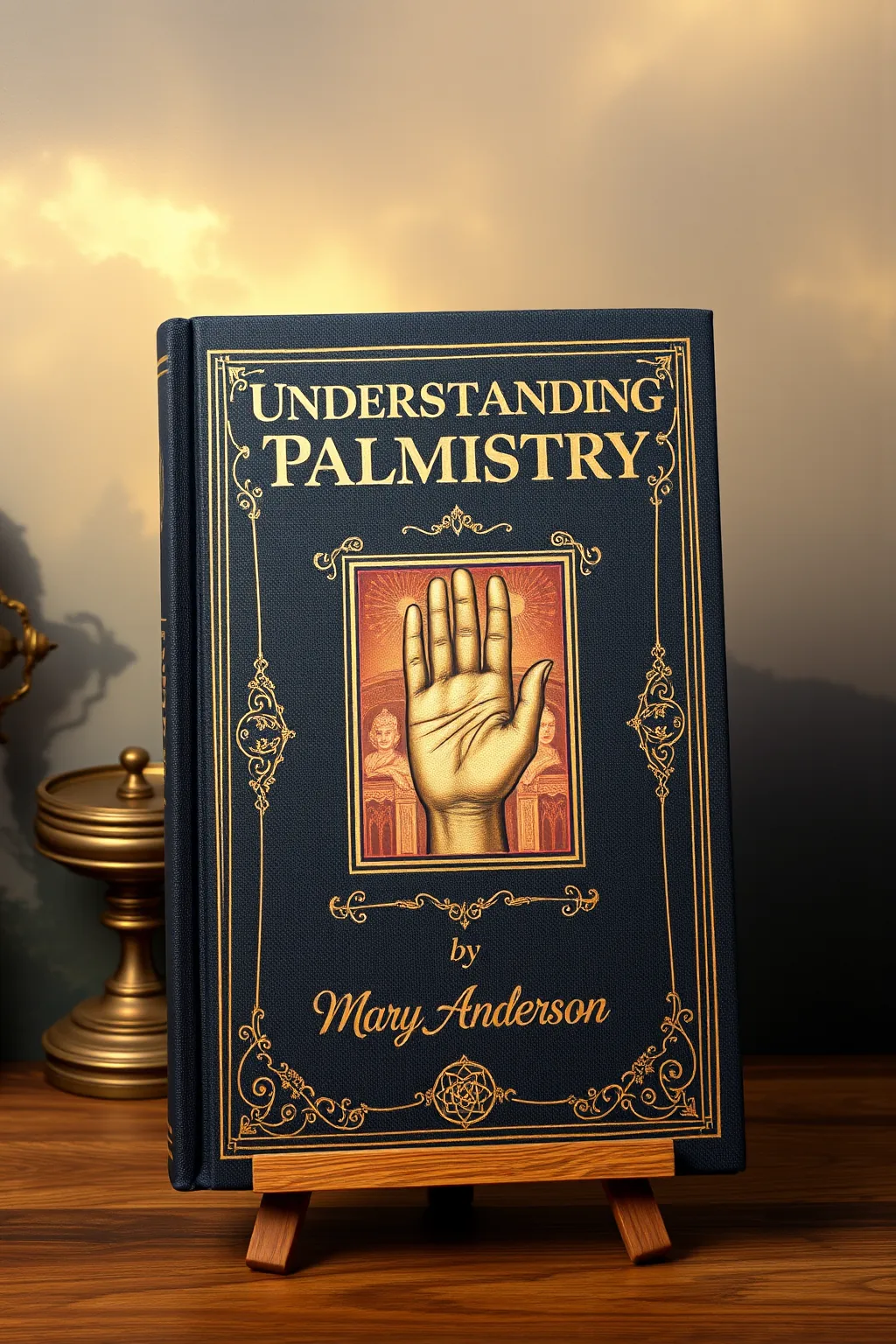
Understanding Palmistry
 82
82

Understanding Palmistry
Mary Anderson's 'Understanding Palmistry' presents a methodical approach to a subject often shrouded in mystique. Unlike many contemporary guides that lean heavily on anecdotal evidence or generalized interpretations, Anderson grounds her exposition in a clear, almost academic, structure. Her detailed examination of the seven mounts, for instance, offers a systematic way to build a reading, moving from the general character indicated by the mount's prominence to its specific influence on life areas. A notable strength is the book's consistent emphasis on palmistry as a tool for self-awareness rather than mere fortune-telling. However, the sheer volume of detail, while comprehensive, can sometimes feel overwhelming for the absolute novice, requiring careful study and cross-referencing. The section on dermatoglyphics, while interesting, feels somewhat detached from the main palm analysis. Anderson’s work is a solid, if not revolutionary, contribution to the literature on chiromancy.
📝 Description
82
Mary Anderson's 1995 guide offers a structured approach to chiromancy, moving beyond superficial readings.
Published in 1995, Mary Anderson's Understanding Palmistry presents a structured method for interpreting the hand. The book systematically examines the mounts, major and minor lines, and various hand shapes. Anderson frames palmistry not just as a divinatory tool but as a system for self-understanding and personal growth, aiming to uncover the symbolic language of the palm. This work caters to both individuals new to esoteric practices and those with prior experience in divination. It also appeals to readers interested in the historical and philosophical aspects of divinatory arts. Anderson's approach sought to provide a grounded, contemporary perspective on a practice with a long history.
The text details the significance of the seven mounts, including Venus, Jupiter, and Saturn, alongside key lines like the Life, Head, and Heart lines. It also covers less prominent lines and the implications of different hand shapes and finger proportions. The book includes analysis of dermatoglyphics, or fingerprints, contributing to a comprehensive interpretive framework. Anderson's methodology allows for a holistic reading of the palm, connecting its features to individual character and potential life paths.
Anderson's 1995 book emerged during a period of revived interest in Western esotericism, following the peak of the New Age movement. While earlier figures like William G. Benham had popularized palmistry in the early 20th century, Anderson's work aimed to synthesize and present the subject with a more contemporary and grounded perspective. It addressed an audience receptive to occult revival ideas but seeking accessible interpretations removed from earlier, more fervent phases of popular esotericism.
💡 Why Read This Book?
• Gain a structured understanding of hand analysis, learning the specific meanings of the seven mounts (Venus, Jupiter, etc.) as detailed by Anderson, which provides a foundational framework for interpretation not found in generalized divination guides. • Explore the symbolic language of the palm beyond simple prediction, discovering how Anderson connects hand features to personal development and self-awareness, offering a deeper psychological application. • Appreciate the historical context of palmistry through Anderson’s discussion of its development, providing insight into why the 1995 publication offered a contemporary synthesis of older traditions.
⭐ Reader Reviews
Honest opinions from readers who have explored this book.
❓ Frequently Asked Questions
What is the significance of the Life Line in Mary Anderson's 'Understanding Palmistry'?
Anderson describes the Life Line not as a predictor of lifespan, but as an indicator of vitality, physical energy, and significant life experiences. Its depth, clarity, and any breaks or islands offer clues to the individual's constitutional strength and health patterns.
Does 'Understanding Palmistry' cover hand shapes and finger analysis?
Yes, the book dedicates significant attention to hand shapes (e.g., square, spatulate, conic) and the relative lengths and features of the fingers, explaining how these elements further refine the interpretation of the palm's lines and mounts.
When was Mary Anderson's 'Understanding Palmistry' first published?
Mary Anderson's 'Understanding Palmistry' was first published in 1995, placing it within a period of renewed interest in esoteric studies and providing a modern perspective on ancient chiromantic practices.
What are the seven mounts discussed in the book?
Anderson details the seven mounts: Venus, Jupiter, Saturn, Apollo (Sun), Mercury, Mars (upper and lower), and Luna (Moon). Each mount is associated with specific personality traits, desires, and influences on the individual's life.
Is 'Understanding Palmistry' suitable for absolute beginners?
The book offers a systematic approach beneficial for beginners. While comprehensive, its structured format and clear explanations of concepts like the Head and Heart lines make it accessible for those new to palmistry.
How does Anderson's work differ from earlier palmistry books?
Anderson's 1995 publication tends to offer a more integrated and psychological approach compared to some earlier, more deterministic texts. She emphasizes self-understanding and potential rather than fixed fate, reflecting a shift in esoteric thought.
🔮 Key Themes & Symbolism
The Seven Mounts
Anderson meticulously details the seven mounts of the hand—Venus, Jupiter, Saturn, Apollo, Mercury, Mars, and Luna. Each mount is presented as a locus of specific energies and potentials within the individual's psyche and life path. The book explains how the relative prominence or flatness of these mounts, often influenced by underlying bone structure and fleshy padding, provides a foundational layer of character analysis. This systematic approach allows readers to move beyond simplistic line readings and gain a more nuanced understanding of personality archetypes and life inclinations.
Major and Minor Lines
Central to palmistry is the interpretation of hand lines. Anderson provides an exhaustive breakdown of the primary lines—Life, Head, and Heart—along with secondary lines such as the Fate (Destiny) and Apollo (Sun) lines. The work explores variations in line appearance, such as breaks, chains, islands, and star formations, and offers interpretations for each. This focus on the lines serves as a narrative thread, illustrating the unfolding of personal experiences, psychological tendencies, and opportunities for growth throughout a person's life.
Hand Shapes and Finger Significance
Beyond the lines and mounts, Anderson emphasizes the importance of the overall hand shape and the characteristics of the fingers. Different hand shapes—such as the elemental types (Earth, Air, Fire, Water) or more specific forms like the spatulate or conic hand—are linked to distinct personality profiles. The length and shape of individual fingers, as well as features like the thumb's flexibility, are also analyzed. This holistic perspective underscores that a complete palm reading requires considering all elements of the hand in conjunction.
Palmistry as Self-Knowledge
A recurring theme in Anderson's work is the utility of palmistry as a tool for self-understanding and personal development, rather than purely for fortune-telling. The book frames the hand as a map of potential and tendencies. By understanding the patterns and energies indicated by the palm, individuals are encouraged to engage with their strengths, acknowledge their challenges, and make conscious choices for personal growth. This psychological interpretation aligns with modern esoteric thought that prioritizes self-awareness and agency.
💬 Memorable Quotes
Direct passages from the work, attributed to the author.
“The Life Line indicates vitality, not duration of life.”
— This concise statement reframes a common misconception about palmistry, emphasizing that the Life Line reflects physical energy, health, and significant life events rather than a predetermined lifespan, aligning with a more psychological interpretation.
“Each mount corresponds to a planet and its associated energies.”
— This highlights the astrological underpinnings of palmistry, suggesting that the fleshy mounds on the palm are symbolic representations of planetary influences on personality and life circumstances.
“Hand shape provides a general blueprint for character.”
— This interpretation suggests that the overall form of the hand offers a broad overview of an individual's fundamental disposition and core personality traits, serving as an initial classification before detailed line analysis.
“Breaks in the lines may signify periods of change or difficulty.”
— This reflects the dynamic nature of palmistry, where imperfections or alterations in the lines are seen not as absolute negative omens, but as indicators of transitional phases or challenges that require attention and adaptation.
“The thumb's flexibility relates to willpower and adaptability.”
— This points to the specific diagnostic value of the thumb, linking its physical attributes, particularly its range of motion, to crucial psychological faculties like determination and the capacity to adjust to circumstances.
🌙 Esoteric Significance
Tradition
Anderson's work aligns with the Western Hermetic tradition, which often seeks to find correspondences between the macrocosm (the universe) and the microcosm (the individual), as reflected in the human body. Palmistry, in this context, is viewed as a divinatory art that reveals the subtle energies and patterns influencing human life, much like astrology or numerology. It departs from purely fortune-telling interpretations by emphasizing the hand as a map of psychological potentials and life-path inclinations, fitting within a modern Hermetic focus on self-actualization.
Symbolism
Key symbols include the seven mounts, each named after a planet (e.g., Mount of Jupiter, Mount of Apollo) and representing associated archetypal energies and personality traits. The major lines (Life, Head, Heart) function as narrative symbols, charting the course of vitality, intellect, and emotion. Hand shapes themselves are symbolic; for instance, a 'spatulate' hand often symbolizes an active, inventive nature, reflecting a broader symbolic language where the physical form communicates psychological and destiny-related information.
Modern Relevance
Anderson's approach, emphasizing psychological insight and self-awareness over fatalism, remains relevant today. Contemporary practitioners of somatic psychology and embodied cognition might find parallels in her work. Modern esotericists and those exploring personal growth through various modalities, including modern Hermeticism and Jungian-influenced psychological astrology, can utilize her systematic framework for understanding innate potentials and life dynamics.
👥 Who Should Read This Book
• Aspiring chiromancers seeking a structured introduction to hand analysis, learning the foundational meanings of lines, mounts, and hand shapes as presented systematically. • Individuals interested in psychological archetypes and self-discovery, who wish to explore how esoteric systems like palmistry can offer insights into personal tendencies and potentials. • Students of Western Esotericism looking to understand the practical applications and historical context of divinatory arts beyond astrology and Tarot, appreciating a text from the late 20th century.
📜 Historical Context
Mary Anderson's 'Understanding Palmistry', published in 1995, arrived during a period where esoteric disciplines were re-emerging from the shadow of the more sensationalist aspects of the New Age movement. While figures like the Comte C. de Saint-Germain had published extensively on palmistry in the late 19th century, and William G. Benham’s influential 'The Laws of Scientific Hand-Reading' (1901) had set a standard, Anderson’s work offered a more contemporary synthesis. It navigated a landscape where psychological interpretations were gaining prominence over purely deterministic readings. Unlike competing schools that might focus solely on Vedic astrology or Tarot, Anderson's palmistry sought to integrate with a broader Western esoteric framework, presenting itself as a practical tool for self-discovery rather than a rigid predictive system. The reception was generally positive within circles seeking grounded, accessible esoteric knowledge.
📔 Journal Prompts
The prominence of the Mount of Jupiter on your palm, as described by Anderson.
Variations in your Head Line's appearance and its implications for thought patterns.
The symbolic meaning of your dominant hand's overall shape.
Periods of change suggested by breaks or islands on your Fate Line.
The relationship between your thumb's flexibility and your personal willpower.
🗂️ Glossary
Chiromancy
The practice of divination and character analysis through the study of the palm of the hand, including its lines, mounts, shape, and other features. It is often used interchangeably with palmistry.
Mounts
The fleshy, raised areas on the palm, typically seven in number, named after classical planets (Venus, Jupiter, Saturn, Apollo, Mercury, Mars, Luna), each associated with specific personality traits and life influences.
Life Line
The semi-circular line that runs from below the thumb towards the wrist. In Anderson's interpretation, it primarily indicates vitality, physical energy, and significant life experiences, rather than longevity.
Head Line
The line extending horizontally across the palm, typically below the Heart Line. It is interpreted as representing mental faculties, intellectual capacity, communication style, and cognitive processes.
Heart Line
The uppermost horizontal line on the palm, running across the hand beneath the fingers. It is associated with emotional expression, romantic relationships, and the state of one's emotional life.
Fate Line (Destiny Line)
A line, often vertical, running upwards from the base of the palm towards the fingers. It is traditionally interpreted as indicating influences related to career, life path, and external circumstances affecting one's destiny.
Dermatoglyphics
The scientific study of the patterns of friction ridges on fingers, palms, and soles. In palmistry, fingerprint patterns are sometimes analyzed for additional character insights.
🔮 Readers Also Liked
Browse all →








More by Mary Anderson
All books →





More Free Occult Philosophy Books
View all →