Das Herz des Reiki
 84
84

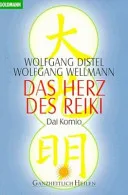
Das Herz des Reiki
Wolfgang Distel and Wolfgang Wellmann’s *Das Herz des Reiki* attempts to anchor the popular healing practice within a more robust esoteric framework. The strength of the 1995 publication lies in its systematic exploration of Reiki’s energetic mechanics, moving beyond mere technique to explore the underlying philosophy. While the writing is often clear, the text occasionally feels overly didactic, particularly when detailing specific energetic flows. A notable passage that captures the book's intent is its detailed explanation of the connection between the practitioner's mental state and the efficacy of the healing energy transmitted, a concept often glossed over in simpler manuals. However, the work could benefit from more direct engagement with the historical development of Reiki's spiritual components as articulated by Usui himself. Ultimately, *Das Herz des Reiki* offers a valuable, if somewhat academic, deepening of understanding for dedicated Reiki practitioners.
📝 Description
84
Published in 1995, Das Herz des Reiki offers a detailed look at Reiki's energetic mechanics and philosophy.
Wolfgang Distel and Wolfgang Wellmann's 1995 book, Das Herz des Reiki, serves as a thorough guide to the esoteric aspects of Reiki healing. It moves past basic instructions to examine the energetic principles and philosophical foundations of this Japanese practice. The authors aim to give practitioners and students a more complete understanding of Reiki's central energies and its potential for personal growth.
The book is for individuals who want to engage with Reiki more deeply than typical certification courses allow. It suits practitioners at all levels looking to improve their grasp of the energetic anatomy and the philosophical system behind Reiki. Those curious about comparative spiritual studies, especially East Asian healing practices and their hidden meanings, will find this valuable. It also appeals to students of subtle energy systems and consciousness.
Das Herz des Reiki appeared in 1995 amid growing Western interest in alternative healing. While Reiki originated with Usui Mikao in Japan early in the 20th century, its Western spread accelerated in the late 1900s. The book met a need among Western practitioners for deeper theoretical frameworks to complement their hands-on work. It entered the growing field of esoteric publications, offering more detail than many introductory manuals and standing apart from purely medical or experiential accounts.
💡 Why Read This Book?
• Gain a deeper understanding of the energetic principles behind Reiki, as presented by Distel and Wellmann, moving beyond basic hand positions to explore the subtle flow of Ki. • Explore the philosophical underpinnings of Reiki as a spiritual practice, as detailed in the 1995 publication, connecting personal healing with broader universal energies. • Learn about the integration of intention and energetic hygiene in practice, concepts specifically addressed in the book to enhance the practitioner's effectiveness.
⭐ Reader Reviews
Honest opinions from readers who have explored this book.
❓ Frequently Asked Questions
When was Das Herz des Reiki first published?
Das Herz des Reiki was first published in 1995 by Wolfgang Distel and Wolfgang Wellmann, reflecting a surge of interest in esoteric healing practices during that era.
What is the primary focus of Das Herz des Reiki?
The book focuses on the esoteric principles and practical application of Reiki, aiming to provide a deeper understanding of its energetic mechanics and philosophical foundations.
Who are the authors of Das Herz des Reiki?
The authors are Wolfgang Distel and Wolfgang Wellmann, who collaborated on this exploration of Reiki's deeper aspects.
Is Das Herz des Reiki suitable for beginners?
While it offers a deeper dive, the book is suitable for those seeking more than basic certification, providing a comprehensive view for practitioners of all levels interested in the theory.
What distinguishes this book from other Reiki guides?
It distinguishes itself by exploring the energetic mechanics and philosophical underpinnings more thoroughly, moving beyond superficial descriptions common in introductory texts.
What is the original publication year and country of origin for Das Herz des Reiki?
The book was first published in 1995, originating from the German-speaking esoteric literature sphere.
🔮 Key Themes & Symbolism
Energetic Mechanics of Ki
The work examines the concept of Ki, or universal life force energy, as the fundamental element of Reiki healing. Distel and Wellmann detail how this energy is perceived, channeled, and directed by the practitioner. It discusses the subtle energetic pathways within the human body, often referred to as meridians or nadis in other traditions, and how Reiki influences these channels to promote balance and well-being. The book emphasizes that understanding these energetic flows is crucial for effective practice, moving beyond simple touch to a conscious interaction with life force.
Spiritual Framework of Practice
Beyond its physical healing applications, *Das Herz des Reiki* positions the practice as a path for spiritual development. It explores the integration of principles such as compassion, mindfulness, and intention into the daily life of a Reiki practitioner. The book suggests that consistent practice cultivates inner peace and heightened awareness, contributing to the practitioner's own evolution. This spiritual dimension is presented not as an optional add-on but as integral to the authentic transmission and reception of Reiki energy, linking personal transformation to the healing process.
The Practitioner's Role
A significant focus is placed on the practitioner's inner state and preparation. Distel and Wellmann highlight the importance of energetic hygiene, mental clarity, and emotional balance for the practitioner to effectively serve as a conduit for Reiki. The book suggests that the practitioner's own energetic field and intentions play an important role in the quality and impact of the healing received by the recipient. It encourages self-healing and personal growth as prerequisites for effective outward healing, framing the practitioner's journey as one of continuous learning and refinement.
Integration of East and West
While rooted in the Japanese tradition of Reiki founded by Usui Mikao, this 1995 German publication engages with the practice from a Western esoteric perspective. It seeks to bridge the gap between Eastern spiritual concepts and Western analytical frameworks, making Reiki accessible to a broader audience familiar with Western metaphysical thought. The book attempts to translate the subtle energetic and spiritual nuances of Reiki into language and concepts that resonate with European practitioners and scholars of esoteric traditions.
💬 Memorable Quotes
Direct passages from the work, attributed to the author.
“Reiki is not merely a technique, but a path of spiritual awakening.”
— This interpretation highlights the book's emphasis on Reiki as more than just a physical healing method. It suggests that dedicated practice fosters personal growth, self-awareness, and a deeper connection to universal consciousness.
“Understanding the subtle energy body is key to mastering Reiki.”
— This reflects the book's detailed exploration of energetic anatomy. It suggests that knowledge of the body's energy systems, beyond the physical, is crucial for practitioners to effectively apply Reiki principles.
“Intention acts as a compass for the flow of universal life force.”
— This interpretation emphasizes the conscious direction of energy. It posits that a focused and clear intention from the practitioner guides the Reiki energy precisely where it is needed for healing.
“Reiki bridges the gap between the material and the spiritual realms.”
— This concept points to the book's broader philosophical scope, suggesting that Reiki operates at the intersection of physical well-being and spiritual consciousness, facilitating a holistic approach to health.
💡 Key Ideas
Editorial paraphrase of the work's core concepts — not direct quotes.
The practitioner's energetic purity is the foundation for effective healing.
This paraphrased concept underscores the importance of the healer's internal state. It implies that maintaining a clear, balanced energetic field is essential for the unobstructed flow of healing energy, directly impacting the recipient's experience.
🌙 Esoteric Significance
Tradition
This work fits within the broader contemporary Western esoteric tradition, specifically engaging with the integration of Eastern spiritual practices into Western metaphysical frameworks. While Reiki originates from Japan, *Das Herz des Reiki* interprets its principles through a lens that appeals to concepts found in Hermeticism and New Age spirituality, focusing on universal energies, consciousness, and the energetic body. It seeks to provide a systematic, almost philosophical, exposition of these energies, making it distinct from purely religious or shamanic traditions, and aligning it with a lineage of Western practitioners who sought to codify and understand subtle forces.
Symbolism
The book likely explores key Reiki symbols, such as the Cho Ku Rei (Power symbol), Sei Hei Ki (Harmony symbol), and Hon Sha Ze Sho Nen (Distance symbol), interpreting their energetic and spiritual significance. The Cho Ku Rei, for instance, is often seen as a symbol of illumination and power, meant to amplify the flow of Reiki. The Sei Hei Ki is associated with emotional and mental balance, promoting harmony within the individual. These symbols are not just visual aids but are understood as energetic keys that unlock specific potentials within the healing process, acting as focal points for intention and energy transmission.
Modern Relevance
Contemporary practitioners of energy healing, mindfulness, and holistic wellness continue to draw upon the foundational understanding of Reiki presented in works like *Das Herz des Reiki*. Its detailed approach to energetic mechanics and the practitioner's role informs modern therapeutic practices and self-healing techniques. Thinkers in consciousness studies and researchers exploring the intersection of mind, body, and spirit find value in its systematic exposition of subtle energies, contributing to ongoing dialogues about non-local healing and the nature of consciousness.
👥 Who Should Read This Book
• Reiki practitioners seeking to deepen their theoretical understanding beyond basic techniques, aiming to grasp the energetic and philosophical foundations of the practice. • Students of esoteric traditions interested in comparative spiritual studies, particularly those exploring the integration of Eastern healing arts into Western metaphysical thought. • Individuals curious about subtle energy systems and consciousness, who want to explore how focused intention and energetic channeling are understood to promote well-being.
📜 Historical Context
The publication of *Das Herz des Reiki* in 1995 occurred during a significant global surge in interest in complementary and alternative medicine, with energy healing modalities like Reiki experiencing widespread adoption in Western countries. While Usui Mikao founded Reiki in Japan in the early 20th century, its introduction and proliferation in Europe and North America gained substantial momentum from the 1980s onward. Distel and Wellmann’s work emerged within this context, aiming to provide a more in-depth, esoteric exploration of Reiki’s principles than many introductory texts available at the time. It sought to ground the practice within a philosophical framework, appealing to a readership already engaged with Western esoteric traditions, which often sought detailed theoretical underpinnings for spiritual practices. This period also saw the rise of comparative spirituality studies, making works that explored the deeper philosophical currents of Eastern practices relevant to a growing academic and lay audience, differentiating it from purely therapeutic manuals.
📔 Journal Prompts
The energetic mechanics of Ki as described in the text.
The practitioner's role in maintaining energetic purity.
Integration of intention and spiritual development through Reiki practice.
The symbolism of the core Reiki symbols discussed.
Personal experiences with subtle energy transmission.
🗂️ Glossary
Ki
The Japanese term for universal life force energy, considered the fundamental essence that flows through all living beings and is channeled in Reiki healing.
Energetic Anatomy
The study and understanding of the body's subtle energy systems, including chakras, meridians, and aura, which are believed to be influenced by energy healing practices like Reiki.
Reiki Symbols
Specific archetypal symbols used in Reiki practice to focus intention and amplify the flow of healing energy, each possessing unique vibrational qualities and functions.
Usui Mikao
The Japanese Buddhist monk credited with founding the Reiki healing system in the early 20th century.
Energy Hygiene
Practices undertaken by energy healers to maintain their own energetic balance and purity, ensuring they are clear conduits for universal life force energy.
Channelling
The process by which a practitioner acts as a conduit, allowing universal life force energy to flow through them to the recipient without depletion or alteration.
Subtle Energy
Forms of energy that are not detectable by conventional scientific instruments but are believed to influence physical and mental well-being, such as Ki.