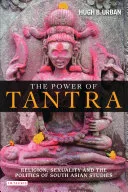
The Power of Tantra
 76
76

The Power of Tantra
Hugh B. Urban's "The Power of Tantra" offers a much-needed scholarly corrective to centuries of Western misrepresentation. The work excels in its meticulous deconstruction of how Victorian Orientalists and colonial administrators weaponized the perception of Tantra, branding it as the nadir of Indian spirituality. Urban demonstrates with clarity how this 'othering' served imperial and missionary agendas. A particularly strong section dissects the Orientalist tendency to conflate the esoteric with the overtly sexual, creating a caricature that demonized practitioners. While the book is primarily an academic exercise, its detailed exploration of the historical discourse surrounding Tantra is indispensable for anyone seeking to understand its complex reception. Its limitation lies in its academic density, which may prove challenging for readers unfamiliar with post-colonial theory or religious studies jargon. Yet, for those willing to engage, the rigorous analysis provides a crucial counter-narrative. Urban's work is a vital academic intervention, stripping away layers of colonial prejudice to reveal the historical construction of 'Tantra' as a scandal.
📝 Description
76
Hugh B. Urban's 2001 book dissects how the West constructed and pathologized Tantra.
Hugh B. Urban's "The Power of Tantra" examines how Western scholars and colonial discourse interpreted Tantric traditions from the Victorian era onward. The book moves past sensationalist views to analyze how Tantra was understood, misunderstood, and often pathologized, particularly by Orientalist perspectives. Urban details the construction of Tantra as a 'deviant' or 'degenerate' religious form, contrasting these colonial interpretations with the varied practices and lived realities within actual Tantric lineages.
The historical context of the late 19th and early 20th centuries is crucial here. During this period of intense colonial activity, Victorian writers, missionaries, and academics frequently viewed Tantra through a lens of moral panic. This often led to conflating its diverse practices with widespread debauchery, a view that served to reinforce colonial narratives of Indian backwardness and Western superiority. The book traces the intellectual roots of these critiques and notes their continued presence in later popular and academic discussions.
Urban engages with key concepts such as the Orientalist gaze, the invention of 'Tantra' as a singular category, and the historical construction of religious deviance. The work also addresses the complex interplay between power, knowledge, and the representation of non-Western spiritual traditions, touching on debates within the academic study of religion.
This book analyzes the Western academic and popular reception of Tantra, a complex set of Indian traditions. It scrutinizes how colonial and Orientalist scholarship in the 19th and 20th centuries shaped perceptions of Tantra, often framing it as degenerate or deviant. Urban's work situates itself within the history of esotericism by examining how specific esoteric traditions are categorized, pathologized, and sometimes exoticized by external observers, particularly within the context of colonial encounters and the rise of religious studies as an academic field.
💡 Why Read This Book?
• Understand the historical construction of 'Tantra' as a scandalous category, a key aspect of colonial-era Orientalism, which shaped Western perceptions from the 19th century onwards. • Gain insight into how Victorian scholars and missionaries interpreted and misrepresented Indian spiritual traditions, particularly through their engagement with Tantric texts and practices. • Learn about the academic debates concerning the definition and categorization of Tantra, moving beyond popular sensationalism to a more nuanced scholarly perspective.
⭐ Reader Reviews
Honest opinions from readers who have explored this book.
❓ Frequently Asked Questions
When was Hugh B. Urban's "The Power of Tantra" first published?
Hugh B. Urban's "The Power of Tantra" was first published on October 30, 2009, providing a critical academic perspective on historical Western interpretations of Tantra.
What was the Victorian era's perception of Tantra according to the book?
The book details how Victorian era European colonizers, Orientalist scholars, and Christian missionaries viewed Tantra as degenerate and depraved, a pathological mix of sensuality and religion.
Does the book focus on Tantric practices or the history of their reception?
The book primarily focuses on the historical reception and scholarly interpretation of Tantra in the West, especially from the 19th century, rather than offering practical guidance on Tantric practices.
Who were some key figures or groups involved in the historical misrepresentation of Tantra discussed by Urban?
Hugh B. Urban discusses European colonizers, Orientalist scholars, and Christian missionaries of the Victorian era as key groups whose interpretations heavily influenced the Western perception of Tantra.
What is the main argument of "The Power of Tantra" regarding Western views?
The main argument is that Western views of Tantra have been largely shaped by colonial and Orientalist discourse, which constructed it as a scandalous and pathological phenomenon, obscuring its diverse traditions.
Is this book a practical guide to Tantra?
No, "The Power of Tantra" is an academic work of scholarship focused on the historical, cultural, and religious studies analysis of how Tantra has been perceived and represented, particularly in the West.
🔮 Key Themes & Symbolism
Orientalism and Tantra
This theme examines how Western scholarship, particularly from the Victorian era, constructed a particular image of Tantra. Urban details how Orientalist scholars and colonial administrators interpreted Tantric traditions not as legitimate spiritual paths, but as evidence of India's supposed 'degeneracy,' often focusing on sensationalized accounts of sexual practices to pathologize the 'Indian mind.' This created a distorted and scandalous representation that served to reinforce Western superiority narratives and colonial agendas.
The Invention of 'Tantra'
The book addresses how 'Tantra' itself became a category constructed by Western observers, often lumping together disparate traditions under a single, sensationalist label. Urban highlights that this monolithic portrayal ignored the vast diversity within actual Tantric lineages. The scholarly act of defining and categorizing Tantra often reflected the biases and preconceptions of the era, rather than an objective understanding of the complex spiritual range of India.
Colonial Discourse and Religious Othering
A central theme is how colonial discourse utilized the representation of Tantra to 'other' Indian culture and religion. By portraying Tantra as the most 'degenerate' or 'depraved' aspect of Hinduism, missionaries and colonial officials could justify their civilizing mission and the imposition of Western values. This process of religious othering served to legitimize colonial rule and maintain power structures by demonizing indigenous spiritual expressions.
Scholarly Reception vs. Lived Practice
Urban contrasts the academic and colonial interpretations of Tantra with the actual practices and philosophies of its adherents. The book implicitly argues for a more nuanced approach, one that acknowledges the complexity and diversity of Tantric traditions without resorting to sensationalism or moral judgment. It questions the authority of external, often biased, interpretations over internal understandings and lived experiences within these traditions.
💬 Memorable Quotes
Direct passages from the work, attributed to the author.
“Tantra was generally seen as a pathological mixture of sensuality and religion.”
— This interpretation emphasizes the Orientalist tendency to view Tantric traditions through a lens of sexual deviance intertwined with religious practice. It suggests that this perceived 'mixture' was used to pathologize Tantra, framing it as an aberration rather than a legitimate spiritual path.
“Orientalist scholars and Christian missionaries... prompted the decline of modern Hinduism.”
— This statement suggests a direct causal link perceived by Victorian observers between the existence or perception of Tantra and a supposed negative impact on Hinduism. It reflects the judgmental framework used by these groups to critique and condemn aspects of Indian religious life.
“For most contemporary New Age and popular understandings, Tantra is often divorced from its historical context.”
— This interpretation points to a divergence between academic/historical understanding and modern popular or New Age interpretations. It implies that contemporary views may simplify or misrepresent Tantra, potentially overlooking the complex scholarly debates and historical mischaracterizations discussed in the book.
💡 Key Ideas
Editorial paraphrase of the work's core concepts — not direct quotes.
Victorian era European colonizers, Orientalist scholars and Christian missionaries... saw Tantra as the most degenerate and depraved example of the worst tendencies of the 'Indian mind'.
This quote captures the core historical critique explored in the book. It highlights how specific Western groups during a particular historical period (Victorian era) actively constructed Tantra as a symbol of perceived Indian inferiority, linking it to moral and spiritual decline.
The work explores the historical construction of Tantra's scandalous reputation in the West.
This paraphrased concept highlights the book's focus on the *process* by which Tantra gained a notoriety for scandal. It emphasizes that this reputation is not inherent but was actively built through specific historical narratives and interpretations.
🌙 Esoteric Significance
Tradition
While not directly aligning with a specific Western esoteric lineage like Hermeticism or Theosophy, Urban's work critically examines how these traditions, alongside academic Orientalism, have historically engaged with and often misrepresented Eastern spiritual systems like Tantra. The book's significance lies in its deconstruction of the very categories and historical narratives that have shaped the Western esoteric understanding of Tantra, revealing the colonial and cultural biases embedded within them.
Symbolism
The book itself does not focus on interpreting Tantric symbols but rather on the *discourse surrounding* them. It highlights how Western observers, particularly during the Victorian era, fixated on symbols and practices associated with sensuality and transgression within Tantra. These elements were often extracted from their original contexts and used to construct Tantra as inherently 'deviant' or 'immoral,' rather than exploring their deeper philosophical or soteriological meanings within the traditions.
Modern Relevance
Urban's critique remains highly relevant for contemporary New Age movements and popular understandings of Tantra, which often selectively adopt or sensationalize certain aspects. Scholars and practitioners today draw on his work to question the authenticity of modern interpretations, to understand the historical roots of misrepresentation, and to advocate for a more nuanced, historically informed approach to studying and practicing traditions like Tantra, moving beyond the colonial baggage.
👥 Who Should Read This Book
• Comparative religion scholars: To understand the historical biases and colonial influences that have shaped the academic study and representation of Tantric traditions. • Students of Orientalism and post-colonial studies: To analyze how religious categories were constructed and utilized within colonial discourse to assert Western dominance. • Serious researchers of esoteric traditions: To critically examine the historical reception of Eastern spiritualities in the West and to differentiate scholarly analysis from popular sensationalism.
📜 Historical Context
Hugh B. Urban's "The Power of Tantra" emerged in 2009, engaging with a long history of scholarship and polemic concerning Tantra that stretches back to the 19th century. During the Victorian era, a period of intense British colonial rule in India, figures like Sir Richard Burton and various missionaries and scholars contributed to a discourse that pathologized Tantric traditions. They often viewed Tantra through a lens of hyper-sexuality and ritualistic excess, contrasting it with perceived Western notions of propriety and progress. This perspective was heavily influenced by Orientalism, a field that sought to categorize and often demonize Eastern cultures. Urban's work revisits this history, analyzing how these colonial and missionary critiques shaped not only academic understanding but also popular perceptions of Tantra, persisting well into the 20th century. He engages with the reception history, noting how competing schools of thought, such as the Brahmo Samaj's reformist agenda, also contributed to the negative portrayal of Tantra as a degenerate aspect of Hinduism.
📔 Journal Prompts
The Victorian era's perception of Tantra as a 'pathological mixture of sensuality and religion': How did this framing serve colonial agendas?
Analyze the concept of 'Orientalism' as it applied to the study of Indian spiritual traditions in the 19th century.
Reflect on the difference between scholarly interpretation and popular understanding of esoteric traditions.
Consider the challenges in defining and categorizing diverse spiritual practices like Tantra.
How might the historical misrepresentations discussed in the book affect contemporary New Age interpretations of Tantra?
🗂️ Glossary
Tantra
A complex and diverse set of spiritual traditions originating in India, characterized by esoteric rituals, meditation, and sometimes unconventional practices, often involving the concept of divine feminine energy.
Orientalism
A term coined by Edward Said, referring to the way Western cultures perceive and represent Eastern societies, often through a lens of exoticism, primitivism, and superiority, which informed colonial policies and scholarship.
Victorian Era
The period of Queen Victoria's reign in the United Kingdom (1837–1901), characterized by significant industrial, cultural, political, scientific, and military changes, including the height of the British Empire.
Sensationalism
The use of exciting or shocking details in reporting or representation, often to provoke public interest or outrage, frequently at the expense of accuracy or nuance.
Pathological
Relating to or characterized by pathology; showing symptoms of a disease. In the context of the book, used to describe how Tantra was framed as abnormal or diseased by Western observers.
Colonial Discourse
The language, narratives, and representations produced by and about colonial powers and their subjects, which served to justify and maintain colonial rule and Western dominance.
New Age
A broad range of spiritual or religious beliefs and practices that emerged in Western society during the late 20th century, often drawing eclectically from various Eastern and Western traditions.