Goethe's Faust and the Divan of Ḥāfiẓ
 79
79

Goethe's Faust and the Divan of Ḥāfiẓ
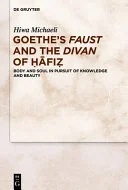
Hiwa Michaeli’s *Goethe's Faust and the Divan of Ḥāfiẓ* presents a compelling argument for a unified spiritual evolution across disparate cultural and temporal landscapes. The strength of the book lies in its meticulous comparison of Goethe's late-stage grappling with modernity and Ḥāfiẓ's sophisticated embrace of divine immanence. Michaeli skillfully demonstrates how both poets, despite their vastly different contexts – 14th-century Shiraz for Ḥāfiẓ and 19th-century Weimar for Goethe – articulate a similar intellectual trajectory. A particular success is the analysis of the body-soul dynamic, showing how both works, in their own ways, move beyond purely transcendent ideals. However, the text could benefit from a more explicit engagement with the reception history of both *Faust* and the *Divan* within esoteric circles. The book offers a sophisticated intellectual framework for understanding shifts in spiritual thought.
📝 Description
79
Hiwa Michaeli's 2019 study compares Goethe's Faust with Hafez's Divan.
This book examines how Johann Wolfgang von Goethe's *Faust* and the *Divan* of Ḥāfiẓ articulate a shift from transcendent to immanent worldviews. Michaeli moves past simple textual comparisons to analyze the core ideas shaping each poet's outlook, focusing on their views of the body and soul relationship. The study is valuable for scholars in comparative literature, religious studies, and Western and Islamic esoteric traditions. It suits readers interested in how philosophical and spiritual thought changes, especially through poetry. Those seeking to understand the move from medieval to modern spiritual ideas will appreciate the detailed textual analysis. The work covers intellectual histories from 14th-century Ḥāfiẓ to 19th-century Goethe, placing them in larger philosophical debates about immanence and transcendence. It offers an alternative to purely theological or secular readings of these poets.
The central concepts include the contrast between immanent and transcendent outlooks, the interplay of body and soul, and how poets express spiritual and intellectual changes. Michaeli investigates *Faust*'s engagement with modern alienation and the search for meaning in the material world. In contrast, Ḥāfiẓ's *Divan* presents a vision where divine presence is integrated within earthly existence.
This study situates itself within the broader currents of Western and Islamic mysticism, particularly focusing on the intellectual shifts that occurred from the medieval period into modernity. It examines how two major poetic works, one from the Persian Sufi tradition and the other from German Romanticism, grapple with core concepts of immanence and transcendence. The book considers these poets' articulations of divine presence, the material world, and the human condition, offering a lens through which to view the development of contemplative and spiritual thought across distinct cultural and historical landscapes. It contrasts with interpretations that isolate these figures within purely religious or secular frameworks.
💡 Why Read This Book?
• Gain insight into the philosophical underpinnings of Goethe's *Faust* (published in its final form in 1832) by comparing its exploration of immanence with Ḥāfiẓ's 14th-century perspective. • Understand the evolution of the body-soul dichotomy in spiritual thought, as articulated through specific symbolic frameworks in both poets’ major works. • Discover how two seemingly disparate literary traditions, Western Romanticism and Persian Sufi poetry, can illuminate shared shifts in worldview and the search for meaning.
⭐ Reader Reviews
Honest opinions from readers who have explored this book.
❓ Frequently Asked Questions
What is the primary focus of Goethe's Faust and the Divan of Ḥāfiẓ?
The book focuses on the poetic articulation of a shift from transcendent to immanent worldviews, examining how Goethe and Ḥāfiẓ evaluated the body and soul in their respective lifeworks.
When was Goethe's Faust first published?
Goethe's *Faust* saw its complete publication in its final form in 1832, though parts were released earlier.
Who was Ḥāfiẓ?
Ḥāfiẓ (Khwāja Shams-ud-Dīn Muḥammad Ḥāfeẓ-e Shīrāzī) was a celebrated Persian lyric poet from Shiraz, whose *Divan* is a cornerstone of Sufi poetry, compiled in the 14th century.
What does 'immanent worldview' mean in this context?
An immanent worldview suggests that the divine or ultimate reality is present within the material world and human experience, rather than being exclusively transcendent or separate from it.
Is this book suitable for beginners in esoteric studies?
While it offers deep comparative analysis, beginners interested in esoteric thought and comparative literature will find it rewarding if they have some familiarity with Goethe or Persian poetry.
What is the core comparison made in the book?
The core comparison is between Goethe's *Faust* and Ḥāfiẓ's *Divan*, focusing on their respective portrayals of the body-soul relationship and their intellectual journeys towards immanence.
🔮 Key Themes & Symbolism
Transcendent to Immanent Shift
This theme investigates the profound intellectual and spiritual movement from viewing the divine as entirely separate and above the world (transcendent) to perceiving it as inherent within existence (immanent). The book traces this shift through the poetic articulations of Goethe and Ḥāfiẓ, highlighting how their lifeworks reflect evolving perceptions of reality, the self, and the sacred. It examines how this transition impacts the valuation of the physical body and the spiritual soul.
Body and Soul Dialectic
The comparative analysis centers on the differing and converging perspectives on the relationship between the corporeal and the spiritual. In Goethe's *Faust*, this often manifests as a struggle or integration within a modern, secularizing context. Ḥāfiẓ's *Divan*, steeped in Sufi mysticism, frequently finds the divine immanent within sensual experience and the physical form. The book explores how these poets construct and resolve this age-old dichotomy.
Intellectual World-Building
Beyond textual analysis, the study reconstructs the foundational intellectual frameworks of Goethe and Ḥāfiẓ. It identifies core concepts, philosophical assumptions, and historical influences that shaped their unique visions. By examining these 'building blocks,' the book offers a deeper understanding of their respective intellectual histories and how they informed their poetic outputs, particularly concerning spiritual and existential questions.
Poetic Articulation of Philosophy
The work emphasizes poetry as a primary vehicle for philosophical and spiritual exploration. It showcases how Goethe and Ḥāfiẓ utilized the unique expressive capacities of verse to articulate complex shifts in worldview. The study highlights the power of literary form in conveying profound changes in human understanding and the valuation of existence, bridging theological, philosophical, and aesthetic concerns.
💬 Memorable Quotes
Direct passages from the work, attributed to the author.
“The evaluation of body and soul underwent significant shifts.”
— This concept highlights the book's central thesis: that both Goethe and Ḥāfiẓ, in their distinct historical and cultural contexts, engaged with changing perceptions of humanity's physical and spiritual nature.
“Comparing the intellectual building blocks of two authors.”
— This reflects the methodological approach of the book, which seeks to understand the foundational ideas and influences that shaped Goethe's and Ḥāfiẓ's perspectives, not just their final texts.
“Ḥāfiẓ's Divan as a reflection of 14th-century Persian thought.”
— This points to the historical grounding of the study, emphasizing the importance of understanding Ḥāfiẓ within his specific time and place to grasp his articulation of immanence.
“Goethe's Faust grappling with modern sensibilities.”
— This interpretation focuses on the German poet's engagement with contemporary issues and the evolving intellectual field of his era, as depicted in his main work.
💡 Key Ideas
Editorial paraphrase of the work's core concepts — not direct quotes.
A move from a transcendent to an immanent worldview.
This paraphrased idea captures the core argument regarding the shift in focus from a divine realm separate from the world to a divine presence within it, as reflected in the poets' works.
🌙 Esoteric Significance
Tradition
This work engages with the perennial philosophical and spiritual quest for understanding the nature of reality, a central tenet across many esoteric lineages, including Hermeticism, Sufism, and Gnosticism. It specifically explores the tension between transcendence (a God separate from creation) and immanence (God within creation), a core dialectic within mystical traditions. Michaeli's study fits within esoteric scholarship by examining how canonical literary works articulate these profound spiritual shifts beyond purely theological dogma.
Symbolism
Within the context of esoteric traditions, both *Faust* and the *Divan* are rich with symbolic meaning. For instance, the figure of Mephistopheles in Goethe's work can be interpreted through various lenses, including the alchemical shadow or the force of negation necessary for transformation. In Ḥāfiẓ's poetry, symbols like the wine cup, the beloved, and the tavern often represent spiritual intoxication, divine union, and the mystical experience of finding God in the mundane, challenging conventional asceticism.
Modern Relevance
Contemporary esoteric thinkers and practitioners, particularly those interested in comparative mysticism and the integration of spiritual insights into modern life, draw upon works like this. It speaks to modern spiritual seekers who grapple with finding meaning in a secularized world, resonating with traditions that emphasize immanence, such as certain branches of Neoplatonism, contemporary Sufi-inspired movements, and depth psychology that explores the interplay of consciousness and the material world.
👥 Who Should Read This Book
• Students of comparative literature and religious studies seeking to understand cross-cultural spiritual and philosophical trajectories. • Scholars of Goethe and Ḥāfiẓ interested in nuanced interpretations that move beyond traditional textual analysis to explore their intellectual frameworks. • Practitioners and theorists of esoteric philosophy and comparative mysticism looking for scholarly engagement with the concepts of immanence and transcendence in major literary works.
📜 Historical Context
Hiwa Michaeli's *Goethe's Faust and the Divan of Ḥāfiẓ*, published in 2019, enters a long tradition of comparative literary and philosophical study. It engages with the intellectual currents of the 14th century, particularly within the Persian Sufi tradition exemplified by Ḥāfiẓ, and the late Enlightenment and Romantic periods in Germany, epitomized by Goethe's complex engagement with modernity. The work implicitly addresses the ongoing scholarly debate concerning the nature of spiritual experience and its representation, contrasting with purely historical-critical or theological interpretations. While not directly engaging with a specific reception event, the book positions itself against prevailing secularizing trends in literary analysis by highlighting the persistent spiritual and philosophical dimensions of these canonical works. Goethe's own extensive engagement with Eastern literature, including his *West-Eastern Divan* inspired by Ḥāfiẓ, provides a historical precedent for such cross-cultural comparisons.
📔 Journal Prompts
The shift from transcendent to immanent worldview as reflected in *Faust* versus the *Divan*.
The body-soul dialectic in Goethe's pact with Mephistopheles.
Ḥāfiẓ's symbolic use of wine and the tavern for spiritual insight.
Goethe's intellectual building blocks and their influence on his worldview.
The articulation of immanence in poetry across different historical epochs.
🗂️ Glossary
Immanent Worldview
A philosophical or spiritual perspective that posits the divine or ultimate reality as inherent within the material world and human experience, rather than existing separately from it.
Transcendent Worldview
A perspective that conceives of the divine or ultimate reality as existing beyond the physical universe, separate from and independent of creation.
Goethe's Faust
The major two-part dramatic work by Johann Wolfgang von Goethe, exploring themes of knowledge, ambition, damnation, and redemption, considered a pinnacle of German literature.
Ḥāfiẓ's Divan
The collected poems of the 14th-century Persian poet Ḥāfiẓ, renowned for his lyrical odes (ghazals) that often blend themes of love, wine, mysticism, and philosophical commentary.
Body-Soul Dialectic
The philosophical exploration of the relationship, tension, or integration between the physical body and the non-physical soul or spirit.
Intellectual Building Blocks
The fundamental concepts, influences, and assumptions that form the basis of an author's thought and worldview.
Poetic Articulation
The expression or formulation of ideas, philosophies, or worldviews through the medium of poetry.
This book appears in 1 collection
🔮 Readers Also Liked
Browse all →



![Serrano Miguel Adolf Hitler The Ultimate Avatar [ 2000]](/img/thumb/serrano-miguel-adolf-hitler-the-ultimate-avatar-2000.webp)





From the “Neoplatonism” Collection
View all →







More Free Occult Philosophy Books
View all →