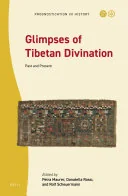
Glimpses of Tibetan Divination
 73
73

Glimpses of Tibetan Divination
The "Glimpses of Tibetan Divination" collection is a welcome, if somewhat dense, scholarly intervention into a field rife with sensationalism and misrepresentation. Its primary achievement is the assembly of academic voices dissecting specific practices, moving beyond the usual 'mystical Tibet' tropes. I found the sections detailing the influence of pre-Buddhist Bon traditions on later Buddhist divination particularly illuminating. However, the book's academic tone, while a strength for serious study, may prove a barrier for casual readers seeking a more accessible introduction. The lack of a unified narrative thread, inherent in multi-author collections, occasionally leaves one wishing for a more cohesive argument. Nevertheless, for its meticulous research and focus on historical figures and specific divinatory methods, it offers substantial value to those dedicated to understanding Tibetan esoteric traditions. It serves as a solid, if demanding, resource.
📝 Description
73
This 2009 compilation gathers scholarly investigations into Tibetan divinatory practices.
Glimpses of Tibetan Divination: Past and Present presents scholarly research on Tibetan prognostication. It moves beyond simple descriptions to offer detailed analyses from academics who examine the historical evolution, cultural assimilation, and key figures in these traditions. The book traces the development of Tibetan divination over centuries, noting its integration of techniques from nearby cultures and religions. This work focuses on the academic rigor of its analyses, highlighting how Tibetan society historically used various divination methods for guidance in personal, political, and spiritual life. The essays aim to clarify complex foresight systems that are integral to Tibetan culture. The text details the dynamic process of cultural exchange and innovation that shaped these practices, noting their adaptation from Indian Buddhist and indigenous Bon traditions. These divinatory arts flourished and remained relevant across eras due to their capacity for adaptation. The book underscores the complexity of systems that often combine astrological calculations, dream interpretation, and omens.
Tibetan divination forms part of a broader Vajrayana Buddhist tradition that integrates various methods for understanding the world and one's place within it. These practices are not separate from the spiritual path but are often seen as tools to aid in decision-making, ward off obstacles, and gain insight into karmic patterns. The assimilation of indigenous Bon traditions and influence from Indian Buddhist astrology demonstrates a historical syncretism that is characteristic of esoteric systems developing in border regions. Such practices aim to align human actions with cosmic principles, offering guidance that complements meditation and ritual.
💡 Why Read This Book?
• Gain an understanding of the historical development of Tibetan divination, including its adaptation from neighboring cultures and religions, as discussed in the "Historical Context" section. • Learn about specific prognostication practices and their integration into Tibetan society, moving beyond generalized notions of 'Tibetan mysticism' as explored in the "Key Concepts" section. • Appreciate the scholarly approach to Tibetan divination, providing a foundation for further academic or personal study, as evidenced by the diverse articles presented.
⭐ Reader Reviews
Honest opinions from readers who have explored this book.
❓ Frequently Asked Questions
What are the main categories of divination explored in Glimpses of Tibetan Divination?
The book examines various forms, including those adapted from neighboring cultures and religions, alongside indigenous Tibetan practices. It highlights the evolution of these methods over centuries and their integration into spiritual and societal life.
Is Glimpses of Tibetan Divination suitable for beginners in occult studies?
While informative, the book is written from a scholarly perspective. It is best suited for individuals with a serious interest in Tibetan esoteric traditions or comparative religious studies, rather than those seeking a basic introductory text.
Who are the 'eminent scholars' contributing to this book?
The book features articles by a group of academics who investigate Tibetan divination through various facets. Specific names are not universally prominent in the blurb, emphasizing the collective scholarly effort rather than individual celebrity.
Does the book cover modern Tibetan divination practices?
Yes, the title "Glimpses of Tibetan Divination: Past and Present" suggests coverage of both historical development and contemporary relevance, examining how these practices have endured and evolved.
What is the primary focus of the scholarly articles in this collection?
The articles investigate Tibetan divination through diverse facets and salient historical figures, exploring its evolution, cultural adaptations, and role as a field of ritual expertise largely neglected in broader discourse.
When was Glimpses of Tibetan Divination first published?
The book was first published on November 4, 2019, making it a relatively recent compilation of scholarship on Tibetan divinatory practices.
🔮 Key Themes & Symbolism
Syncretism in Tibetan Prognostication
This theme explores how Tibetan divination systems are not monolithic but rather products of extensive cultural borrowing and adaptation. The work illustrates the integration of practices from Indian Buddhist traditions, indigenous Bon shamanism, and potentially even Central Asian influences. This syncretic nature is crucial for understanding the vast field of Tibetan prognostication, which absorbed and reinterpreted techniques over centuries, creating unique methodologies distinct from their origins. The book highlights how this adaptive capacity allowed divination to remain a living, evolving aspect of Tibetan culture.
The Role of Divination in Tibetan Society
This theme examines the integral function of divinatory practices within Tibetan social, political, and spiritual life. It moves beyond viewing divination as mere superstition, instead presenting it as a sophisticated system for decision-making, understanding karma, and seeking guidance from unseen forces. The scholarly articles explore how rulers, monastic orders, and common people alike historically relied on these methods for everything from statecraft to personal well-being, underscoring its pervasive influence and the deep-seated need for foresight within the culture.
Academic Neglect and Scholarly Revival
A significant theme is the historical lack of comprehensive scholarly attention paid to Tibetan divinatory arts, contrasting with more widely studied aspects of Tibetan Buddhism. This compilation aims to rectify that neglect by presenting rigorous academic research that dissects the complexity and historical depth of these practices. By bringing together diverse scholarly perspectives, the book signals a revival of interest and a commitment to understanding Tibetan divination as a legitimate and rich field of ritual expertise worthy of serious academic inquiry.
Historical Figures and Methodological Evolution
This theme focuses on the individuals and lineages that shaped the development of Tibetan divination. The work investigates how specific historical figures, through their teachings, compilations, or patronage, influenced the transmission and refinement of divinatory techniques. It also explores the methodological evolution of these practices, showing how they transformed over time, adapting to new philosophical understandings and societal needs, thereby providing a nuanced historical trajectory of Tibetan prognostication.
💬 Memorable Quotes
Direct passages from the work, attributed to the author.
“Tibetans developed many practices of prognostication and adapted many others from neighboring cultures and religions.”
— This statement underscores the dynamic and syncretic nature of Tibetan divination, emphasizing that its rich systems are a result of both indigenous innovation and cross-cultural exchange over centuries.
“Tibetan divination evolved into a vast field of ritual expertise.”
— This highlights that the practices are not superficial but represent a deep and complex body of knowledge and skill, integral to Tibetan culture and spiritual life.
“This book contains articles by a group of eminent scholars who approach the subject matter by investigating it through various facets.”
— This points to the academic rigor and multi-disciplinary approach of the compilation, promising a thorough and scholarly examination rather than anecdotal accounts.
“The subject matter has been largely neglected in Ti...”
— This indicates the book's aim to fill a gap in existing literature, bringing scholarly attention to an under-researched area of Tibetan cultural and religious studies.
“Over the centuries, Tibetans developed many practices of prognostication.”
— This emphasizes the long historical trajectory of Tibetan divination, suggesting deep roots and a continuous tradition of developing methods for foresight and understanding.
🌙 Esoteric Significance
Tradition
This work situates itself within the broad umbrella of Tibetan Buddhism and its indigenous Bon precursors, which collectively form a unique lineage of Vajrayana and indigenous spiritual practices. While not strictly Hermetic or Kabbalistic, Tibetan divination shares with these traditions a foundational belief in the interconnectedness of the cosmos and the human psyche, and the potential for discerning hidden patterns. It departs from Western esoteric systems by its deep integration with Buddhist concepts of karma, rebirth, and the nature of consciousness, viewing divination not merely as prediction but as a tool for spiritual development and understanding.
Symbolism
Key symbols often encountered in Tibetan divination include the Dorje (Vajra), representing indestructibility and the enlightened mind, often used in ritual contexts. The Pa (dice) are a fundamental tool in many forms of prognostication, their thrown configurations interpreted through complex systems. Mandalas, while primarily meditative tools, also inform the structured worldview within which divination operates, representing cosmic order. These symbols are not merely decorative but are imbued with profound philosophical and psychological meanings central to the divinatory process.
Modern Relevance
Contemporary practitioners of Tibetan Buddhism, both within diaspora communities and globally, continue to engage with these divinatory arts. Thinkers and scholars influenced by Tibetan Buddhism, such as the Dalai Lama himself, occasionally reference the importance of these practices for guidance and understanding. Modern esotericists and comparative religion scholars also draw on this work to understand diverse epistemologies and methods of accessing knowledge beyond conventional empirical means, finding parallels and unique insights within the Tibetan framework.
👥 Who Should Read This Book
• Academic researchers in Tibetan Studies, religious studies, and anthropology seeking scholarly analyses of prognostication practices. • Students of Tibetan Buddhism and Bon traditions looking to understand the practical application of esoteric knowledge in historical and cultural contexts. • Practitioners and enthusiasts of comparative divination systems interested in exploring non-Western methodologies and their underlying philosophical frameworks.
📜 Historical Context
Published in 2019, "Glimpses of Tibetan Divination: Past and Present" emerges in an era of increased global academic interest in Tibetan culture, following decades where such studies were often overshadowed by broader geopolitical narratives or simplified portrayals of Tibetan Buddhism. The book arrives at a time when scholars are re-examining previously overlooked aspects of Tibetan intellectual and ritual life. Its focus on divination addresses a niche within the study of Tibetan religion and cosmology, a field historically dominated by analyses of monastic philosophy and tantric practices. While figures like Alexandra David-Néel explored Tibetan life in the early 20th century, detailed academic investigations into specific divinatory systems were less common. This compilation seeks to rectify that, presenting research that situates these practices within their historical and cultural milieu, moving beyond simplistic notions of magic or folk belief. The work implicitly engages with a growing body of scholarship that seeks to understand Tibetan traditions in their full complexity, potentially countering earlier Orientalist perspectives that often exoticized or misunderstood Tibetan spiritual arts.
📔 Journal Prompts
Reflect on the concept of 'ritual expertise' as applied to Tibetan divination.
Consider the historical adaptations of divinatory practices mentioned in the text.
Analyze the societal role of prognostication in Tibetan culture as described.
Explore the interplay between Buddhist philosophy and divinatory methods presented.
How does the notion of 'largely neglected' subject matter influence your perception of this research?
🗂️ Glossary
Prognostication
The act of predicting or foretelling future events, often through divination or observation of signs and omens. In the context of Tibetan practices, it encompasses a wide range of methods.
Bon
The indigenous spiritual tradition of Tibet, predating Buddhism. It shares many elements with Tibetan Buddhism, including shamanic practices, cosmology, and certain forms of divination, often influencing Buddhist adaptations.
Vajrayana
The 'Diamond Vehicle' or 'Thunderbolt Vehicle,' a major branch of Buddhism prominent in Tibet and other Himalayan regions. It is characterized by tantric practices and esoteric initiations.
Karma
In Buddhist and Hindu traditions, the principle of cause and effect where intent and actions influence the future. Divination is often seen as a way to understand karmic patterns.
Ritual Expertise
A high level of skill and knowledge in performing religious or magical rites. In Tibetan divination, this implies mastery of complex systems, symbolism, and interpretation.
Syncretism
The merging or blending of different religions, cultures, or schools of thought. Tibetan divination exemplifies this through its integration of indigenous and foreign practices.
Esoteric
Intended for or likely to be understood by only a small number of people with a specialized knowledge or interest. Divination is often considered an esoteric practice.
This book appears in 1 collection
🔮 Readers Also Liked
Browse all →








From the “Divination” Collection
View all →





More Free Divination & Tarot Books
View all →