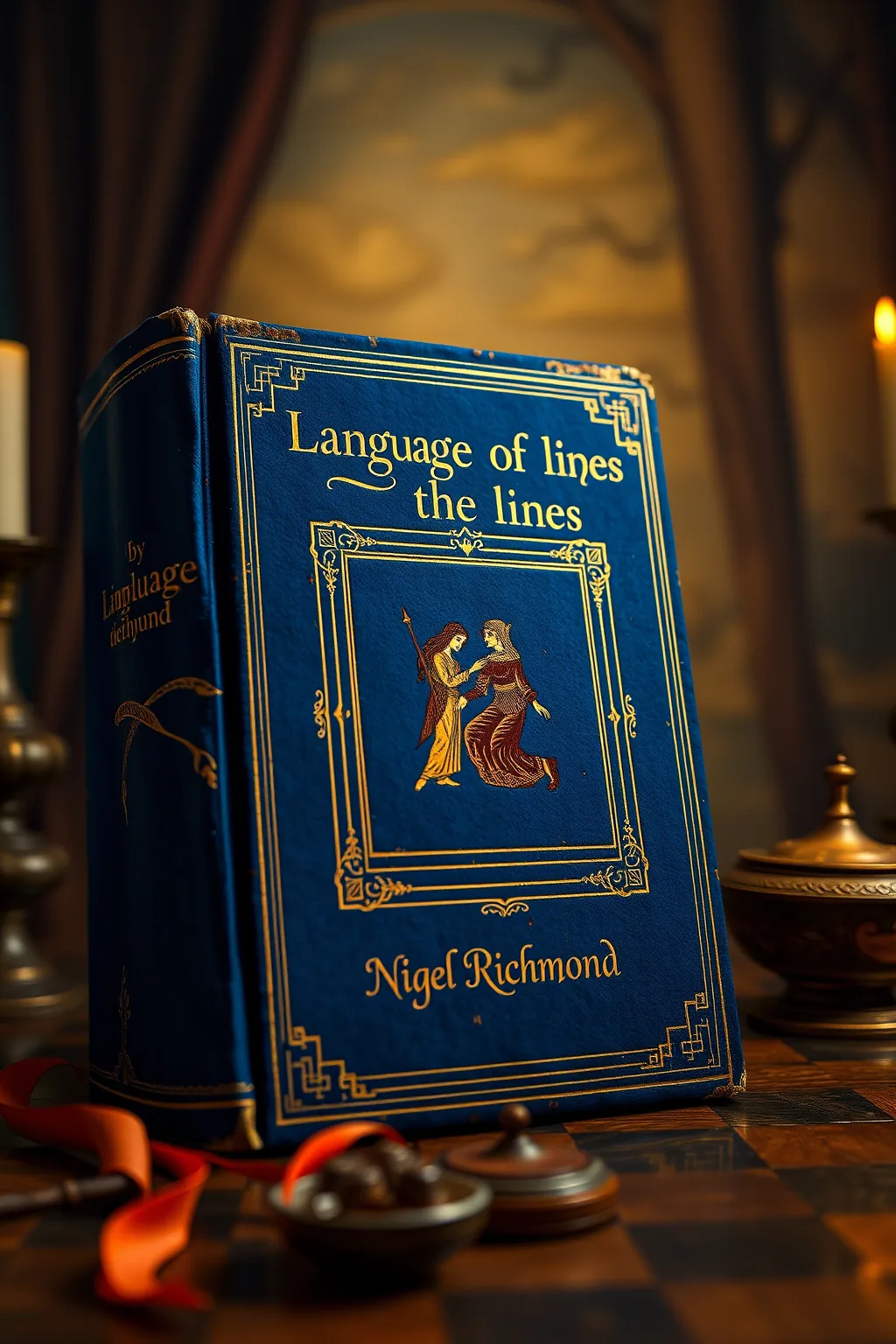
Language of the lines
 61
61

Language of the lines



Sophia Crane (Associate Editor) — 'Language of the Lines' by Nigel Richmond is an essential acquisition for any serious student of esoteric wisdom. Richmond's scholarly yet accessible approach to the I Ching illuminates its profound divinatory and philosophical dimensions. He masterfully deciphers the intricate symbolism, revealing the hexagrams not just as tools for prediction, but as archetypal blueprints of existence. This book is a rich tapestry of insight, perfect for practitioners seeking to deepen their connection to this ancient oracle, scholars intrigued by its metaphysical depth, and seekers yearning for a more profound understanding of life's unfolding patterns. Richmond's clarity and reverence for the subject make this a truly illuminating read.
📝 Description
61
Nigel Richmond's 'Language of the Lines' deciphers the I Ching for modern understanding.
Published by Nigel Richmond, 'Language of the Lines' examines the I Ching, the ancient Chinese divination text. Richmond moves beyond simple prognostication, aiming to illuminate the flow of cosmic energies and the interconnectedness of existence. He walks readers through the symbolic structure of the hexagrams, explaining their philosophical foundations and how they can be applied to daily life.
The book reveals patterns within seemingly random events, presenting the I Ching as a source of significant insight. It encourages a more involved engagement with the universe, appealing to those seeking personal growth or greater skill in divination. This work demonstrates the continued relevance of ancient knowledge in contemporary times, serving those interested in the unseen influences on human fate.
This book fits within the tradition of Western interest in Chinese divination systems, particularly the I Ching. It follows in a line of interpreters who sought to make the text accessible and relevant to contemporary practitioners. Such works often aim to bridge the gap between the text's philosophical depth and its use as a tool for personal guidance and understanding the forces that shape events.
💡 Why Read This Book?
Embark on a transformative journey into the heart of ancient Chinese wisdom. 'Language of the Lines' offers a rare opportunity to decipher the profound symbolism of the I Ching, revealing its secrets for personal growth and spiritual insight. Ideal for seekers of hidden knowledge, practitioners of divination, and scholars of esoteric traditions who desire a deeper, more meaningful connection to the oracular arts. Uncover the universal patterns that govern existence and empower your life with ancient foresight.
⭐ Reader Reviews
Honest opinions from readers who have explored this book.
❓ Frequently Asked Questions
What is the I Ching and how does 'Language of the Lines' explain it?
The I Ching, or 'Book of Changes,' is an ancient Chinese divination text and philosophical classic. Richmond's book provides a comprehensive and accessible guide to its complex symbolism, hexagrams, and their interpretations, presenting it as a profound system for understanding life's dynamics.
Is this book suitable for beginners in divination?
Yes, while rich in depth, 'Language of the Lines' is structured to be accessible to beginners. Richmond's clear explanations and focus on core principles make it an excellent starting point for those new to the I Ching.
What makes Nigel Richmond's approach unique?
Richmond's unique approach lies in his ability to bridge the gap between the scholarly and the practical. He emphasizes the philosophical and psychological dimensions of the I Ching, offering interpretations that resonate with modern seekers and practitioners alike.
How can 'Language of the Lines' be used in daily life?
The book teaches how to consult the I Ching for guidance on decisions, understanding relationships, and navigating challenges. Its insights can help individuals gain clarity, embrace change, and align their actions with the natural flow of life.
Does the book cover different methods of I Ching divination?
While the primary focus is on understanding the hexagrams and their meanings, Richmond's work implicitly supports various methods of consultation by providing the foundational knowledge necessary to interpret the results effectively.
🔮 Key Themes & Symbolism
The Oracle of Change
Explore the I Ching as a dynamic system of cosmic principles, where change is the only constant. Richmond reveals how the 64 hexagrams act as archetypal representations of universal situations and transformations. This section examines the philosophical underpinnings of flux, balance, and synchronicity, encouraging readers to perceive life not as a series of static events, but as an ever-evolving dance of energies. Understanding this core concept is vital for unlocking the deeper messages of the oracle and applying its wisdom to personal growth and decision-making.
Symbolic Language of the Hexagrams
Unravel the intricate collection of symbols that form the hexagrams. Richmond meticulously decodes the lines, trigrams, and their combinations, revealing the profound symbolic language of the I Ching. Each hexagram is presented not merely as a prediction, but as a rich narrative of forces at play, offering nuanced perspectives on challenges and opportunities. This theme emphasizes the visual and intuitive understanding of the oracle, guiding readers to connect with the deeper archetypal meanings that resonate across cultures and time.
Practical Application and Inner Wisdom
Bridge the gap between ancient oracular art and modern-day living. 'Language of the Lines' empowers readers to utilize the I Ching for practical guidance in everyday life, from relationships and career to personal development and spiritual exploration. Richmond stresses that the oracle is a mirror reflecting one's inner state and the external circumstances, offering wisdom to navigate difficulties with grace and embrace auspicious moments with awareness. This theme highlights the transformative potential of the I Ching as a tool for self-discovery and conscious living.
💬 Memorable Quotes
Direct passages from the work, attributed to the author.
“Within the hexagram lies the echo of the cosmos.”
— This highlights the profound connection between the individual, the oracle, and the universe, implying that the I Ching reflects universal patterns and truths.
“To consult the oracle is to engage in a dialogue with the self.”
— This emphasizes the introspective nature of divination, suggesting that the I Ching serves as a tool for self-reflection and understanding one's inner landscape.
“The wisdom of ages is etched in the simple lines.”
— This points to the profound depth and enduring relevance of the I Ching, accessible through its seemingly simple symbolic language.
💡 Key Ideas
Editorial paraphrase of the work's core concepts — not direct quotes.
The lines speak not of fate, but of flow.
This quote suggests the I Ching doesn't preordain destiny but reveals the natural currents and tendencies of situations, empowering the user to navigate them wisely.
Embrace the change, for in it lies your greatest growth.
This quote captures the core philosophy of the I Ching – that change is inevitable and essential for personal development and evolution.
🌙 Esoteric Significance
Tradition
The primary esoteric tradition explored is Taoism, with the I Ching serving as its quintessential divination and philosophical text. Richmond's work examines the Taoist principles of Yin and Yang, the Five Elements, and the concept of the Tao itself. It positions the I Ching as a living cosmology, a map of the energetic shifts and archetypal patterns that govern existence, offering a path to harmonize oneself with the natural order of the universe and cultivate inner wisdom.
Symbolism
The core symbolism revolves around the 64 hexagrams, each composed of six lines, which are themselves combinations of Yin (broken) and Yang (solid) lines. These lines and their arrangements represent fundamental forces, situations, and transformations. Richmond illuminates the symbolic meaning of each trigram (three-line combination) and how their pairings create the hexagrams, revealing archetypal narratives of creation, conflict, harmony, and dissolution, all imbued with profound philosophical and psychological significance.
Modern Relevance
In contemporary times, 'Language of the Lines' offers a vital counterpoint to the often chaotic and disconnected nature of modern life. It provides a framework for intuitive understanding, ethical guidance, and personal transformation. For those seeking meaning beyond material pursuits, the book offers a timeless wisdom tradition that encourages self-awareness, acceptance of change, and a deeper connection to the natural world and the subtle energies that shape our lives, fostering resilience and inner peace.
👥 Who Should Read This Book
This book is a treasure for a diverse audience. **Beginners** will find a clear and insightful introduction to the I Ching, explaining its complexities. **Scholars** of comparative religion, philosophy, and ancient wisdom traditions will appreciate its depth and scholarly rigor. **Spiritual seekers** yearning for a deeper understanding of life's patterns and universal truths will find profound resonance. **Practitioners of divination** seeking to enhance their skills and gain a more profound connection to the oracle will discover invaluable insights and new perspectives. It is for anyone who wishes to engage with a timeless oracle and unlock its transformative potential.
📜 Historical Context
Nigel Richmond's 'Language of the Lines' emerges from a rich lineage of scholarship and esoteric exploration concerning the I Ching. While the I Ching itself dates back over three millennia to ancient China, its transmission and interpretation in the West gained significant traction in the 20th century, particularly through figures like Richard Wilhelm and Carl Jung. Richmond builds upon this foundation, offering a contemporary perspective that appeals to modern seekers. The book reflects an era where Western interest in Eastern philosophies and ancient divination systems flourished, driven by a desire for alternative frameworks of understanding reality and a yearning for deeper spiritual connection beyond conventional dogma. Its publication speaks to the enduring appeal of wisdom traditions that offer guidance and meaning in an increasingly complex world.
📔 Journal Prompts
Reflect on a recent challenge: Which hexagrams from the I Ching might represent its essence, and what guidance do they offer?
Consider a recurring pattern in your life. How does the philosophy of change, as presented in 'Language of the Lines,' apply to this pattern?
What does the concept of 'balance' mean to you in the context of your daily life, and how can the I Ching help you cultivate it?
If the lines of the I Ching represent a dialogue, what questions are you currently asking the universe, and what might its 'answers' be?
How can embracing the 'flow' of events, rather than resisting them, lead to greater personal growth and understanding?
🗂️ Glossary
Hexagram
A symbol in the I Ching composed of six stacked lines, each representing either a solid (Yang) or broken (Yin) state. There are 64 unique hexagrams, each with a specific meaning and symbolism.
Trigram
A basic building block of a hexagram, consisting of three stacked lines. There are eight fundamental trigrams, each representing a core element or concept (e.g., Heaven, Earth, Fire, Water).
Yin
In Taoist philosophy and the I Ching, Yin represents the passive, receptive, dark, feminine, and earthbound principle, often symbolized by a broken line.
Yang
In Taoist philosophy and the I Ching, Yang represents the active, creative, light, masculine, and celestial principle, often symbolized by a solid line.
Oracle
A source of divine counsel or prophetic prediction. In the context of the I Ching, it refers to the system of divination used to gain insight and guidance from the hexagrams.
This book appears in 1 collection
🔮 Readers Also Liked
Browse all →








More by Nigel Richmond
All books →
From the “Divination” Collection
View all →








More Free Divination & Tarot Books
View all →