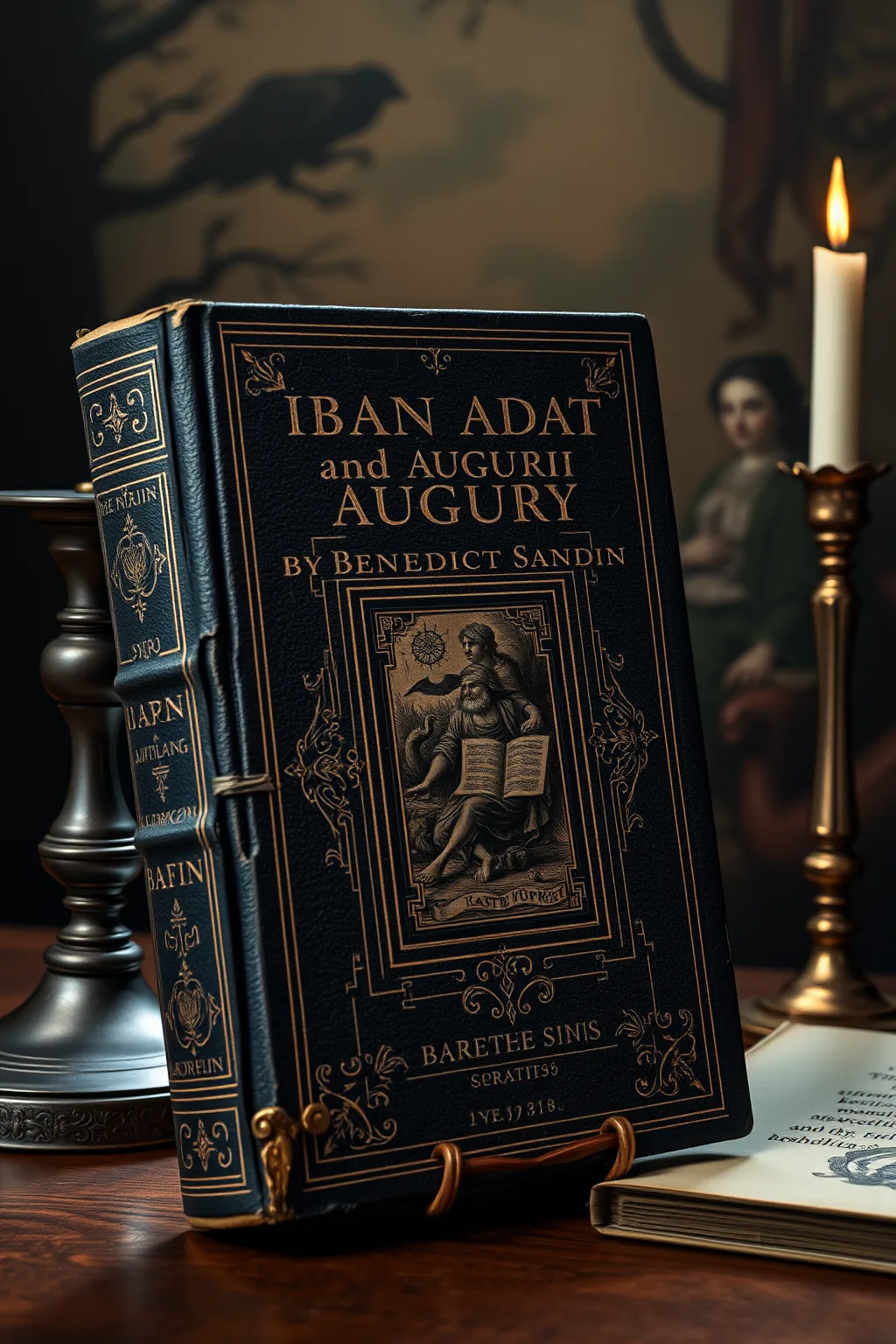
Iban adat and augury
 62
62

Iban adat and augury



Lorelei Sage, Contemplative Literature Editor: Benedict Sandin's 'Iban Adat and Augury' is an indispensable cornerstone for anyone exploring the rich landscape of ancestral divination. Sandin masterfully deciphers the subtle yet profound language of the Iban people, revealing a sophisticated worldview where the cosmos communicates through an intricate web of omens. This work transcends mere ethnography, offering genuine esoteric insights into how natural phenomena were perceived as divine pronouncements. Its strength lies in its patient, detailed exposition, making complex augurial practices accessible without sacrificing their inherent mystery. Highly recommended for scholars of comparative religion, anthropologists, and serious practitioners of divination seeking to broaden their understanding beyond Western paradigms.
📝 Description
62
Benedict Sandin's 1980 study details Iban adat and augury, drawing on his extensive fieldwork.
This book examines the traditional customs (adat) and divination practices (augury) of the Iban people of Borneo. Sandin, who grew up among the Iban, describes how signs in nature, such as bird calls and animal behavior, were interpreted to guide daily life and important decisions. The work details the specific rituals and beliefs associated with these omens, showing how they were woven into the fabric of Iban society and their understanding of the spirit world.
It covers the philosophical basis of Iban worldview, where observation and interpretation of natural phenomena played a crucial role. The book explains how these practices informed everything from agricultural planning to conflict resolution. Sandin’s account provides a close look at a complex system of symbolic communication and its function within a specific cultural context.
Benedict Sandin's work on Iban adat and augury fits within the broader study of shamanism and indigenous cosmologies. It documents a specific cultural system where divination is not a fringe practice but integral to social and spiritual order. Like other ethnographic studies of esoteric traditions, it records belief systems that interpret natural phenomena as carrying supernatural meaning, guiding human action through symbolic communication.
💡 Why Read This Book?
Uncover the profound, intricate divination practices of the Iban people, a sophisticated system of interpreting omens deeply embedded in their culture. This book offers a unique window into ancestral wisdom, revealing how natural signs were understood as divine communication, guiding life and destiny. Ideal for scholars, spiritual seekers, and practitioners of divination interested in non-Western traditions and the universal human quest for meaning.
⭐ Reader Reviews
Honest opinions from readers who have explored this book.
❓ Frequently Asked Questions
What is 'adat' in the context of the Iban people?
'Adat' refers to the customary laws, traditions, and social norms that govern the Iban community. It encompasses a comprehensive ethical and legal framework, deeply intertwined with their spiritual beliefs and practices, including their system of divination.
What types of augury are explored in this book?
The book details various forms of Iban augury, including interpretations derived from the flight and calls of birds, the behavior of animals, natural phenomena, and the examination of sacrificed animal entrails.
Who was Benedict Sandin?
Benedict Sandin was a significant ethnographer and scholar who dedicated much of his life to studying and documenting the culture, history, and traditions of the Iban people of Borneo.
Is this book suitable for beginners in divination?
While comprehensive, the book's depth requires a dedicated reader. Beginners will gain a broad understanding of complex systems, but a foundational knowledge of divination principles might enhance comprehension.
Does the book discuss the spiritual beliefs behind Iban augury?
Absolutely. A core focus of the book is the intricate connection between Iban augury and their animistic beliefs, their understanding of the spirit world, and the role of omens in maintaining cosmic balance and individual fortune.
🔮 Key Themes & Symbolism
The Language of Omens
This theme studies the sophisticated system of interpreting signs and symbols within Iban culture. It explores how seemingly random occurrences in nature – the flight of a particular bird, the rustling of leaves, the configuration of stars – were meticulously observed and understood as direct communications from the spiritual realm. The book illuminates the intricate lexicon of these omens, revealing a worldview where the universe constantly offers guidance, warnings, and insights, shaping the decisions and destinies of individuals and communities.
Social Fabric and Spiritual Harmony
Explore the profound integration of divination within the social and spiritual fabric of Iban society. This theme examines how adat, or customary law, was not merely a set of rules but a living tradition guided by augury, ensuring social harmony and spiritual equilibrium. Decisions concerning agriculture, warfare, marriage, and even daily activities were often deferred to the wisdom gleaned from omens, highlighting a holistic approach to life where human agency was understood within a larger cosmic order.
The Entrails of Wisdom
This theme focuses on the specific and often visceral practice of augury through the examination of sacrificed animals, particularly their entrails. Sandin provides a detailed account of this ancient method, revealing the complex symbolism and specific interpretations associated with various patterns and formations. It underscores the Iban belief in the connection between the physical and spiritual, where the inner workings of a creature could reveal profound truths about the present and future, offering a potent example of embodied divination.
💬 Memorable Quotes
Direct passages from the work, attributed to the author.
“A bird's flight is a divine decree.”
— Highlights the sacredness attributed to natural phenomena, where avian movements were not random but divinely ordained messages requiring careful interpretation.
“The entrails hold the map of destiny.”
— Refers to the augurial practice of reading omens from sacrificed animals, suggesting that the future is revealed in the physical signs within.
“Custom is the root, augury the branch.”
— Illustrates the inseparable link between Iban traditions (adat) and their divination practices, showing how omens inform and sustain cultural norms.
“To understand the present, one must read the past in the signs of today.”
— Emphasizes the Iban perspective that current events and future possibilities are intrinsically linked and decipherable through the interpretation of omens.
💡 Key Ideas
Editorial paraphrase of the work's core concepts — not direct quotes.
The jungle whispers secrets to those who know how to listen.
This quote expresses the Iban belief that the natural world is alive with meaning, communicating vital information to those attuned to its subtle language.
🌙 Esoteric Significance
Tradition
This work deeply appeals to animistic and shamanistic traditions, where the natural world is imbued with spirit and consciousness. It aligns with broader esoteric streams that emphasize the interconnectedness of all things and the belief that divine or spiritual forces communicate through tangible phenomena. The Iban practice of augury can be seen as a sophisticated form of sympathetic magic and a method of direct communion with the unseen, characteristic of many indigenous esoteric systems.
Symbolism
The symbolism in Iban augury is rich and many-sided, drawing from the perceived characteristics and behaviors of animals, the patterns of nature, and the spiritual significance attributed to various bodily organs. Each omen, whether the flight of a specific bird or the markings on an animal's liver, carries a dense web of meanings understood within the Iban cosmology. This symbolic language acted as a vital medium for working through the complexities of life, ensuring that actions were aligned with spiritual forces and cultural harmony.
Modern Relevance
In an age often characterized by disconnection from nature and a reliance on empirical data, 'Iban Adat and Augury' offers a potent reminder of alternative ways of knowing. Its relevance lies in its exploration of intuitive perception, symbolic interpretation, and the profound wisdom embedded in natural cycles. For modern seekers, it provides a lens through which to re-examine our relationship with the environment and to consider the possibility of receiving guidance from sources beyond the purely rational, fostering a more holistic and spiritually informed existence.
👥 Who Should Read This Book
Scholars of anthropology, religious studies, and folklore will find 'Iban Adat and Augury' an essential primary source, offering meticulous documentation of a unique cultural system. Spiritual seekers and practitioners of divination, particularly those interested in non-Western traditions, will discover a wealth of knowledge on omen interpretation and the symbolic language of the natural world. Beginners curious about the depth and diversity of human divination practices will gain an invaluable overview of a complex and ancient system. Anyone yearning to understand the profound relationship between culture, spirituality, and the interpretation of life's signs will find this book deeply rewarding.
📜 Historical Context
Written during a period of increasing anthropological engagement with indigenous cultures, 'Iban Adat and Augury' emerged from a rich tradition of ethnographic research in colonial Southeast Asia. Benedict Sandin's work, conducted during the mid-20th century, reflects a growing scholarly interest in documenting and understanding the complex social structures, belief systems, and ritual practices of peoples like the Iban of Borneo. This era saw a shift from purely descriptive accounts to more interpretative analyses, seeking to grasp the internal logic and symbolic meanings of these cultures. Sandin's deep immersion and respectful approach allowed for an outstanding depth of insight into Iban life, preserving invaluable knowledge that might otherwise have been lost to the rapid societal changes of the time.
📔 Journal Prompts
Reflect on a time you felt you received a clear 'sign' from the universe. How did you interpret it, and what was the outcome?
Consider the relationship between natural phenomena (weather, animal behavior) and your daily life. Do you see any patterns or potential messages?
If you were to create your own system of interpreting omens, what natural elements or symbols would you prioritize and why?
How might understanding the Iban perspective on adat and augury influence your own decision-making processes?
Explore the concept of 'listening' to the world around you. What barriers prevent you from doing so, and how might you overcome them?
🗂️ Glossary
Adat
The customary laws, traditions, social norms, and moral codes that govern Iban society. It is a comprehensive framework encompassing all aspects of life, deeply integrated with spiritual beliefs and practices.
Augury
The practice of interpreting omens and portents, typically from the observation of natural phenomena, the flight of birds, or the examination of animal entrails, to divine future events or the will of the gods.
Bungai Nalong
A specific type of Iban omen interpretation often involving the systematic observation of bird calls and flights, categorized by species, direction, and context.
Pangkong
Refers to the practice of divination through the examination of the liver and other internal organs of sacrificed animals, a significant method for seeking divine guidance.
Sempeng
A term related to auspicious and inauspicious signs or omens within Iban tradition, detailing the positive or negative implications of various observed phenomena.
This book appears in 1 collection
🔮 Readers Also Liked
Browse all →







From the “Divination” Collection
View all →









More Free Divination & Tarot Books
View all →