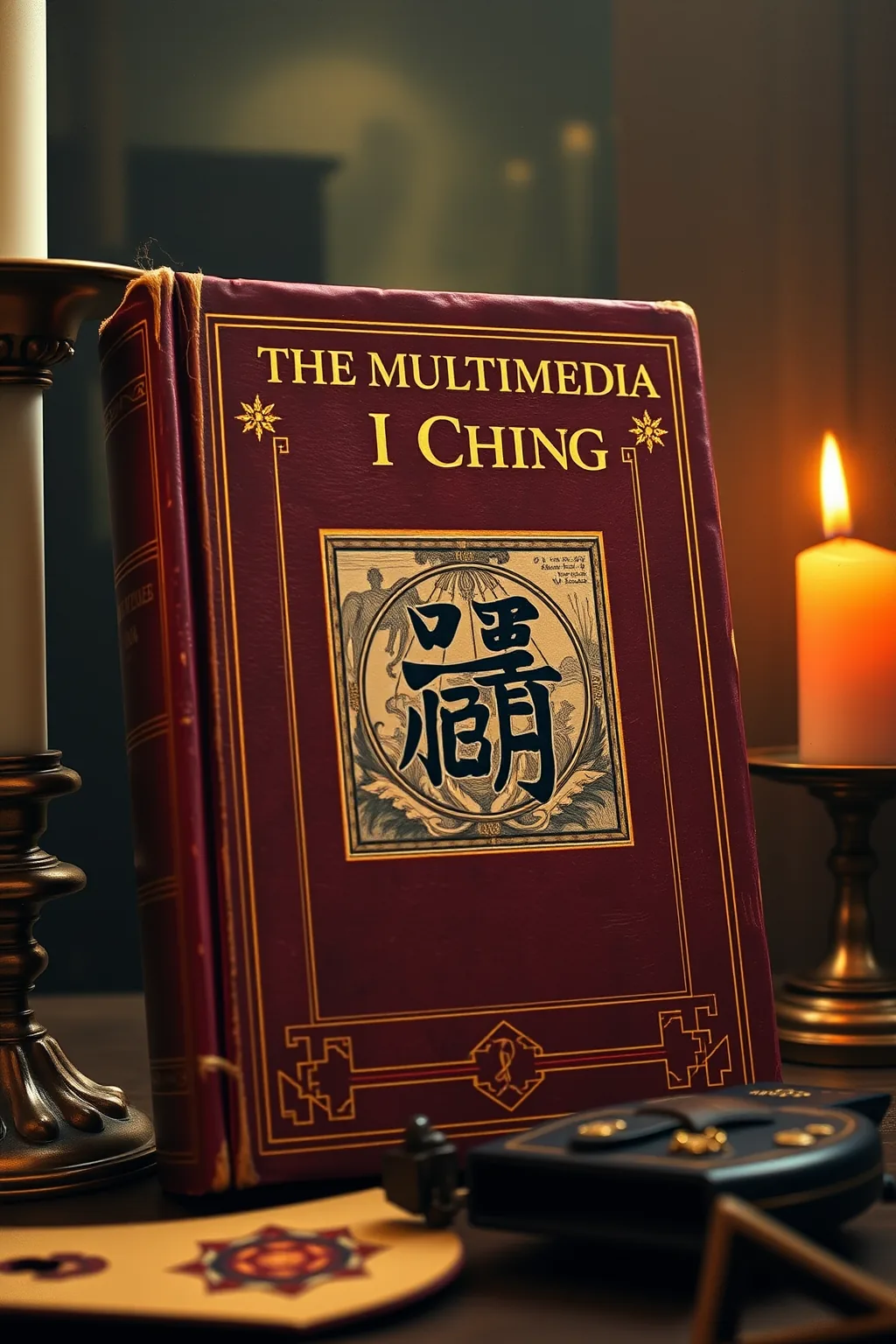
The Multimedia I Ching
 61
61

The Multimedia I Ching



Ophelia Vance, Mystical Literature Reviewer: Hellmut Wilhelm's 'The Multimedia I Ching' stands as a beacon for those who seek more than surface-level understanding of this ancient oracle. Wilhelm's profound scholarship and intuitive grasp of the Yi Jing's esoteric currents are evident on every page. He masterfully bridges the gap between the text's philosophical grandeur and its practical application as a tool for self-discovery and cosmic attunement. This is an essential read for serious students of divination, offering unparalleled insights into the symbolic language and transformative power of the hexagrams. Its depth ensures it will be a cherished companion for years to come.
📝 Description
61
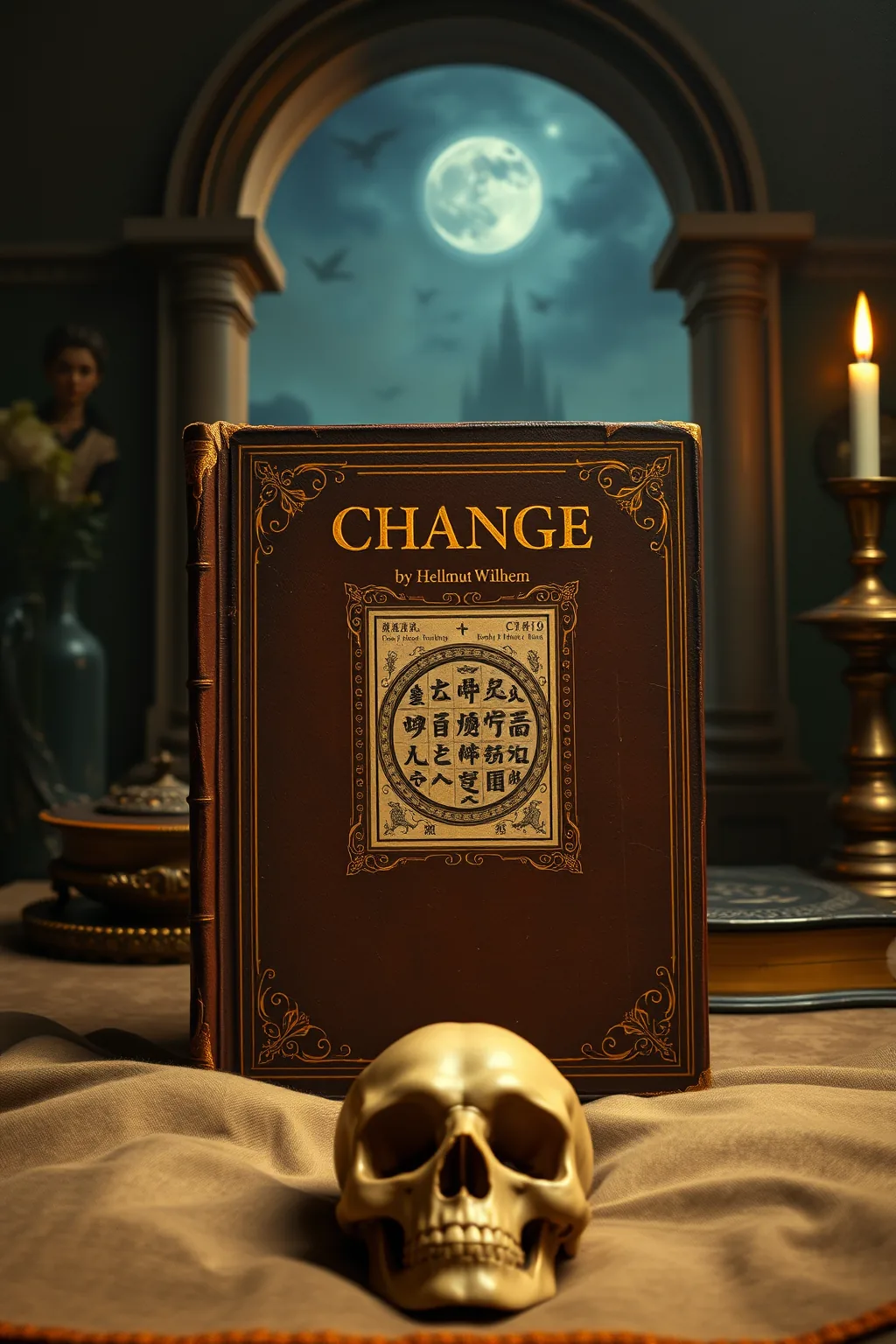
Hellmut Wilhelm published 'The Multimedia I Ching' in 1970, presenting the oracle's hexagrams as a dynamic system.
Hellmut Wilhelm's 'The Multimedia I Ching' is more than a translation of the ancient Chinese text. It examines the I Ching as a system of universal principles that influence both the larger cosmos and individual human experience. Wilhelm details the symbolic language of the hexagrams, showing how they connect to psychological patterns.
The book goes beyond simple interpretation or prediction. It focuses on the philosophical foundations of divination, suggesting the I Ching addresses fundamental aspects of existence and destiny. This work is intended for those seeking a thorough, layered comprehension of the text's deeper meanings and its role as an oracle.
This work engages with the I Ching, a Chinese classic that has been interpreted for centuries within various philosophical and religious traditions, including Daoism and Confucianism. Its use as a divinatory tool is central to its esoteric appeal, viewed not simply as a predictive device but as a means to understand the patterns of change in the universe and human life. Wilhelm's approach highlights the I Ching's potential as a framework for understanding psychological and cosmic correspondences.
💡 Why Read This Book?
Unlock the secrets of cosmic interconnectedness and personal destiny. 'The Multimedia I Ching' offers a profound exploration of ancient Chinese wisdom, revealing the Yi Jing not just as a divination tool, but as a philosophical map. Ideal for seekers of hidden knowledge, scholars of Eastern philosophy, and practitioners of esoteric arts who wish to deepen their understanding of change and universal patterns.
⭐ Reader Reviews
Honest opinions from readers who have explored this book.
❓ Frequently Asked Questions
What makes this I Ching unique?
This edition transcends traditional translations by presenting the I Ching as a 'multimedia' system, emphasizing its interconnected symbolic layers and dynamic interplay, akin to a living, breathing oracle rather than a static text.
Is this book suitable for beginners?
While rich in depth, the book's comprehensive approach can be challenging for absolute beginners. However, those dedicated to a serious study of the I Ching will find its insights invaluable and rewarding.
What is the philosophical significance of the I Ching?
The I Ching is fundamentally a philosophy of change. It posits that the universe is in constant flux and offers a framework for understanding these transformations, guiding individuals to navigate life's challenges with wisdom and foresight.
How does the 'multimedia' aspect apply?
The term 'multimedia' refers to the I Ching's intricate web of symbolism, imagery, and philosophical concepts that work in concert. It's about the holistic experience of interacting with the oracle, not just the textual content.
What kind of divination practice does this book support?
This book supports a contemplative and philosophical approach to divination, encouraging deep reflection and the integration of the I Ching's wisdom into one's life, rather than mere prediction.
🔮 Key Themes & Symbolism
The Philosophy of Change
Fundamentally, the I Ching embodies a profound philosophy of perpetual transformation. Wilhelm illuminates how the hexagrams represent the dynamic flux of existence, offering a sophisticated framework for understanding cosmic and personal evolution. This theme studies the cyclical nature of events, the interplay of opposing forces, and the wisdom of adapting to inevitable change, presenting a worldview where balance and harmony are achieved through embracing impermanence.
Symbolic Language of the Cosmos
This work unveils the I Ching as a collection of symbolic language, where each line, trigram, and hexagram holds layers of meaning. Wilhelm guides the reader to decipher this cosmic script, revealing how these symbols reflect universal archetypes and psychological patterns. The exploration transcends mere definition, inviting an intuitive understanding of the deep connections between the celestial, terrestrial, and human realms, fostering a profound sense of universal interconnectedness.
The Oracle as a Living System
Wilhelm presents the I Ching not as a static text but as a vibrant, living oracle capable of offering guidance and insight into the present moment. The 'multimedia' aspect emphasizes the dynamic interaction between the user and the text, where the hexagrams serve as mirrors to one's inner state and external circumstances. This theme explores how to engage with the oracle for self-awareness, ethical decision-making, and reading through the complexities of life with greater clarity and wisdom.
💬 Memorable Quotes
Direct passages from the work, attributed to the author.
“Within the stillness, the seed of movement resides.”
— This highlights the inherent potential within apparent stability, suggesting that even in moments of calm, the forces of change are subtly at play, preparing for emergence.
“The wise man adapts his course to the turning of the times.”
— Emphasizes the virtue of flexibility and foresight, advocating for alignment with universal cycles rather than rigid resistance to inevitable shifts.
“Each hexagram is a universe in miniature.”
— This statement underscores the profound depth and complexity of the I Ching's structure, where each symbolic configuration captures a complete dynamic of forces and potential outcomes.
“To know the pattern is to know the way.”
— Suggests that understanding the underlying principles and cyclical patterns revealed by the I Ching is the key to navigating life effectively and harmoniously.
💡 Key Ideas
Editorial paraphrase of the work's core concepts — not direct quotes.
Change is the only constant.
A foundational principle of the I Ching, this quote captures the dynamic nature of reality and the necessity of embracing flux for growth and understanding.
🌙 Esoteric Significance
Tradition
This work is deeply rooted in the Taoist and Confucian traditions of ancient China, specifically the I Ching (Book of Changes). It engages with the esoteric dimensions of these philosophies, viewing the I Ching not just as a text for governance or ethics, but as a profound system of cosmic principles, a key to understanding the energetic flows of the universe and the human psyche.
Symbolism
The I Ching's power lies in its rich symbolic language, primarily the trigrams and hexagrams. Wilhelm highlights the symbolic interplay of Yin and Yang, the five elements, and the archetypal images they represent. These symbols are not static; they represent dynamic processes and relationships, serving as a visual and conceptual map of reality's constant unfolding and transformation.
Modern Relevance
In an age of rapid technological advancement and information overload, the I Ching's emphasis on cyclical change, balance, and intuitive wisdom offers a vital counterbalance. Wilhelm's work encourages a deeper, more mindful engagement with the present moment and the underlying currents of life, providing a timeless framework for navigating complexity and fostering personal growth and resilience.
👥 Who Should Read This Book
This profound text is a treasure for a diverse audience. **Beginners** seeking a comprehensive and philosophical introduction to the I Ching will find its depth clear, though a dedicated study is recommended. **Scholars** of Eastern philosophy and comparative religion will appreciate Wilhelm's rigorous scholarship and insightful cross-cultural analysis. **Seekers** of spiritual wisdom and self-understanding will discover a powerful tool for introspection and guidance. **Practitioners** of divination and esoteric arts will gain a richer, multi-layered perspective on this ancient oracle, enhancing their divinatory and meditative practices.
📜 Historical Context
Hellmut Wilhelm's 'The Multimedia I Ching' emerged in the mid-20th century, a period marked by a burgeoning interest in Eastern philosophies and esoteric traditions within Western intellectual circles. Following the devastation of World War II, many sought alternative frameworks for understanding existence and finding meaning beyond material pursuits. Wilhelm, a scholar with deep roots in both Western sinology and Eastern thought, was uniquely positioned to bridge these worlds. His work contributed significantly to the academic and spiritual reception of the I Ching in the West, moving it beyond a mere curiosity to a respected philosophical and divinatory system. This era saw a cross-pollination of ideas, with thinkers exploring psychoanalysis, mysticism, and ancient wisdom, making Wilhelm's insightful interpretation particularly timely and influential.
📔 Journal Prompts
Reflect on a recent period of significant change in your life. How did the principles of the I Ching resonate with this experience?
Consider a current challenge you face. How might viewing it through the lens of Yin and Yang offer new perspectives?
If you were to ask the I Ching for guidance on a specific decision, what would be your question and what would you hope to learn?
Explore the symbolism of one hexagram that particularly speaks to you. What does its imagery suggest about universal patterns?
How can the concept of 'adapting one's course to the turning of the times' be applied to your personal or professional life?
🗂️ Glossary
Hexagram
A primary symbol in the I Ching, composed of six stacked horizontal lines, each representing either Yin (broken) or Yang (solid). Each of the 64 hexagrams embodies a specific situation or stage of change.
Trigram
A fundamental component of a hexagram, consisting of three stacked lines. There are eight basic trigrams (e.g., Heaven, Earth, Water, Fire), each with its own symbolic meaning and association.
Yin
The feminine, passive, dark, receptive, and yielding principle in Taoist philosophy, often represented by a broken line in the I Ching.
Yang
The masculine, active, light, creative, and assertive principle in Taoist philosophy, often represented by a solid line in the I Ching.
Yi Jing
Literally 'Book of Changes,' this is the ancient Chinese classic text that forms the basis of the I Ching, a profound system of divination and philosophy.
This book appears in 3 collections
🔮 Readers Also Liked
Browse all →








More by Hellmut Wilhelm
All books →



From the “Tarot” Collection
View all →








More Free Divination & Tarot Books
View all →