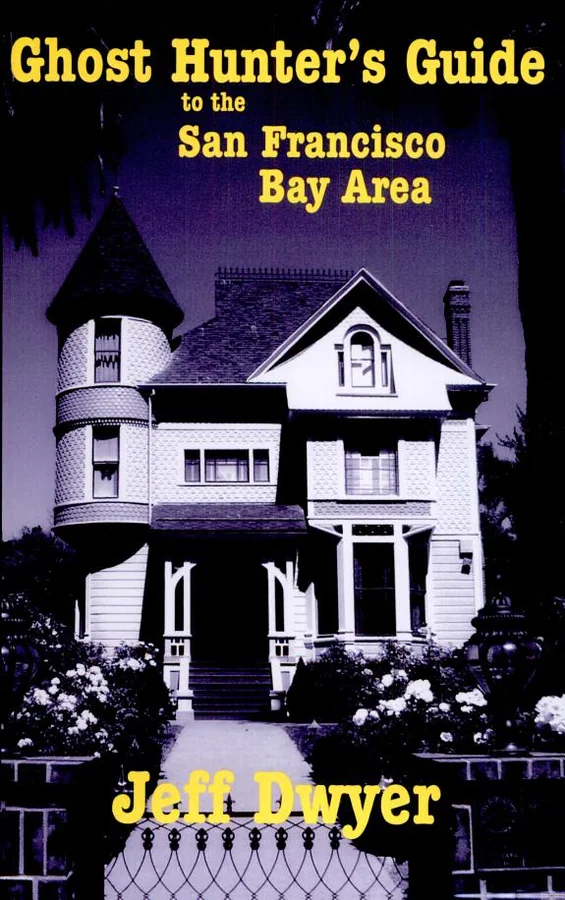
Ghost Hunter's Guide to the San Francisco Bay Area
 79
79

Ghost Hunter's Guide to the San Francisco Bay Area
Jeff Dwyer’s *Ghost Hunter's Guide to the San Francisco Bay Area* offers a refreshingly pragmatic approach to spectral sleuthing. Instead of vague pronouncements, Dwyer provides actionable checklists and procedural tips, transforming a potentially nebulous hobby into something akin to a structured field study. The strength of this 2005 publication lies in its focus on over one hundred publicly accessible sites, democratizing the pursuit of the paranormal. However, the book occasionally leans on the sheer volume of locations without always providing deeper historical context for each site’s reported activity, which can feel somewhat repetitive for the deeply historically inclined reader. A notable passage details the procedure for investigating the Queen Anne Hotel, offering specific advice on navigating its reported hauntings, which exemplifies the book's practical value. This guide is a solid, if somewhat matter-of-fact, companion for the aspiring Bay Area ghost hunter.
📝 Description
79
Jeff Dwyer's 2005 Ghost Hunter's Guide details over 100 haunted locations in the San Francisco Bay Area.
Published in 2005, Jeff Dwyer's "Ghost Hunter's Guide to the San Francisco Bay Area" serves as a practical handbook for amateur paranormal investigators. It catalogues more than one hundred publicly accessible sites throughout San Francisco and its surroundings, each associated with reported spectral activity. The author guides readers through structured methods for conducting their own ghost hunts, moving beyond mere stories to encourage systematic investigation.
This guide appeals to ghost hunting enthusiasts, urban explorers, and tourists looking for unusual experiences. It is designed for those who approach the paranormal with a methodical mindset, seeking advice and checklists to organize their investigations. Individuals interested in local history, particularly its more mysterious aspects, will also find value in the book's detailed breakdowns of various locations.
Dwyer emphasizes "accessibility," meaning locations are not private property, and offers "procedural tips" for systematic investigation. The book uses "anecdotal evidence" as a starting point, urging readers to gather their own observations and organize their hunts using the provided frameworks. It taps into the early 2000s interest in ghost hunting, which coincided with the rise of paranormal television.
This guide situates itself within the broader tradition of local folklore and ghost lore studies, which often document and categorize reported supernatural phenomena in specific geographic areas. While not strictly academic, it aligns with historical efforts to compile accounts of hauntings and spectral encounters, providing a practical framework for contemporary enthusiasts. It reflects a modern iteration of ghost hunting, merging popular interest with a desire for structured, albeit amateur, investigation into the unexplained.
💡 Why Read This Book?
• Gain specific instructions for conducting paranormal investigations, including procedural tips and checklists, directly applicable to over 100 Bay Area locations detailed by Jeff Dwyer. • Explore the historical context of paranormal interest in the early 2000s through Dwyer's methodical approach, which contrasts with more sensationalized media of the era. • Learn to systematically research and document potential hauntings, using the book's framework to organize your own spirit sleuthing activities at specific sites like the Queen Anne Hotel.
⭐ Reader Reviews
Honest opinions from readers who have explored this book.
❓ Frequently Asked Questions
What is the primary focus of the Ghost Hunter's Guide to the San Francisco Bay Area?
The guide focuses on providing practical, step-by-step instructions for amateur ghost hunters to investigate over one hundred publicly accessible haunted locations throughout the San Francisco Bay Area.
Who is the author of the Ghost Hunter's Guide to the San Francisco Bay Area?
The author is Jeff Dwyer, a ghost-hunting hobbyist who compiled this guide to make spirit sleuthing a more accessible tourist activity.
When was the Ghost Hunter's Guide to the San Francisco Bay Area first published?
The book was first published on March 31, 2005, tapping into a growing interest in paranormal investigation.
What kind of information does the book provide for each haunted location?
For each location, the book offers procedural tips for investigation, anecdotal evidence of previous sightings, and handy checklists to aid in organizing a ghost hunt.
Are the locations mentioned in the guide private or public?
The guide specifically highlights locations that are accessible to the public, making them practical for hobbyist ghost hunters to visit and research.
What is the overall goal of Jeff Dwyer's guide?
Dwyer's goal is to equip individuals with the tools and knowledge to conduct their own ghost hunts, integrating paranormal investigation into typical tourist activities.
🔮 Key Themes & Symbolism
Methodical Paranormal Investigation
Dwyer emphasizes a structured, almost scientific, approach to ghost hunting. The book provides checklists and procedural tips, moving beyond mere storytelling to offer a framework for systematic inquiry. This theme suggests that the pursuit of the paranormal can be organized and executed with specific methodologies, encouraging readers to act as researchers rather than passive observers. The focus is on actionable steps for investigating reported hauntings at accessible locations.
Accessible Hauntings
A core tenet of the guide is the focus on publicly accessible locations. This democratizes the practice of ghost hunting, making it a feasible activity for tourists and local enthusiasts alike, rather than an endeavor requiring special access or permissions. The book aims to integrate spirit sleuthing into everyday exploration, positioning haunted sites as destinations on par with historical landmarks or scenic viewpoints.
Local Lore and Anecdotal Evidence
The guide compiles numerous reported hauntings specific to the San Francisco Bay Area. It relies heavily on anecdotal evidence as a starting point, presenting these accounts to pique reader interest and provide context for each location. This theme highlights the rich, often dark, folklore woven into the region's history, encouraging readers to engage with these stories firsthand.
The Hobbyist's Toolkit
Jeff Dwyer positions himself as a hobbyist, and the book is designed for fellow enthusiasts. It functions as a toolkit, equipping readers with practical advice and information necessary to conduct their own investigations. The emphasis is on empowering individuals to take an active role in exploring the spectral side of the Bay Area, offering a resource for those who want to go beyond reading about ghosts.
💬 Memorable Quotes
Direct passages from the work, attributed to the author.
“Add spirit sleuthing to our list of typical tourist activities.”
— This phrase captures the book's central premise: normalizing and explaining ghost hunting. It suggests that exploring haunted locations can be as common and accessible as visiting museums or landmarks, encouraging a broader audience to engage with the paranormal.
“More than one hundred haunted spots in and around San Francisco, all accessible to the public.”
— This highlights the practical scope and accessibility of the guide. It promises a substantial number of locations that are readily available for investigation, making the pursuit of spectral phenomena a tangible and achievable hobby for anyone in the region.
“Complete with handy checklists, procedural tips, and anecdotal evidence.”
— This outlines the core components of the guide's methodology. It emphasizes structure and preparedness, suggesting that effective ghost hunting involves more than just belief; it requires tools and techniques for systematic exploration and documentation.
“Allows the phantom-seeker in all of us...”
— This phrasing suggests an inherent curiosity about the supernatural within everyone. The guide aims to unlock this latent interest, providing a pathway for individuals to explore their fascination with ghosts and the unexplained.
“Research and organize your own ghost hunt.”
— This is a direct call to action, encouraging readers to take an active role. It frames ghost hunting as an intellectual pursuit that requires planning and investigation, empowering the reader to become an active participant in discovering the spectral.
🌙 Esoteric Significance
Tradition
While not strictly adhering to a singular esoteric lineage like Hermeticism or Kabbalah, Dwyer's work intersects with modern occult interests by focusing on practical application and personal experience within the paranormal field. It aligns with a contemporary, often secularized, approach to the esoteric that emphasizes investigation and empirical (albeit subjective) observation of phenomena, rather than adherence to established dogma or ritualistic practice.
Symbolism
The primary symbolism in the guide lies in the locations themselves. Each haunted spot—be it a historic hotel, an old prison, or a specific natural landmark—becomes a locus of symbolic energy, representing historical trauma, unresolved energies, or lingering presences. The 'anecdotal evidence' serves as a form of modern folklore, imbuing these places with narratives that transcend their physical reality and invite deeper contemplation.
Modern Relevance
Dwyer's guide remains relevant for contemporary paranormal investigators, urban explorers, and those interested in the folklore of the San Francisco Bay Area. Its methodical approach and focus on accessible sites resonate with modern amateur ghost-hunting groups and individuals utilizing digital tools for research and documentation. The book serves as a foundational text for understanding how localized paranormal interest can be structured and pursued.
👥 Who Should Read This Book
• Aspiring ghost hunters seeking a structured methodology for investigating paranormal phenomena, complete with practical checklists and procedural advice. • Tourists and locals interested in the unique, often macabre, history of the San Francisco Bay Area, looking for unconventional points of interest beyond typical landmarks. • Researchers of folklore and local legends who wish to explore how anecdotal evidence and reported hauntings shape community narratives and perceptions of place.
📜 Historical Context
Published in 2005, Jeff Dwyer's *Ghost Hunter's Guide to the San Francisco Bay Area* emerged during a period of significant popularization for paranormal investigation. The early 2000s saw a surge in ghost-hunting television shows like *Ghost Hunters* (debuting in 2004), which brought the hobby into mainstream awareness. Dwyer's work tapped into this zeitgeist, offering a practical, localized guide that contrasted with more sensationalized or broadly theoretical paranormal literature. While figures like Hans Holzer had been exploring the subject for decades, Dwyer's focus was specifically on empowering the amateur investigator with accessible locations and structured methods. The book's emphasis on public sites and methodical investigation positioned it as a valuable resource for a growing community of enthusiasts seeking concrete, actionable steps to explore local legends, differentiating it from purely academic or sensationalist treatments of the supernatural.
📔 Journal Prompts
The procedural tips for organizing a ghost hunt: How can these be adapted for non-paranormal research?
Jeff Dwyer's concept of 'spirit sleuthing as a tourist activity': What does this suggest about the commodification of the uncanny?
Anecdotal evidence at locations like the Queen Anne Hotel: How does personal testimony shape the 'haunted' reputation of a place?
Publicly accessible haunted spots: What ethical considerations arise when investigating sites frequented by the general public?
The author's role as a hobbyist: How does this perspective influence the guide's practical advice and accessibility?
🗂️ Glossary
Spirit Sleuthing
A term used by the author to describe the activity of ghost hunting or paranormal investigation, framing it as an active pursuit of evidence and understanding.
Phantom-Seeker
An individual who actively seeks out or is interested in encountering ghosts or paranormal phenomena, often with a hobbyist or investigative intent.
Publicly Accessible Locations
Sites mentioned in the guide that can be visited by the general public without special permission, such as parks, historical buildings open to tours, or certain public streets.
Procedural Tips
Specific, step-by-step advice provided by the author on how to conduct a ghost hunt effectively, covering aspects like preparation, investigation techniques, and documentation.
Anecdotal Evidence
Accounts or stories related by individuals who claim to have experienced paranormal activity at a specific location, used in the guide as background information.
Organize Your Own Ghost Hunt
The process of planning and structuring a paranormal investigation, as facilitated by the guide's checklists and recommendations, enabling a methodical approach.
Haunted Spots
Locations within the San Francisco Bay Area that are reputed to be sites of paranormal activity, as documented and presented in the guide.
This book appears in 1 collection
🔮 Readers Also Liked
Browse all →









From the “Haunted Places” Collection
View all →







More Free Occult Philosophy Books
View all →