The Airship
 75
75

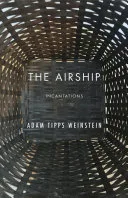
The Airship
Adam Tipps Weinstein's "The Airship" offers a compelling portrait of Nathan Cohen, a man rendered stateless by early 20th-century U.S. immigration policy. The novel excels in its detailed depiction of Cohen's three-year odyssey aboard the Vasari, portraying the ship as a microcosm of a world in flux. Weinstein's prose captures the quiet desperation and resilience of a man adrift, a poignant counterpoint to the sensationalist newspaper headlines that branded him "The Man Without a Country." A notable strength is the subtle exploration of Jewish identity within the context of displacement, moving beyond simplistic tropes. However, the narrative occasionally feels constrained by its adherence to Cohen's perspective, leaving the broader geopolitical canvas somewhat underdeveloped. The section describing Cohen's interactions with other passengers during a particularly long layover in Buenos Aires offers a glimpse into the richer social dynamics the book could have explored further. "The Airship" is a finely crafted, melancholic study of enforced transience.
📝 Description
75
In 1912, Nathan Cohen, a Jewish refugee, became 'The Wandering Jew' after deportation from the U.S.
Adam Tipps Weinstein's novel, The Airship, chronicles the three years Nathan Cohen spent adrift, often aboard the passenger vessel Vasari, following his deportation from the United States under the Alien Act. His involuntary voyages between the U.S. and Argentina during the early years of World War I drew public attention, earning him press monikers like 'The Wandering Jew' and 'The Man Without a Country.' The narrative details Cohen's experiences during this period of enforced transience and his struggle with displacement.
The book, published in 2021, engages with the historical backdrop of 1912-1915, a time of escalating global tensions and increasingly restrictive immigration policies. While the Alien Act of 1917 was enacted after Cohen's deportation, it reflects the prevailing legislative climate concerning immigration and national identity. The story confronts the realities faced by individuals caught within state control and international conflict, examining the arbitrary nature of national borders and the psychological toll of statelessness. It questions the concept of belonging when a homeland is denied.
This novel engages with the concept of the 'Wandering Jew' not just as a myth but as a lived experience. It touches on themes common in Jewish mysticism concerning exile and the search for a spiritual homeland, even as the protagonist grapples with the literal denial of a physical one. The narrative’s focus on an individual caught by state apparatuses and international conflict can be seen as a modern interpretation of the soul's journey through a flawed material world, seeking its true origin or place.
💡 Why Read This Book?
• Gain a nuanced understanding of the impact of early 20th-century U.S. immigration laws, specifically the Alien Act's legislative precursors, on individual lives. • Experience the symbolic power of the Vasari The Airship as a metaphor for liminality and displacement, central to the narrative's exploration of identity. • Explore the reinterpretation of the "Wandering Jew" archetype through the specific experiences of Nathan Cohen, offering a modern perspective on historical persecution.
⭐ Reader Reviews
Honest opinions from readers who have explored this book.
❓ Frequently Asked Questions
What historical event led to Nathan Cohen's deportation in 1912?
Nathan Cohen was deported from the US in 1912 under the Alien Act, a piece of legislation reflecting growing U.S. restrictions on immigration and defining who was considered an undesirable alien.
How long was Nathan Cohen stranded at sea?
Nathan Cohen spent approximately three years stranded aboard the Vasari The Airship, traveling between the United States and Argentina during the initial period of World War I.
What were the nicknames given to Nathan Cohen by the press?
Newspapers of the time referred to Nathan Cohen as "The Wandering Jew" and "The Man Without a Country" due to his prolonged statelessness and constant travel.
What is the significance of the Vasari The Airship in the novel?
The Vasari The Airship serves as a central symbol in the novel, representing a liminal space of transience, displacement, and enforced waiting for Nathan Cohen.
Does "The Airship" focus on World War I battles?
No, "The Airship" focuses on the personal experience of being stranded during the early years of World War I, rather than on military conflict. It highlights the impact of geopolitical events on individuals.
Is "The Airship" a true story?
While "The Airship" is presented as a fictional biography, it is inspired by real historical circumstances and the harsh realities of immigration policies and international displacement in the early 20th century.
🔮 Key Themes & Symbolism
Statelessness and Bureaucratic Limbo
The novel vividly portrays the experience of being a person without a country, trapped in bureaucratic purgatory. Nathan Cohen's deportation under the Alien Act and subsequent years adrift on the Vasari The Airship illustrate the dehumanizing effects of rigid immigration policies. This theme explores how individuals can become pawns in geopolitical and legal systems, stripped of agency and identity, existing in a perpetual state of 'in-between'.
The Wandering Jew Archetype
Weinstein recontextualizes the ancient myth of the "Wandering Jew" through Nathan Cohen's modern predicament. The newspaper epithets, "The Wandering Jew" and "The Man Without a Country," highlight how Cohen becomes a public spectacle, embodying a folkloric figure of perpetual exile. The work examines the psychological and spiritual toll of such an existence, questioning notions of home, belonging, and destiny.
The Ship as a Microcosm
The Vasari The Airship functions as a self-contained world, a microcosm of society and a symbol of liminality. For Cohen, it is both prison and refuge, a place of enforced stasis amidst the churning currents of global conflict. The ship's decks become a stage for quiet dramas of human endurance, isolation, and the search for meaning in the absence of solid ground or a clear destination.
Identity in Exile
Cohen's protracted displacement forces a confrontation with his own identity, particularly his Jewish heritage. Stripped of national affiliations and social roles, he must redefine himself. The narrative probes how external labels, like those imposed by the press, clash with internal self-perception. It is a study of resilience and the enduring human spirit when confronted with profound alienation.
💬 Memorable Quotes
Direct passages from the work, attributed to the author.
“Deported from the US in 1912 under the Alien Act, he spent years shuttled between ports.”
— This statement expresses the core predicament of Nathan Cohen, highlighting the arbitrary nature of his statelessness and the enforced transience that defined his existence during an important historical period.
“Newspapers called him “The Wandering Jew” and “The Man Without a Country.””
— These media labels reveal how the public and press perceived Cohen's situation, transforming his personal tragedy into a sensationalized narrative that connected him to ancient archetypes of perpetual exile.
“He spent the first years of World War I on a passenger ship, waiting.”
— This highlights the peculiar intersection of Cohen's personal ordeal with a global conflict, emphasizing his passive, suspended state aboard the Vasari The Airship while the world around him was in violent motion.
“The Vasari The Airship became his world for three years.”
— This phrase underscores the profound isolation and confinement Cohen experienced, where a single vessel transformed from a mode of transport into his entire universe for an extended period.
“Speculation arose that he would spend the rest of his life at sea.”
— This reflects the bleak outlook surrounding Cohen's fate, suggesting the extreme nature of his predicament and the perception that his displacement might become a permanent condition.
🌙 Esoteric Significance
Tradition
While not explicitly tied to a single esoteric tradition, "The Airship" speaks to themes common in Gnosticism and existentialist philosophy, particularly the concept of alienation from a flawed or imposed reality. Cohen's state of being stateless and adrift can be interpreted through a Gnostic lens as a form of spiritual exile, seeking a true homeland beyond the material world's bureaucratic constructs. The narrative's focus on inner experience and the search for meaning in a seemingly absurd existence aligns with existentialist thought, often explored within esoteric circles.
Symbolism
The titular Airship is a primary symbol, representing a liminal space suspended between earth and sky, belonging and exile. It is a vessel of transit that becomes a place of stasis, mirroring the soul's journey through uncertain states. Nathan Cohen himself embodies the archetype of the "Wandering Jew," a figure historically laden with symbolic interpretations of eternal penance or spiritual questing. His enforced journey across seas also symbolizes the soul's passage through the astral planes or intermediary states between incarnations.
Modern Relevance
Contemporary thinkers and practitioners exploring themes of displacement, identity politics, and the critique of state power find echoes in "The Airship." It speaks to modern anxieties about borders, refugee crises, and the individual's struggle against impersonal systems. Those interested in the phenomenology of exile and the psychological impact of statelessness, particularly within Jewish existential thought, can draw parallels to Cohen's experience. The novel's exploration of being "othered" remains acutely relevant in today's globalized yet fragmented world.
👥 Who Should Read This Book
• Students of early 20th-century American immigration history and policy, seeking a narrative exploration of the human impact of laws like the Alien Act. • Readers interested in literary explorations of existential themes, statelessness, and the search for identity in the face of bureaucratic alienation. • Those drawn to character-driven historical fiction that uses a specific individual's journey to illuminate broader societal and geopolitical shifts during the pre-WWI era.
📜 Historical Context
Adam Tipps Weinstein's "The Airship" emerges from a specific moment in 2021, yet it excavates the fraught range of early 20th-century U.S. immigration policy and the precipice of World War I. The year 1912, when Nathan Cohen's ordeal began, predates the full implementation of the 1917 Alien Act but reflects a growing sentiment towards stricter border control. This period saw significant shifts in global power and increased anxieties surrounding foreign populations, particularly in the United States. While the novel doesn't directly engage with figures like Madison Grant, a prominent eugenicist whose writings influenced immigration policy, it implicitly critiques the bureaucratic and xenophobic currents that informed such legislation. The narrative avoids direct engagement with contemporary literary or philosophical movements, focusing instead on the individual's experience against a backdrop of systemic forces. Reception was primarily within literary circles, appreciating its character study over broad historical commentary.
📔 Journal Prompts
Nathan Cohen's experience aboard the Vasari The Airship.
The press's portrayal of Cohen as "The Wandering Jew."
The symbolic meaning of the ship as a liminal space.
Your own experiences of feeling like an "outsider."
The tension between bureaucratic identity and personal selfhood.
🗂️ Glossary
Alien Act
Refers to U.S. federal legislation designed to regulate immigration and define who could be excluded or deported. The context here points to laws enacted around the early 20th century that increased federal control over immigration.
Vasari The Airship
The name of the passenger ship on which Nathan Cohen spent three years. It serves as the primary setting and a symbol of his prolonged displacement and transit.
The Wandering Jew
A figure from medieval European folklore, often depicted as a Jew cursed to roam the Earth eternally until the Second Coming. In the novel, it's a label applied to Nathan Cohen.
The Man Without a Country
A phrase used to describe someone stripped of national identity or belonging, often due to political exile or statelessness. It was applied to Nathan Cohen by the press.
Statelessness
The condition of not being recognized as a national by any state, leading to a lack of legal protection and rights associated with citizenship.
Liminality
The quality of being in an intermediate state or position; a transitional or initial stage of a process, often involving ambiguity and uncertainty, as experienced by Cohen on the ship.
Deportation
The formal removal of a foreign national from a country for violating immigration laws. This was the event that initiated Nathan Cohen's period of being stranded.