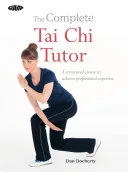
The Complete Tai Chi Tutor
 75
75

The Complete Tai Chi Tutor
Dan Docherty's "The Complete Tai Chi Tutor" presents a more academic approach to the study of Tai Chi than many popular guides. Its strength lies in its detailed historical investigation, particularly its engagement with the evolution of forms and theoretical texts. Docherty's examination of the potential origins of Tai Chi, referencing the early 20th century and earlier, offers a solid grounding for practitioners. However, the text occasionally becomes dense, potentially overwhelming beginners seeking only practical instruction. A particular passage discussing the subtle differences in the 'push hands' training methods across various lineages provides excellent clarity on the practical application of theoretical concepts. Ultimately, this book serves as a valuable resource for those wishing to understand Tai Chi's depth, not just its surface.
📝 Description
75
Dan Docherty's 2011 book traces Tai Chi from ancient China to its modern practice.
This guide to Tai Chi connects its historical roots with practical instruction. It follows the art from its beginnings in ancient Chinese civilization to current forms. The text examines the theoretical ideas and how the practice has changed over time. Docherty aims to give readers a firm grasp of Tai Chi's main ideas and its background. "The Complete Tai Chi Tutor" is for people who want to engage with Tai Chi more deeply than just physical exercise. It suits students of martial arts, philosophy, and Chinese cultural history interested in the origins and ideas behind this old practice. Those who want to understand the link between movement, philosophy, and historical change will find plenty here.
The book places Tai Chi within the larger story of Chinese history and thought. It looks into the art's often unclear beginnings, considering scholarly arguments and written records. By looking at how Tai Chi knowledge passed down through centuries, it shows how the practice changed and was understood, from its earliest recorded versions to its current worldwide presence. Central to the text are Tai Chi's main ideas, like the balance of Yin and Yang, the idea of Qi (vital energy), and the importance of moving with awareness. Docherty explains how these abstract concepts appear in physical practice, describing specific forms and how they are used. The book also discusses the physical and mental benefits that come from regular practice.
Tai Chi is presented not merely as a physical discipline but as a path for cultivating internal energy and harmonizing with natural principles. Its roots are tied to Daoist philosophy, emphasizing concepts like Qi (life force) and the interplay of complementary forces (Yin and Yang). The book positions these ideas as central to understanding the practice, suggesting that mastery involves aligning one's internal state with these cosmic rhythms. This perspective aligns Tai Chi with broader traditions of mind-body cultivation found in various esoteric philosophies that seek inner transformation through disciplined practice and philosophical insight.
💡 Why Read This Book?
• Gain a nuanced understanding of Tai Chi's historical trajectory, from its ancient Chinese roots to the 21st century, as detailed in the book's exploration of its origins. • Comprehend the fundamental principles of Qi and Yin/Yang balance as they are applied in specific Tai Chi movements, moving beyond superficial practice. • Appreciate the practical benefits and teaching methodologies discussed by Dan Docherty, offering insights into the efficacy of dedicated practice.
⭐ Reader Reviews
Honest opinions from readers who have explored this book.
❓ Frequently Asked Questions
What are the primary benefits of practicing Tai Chi as outlined in Dan Docherty's book?
The book highlights physical benefits such as improved balance and coordination, alongside mental advantages like enhanced focus and stress reduction. It also touches upon the cultivation of internal energy (Qi).
When was 'The Complete Tai Chi Tutor' first published?
'The Complete Tai Chi Tutor' by Dan Docherty was first published on September 7, 2015.
Does the book cover different styles of Tai Chi?
While the book focuses on core principles and historical evolution, it addresses how different interpretations and lineages have developed over time, offering a broad perspective.
Is 'The Complete Tai Chi Tutor' suitable for absolute beginners?
Yes, the book starts with fundamental principles and progresses through practical applications, making it accessible to beginners interested in a thorough understanding of Tai Chi.
What historical periods does the book reference regarding Tai Chi's origins?
The work explores Tai Chi's origins from ancient Chinese civilization, tracing its development through various historical periods up to the 21st century.
What role does the concept of Qi play in the book's explanation of Tai Chi?
The book explains Qi as vital energy and explores how its cultivation and flow are central to the practice and philosophy of Tai Chi.
🔮 Key Themes & Symbolism
Historical Lineage of Tai Chi
The text meticulously traces the evolution of Tai Chi, looking at its obscure origins within ancient Chinese civilization. It examines how the art was transmitted and adapted through centuries, referencing early texts and scholarly debates to contextualize its development. Docherty highlights the transition from theoretical concepts to codified forms, underscoring the historical forces that shaped Tai Chi into its modern manifestations.
Principles of Qi and Energetic Flow
A central theme is the understanding and cultivation of Qi, or vital energy. The book explains how Qi is fundamental to Tai Chi practice, influencing movement, intention, and internal harmony. It explores the concept of Yin and Yang as they relate to energetic balance within the body and in the execution of forms, providing a framework for deeper practice.
Philosophy of Mindful Movement
Docherty emphasizes the philosophical underpinnings of Tai Chi, particularly the integration of mind and body. The text discusses how mindful awareness is crucial for unlocking the practice's benefits, connecting the physical movements to internal states. This approach positions Tai Chi not just as a martial art or exercise, but as a path to self-cultivation and understanding.
Practical Application and Teaching
Beyond theory, the book addresses the practicalities of Tai Chi practice and teaching. It reviews fundamental movements and their benefits, offering guidance on how to approach learning and instruction. The work explores efficacious techniques and the systematic progression required for mastery, making it a valuable resource for both students and instructors.
💬 Memorable Quotes
Direct passages from the work, attributed to the author.
“The work explores what is known and unknown concerning the origins and history of Tai Chi.”
— This statement highlights the book's dual focus on established historical facts and the more speculative, debated aspects of Tai Chi's genesis, inviting readers to consider the complexities of its lineage.
“Docherty considers the practicalities of teaching, reviewing the fundamentals and benefits of practice.”
— This indicates the author's intention to bridge theory and practice, offering guidance not only on the 'what' but also the 'how' of Tai Chi, making it a functional guide.
“It investigates the ancient texts of Chinese civilization.”
— This points to the book's scholarly approach, grounding its exploration of Tai Chi in primary historical and philosophical sources from China's rich cultural heritage.
“The book demonstrates some highly efficacious but...”
— This suggests that the text will reveal specific, effective techniques and methods within Tai Chi, hinting at practical knowledge that goes beyond general descriptions.
“The book explores some key questions on the way.”
— This implies an inquisitive and analytical approach, prompting readers to consider the deeper philosophical and historical inquiries surrounding the art of Tai Chi.
🌙 Esoteric Significance
Tradition
While not explicitly aligned with a single Western esoteric lineage like Hermeticism or Kabbalah, "The Complete Tai Chi Tutor" deeply engages with Taoist philosophy, a core component of many Eastern esoteric traditions. It interprets Tai Chi as a practice that harmonizes internal energy (Qi) with external movement, echoing principles found in various mystical systems that seek union through disciplined practice and energetic cultivation.
Symbolism
The book explores the symbolism inherent in Tai Chi's movements and philosophy. The Yin and Yang symbol, representing complementary opposites, is central, illustrating the dynamic balance sought in practice. The concept of the 'empty force' or 'yielding' also carries profound symbolic weight, suggesting that true power lies not in resistance but in harmonious adaptation and redirection, a common theme in esoteric thought.
Modern Relevance
In contemporary esoteric circles, Docherty's work is relevant for its detailed exploration of energetic principles (Qi) and internal cultivation through movement. Thinkers and practitioners interested in somatic practices, embodied consciousness, and the intersection of philosophy and physical discipline draw upon its insights. It provides a solid foundation for those exploring embodied mysticism or seeking to integrate Eastern energetic concepts into their spiritual development.
👥 Who Should Read This Book
• Students of comparative philosophy and religion seeking to understand the practical application of Taoist principles through movement. • Martial artists interested in the historical development and theoretical underpinnings of internal martial arts beyond mere combat techniques. • Individuals exploring somatic practices and energetic cultivation who wish to ground their understanding in historical context and fundamental concepts like Qi.
📜 Historical Context
Published in 2015, Dan Docherty's "The Complete Tai Chi Tutor" emerged during a period of significant global interest in both traditional Chinese medicine and martial arts. While many contemporary works focused on simplified forms for health, Docherty's text aimed for a more rigorous historical and philosophical exploration. It engaged with a scholarly tradition that sought to authenticate Tai Chi's lineage, often contrasting with more popular, less historically grounded interpretations. The book's detailed examination of early theories and practices offered a counterpoint to the widespread adoption of Tai Chi solely as a gentle exercise, situating it within the broader context of Taoist philosophy and martial traditions. It arrived at a time when scholars like Benjamin Penny were also exploring the cultural impact of Chinese martial arts.
📔 Journal Prompts
The historical evolution of Tai Chi from ancient Chinese civilization.
The practical application of Qi cultivation in daily life.
The philosophical balance represented by Yin and Yang in movement.
Key questions concerning the origins of Tai Chi.
The efficacy of specific Tai Chi teaching methodologies.
🗂️ Glossary
Qi (Chi)
Often translated as 'vital energy' or 'life force,' Qi is considered the fundamental substance and animating principle in traditional Chinese philosophy and medicine, central to Tai Chi practice.
Yin and Yang
The Taoist concept of dual, complementary, and interdependent forces that govern the natural world. In Tai Chi, it represents balance, opposition, and the cyclical nature of energy.
Ancient Texts of Chinese Civilization
Refers to foundational written works from early Chinese history, such as philosophical treatises and historical records, which Docherty examines for insights into Tai Chi's origins.
Fundamentals of Practice
The basic movements, postures, and principles that form the foundation of Tai Chi training, as detailed in the book.
Efficacious Demonstrations
The book's presentation of practical techniques and methods within Tai Chi that are shown to be effective and produce desired results.
Spiritual Journey
The transformative process of personal growth and self-discovery undertaken through the practice and study of Tai Chi, as described in the text.
21st Century Forms
The contemporary adaptations and popularizations of Tai Chi that exist today, contrasted with its historical development.