Transmutation theory and applications
 74
74

Transmutation theory and applications
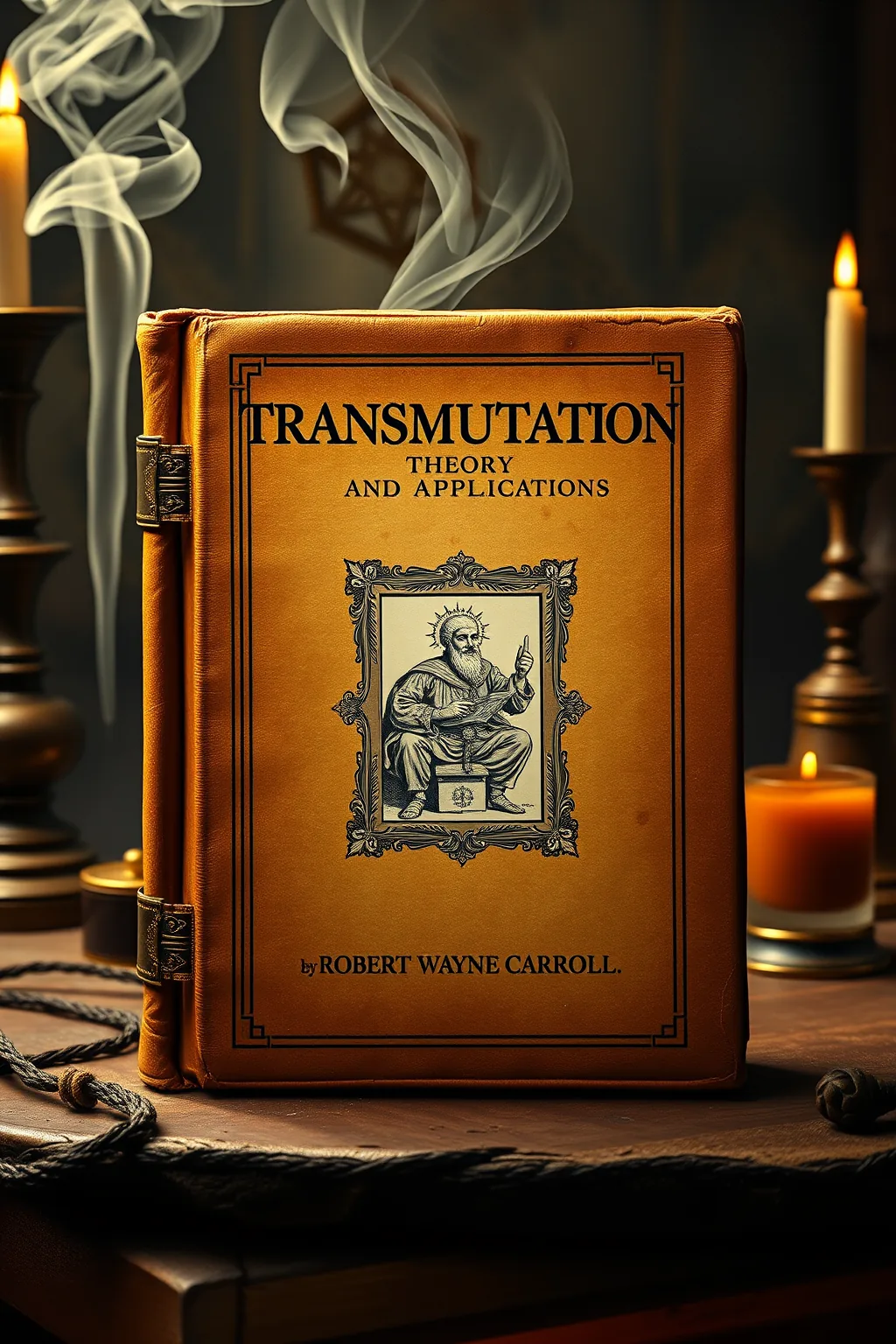
Carroll's "Transmutation Theory and Applications" offers a welcome departure from the often-apologetic or overly-mystical treatments of alchemy. The strength lies in its systematic approach, treating transmutation as a subject demanding intellectual rigor. The 1985 publication date positions it as a scholarly work seeking to integrate historical alchemical thought with theoretical frameworks, rather than purely symbolic interpretation. However, the book's density can be a significant hurdle; it reads more like a doctoral thesis than an accessible introduction. A particularly illuminating section details the theoretical stages of the Great Work, outlining the conceptual shifts required at each phase, which Carroll presents with a sober, almost scientific detachment. The primary limitation is its academic dryness, which may alienate readers seeking a more direct, experiential connection to alchemical practice. Despite this, for the dedicated student of esoteric theory, Carroll provides a valuable, albeit challenging, resource.
📝 Description
74
Robert Wayne Carroll's 1985 book examines transmutation theory beyond metaphor.
Published in 1985, Robert Wayne Carroll's "Transmutation Theory and Applications" approaches alchemical principles with academic rigor. The book sets aside mystical language to focus on the theoretical and practical aspects of transformative processes. Carroll examines the conceptual framework behind alchemy, treating transmutation as a subject for detailed study rather than mere symbolism. This work is for those interested in the historical and philosophical foundations of esoteric transformation.
This text is aimed at serious students of esoteric philosophy and alchemy who seek an academic understanding. It will appeal to researchers and practitioners who desire to move past superficial interpretations and engage with the historical development of alchemical thought. Those interested in how alchemy intersects with scientific inquiry and its potential to illuminate consciousness and matter will find considerable material. The book is not suited for casual readers.
Carroll's work emerged in 1985 amidst a resurgence of academic interest in esoteric traditions. It distinguished itself from the more popular New Age literature of the preceding decade by concentrating on theoretical frameworks. The book engages directly with scholarly discussions of Hermeticism and the history of science. It provides a counterpoint to interpretations that focus solely on psychological symbolism, such as some readings of Carl Jung's work on alchemy.
💡 Why Read This Book?
• Gain a structured understanding of alchemical theory, moving beyond symbolic interpretations to grasp the conceptual frameworks of transformation as presented in Carroll's work. • Explore the philosophical underpinnings of the Great Work, learning about concepts like the prima materia and the alchemist's role as detailed in historical texts referenced since 1985. • Appreciate the historical context of esoteric studies, understanding how works like Carroll's contributed to academic discourse on alchemy during the late 20th century.
⭐ Reader Reviews
Honest opinions from readers who have explored this book.
❓ Frequently Asked Questions
What is the primary focus of Robert Wayne Carroll's 'Transmutation Theory and Applications'?
The book primarily focuses on the theoretical and practical frameworks of alchemical transmutation, treating it as a subject for rigorous academic examination rather than solely symbolic or mystical interpretation. It details historical concepts and potential applications.
When was 'Transmutation Theory and Applications' first published?
The book was first published in 1985, positioning it as a significant scholarly contribution during a period of renewed academic interest in esoteric traditions.
Who would benefit most from reading this book?
Serious students of esoteric philosophy, alchemy, comparative religion, and those interested in the history of science and philosophy will benefit. It is suited for readers seeking academic rigor and detailed theoretical exploration.
Does the book offer practical alchemical recipes or instructions?
No, the book emphasizes theoretical frameworks and conceptual understanding of transmutation. While it discusses historical practices, it does not provide literal step-by-step recipes for alchemical operations.
How does Carroll's work relate to other alchemical literature?
Carroll's work is notable for its academic and theoretical approach, distinguishing it from more experiential or purely symbolic interpretations that were prevalent. It engages with historical alchemical texts from a scholarly perspective.
What is the 'prima materia' as discussed in the book?
The prima materia, as explored in Carroll's work, refers to the fundamental, undifferentiated substance from which all matter is believed to originate in alchemical theory. It is the foundational element for the Great Work.
🔮 Key Themes & Symbolism
Theoretical Frameworks of Alchemy
Carroll meticulously dissects the theoretical scaffolding of alchemical transmutation. He examines concepts such as the prima materia, the four classical elements, and the philosophical intent behind the Great Work. The book posits that understanding these theoretical constructs is paramount for comprehending the alchemist's endeavor, moving beyond mere symbolic interpretation to a conceptual grasp of transformative processes. This focus on theory, evident since its 1985 publication, provides a structured approach for students of the art.
The Alchemist's Role
Central to Carroll's analysis is the role of the alchemist not merely as an observer but as an active participant in the process of transmutation. This involves not only manipulation of substances but also a profound internal transformation. The work explores how the alchemist's intention, knowledge, and spiritual state are considered integral to the success of the Great Work, linking the external operations to internal development as theorized throughout esoteric traditions.
Symbolism vs. Application
The book navigates the complex relationship between alchemical symbolism and its practical, theoretical applications. While acknowledging the rich symbolic language of alchemy, Carroll prioritizes the underlying principles and conceptual models that informed these symbols. He aims to establish a coherent theory of transmutation that can be studied and understood, differentiating his approach from purely allegorical or psychological readings that might overlook the technical and philosophical dimensions.
Historical Evolution of Thought
Carroll situates alchemical theory within its historical development, referencing key figures and texts that have shaped its trajectory. By examining the evolution of ideas surrounding transmutation, the book offers a perspective on how these concepts were understood and debated over centuries. This historical lens, applied rigorously since 1985, helps readers appreciate the intellectual currents that fed into alchemical philosophy and its eventual separation into distinct scientific and esoteric paths.
💬 Memorable Quotes
Direct passages from the work, attributed to the author.
“The prima materia is the foundation upon which all alchemical operations are predicated.”
— This statement underscores the concept of a fundamental, primordial substance as the essential starting point for any alchemical process, highlighting its role as the ultimate potentiality.
“Transmutation requires an understanding of both material manipulation and the internal state of the operator.”
— This highlights the dual nature of the alchemical work, emphasizing that successful transformation involves not only external actions but also the inner disposition and development of the alchemist.
“The four elements serve as fundamental principles governing the qualities of all substances.”
— This interpretation focuses on the classical elements (earth, air, fire, water) not just as physical states but as foundational energetic principles that define the characteristics and potential changes within matter.
“Historical alchemical texts provide blueprints for theoretical understanding.”
— This suggests that ancient alchemical writings are valuable resources not for direct replication, but for deciphering the underlying theoretical logic and conceptual frameworks of transmutation.
💡 Key Ideas
Editorial paraphrase of the work's core concepts — not direct quotes.
The Great Work is a process of purification and perfection, applied to both matter and spirit.
This paraphrase captures the ultimate goal of alchemy as described in the book: a comprehensive process aimed at refining and elevating existence, encompassing both the physical and the spiritual dimensions.
🌙 Esoteric Significance
Tradition
Carroll's work situates itself within the broad stream of Western Esotericism, with a particular focus on Hermeticism and alchemy. It attempts to systematize the theoretical aspects of transmutation, drawing from historical alchemical literature that forms a core component of Hermetic traditions. Rather than adhering strictly to a specific lineage, Carroll seeks to extract and analyze the underlying principles that transcend individual schools, offering a more generalized theory of transformation applicable across various esoteric interpretations.
Symbolism
The book frequently engages with core alchemical symbols, interpreting them through a theoretical lens. The 'prima materia' is discussed as the undifferentiated potential from which all creation arises, representing the starting point of the alchemical journey. The four classical elements (earth, air, fire, water) are examined not just as physical states but as fundamental forces and qualities that govern material change and transformation, providing a conceptual framework for understanding substance dynamics.
Modern Relevance
Contemporary practitioners and scholars of Hermeticism and comparative religion find value in Carroll's systematic approach to alchemical theory. His work informs modern interpretations of esoteric philosophy by providing a structured framework for understanding transformation, which can be applied to personal development, philosophical inquiry, and the study of historical occult traditions. Thinkers interested in the intersection of consciousness, matter, and esoteric principles may draw upon his detailed theoretical analyses.
👥 Who Should Read This Book
• Advanced students of alchemy and Hermeticism seeking a deep dive into the theoretical underpinnings of transmutation, moving beyond introductory texts. • Researchers in the history of science and comparative religion interested in understanding the philosophical frameworks that informed historical alchemical practices. • Individuals engaged in rigorous self-study of esoteric traditions who desire a structured, analytical approach to complex metaphysical concepts.
📜 Historical Context
Robert Wayne Carroll's "Transmutation Theory and Applications," first published in 1985, emerged in a cultural landscape increasingly receptive to esoteric studies, yet still grappling with how to approach them academically. The book offered a rigorous, theoretical lens on alchemy, contrasting with the more popular, often psychologized interpretations prevalent at the time, influenced by figures like Carl Jung. Carroll’s work engaged with the intellectual currents of Hermeticism and the history of science, seeking to reconstruct the logical frameworks behind alchemical practices. It provided a counterpoint to movements that might have reduced alchemy solely to symbolic allegory or psychological projection, emphasizing its potential as a coherent, albeit esoteric, system of knowledge. Its scholarly tone aimed to bridge the gap between historical occultism and academic inquiry, contributing to the growing body of literature that treated such subjects with intellectual seriousness.
📔 Journal Prompts
The concept of the prima materia: its nature and role in potential transformation.
Reflect on the alchemist's dual role: operator and internal transformer.
Analyze the relationship between theoretical frameworks and symbolic expression in alchemy.
Consider the historical trajectory of alchemical thought as presented by Carroll.
How do the four elements function as theoretical principles of change?
🗂️ Glossary
Prima Materia
The fundamental, undifferentiated substance or potential from which all matter is believed to originate in alchemical theory. It is considered the essential starting point for the Great Work, containing all possibilities.
Transmutation
In alchemy, the process of transforming one substance into another, typically referring to the theoretical conversion of base metals into noble metals like gold, but also encompassing spiritual and psychological transformation.
The Great Work (Major work)
The central process in alchemy, involving the creation of the Philosopher's Stone. It is understood as a complex series of operations aimed at perfecting matter and achieving spiritual enlightenment or liberation.
Alchemical Elements
The classical elements of earth, air, fire, and water, which in alchemy are considered fundamental principles or qualities governing the composition and transformation of all matter, rather than merely physical states.
Operator
Refers to the alchemist themselves, emphasizing their active role and inner state as crucial components in the success of the alchemical operations and the Great Work.
Philosopher's Stone
The legendary alchemical substance, believed to be capable of transmuting base metals into gold and producing the elixir of life. It represents the ultimate goal of the Great Work.
Theoretical Framework
The underlying structure of concepts, principles, and logic that forms the basis for understanding a particular subject, in this context, the theory of alchemical transmutation.
🔮 Readers Also Liked
Browse all →









More by Robert Wayne Carroll
All books →


More Free Occult Philosophy Books
View all →