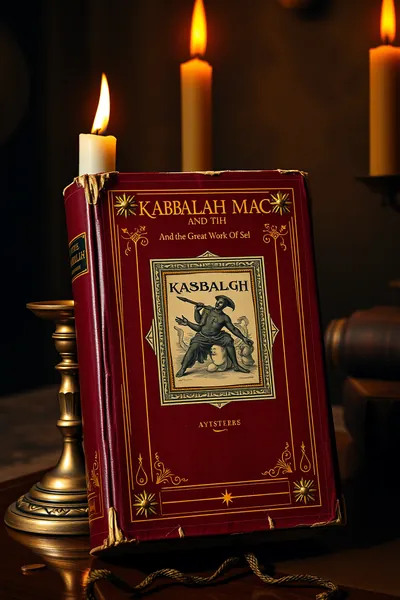
Freemasonry and the Qabalistic Jehovah

 79
79

Freemasonry and the Qabalistic Jehovah
Arthur Preuss’s "Freemasonry and the Qabalistic Jehovah" offers a dense, scholarly bridge between two complex esoteric systems. The book's strength lies in its meticulous tracing of symbolic parallels, particularly how the Qabalistic understanding of Jehovah's name can illuminate Masonic allegories. Preuss demonstrates a clear grasp of both subject matters, avoiding superficial comparisons. However, the work’s primary limitation is its academic density; it assumes a significant pre-existing knowledge of Qabalah and Masonic ritual, making it inaccessible to newcomers. A particularly compelling section discusses the "four letters" of the Tetragrammaton as they relate to stages of Masonic initiation, a concept that, while challenging, provides genuine insight. For seasoned researchers, this is a valuable, albeit demanding, resource.
📝 Description
79
Arthur Preuss's 2005 posthumous work connects Masonic symbolism with Qabalistic interpretations of Jehovah.
Arthur Preuss's "Freemasonry and the Qabalistic Jehovah" was published in 2005, after his death. It examines the links between Masonic symbols and how the divine name Jehovah is understood in Qabalistic thought. The book is not a standard historical account. Instead, it looks at how Masonic rituals and stories can be viewed through the framework of Qabalistic cosmology, particularly regarding the Supreme Being. This text is for serious students of Western esotericism who already know about Freemasonry and Qabalah. It discusses theology and philosophy in detail, not practical ritual advice. The book will interest those studying comparative mysticism, the history of esoteric ideas, and the symbolic language of secret societies.
Preuss's work emerges from the early 20th century, a time when occult societies and philosophical thought influenced each other. Movements like Theosophy and the Golden Dawn brought Qabalistic ideas to a wider audience. Freemasonry itself was also developing its symbolic meanings. Preuss's scholarship follows a line of Masonic study that sought connections to ancient mysteries, Gnosticism, and the Kabbalah, similar to figures such as Eliphas Lévi and Manly P. Hall, but with a specific focus on the Jehovah aspect.
💡 Why Read This Book?
• Gain a unique perspective on Masonic symbolism by understanding its potential Qabalistic roots, specifically through Preuss's analysis of the Tetragrammaton. • Explore the esoteric interpretations of "Jehovah" beyond conventional theology, as detailed in Preuss's examination of its symbolic representation on the Qabalistic Tree of Life. • Appreciate the historical intellectual currents of the early 20th century, as this work engages with the esoteric scholarship of figures like Eliphas Lévi and the popularization of Qabalah during that era.
⭐ Reader Reviews
Honest opinions from readers who have explored this book.
❓ Frequently Asked Questions
What is the primary focus of Arthur Preuss's "Freemasonry and the Qabalistic Jehovah"?
The book focuses on the intersection of Masonic symbolism and Qabalistic interpretations of the divine name Jehovah. Preuss explores how Qabalistic cosmology can illuminate Masonic rituals and allegories concerning the Supreme Being.
Who is the intended audience for this book?
It is aimed at serious students of Western esotericism with prior knowledge of Freemasonry and Qabalah, offering dense theological and philosophical discussions rather than introductory material.
When was Arthur Preuss's "Freemasonry and the Qabalistic Jehovah" first published?
The work was first published posthumously in 2005, though Arthur Preuss likely developed his ideas much earlier, reflecting the intellectual climate of the early 20th century.
Does the book provide practical Masonic rituals?
No, the book is primarily analytical and conceptual. It explores symbolic meanings and philosophical connections rather than offering practical instructions for Masonic rituals.
What is the significance of the Tetragrammaton in this context?
Preuss uses the Qabalistic understanding of the Tetragrammaton (the four letters of Jehovah) to interpret stages of Masonic initiation, demonstrating a symbolic correspondence between divine manifestation and the aspirant's journey.
Is this book suitable for beginners in Qabalah or Freemasonry?
It is generally not recommended for beginners. The text is dense and presumes a foundational familiarity with both Qabalistic concepts and Masonic symbolism to be fully understood.
🔮 Key Themes & Symbolism
The Tetragrammaton as a Masonic Key
Preuss posits that the four-letter Hebrew name of God, YHVH (Tetragrammaton), is not merely a divine appellation but a profound symbolic cipher within Freemasonry. He connects its Qabalistic interpretation, representing divine emanation and the interplay of forces, to the allegorical progression of Masonic degrees. The journey of the candidate, Preuss suggests, mirrors the unfolding of these divine principles as understood in Qabalistic cosmology, offering a framework for understanding the 'Great Architect' beyond simple deism.
Qabalistic Jehovah and Divine Manifestation
The work critically examines the designation 'Jehovah' through the Qabalistic Tree of Life. Preuss explores how each Sephirah represents a stage of divine manifestation, from the ineffable Kether to the material Malkuth. He argues that Masonic rituals and symbols often echo this process, depicting a structured descent and ascent of consciousness. This perspective reframes the Masonic Godhead not as a static entity but as a dynamic, unfolding principle accessible through esoteric understanding.
Gnostic Parallels in Masonic Allegory
Preuss draws connections between Masonic symbolism and Gnostic concepts, particularly concerning the Demiurge and the nature of creation. He examines how certain Masonic narratives might reflect Gnostic ideas about imperfect creators or the entrapment of divine sparks within material existence. This comparative approach suggests that Masonic teachings could contain traces of ancient dualistic and emanationist philosophies, offering a richer, more complex understanding of its allegorical framework.
Symbolic Language of the Degrees
The book examines specific symbols found within various Masonic degrees, interpreting them through a Qabalistic lens. Preuss analyzes how elements like the compasses, square, and the candidate's symbolic death and rebirth can be understood as representations of Qabalistic concepts such as divine law, cosmic order, and spiritual regeneration. The goal is to reveal a hidden layer of meaning within Masonic practice, accessible to those versed in esoteric traditions.
💬 Memorable Quotes
Direct passages from the work, attributed to the author.
“Jehovah, understood Qabalistically, represents not just a name but the dynamic interplay of divine forces.”
— This interpretation emphasizes Preuss's view of the Tetragrammaton as a complex symbol within Qabalah, signifying the active, complex nature of the Godhead rather than a simple personal deity.
“The 'Great Architect' in Masonry can be viewed through the lens of Qabalistic Ain Soph, the infinite and unknowable.”
— This interpretation proposes that the Masonic concept of the 'Great Architect' may align with the Qabalistic understanding of the ultimate, transcendent divine source, Ain Soph, which lies beyond all form and definition.
💡 Key Ideas
Editorial paraphrase of the work's core concepts — not direct quotes.
The candidate's journey through the Masonic lodge mirrors the Qabalistic ascent through the Sephiroth.
This paraphrased concept highlights Preuss's central thesis: that the symbolic progression of Masonic initiation can be understood as a spiritual journey analogous to the Qabalistic path of ascending the Tree of Life.
Masonic symbols of creation and order reflect the emanationist principles found in esoteric cosmology.
This paraphrased idea suggests that the tools and symbols used in Freemasonry, such as the square and compasses, can be seen as representations of the structured unfolding of the universe as described in Qabalistic and other esoteric systems.
Gnostic ideas about the Demiurge find resonance in certain Masonic interpretations of divine craftsmanship.
This paraphrased concept points to Preuss's exploration of potential links between Masonic teachings and Gnosticism, suggesting that the creator figure in Masonry might, for some, represent a complex entity akin to the Gnostic Demiurge.
🌙 Esoteric Significance
Tradition
This work sits firmly within the Western Esoteric Tradition, specifically intersecting Hermeticism, Qabalah, and Masonic studies. It departs from purely historical or ritualistic accounts of Freemasonry by applying Qabalistic hermeneutics to its symbolic language. Preuss engages with the tradition of esoteric interpretation that views Masonic degrees as a system of spiritual instruction, aligning with schools of thought that see a common root in ancient mysteries and Gnostic cosmology.
Symbolism
Central symbols explored include the Tetragrammaton (YHVH), which Preuss interprets through its Qabalistic Sephirothic associations, representing divine manifestation and polarity. The Tree of Life itself serves as a symbolic map for understanding the structure of the cosmos and the soul's journey, paralleling initiatory paths. Masonic tools like the square and compasses are recontextualized as representations of divine law and the containment of the infinite within manifest form.
Modern Relevance
Contemporary practitioners and scholars of Western Esotericism continue to draw upon Preuss's approach. Thinkers in Qabalistic studies and Masonic research often reference such works when seeking to understand the deeper symbolic layers of initiatory traditions. Modern esoteric organizations that integrate Qabalistic principles into their teachings may find Preuss's framework useful for comparative analysis or for enriching their own symbolic understanding.
👥 Who Should Read This Book
['• Students of Western Esotericism: Those seeking to understand the cross-pollination between Qabalah and Freemasonry, particularly concerning theological and cosmological interpretations.', '• Masonic Researchers: Individuals interested in esoteric interpretations of Masonic symbolism and ritual, specifically how the name and concept of Jehovah are understood through Qabalistic frameworks.', '• Comparative Religion Scholars: Academics and enthusiasts interested in how monotheistic concepts are reinterpreted within mystical and esoteric traditions, focusing on the specific case of Jehovah in a Qabalistic-Masonic context.']
📜 Historical Context
Arthur Preuss's work emerged during a period when Western esotericism saw a significant surge in comparative studies and the popularization of ancient traditions. The early 20th century was marked by intellectual currents that sought to synthesize diverse mystical systems, including Kabbalah, Hermeticism, and Rosicrucianism, often through the lens of secret societies like Freemasonry. Figures such as Manly P. Hall were actively exploring similar thematic territory, publishing extensively on the esoteric interpretations of Masonic symbolism. Preuss's specific focus on the Qabalistic Jehovah places his work within a lineage of Masonic scholarship attempting to uncover deeper, often ancient, origins for its rituals and teachings. This was a time when esoteric interpretations were gaining traction, sometimes in direct dialogue with, and sometimes in opposition to, more orthodox religious and academic views.
📔 Journal Prompts
The Qabalistic interpretation of the Tetragrammaton's four letters and its Masonic allegorical stages.
The symbolic parallels between the candidate's journey in Freemasonry and the ascent through the Sephiroth.
Reconciling the concept of the 'Great Architect' with the Qabalistic Ain Soph and Gnostic Demiurge.
The representation of divine manifestation through Masonic symbols within the Qabalistic framework.
How the concept of divine polarity, as seen in Qabalah, might inform Masonic rituals.
🗂️ Glossary
Qabalah
A complex system of Jewish mysticism that explores the nature of God and creation, often represented through the Tree of Life (Sephiroth) and intricate symbolic interpretations of scripture.
Tetragrammaton
The four-Hebrew-letter name of God (YHVH), considered sacred in Judaism and central to Qabalistic theology, representing divine essence and emanation.
Sephiroth
The ten divine emanations or attributes described in Qabalah, forming the structure of the Tree of Life, through which God manifests in the universe.
Ain Soph
In Qabalah, the 'Without End' or 'Infinite,' representing the absolute, unknowable Godhead beyond all manifestation and comprehension.
Demiurge
In Gnosticism, a lesser creator deity, often conceived as imperfect or malevolent, responsible for creating the material world, distinct from the ultimate transcendent God.
Masonic Allegory
The use of symbols, stories, and rituals within Freemasonry to convey moral, philosophical, and spiritual teachings, often drawing from historical, biblical, and mythical narratives.
Emanationism
A metaphysical doctrine that posits the universe originates from a single divine source through a series of descending stages or emanations, common in Gnosticism and Qabalah.
🔮 Readers Also Liked
Browse all →




More by Arthur Preuss
All books →
More Free Kabbalah & Jewish Mysticism Books
View all →