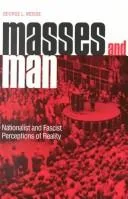
Masses and man
 62
62

Masses and man



Celeste Moreau (Divination & Symbolism Reviewer) — George L. Mosse's 'Masses and Man' is a revelation for those who perceive the invisible threads connecting spiritual traditions to socio-political phenomena. Mosse masterfully deciphers the Kabbalistic echoes within the rise of nationalism, revealing how collective identity is often constructed through esoteric symbolism and a shared narrative steeped in myth. His analysis of fascism, in particular, unearths its roots in a yearning for a mystical rebirth, a distorted spiritual quest for unity. This work is an essential read for scholars of comparative religion, political philosophy, and esoteric history, offering profound insights into the psychological and spiritual forces that drive human mobilization. An illuminating exploration of the hidden architecture of power.
📝 Description
62
George L. Mosse's 1980 book 'Masses and Man' examines the spiritual roots of nationalism.
Published in 1980, George L. Mosse's 'Masses and Man' examines the spiritual and symbolic foundations of modern nationalism. Mosse argues that political movements draw on esoteric and mystical frameworks to create collective identity. He investigates how symbols and rituals shape mass psychology, linking these to the construction of the 'other' in nationalistic narratives. The book looks at the hidden architecture of collective consciousness and the archetypes that influence national identity.
Mosse connects the desire for transcendent meaning with the mobilization of myth and symbol in shaping historical destinies. He shows how individual souls were transmuted into nationalistic masses through these often veiled, ritualistic processes. The work delves into the hidden language of symbols that resonate within the collective unconscious, revealing the spiritual alchemy behind national belonging.
While categorized as esoteric, 'Masses and Man' engages with traditions that explore hidden spiritual forces and symbolic systems. It draws parallels between Kabbalistic concepts, often concerned with divine emanations and hidden cosmic structures, and the formation of collective identity in secular political movements. The book's focus on archetypes and the collective unconscious positions it within broader discussions of esoteric psychology and the symbolic language that underpins human belief and social cohesion, particularly when examining how abstract spiritual frameworks can be adapted and utilized for political ends.
💡 Why Read This Book?
Uncover the esoteric origins of national identity and the spiritual underpinnings of mass movements. 'Masses and Man' reveals how Kabbalistic concepts and ancient symbolism have been channeled into political ideologies, particularly nationalism and fascism. Ideal for seekers of hidden knowledge, scholars of esoteric history, and anyone wishing to understand the deeper, mystical forces that have shaped the modern world.
⭐ Reader Reviews
Honest opinions from readers who have explored this book.
❓ Frequently Asked Questions
Does 'Masses and Man' require prior knowledge of Kabbalah?
While familiarity with Kabbalistic concepts enriches the reading, Mosse’s compelling prose and clear explanations make the esoteric dimensions accessible even to those new to the tradition. The book focuses on the *application* of these ideas.
How does this book connect to historical events?
The book meticulously examines the historical trajectory of nationalism and fascism across Europe, particularly from the late 19th century into the 20th century, demonstrating how these political forces drew upon spiritual and symbolic frameworks.
What is the 'mass' in the context of this book?
The 'mass' refers to the collective body of people, analyzed not just as a political entity but as a spiritual and psychological force driven by shared beliefs, symbols, and a yearning for belonging.
Is this book suitable for practitioners of mysticism?
Yes, practitioners will find profound insights into how mystical energies and symbolic language have been historically co-opted and manifested in the secular realm of politics, offering a unique perspective on the manipulation of collective consciousness.
What makes this book 'esoteric'?
Its esoteric nature lies in its exploration of hidden influences, symbolic language, and the spiritual underpinnings of mass psychology and political movements, revealing the often-unseen forces at play in shaping human destiny.
🔮 Key Themes & Symbolism
The Kabbalistic Blueprint of Nationalism
This theme explores how the structured cosmology and symbolic language of Kabbalah, with its emphasis on divine emanation, hidden orders, and the creation of worlds, provided a latent framework for nationalist ideologies. Mosse reveals how concepts of purity, chosenness, and a cosmic struggle between light and darkness were reinterpreted and secularized to forge collective identities, offering a sense of transcendent purpose and belonging to the masses. This spiritual architecture became a potent, albeit often unconscious, force in shaping national myths and mobilizing populations.
The Alchemy of Mass Psychology
Mosse examines the alchemical process by which individual consciousness is transmuted into the collective will of the 'mass.' He examines how shared symbols, rituals, and potent archetypes, often drawn from ancient mystical traditions, are employed to evoke profound emotional and spiritual responses. This theme highlights the psychological manipulation inherent in mass movements, where the yearning for unity and meaning is exploited to create fervent adherence to political doctrines, mirroring the alchemical transformation of base elements into gold.
Fascism as a Distorted Spiritual Quest
Here, the book dissects fascism not merely as a political system but as a perverted spiritual impulse. Mosse argues that fascism offered a seductive, albeit destructive, path to transcendence, promising a rebirth of the nation through a unified, almost mystical, collective experience. It tapped into a deep-seated human need for meaning, order, and belonging by presenting a distorted vision of spiritual salvation through nationalistic fervor and the eradication of perceived impurities, echoing ancient Gnostic or Manichaean dualities.
💬 Memorable Quotes
Direct passages from the work, attributed to the author.
“The symbol became a substitute for reality.”
— Highlighting the power of abstract representation, this suggests that in mass movements, potent symbols superseded reasoned discourse, directly influencing emotions and shaping collective perception.
“The Jew became the eternal 'other'.”
— This points to the scapegoating mechanism, where a specific group is defined as antithetical to the national 'self,' a common tactic in creating in-group cohesion through externalized animosity, often drawing on ancient symbolic oppositions.
“A yearning for a lost paradise.”
— This phrase speaks to the nostalgic and redemptive narrative often employed by nationalist movements, promising a return to a mythical golden age, a spiritual quest for national renewal.
“The mass was a vessel for national rebirth.”
— This conveys the idea of collective transformation, where individuals were subsumed into a larger entity to achieve a spiritual and national regeneration, a potent, almost mystical, promise.
💡 Key Ideas
Editorial paraphrase of the work's core concepts — not direct quotes.
Nationalism offered a new religion.
This quote captures the book's core argument: that nationalism functioned as a substitute for traditional religious faith, providing meaning, community, and a sense of divine purpose in a secularizing world.
🌙 Esoteric Significance
Tradition
The book's esoteric significance is deeply rooted in its engagement with Kabbalistic thought, particularly its structural principles and symbolic lexicon. Mosse explores how concepts of divine emanation, the Sephirot, and the interplay of opposing forces, traditionally used for spiritual ascent, were reappropriated and secularized within nationalist and fascist ideologies. It uncovers a latent mystical blueprint for social organization and collective identity, revealing how ancient esoteric frameworks can influence secular power structures and mass psychology.
Symbolism
Mosse highlights the crucial role of potent, often ancient, symbols in forging collective identity and mobilizing the masses. He dissects how symbols of purity, light versus darkness, the divine right of a nation, and the concept of a chosen people, all with deep roots in esoteric traditions, were weaponized. These symbols bypass rational thought, tapping directly into the subconscious, creating an almost ritualistic adherence to political dogma and fostering a sense of shared spiritual destiny.
Modern Relevance
In an age still grappling with identity politics, nationalism, and the power of digital myth-making, 'Masses and Man' offers profound contemporary relevance. It provides a critical lens through which to examine how modern political movements continue to leverage symbolic language and manufactured collective narratives. Understanding the esoteric underpinnings of historical mass movements is crucial for discerning the spiritual and psychological forces at play in contemporary discourse and for safeguarding against the manipulation of collective consciousness.
👥 Who Should Read This Book
This profound work is indispensable for a diverse readership. **Scholars of history, political science, and comparative religion** will find it an essential text for understanding the esoteric underpinnings of modern political phenomena. **Seekers of hidden knowledge and practitioners of esoteric disciplines** will gain invaluable insights into how ancient spiritual frameworks have been historically distorted and applied in the secular realm. **Students of psychology and sociology** will appreciate its deep dive into mass psychology and the formation of collective identity. **Anyone interested in the roots of nationalism and fascism**, and the enduring power of symbolism in shaping human belief, will find 'Masses and Man' a deeply clear and essential read.
📜 Historical Context
Published in the shadow of the mid-20th century's cataclysmic events, George L. Mosse's 'Masses and Man' emerges from an era deeply scarred by the rise of totalitarian ideologies and the devastating consequences of unchecked nationalism. The early to mid-20th century in Europe was a crucible where traditional social and spiritual structures were rapidly eroding, leaving a void that potent political movements eagerly filled. Mosse critically examines the period from the late 19th century onwards, a time marked by burgeoning industrialization, secularization, and a growing sense of existential unease. It was within this fertile ground that the seeds of mass psychology and manipulated collective identity took root, drawing, as Mosse reveals, from ancient symbolic reservoirs and quasi-mystical yearnings for order and belonging. The book thus provides crucial context for understanding how seemingly secular political forces could harness deep-seated spiritual impulses.
📔 Journal Prompts
Reflect on a modern political movement. What symbols or narratives does it employ to foster collective identity, and how might these echo older esoteric concepts?
Consider the concept of a 'national myth.' How does the creation and dissemination of such myths resemble the construction of spiritual narratives in esoteric traditions?
Analyze a historical event where mass psychology played a significant role. What 'esoteric' or symbolic elements might have been at play in mobilizing the population?
How does the modern media landscape amplify or distort the 'symbolism' of political discourse, similar to the historical patterns described by Mosse?
Explore the personal 'yearning for belonging' within yourself or your community. How might this inherent human need be susceptible to manipulation by powerful ideologies?
🗂️ Glossary
Kabbalah
An esoteric tradition within Judaism that seeks to understand the nature of God and the universe through mystical interpretation of the Torah and divine emanations, often employing complex symbolic systems and numerical values.
Sephirot
In Kabbalistic cosmology, the ten divine emanations or attributes through which God manifests and interacts with the created universe, forming a central part of the Tree of Life diagram.
Archetype
A universal, archaic symbol or motif that appears in the collective unconscious of humanity, as described by Carl Jung, representing fundamental human experiences and patterns of behavior.
Secularization
The process by which religion loses its influence over public life and becomes a matter of private belief and practice, leading to a decline in religious adherence and the rise of alternative belief systems.
Gnosticism
A diverse set of religious and philosophical movements in antiquity that emphasized knowledge (gnosis) of the divine as the path to salvation, often involving dualistic worldviews and secret teachings.
This book appears in 1 collection
🔮 Readers Also Liked
Browse all →









From the “Kabbalah” Collection
View all →








More Free Kabbalah & Jewish Mysticism Books
View all →