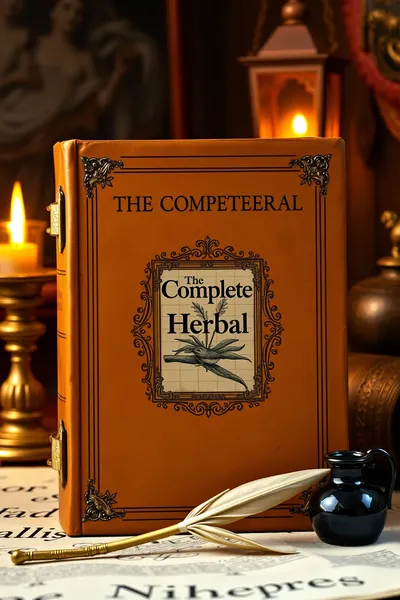
Foods, Herbs, Health and Healing

 80
80

Foods, Herbs, Health and Healing
John Smith’s Foods, Herbs, Health and Healing offers a broad survey of global healing traditions, moving from European folk medicine to Chinese five-element theory. Its strength lies in its comparative approach, revealing common threads in humanity's use of plants for wellness. The work is meticulously researched, detailing food and plant origins with clarity. However, the sheer breadth of cultures covered can sometimes lead to a superficial treatment of complex systems. A passage discussing the five-element system, for instance, provides a useful overview but lacks the depth found in specialized texts. Despite this, Smith’s book serves as an accessible introduction to ethnobotany and natural healing modalities. It’s a valuable reference for those beginning their study of herbalism and comparative medicine.
📝 Description
80
John Smith's 2009 book, Foods, Herbs, Health and Healing, examines global phytotherapy and dietary medicine.
Published in 2009, John Smith's Foods, Herbs, Health and Healing goes beyond basic remedies to investigate the philosophical foundations of how food and plants have historically supported wellness. The book connects ancient European herbalism, American folk practices, and Traditional Chinese Medicine. Smith focuses on synergistic healing, where the entire plant or food offers benefits greater than individual components. It stresses understanding a plant's origins, its specific therapeutic qualities, and how to safely use these natural agents for common ailments. This work is for individuals interested in the historical and cultural aspects of natural healing. It will interest herbalists, nutritionists, students of comparative medicine, and those drawn to ethnobotany or the interplay of diet, plant lore, and holistic health.
This book fits within a long tradition of medical botany and folk healing. It bridges empirical observation of plant properties with a deeper understanding of their energetic and spiritual significance, as understood in systems like Traditional Chinese Medicine. Smith's approach suggests that food and herbs are not just chemical agents but carry traditions and wisdom related to life force and balance. The work acknowledges a historical lineage where plant knowledge was intertwined with spiritual development and a holistic view of well-being.
💡 Why Read This Book?
• Learn about the specific healing properties of dozens of common foods and herbs, detailed with their origins and safe usage guidelines, as presented in the book's sections on European and American folk medicine. • Understand the foundational principles of Traditional Chinese Medicine’s five-element system as it relates to food and health, a concept explored in depth. • Discover the synergistic benefits of whole foods and plants for wellness, a core philosophy discussed throughout the text, offering a holistic perspective on natural remedies.
⭐ Reader Reviews
Honest opinions from readers who have explored this book.
❓ Frequently Asked Questions
What historical periods does John Smith cover in Foods, Herbs, Health and Healing?
The book spans historical periods from ancient folk medicine traditions across Europe and America to more structured systems like Traditional Chinese Medicine, synthesizing knowledge up to its 2009 publication.
Is Foods, Herbs, Health and Healing suitable for complete beginners in herbalism?
Yes, the book is designed to be accessible, explaining plant origins and healing properties in a way that's understandable for those new to herbal studies, while still offering depth for experienced practitioners.
Does the book provide practical advice on using herbs and foods for specific ailments?
Absolutely. The text offers guidance on how to safely use ancient remedies derived from foods and herbs for a wide range of common health issues.
What makes this book different from other herbal medicine guides published around 2009?
Its distinctiveness lies in its global comparative approach, contrasting European and American folk traditions with Eastern medicinal philosophies, and detailing plant origins alongside their therapeutic uses.
Who is the author, John Smith, and what is his background?
John Smith, author of the earlier '100 Herbs of Power', is an herbalist with a Bachelor of Arts (Honours) degree, bringing academic rigor to his practical knowledge of plant-based healing.
Can I find information on specific plants and their medicinal uses?
Yes, the book details the origins and healing properties of numerous plants, providing practical information on their application for various health conditions.
🔮 Key Themes & Symbolism
Ethnobotanical Comparisons
This work excels at drawing parallels between disparate healing systems, demonstrating how cultures across Europe, America, and China independently identified and utilized plant properties. It highlights the shared human endeavor to find remedies in the natural world, moving beyond a single cultural perspective to present a global ethnobotanical dialogue. The book maps these connections, revealing universal principles of phytotherapy.
Synergistic Healing Principles
A core concept explored is the idea that entire foods and herbs possess healing capabilities greater than their isolated chemical components. Smith emphasizes the holistic approach inherent in many ancient traditions, suggesting that the complete plant matrix provides a balanced and effective therapeutic agent. This perspective counters a purely reductionist view of medicine, advocating for the wisdom found in natural preparations.
The Five-Element System
The book introduces readers to the foundational tenets of Traditional Chinese Medicine, specifically its five-element framework (Wood, Fire, Earth, Metal, Water) as applied to diet and health. It explains how different foods and herbs are associated with these elements and seasons, offering a structured method for balancing bodily energies and promoting well-being.
Folk Medicine Revival
Foods, Herbs, Health and Healing champions the enduring value of folk medicine traditions from Europe and the Americas. It serves as a compendium of these time-honored practices, validating their efficacy and encouraging their integration into contemporary wellness strategies. The text acts as a bridge, connecting ancestral knowledge with modern health concerns.
💬 Memorable Quotes
Direct passages from the work, attributed to the author.
“The text explores food and plant origins, their healing properties, and safe application for common ailments.”
— This expresses the book's practical focus, highlighting its role as a guide for understanding and using natural remedies effectively for everyday health challenges.
“From the folk medicine traditions of Europe and America to the five-element system of China...”
— This phrase points to the book's ambitious comparative scope, bridging distinct healing paradigms and showcasing the universality of plant-based medicine across cultures.
“John E. Smith takes a look at the use of food and herbs as medicine in different cultures across the globe.”
— This statement emphasizes the author's ethnographic and cross-cultural approach, positioning the book as an exploration of global ethnobotany rather than a localized herbal guide.
“Food, Herbs, Health & Healing is a practice-proven way to achieve better health, naturally.”
— This asserts the book's emphasis on efficacy and natural methods, suggesting that the remedies and principles discussed have been validated through use and offer a path to improved well-being without artificial interventions.
“Learn food and plant origins, their healing properties and how to safely use ancient remedies...”
— This highlights the educational and practical utility of the content, promising readers knowledge about where remedies come from, what they do, and how to employ them safely.
🌙 Esoteric Significance
Tradition
While not explicitly rooted in a singular esoteric lineage like Hermeticism or Gnosticism, the work engages with the perennial philosophy of nature's healing power, common in many esoteric traditions. It taps into a vitalist worldview where plants possess inherent energetic or spiritual properties that contribute to health. This aligns with broader Neopagan, traditionalist, and nature-based spiritual paths that see the divine or natural order reflected in botanical remedies.
Symbolism
The book implicitly engages with the symbolism of plants as conduits of life force or elemental energies. While not overtly detailing specific symbols, the discussion of plant origins and their association with specific climates or seasons hints at their symbolic connection to Earth's cycles and the elemental forces that govern health. The five-element system itself is a symbolic framework representing dynamic interactions within the cosmos and the body.
Modern Relevance
Contemporary herbalists, integrative medicine practitioners, and proponents of Traditional Chinese Medicine continue to draw upon the foundational knowledge presented in works like Smith's. Its emphasis on ethnobotany and comparative healing appeals to modern movements seeking to decolonize medicine and reintegrate indigenous knowledge systems. The book's accessible format makes it a valuable resource for those exploring personalized wellness strategies rooted in nature.
👥 Who Should Read This Book
• Aspiring herbalists and natural health enthusiasts seeking a foundational understanding of global medicinal plant traditions and their applications. • Students of comparative medicine or ethnobotany interested in the historical and cultural contexts of healing practices across different societies. • Individuals exploring holistic and natural approaches to wellness who wish to learn about the therapeutic properties of foods and herbs for common ailments.
📜 Historical Context
Published in 2009, John Smith's Foods, Herbs, Health and Healing emerged during a period of renewed interest in holistic health and traditional medicine, contrasting with the dominant pharmaceutical-driven Western medical model. This era saw a proliferation of books on herbalism and natural remedies, yet Smith's work distinguished itself by its comparative ethnobotanical approach. It offered a synthesis of disparate traditions, including European folk medicine, American herbalism, and Traditional Chinese Medicine. While not facing overt censorship, such works often existed on the fringes of academic medicine, sometimes viewed with skepticism by the established scientific community. Contemporary authors like David K. Winston were also exploring herbal traditions, but Smith's broad sweep from folk practices to structured systems like TCM provided a unique overview for a general audience seeking natural health solutions.
📔 Journal Prompts
The five-element system's association with specific foods.
European folk medicine remedies and their modern applicability.
Plant origins and their significance for healing properties.
Synergistic effects of whole herbs versus isolated compounds.
Safe application practices for ancient herbal remedies.
🗂️ Glossary
Phytotherapy
The study and use of medicinal properties of plants. It involves using plant extracts or whole herbs to treat diseases or maintain health, forming the core subject of the book.
Ethnobotany
The scientific study of the relationships between people and plants. This includes how cultures use plants for medicine, food, shelter, and rituals, a key aspect explored in the book's comparative approach.
Five-Element System
A foundational concept in Traditional Chinese Medicine (TCM) that describes the relationships and cycles between five basic elements: Wood, Fire, Earth, Metal, and Water. It's applied to understand health and disease.
Folk Medicine
A broad category of traditional health practices and beliefs passed down through generations within families or communities, often orally. The book examines European and American folk traditions.
Synergistic Healing
The principle that the combined effect of different components within a natural substance (like a whole herb or food) is greater or more beneficial than the effect of individual components acting alone.
Ancient Remedies
Therapeutic methods and preparations derived from natural sources, particularly plants and foods, that have been used for centuries across various cultures for healing purposes.
Plant Origins
The geographical source and historical development of medicinal plants. Understanding origins can provide context for a plant's properties and its traditional uses.
This book appears in 1 collection
🔮 Readers Also Liked
Browse all →







From the “Herbalism” Collection
View all →








More Free Occult Philosophy Books
View all →