Tripping on Utopia
 84
84

Tripping on Utopia
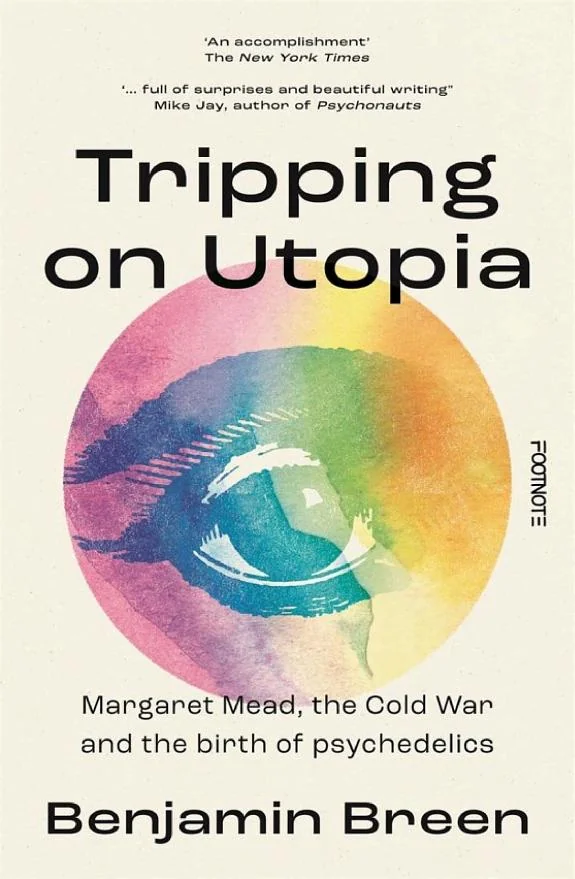
Benjamin Breen’s *Tripping on Utopia* revisits a period many historians overlook when discussing the history of consciousness-altering substances. The book meticulously details how the generation that endured WWII, rather than their Baby Boomer offspring, were the first to widely experiment with drugs like LSD and mescaline, often with societal and even governmental blessing. Breen’s strength lies in his rigorous research, uncovering fascinating anecdotes, such as John C. Lilly’s controversial NASA-funded research involving LSD and dolphins. A limitation, however, is the occasional feeling that the narrative could delve deeper into the philosophical underpinnings of this early experimentation, beyond its historical documentation. The passage detailing the legal status and celebration of these drugs in the 1940s and 1950s serves as a potent reminder of how rapidly cultural perceptions can shift. *Tripping on Utopia* offers a vital corrective to common historical narratives about drug use.
📝 Description
84
Benjamin Breen's 2023 book reveals the mid-20th century's surprisingly open embrace of psychoactive substances.
Tripping on Utopia examines the period between World War II and the 1960s, a time when psychoactive compounds like LSD and mescaline moved from laboratories and military research into wider society. Breen details how these substances were often officially sanctioned, a stark contrast to later eras of prohibition. The book chronicles how widespread drug experimentation was not solely a countercultural phenomenon of the 1960s but had roots in the post-war years. This era saw the legal and celebrated use of drugs like LSD, which were not yet stigmatized and were actively explored by institutions and individuals seeking to understand their potential.
The work situates the 1940s and 1950s as a time of significant social and scientific exploration, predating the more recognized psychedelic movements. It investigates the concept of "utopian" drug use, where substances were viewed as instruments for societal advancement and personal enlightenment. The narrative highlights figures like John C. Lilly, who conducted early LSD research with dolphins and himself, often with institutional support. Ultimately, the book tracks the shift from this open exploration to the widespread condemnation and criminalization that followed.
This book fits within a tradition of looking at altered states of consciousness and their societal implications, separate from mainstream historical narratives. While often associated with the counterculture, Breen shows that the exploration of psychedelics had earlier, more institutional roots. It touches on themes of consciousness expansion and the search for societal improvement through non-ordinary states, concepts that resonate with esoteric inquiries into the mind and human potential. The focus on early, sanctioned research offers a counterpoint to later, more fringe or underground movements, highlighting a less-discussed lineage of psychedelic engagement.
💡 Why Read This Book?
• Understand the surprising legal and celebrated status of drugs like LSD in the 1940s and 1950s, challenging the notion that psychedelic experimentation began solely with the Baby Boomers. • Discover the role of figures like John C. Lilly and his unique research with dolphins and LSD, revealing early institutional engagement with psychoactive substances. • Gain perspective on the historical arc of drug policy and cultural attitudes, seeing how open exploration gradually transformed into widespread prohibition.
⭐ Reader Reviews
Honest opinions from readers who have explored this book.
❓ Frequently Asked Questions
When was Tripping on Utopia first published?
Tripping on Utopia by Benjamin Breen was first published on April 25, 2024. This makes it a very recent exploration of its subject matter.
What is the main argument of Tripping on Utopia?
The book argues that the first era of widespread drug experimentation, particularly with substances like LSD, occurred in the 1940s and 1950s, led by the generation that survived World War II, not the Baby Boomers.
Who was John C. Lilly and what was his connection to LSD?
John C. Lilly was an American physician and neuroscientist who famously conducted research with LSD, including experiments involving himself and dolphins, with funding from NASA in the mid-20th century.
Were drugs like LSD legal during the period discussed in the book?
Yes, during the 1940s and 1950s, drugs like LSD were often legal and openly celebrated in mainstream culture, a stark contrast to later periods of prohibition.
What historical period does Tripping on Utopia primarily focus on?
The book primarily focuses on the post-World War II era, specifically the 1940s and 1950s, highlighting the social and scientific exploration of psychoactive substances during that time.
Does the book discuss the shift from drug legality to prohibition?
Yes, the narrative tracks the evolution of drug perception, detailing how substances once celebrated and legally used in the 1940s and 1950s eventually faced widespread condemnation and criminalization.
🔮 Key Themes & Symbolism
Post-War Social Experimentation
The work posits that the generation that endured World War II exhibited a profound drive for social experimentation, extending into the field of consciousness. Unlike the counterculture of the 1960s, this earlier wave saw psychoactive drugs not as tools of rebellion, but as potential instruments for societal advancement and personal growth. The book details how compounds like LSD and mescaline were integrated into mainstream culture, often with institutional support and public acceptance, challenging conventional timelines of psychedelic history.
The Utopian Drug Impulse
Breen examines the concept of 'utopian' drug use, where the potential for altered states was viewed through a lens of optimistic progress. This perspective fueled scientific inquiry and cultural exploration, leading to initiatives like John C. Lilly's LSD research with dolphins. The narrative illustrates how these substances were conceptualized as keys to unlocking new potentials for humanity, a stark contrast to their later demonization and the subsequent era of prohibition and fear.
The Shifting Field of Legality
A central theme is the dramatic historical shift in the legal and social standing of psychoactive substances. *Tripping on Utopia* vividly portrays a period in the 1940s and 1950s where drugs were not only legal but often openly celebrated, a phenomenon largely forgotten today. The book traces this trajectory, highlighting how societal attitudes and regulatory frameworks evolved, transforming a time of open exploration into one of strict control and moral panic.
Science, Consciousness, and the Mainstream
The book investigates the entanglement of scientific research, particularly in fields like neuroscience and psychiatry, with the exploration of altered states of consciousness. It details how mainstream institutions, including NASA and various research facilities, engaged with psychedelics, seeking to understand their effects on the human mind and even interspecies communication, as seen in Lilly's work. This integration into official research contrasts sharply with the later marginalization of such studies.
💬 Memorable Quotes
Direct passages from the work, attributed to the author.
“It was not the Baby Boomers who ushered in the first era of widespread drug experimentation. It was their parents.”
— This opening statement sets the revisionist tone of the book, directly challenging the popular conception that the 1960s counterculture pioneered widespread psychedelic use. It immediately establishes the work's focus on the post-WWII generation.
“The generation that survived the second World War emerged with a profoundly ambitious sense of social experimentation.”
— This highlights a core thesis: the trauma and societal upheaval of WWII fostered a unique mindset receptive to radical change and exploration, including the use of psychoactive substances for personal and societal transformation.
“In the '40s and '50s, transformative drugs rapidly entered mainstream culture, where they were not only legal, but openly celebrated.”
— This statement underscores the book's central historical claim, emphasizing the surprising legality and positive reception of drugs like LSD during the mid-20th century, a stark contrast to contemporary perceptions and laws.
“American physician John C. Lilly infamously dosed dolphins (and himself) with LSD in a NASA-funded effort to teach dolphins to talk.”
— This specific example illustrates the book's exploration of institutional involvement in psychedelic research, showcasing the ambitious and unconventional nature of scientific inquiry into consciousness during that era.
“transformative drugs rapidly entered mainstream culture”
— This phrase captures the speed and scope of psychedelic integration into society during the 1940s and 50s. It suggests a cultural embrace rather than a fringe movement, setting the stage for the book's historical revisionism.
🌙 Esoteric Significance
Tradition
While not strictly within a single esoteric lineage, *Tripping on Utopia* engages with the modern Western esoteric tradition's interest in consciousness alteration and the pursuit of transcendent states. It particularly speaks to the Hermetic principle of 'As Above, So Below,' suggesting that internal states of consciousness can mirror and influence external reality and societal structures. The book's exploration of drug-induced 'utopias' can be seen as a secularized, scientific interpretation of achieving higher states or divine communion, diverging from traditional ritualistic or contemplative methods.
Symbolism
The primary symbolic motif is the 'utopia' itself, representing an idealized state of being or society achievable through altered consciousness. The dolphin, particularly in the context of John C. Lilly's work, symbolizes intelligence, communication beyond conventional human bounds, and the potential for interspecies connection facilitated by psychedelic states. LSD and other transformative drugs function symbolically as keys or catalysts, unlocking hidden potentials within the human psyche and societal structures, enabling a perceived leap towards a more enlightened existence.
Modern Relevance
Contemporary thinkers and movements focused on psychedelic-assisted therapy, consciousness studies, and the integration of altered states into personal development echo the explorations documented in Breen's work. Researchers and practitioners in fields like transpersonal psychology and those advocating for the decriminalization or legalization of psychedelics often draw upon historical accounts of earlier, more open attitudes. The work provides a crucial historical counterpoint to contemporary discussions, reminding us that the current paradigm of prohibition is not a historical inevitability but a relatively recent development.
👥 Who Should Read This Book
• Individuals interested in the social history of psychoactive substances, particularly those seeking to understand the pre-1960s context of drug use and experimentation. • Scholars and students of counterculture, the history of science, and mid-20th century American society, who will find detailed accounts of institutional research and public reception. • Readers exploring the philosophical and psychological dimensions of altered states of consciousness, seeking historical precedents for contemporary discussions on psychedelics and their potential societal impact.
📜 Historical Context
Benjamin Breen's *Tripping on Utopia* emerges from a rich vein of scholarship that has increasingly questioned the monolithic narrative of psychedelic history, which often begins with the 1960s counterculture. Breen situates his work within the post-World War II era, a period characterized by significant scientific advancement and a lingering sense of societal possibility, sometimes termed the 'Atomic Age' or the 'Post-War Boom'. This era saw figures like Aldous Huxley publishing influential works on consciousness, such as *The Doors of Perception* (1954), which engaged with mescaline. Breen’s exploration of figures like John C. Lilly and his NASA-funded research with LSD and dolphins is crucial, demonstrating institutional backing for psychedelic inquiry. This stands in contrast to the subsequent, more restrictive intellectual climate that followed the widespread criminalization of these substances, a trajectory Breen meticulously documents.
📔 Journal Prompts
The post-WWII generation's ambition for social experimentation, as detailed in the book.
John C. Lilly's interspecies communication research and its implications.
The contrast between 1940s/50s celebration of drugs and later prohibition.
Defining 'utopian' drug use within the historical context presented.
The role of scientific institutions in exploring transformative drugs.
🗂️ Glossary
Psychoactive substances
Chemical compounds that alter perception, mood, consciousness, cognition, or behavior. Examples discussed include LSD, mescaline, and psilocybin.
Social experimentation
The process of testing new social ideas, structures, or behaviors within a society, often driven by a desire for progress or reform. In this context, it includes exploring the effects of drugs on individuals and culture.
John C. Lilly
An American physician and neuroscientist known for his pioneering, and often controversial, research into consciousness, sensory deprivation tanks, and the use of LSD, including his experiments with dolphins.
LSD (Lysergic acid diethylamide)
A potent synthetic psychoactive drug known for its profound effects on perception, mood, and thought processes. Its early history involved significant scientific and medical research.
Mainstream culture
The dominant set of beliefs, practices, and cultural norms shared by the majority of a society. The book explores how transformative drugs entered and were accepted within this sphere.
Prohibition
The legal banning of the manufacture, sale, or possession of certain substances. The book contrasts the legal status of drugs in the mid-20th century with later periods of prohibition.
Utopia
An imagined place or state of things in which everything is perfect. In the context of the book, it refers to the idealized societal or personal states envisioned through the use of transformative drugs.
This book appears in 1 collection
🔮 Readers Also Liked
Browse all →









From the “Consciousness Expansion” Collection
View all →








More Free Occult Philosophy Books
View all →