The Psychedelic Tarot
 84
84

The Psychedelic Tarot
M. A. Eremitus's *The Psychedelic Tarot* ventures into ambitious territory, proposing a syncretic method for exploring consciousness via Tarot and psychedelics. The book’s strength lies in its earnest attempt to map the subjective landscape of altered states onto the archetypal structure of the Tarot. Eremitus frames entheogens as catalysts for traversing this inner terrain, aiming to forge a connection between the psychonaut and their divine essence. A particularly compelling aspect is the book's treatment of the Tarot as a 'map of consciousness,' moving beyond fortune-telling to a more profound psychological and spiritual interpretation. However, the work occasionally suffers from a lack of rigorous differentiation between various psychedelic experiences and their potential symbolic correlates, sometimes presenting a broad stroke where nuance might be beneficial. Paul Krassner's somewhat wry endorsement, hinting at the contentious nature of drug use, underscores the book's provocative stance. Ultimately, *The Psychedelic Tarot* offers a unique, albeit specialized, approach for those seeking to integrate entheogenic exploration with Tarot symbolism.
📝 Description
84
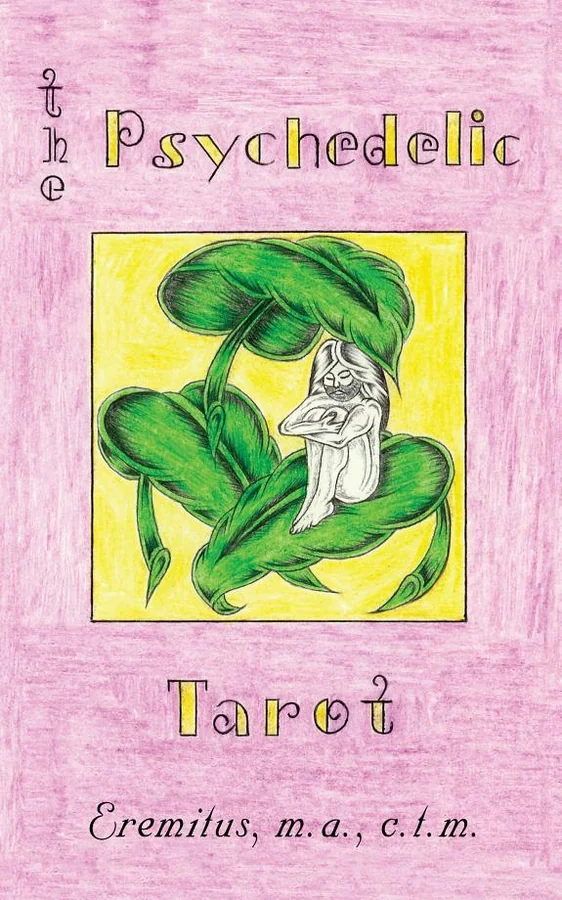
M. A. Eremitus published The Psychedelic Tarot in 2009, viewing the Tarot as a map of consciousness.
Published in February 2009, M. A. Eremitus's The Psychedelic Tarot proposes that entheogenic substances can illuminate the archetypal imagery of the Tarot. Eremitus frames the Tarot not just as a tool for fortune telling, but as a cartography of the inner world. The book connects ancient symbolic systems with modern explorations of altered states of consciousness, intending to guide personal transformation.
This work is for those interested in the meeting point of esoteric symbolism, consciousness studies, and the spiritual insights possible through psychoactive substances. It will appeal to psychonauts, experienced Tarot readers looking for deeper meaning, and practitioners of alchemical or Gnostic traditions interested in self-exploration. An open mind is necessary, along with a willingness to accept non-ordinary states of awareness as valid paths to knowledge.
Eremitus's book appeared during a time of renewed interest in psychedelic research and its spiritual potential. The early 2000s saw a growing community exploring these areas, often referencing ancient shamanic practices and contemporary esoteric thought. The Psychedelic Tarot, published in 2009, fits within this resurgence, offering a specific viewpoint on both the Tarot and entheogenic experiences within Western esotericism.
The Psychedelic Tarot is situated within Western esotericism, specifically drawing connections between the Hermetic tradition, alchemy, and Gnosticism. It aligns with a lineage that views symbolic systems like the Tarot as keys to understanding the psyche and the cosmos. The book's focus on altered states of consciousness as a means of accessing esoteric knowledge echoes earlier mystical traditions and contemporary psychedelic philosophies that seek direct experience of spiritual realities. Eremitus places the Tarot deck as a structured framework for understanding these subjective experiences, informed by both historical esoteric symbolism and modern consciousness research.
💡 Why Read This Book?
• Understand the Tarot as a cartography of consciousness, moving beyond traditional divination to a map of inner states, as detailed in its exploration of 'inner space.' • Explore the potential of entheogens as tools for spiritual insight and personal transformation, presented as a method for alchemical interior wholeness. • Gain a historical perspective on esoteric practices, situating Eremitus's work within the early 2000s resurgence of interest in psychedelics and consciousness studies.
⭐ Reader Reviews
Honest opinions from readers who have explored this book.
❓ Frequently Asked Questions
What is the primary argument of The Psychedelic Tarot?
The book argues that the Tarot serves as a map of consciousness, and psychedelics can be employed as tools to actively explore this inner landscape, facilitating a process of spiritual and psychological integration.
When was The Psychedelic Tarot first published?
The Psychedelic Tarot was first published in February 2009.
Who is the author of The Psychedelic Tarot?
The author of The Psychedelic Tarot is M. A. Eremitus.
What kind of reader would most benefit from this book?
Readers interested in the intersection of consciousness studies, esoteric symbolism, and the spiritual potential of entheogenic substances, particularly those familiar with Tarot archetypes, would find this book most beneficial.
Does the book advocate for recreational drug use?
The book frames psychedelic substances within a spiritual and alchemical context, focusing on their potential for consciousness exploration and achieving interior wholeness, rather than recreational use.
What is the concept of 'interior wholeness' in this book?
'Interior wholeness' refers to a state of psychological and spiritual integration achieved through the conscious exploration of inner space, facilitated by the combined use of Tarot symbolism and entheogenic experiences.
🔮 Key Themes & Symbolism
Tarot as Consciousness Cartography
This work reinterprets the Tarot not as a predictive tool, but as a sophisticated map of the human psyche and its potential states of awareness. Each card's imagery is presented as a landmark within 'inner space,' a territory accessible through introspection and expanded consciousness. The archetypes serve as guides and signposts, delineating the various areas of experience, from the mundane to the sublime. This perspective invites practitioners to use the Tarot as a navigational aid for self-discovery and spiritual growth, charting the complex terrain of the mind.
Psychedelics as Exploratory Vehicles
The book posits that certain entheogenic substances can function as catalysts, enabling individuals to directly traverse the 'inner space' mapped by the Tarot. Rather than viewing these substances as mere recreational agents, Eremitus frames them as anciently recognized tools for communion with the divine and for accessing deeper levels of consciousness. This perspective aligns with historical shamanic practices, suggesting a primeval use of entheogens for spiritual quests and to achieve clear insights into the nature of reality and self.
The Alchemical Process of Wholeness
By uniting the symbolic language of the Tarot with the experiential insights gained from psychedelic journeys, the book outlines a method for achieving 'interior wholeness.' This process is described as alchemical, implying a transformation and purification of the self. The integration of the psychonaut's encounters within the Tarot's framework is intended to lead to a more complete and unified sense of being, bridging the gap between the mundane and the divine aspects of existence.
Psychonaut to Divinity
A central tenet is the potential for the 'psychonaut'—one who explores consciousness—to connect with their inherent divinity. The book suggests that the disciplined exploration of the inner realms, guided by the Tarot and potentially aided by entheogens, can lead to a profound realization of one's divine essence. This connection is presented not as an external attainment but as an unveiling of an intrinsic spiritual reality within the individual.
💬 Memorable Quotes
Direct passages from the work, attributed to the author.
“The Psychedelic Tarot discusses tarot as a map of consciousness and presents psychedelics as a means by which to traverse inner space.”
— This core statement establishes the book's central thesis: the Tarot provides the structure for understanding internal landscapes, while psychedelics offer a method for direct exploration of these landscapes.
“This blending of the ancient tarot and primeval use of entheogens establishes a definitive method for pursuing an alchemical process of interior wholeness.”
— This highlights the book's goal of creating a structured, transformative practice by combining historical esoteric systems with the ancient use of consciousness-altering substances for self-integration.
“It unites the psychonaut to divinity within.”
— This concise phrase captures the ultimate aim of the practice described in the book: to facilitate a direct connection between the individual explorer of consciousness and their innate divine nature.
💡 Key Ideas
Editorial paraphrase of the work's core concepts — not direct quotes.
Here is what experts are saying: "A diligent, mystical approach to the war on some people, who use some drugs, sometimes."
This quote from Paul Krassner humorously points to the controversial nature of the subject matter, suggesting the book approaches drug use from a serious, spiritual perspective amidst societal contention.
The work explores the Tarot as a map of consciousness.
This paraphrased concept emphasizes the book's unique interpretation of the Tarot, moving beyond simple divination to a complex symbolic system for understanding subjective experience.
🌙 Esoteric Significance
Tradition
The work situates itself within the Western Esoteric Tradition, particularly drawing from Hermeticism and Gnosticism, which emphasize the inner journey and the attainment of knowledge (gnosis) through direct experience. It aligns with alchemical principles by proposing a process of transformation and purification of the self. While Tarot is widely used in esoteric circles, Eremitus's specific framing of it as a direct map for navigating psychedelic states represents a departure from more traditional divinatory or purely psychological interpretations, offering a novel application within these lineages.
Symbolism
The Tarot's Major Arcana are central symbols, reinterpreted here as stages or landscapes within consciousness. For example, The Fool might represent the initial leap into the unknown of a psychedelic journey, while The High Priestess could symbolize access to intuitive, hidden knowledge. The concept of 'inner space' itself functions as a potent metaphor, akin to the alchemical vessel or the Kabbalistic Tree of Life, representing a area of symbolic potential and transformation to be explored and integrated by the psychonaut.
Modern Relevance
Contemporary thinkers and practitioners in fields such as psychedelic-assisted therapy, consciousness studies, and transpersonal psychology may find value in Eremitus's framework. The book's exploration of Tarot as a symbolic system for understanding subjective experience appeals to modern efforts to develop non-pharmacological frameworks for integrating psychedelic insights. It speaks to a growing interest in holistic approaches to mental well-being and spiritual development that incorporate both ancient wisdom traditions and contemporary understandings of consciousness.
👥 Who Should Read This Book
• Experienced Tarot readers seeking to deepen their understanding of the cards beyond traditional divination, exploring their potential as a map of consciousness. • Psychonauts and individuals interested in altered states of consciousness who are looking for structured symbolic frameworks to guide their inner explorations. • Students of Western Esotericism interested in alchemical processes and Gnostic themes, particularly those curious about integrating entheogenic experiences with symbolic systems.
📜 Historical Context
M. A. Eremitus's *The Psychedelic Tarot*, published in 2009, emerged within a renewed global interest in psychedelics, a period often termed the 'psychedelic renaissance.' This era saw a resurgence in scientific research and a growing cultural discourse surrounding the potential therapeutic, spiritual, and consciousness-expanding uses of substances like psilocybin, LSD, and MDMA, which had been heavily restricted since the 1970s. The book taps into this zeitgeist, bridging it with the established esoteric tradition of Tarot interpretation. Contemporaries exploring similar intersections included figures in the New Age and consciousness studies movements, though Eremitus's specific focus on Tarot as a direct map for psychedelic journeys offered a distinct angle. While the book itself may not have garnered major academic citations or faced significant public controversy, its publication occurred alongside a broader re-evaluation of psychedelic research, echoing earlier explorations by figures like Timothy Leary in the 1960s, though Eremitus's approach is framed within a more contemporary esoteric and alchemical context.
📔 Journal Prompts
The Tarot as a map of consciousness: How might the archetypes of the Major Arcana visually represent your own inner landscape?
Reflecting on the concept of 'inner space,' what territories have you previously explored, and what tools did you use?
Consider the alchemical process: What elements of your psyche do you feel require transformation or integration?
The connection between the psychonaut and divinity: In what ways have you experienced or sought a connection to the divine within yourself?
Psychedelics as exploratory vehicles: If using entheogens, how can the symbolic language of the Tarot provide a framework for understanding the experience?
🗂️ Glossary
Psychonaut
An individual who explores the universe of the mind and consciousness, often through the use of psychoactive substances, meditation, or other consciousness-altering techniques.
Inner Space
A metaphorical term referring to the internal range of the mind, consciousness, and subjective experience, often explored during altered states of awareness.
Entheogens
Psychoactive substances that are used for their capacity to facilitate spiritual or shamanic experiences, often in a religious or ritualistic context. The term implies 'generating the divine within.'
Alchemical Process
In this context, a transformative process aimed at achieving psychological and spiritual integration, purification, and wholeness, drawing parallels with historical alchemical practices of transmutation.
Interior Wholeness
A state of complete psychological and spiritual integration, where the various aspects of the self are harmonized, leading to a profound sense of unity and completeness.
Cartography of Consciousness
The representation of consciousness and its various states as a map, delineating different regions, landmarks, and pathways within the subjective experience.
Divinity Within
The inherent spiritual essence or divine spark believed to exist within every individual, which can be realized through self-exploration and spiritual practice.
This book appears in 1 collection
🔮 Readers Also Liked
Browse all →









From the “Consciousness Expansion” Collection
View all →




More Free Occult Philosophy Books
View all →