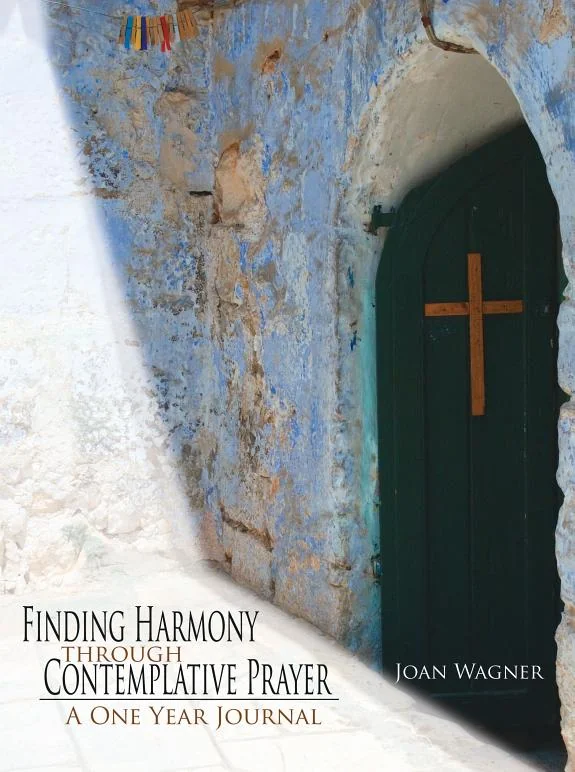
Finding Harmony Through Contemplative Prayer
 73
73

Finding Harmony Through Contemplative Prayer
Joan Wagner’s 2007 journal, *Finding Harmony Through Contemplative Prayer*, offers a disciplined, year-long program rooted in Lectio Divina. Its strength lies in its systematic approach, breaking down scripture engagement into manageable daily doses tied to ten salient themes. This structure is invaluable for those seeking consistency in their spiritual practice. However, the journal's reliance on specific scripture references, while its core function, may feel restrictive to readers who prefer more spontaneous exploration or engagement with non-canonical texts. A particular strength is the clear articulation of the four stages of Lectio Divina, which grounds the practice. The limitation, perhaps, is that the 'Finding H' blurb suggests a singular focus that, while clear, might not appeal to those seeking a broader range of spiritual methodologies. Wagner’s work provides a solid, if traditional, pathway for deepening scriptural connection.
📝 Description
73
Joan Wagner's 2007 journal guides daily prayer using Lectio Divina.
Finding Harmony Through Contemplative Prayer is a year-long devotional journal. It pairs scripture with ten themes for contemporary life: honesty, valuing others, repentance, forgiveness, salvation, mind, body, Spirit, faith, hope, and love. The journal's design encourages users to practice Lectio Divina, an ancient method of scripture engagement. This approach moves through reading, meditation, prayer, and contemplation. The goal is to build a spiritual connection with the divine through scripture, not just intellectual understanding.
Wagner's work is for individuals seeking a structured path for spiritual reflection and deeper scriptural engagement. It suits those who value daily practice and wish to connect scriptural insights with personal growth. The journal advocates for a slow, deliberate engagement with sacred texts, countering more superficial devotional methods. It aligns with a modern interest in embodied, mindful spiritual disciplines.
Published in 2007, this journal engages with the resurgence of interest in contemplative practices. It offers a modern application of ancient Christian traditions, particularly Lectio Divina. This method, with its four stages of reading, meditation, prayer, and contemplation, aims for a felt spiritual connection rather than mere intellectual assent. The journal's thematic structure over a year supports a sustained, embodied engagement with scripture, reflecting a broader contemporary turn toward mindful spiritual disciplines.
💡 Why Read This Book?
• Gain a structured, year-long devotional practice grounded in the ancient Christian method of Lectio Divina, allowing for consistent, deep engagement with scripture. • Explore ten specific themes—personal honesty, valuing others, repentance/forgiveness, salvation, mind, body, Spirit, faith, hope, and love—integrating spiritual growth into daily life. • Develop a personal contemplative practice that moves beyond mere reading to active meditation and prayer, fostering a direct connection with the divine through scripture.
⭐ Reader Reviews
Honest opinions from readers who have explored this book.
❓ Frequently Asked Questions
What is Lectio Divina as presented in Finding Harmony Through Contemplative Prayer?
Lectio Divina, as utilized in Joan Wagner's journal, is an ancient four-stage method of reading scripture: Lectio (reading the text), Meditatio (meditating on its meaning), Oratio (responding in prayer), and Contemplatio (resting in God's presence).
How does the journal structure daily scripture references?
The journal provides daily scripture references for one year, organized around ten core themes such as personal honesty, faith, hope, and love, guiding users through a systematic exploration of biblical texts.
Is Finding Harmony Through Contemplative Prayer suitable for beginners?
Yes, the journal is designed to guide users through the practice of Lectio Divina, making it accessible for beginners who wish to engage with scripture in a contemplative manner.
What are the ten themes covered in the journal?
The ten themes are personal honesty, valuing others, repentance/forgiveness, salvation, mind, body, Spirit, faith, hope, and love, providing a comprehensive framework for spiritual reflection.
When was Finding Harmony Through Contemplative Prayer first published?
The book, *Finding Harmony Through Contemplative Prayer: A One Year Journal*, was first published in 2007.
What is the primary goal of using this journal?
The primary goal is to foster a deeper understanding of scripture and draw closer to God through the practice of daily scripture reading and contemplative prayer.
🔮 Key Themes & Symbolism
Lectio Divina Practice
The journal is built around the disciplined application of Lectio Divina, an ancient monastic practice of engaging scripture. It guides the reader through the distinct stages: reading the text, meditating upon its meaning, responding through prayer, and finally, resting in contemplative silence. This method aims to move beyond intellectual assent to a transformative encounter with the divine, fostering spiritual growth through deliberate, slow engagement with sacred words.
Scriptural Engagement Framework
Wagner structures a year of daily scripture references around ten foundational themes. These themes—personal honesty, valuing others, repentance/forgiveness, salvation, mind, body, Spirit, faith, hope, and love—provide a comprehensive lens through which to interpret and internalize biblical passages. This thematic approach ensures a holistic spiritual journey, connecting scripture to practical aspects of daily life and personal development.
Personal Honesty and Integrity
A central tenet explored through the journal's thematic structure is personal honesty. This theme encourages readers to confront their inner lives with authenticity, examining their thoughts, motivations, and actions against the backdrop of scriptural teachings. It calls for a sincere self-assessment and a commitment to truthfulness, forming a bedrock for genuine spiritual progress and relationship with the divine.
The Interconnectedness of Spirit, Mind, and Body
The journal explicitly dedicates themes to the mind, body, and Spirit, emphasizing their interconnectedness within a holistic spiritual life. This approach counters any tendency to compartmentalize spiritual practice, encouraging readers to see these dimensions as unified aspects of their being that are all subject to divine influence and called to harmony. It promotes a balanced, integrated approach to spiritual well-being.
💬 Memorable Quotes
Direct passages from the work, attributed to the author.
“daily scripture references based on ten themes”
— This phrase expresses the journal's core structure, highlighting its systematic approach to integrating scripture with specific areas of personal and spiritual development over a year.
“ancient and sacred form of bible reading and contemplative prayer”
— This describes Lectio Divina, emphasizing its historical depth and sacred nature as the method employed within the journal to foster spiritual connection.
“personal honesty, valuing others, repentance/forgiveness”
— These specific themes illustrate the practical, ethical, and relational dimensions of spiritual growth that the journal seeks to address through scriptural study.
“draws us closer to God”
— This phrase articulates the ultimate aim of the journal's methodology—to facilitate a deepening relationship and communion with the divine through sustained contemplative practice.
“a one year journal”
— This clearly defines the format and duration of the devotional experience offered, indicating a commitment to a sustained period of spiritual discipline and reflection.
🌙 Esoteric Significance
Tradition
While rooted in Christian scripture, the journal's emphasis on contemplative prayer and deep scriptural immersion aligns with broader esoteric traditions that seek direct experience of the divine. Its methodical approach to inner transformation through sacred text can be seen as a practical application of principles found in Hermeticism and Gnosticism, which often prioritize gnosis (direct knowing) and the inner spiritual journey.
Symbolism
The journal's structure itself can be viewed symbolically: the year represents a cycle of spiritual development, the ten themes form a map of the soul's landscape, and the scripture references act as keys to unlock deeper spiritual understanding. The act of 'reading' scripture transcends literal interpretation, symbolizing the process of 'listening' to the divine voice within.
Modern Relevance
In contemporary spiritual landscapes, which often fragment into various disciplines, Wagner's work offers a unified approach. Its emphasis on Lectio Divina and integration of mind, body, and Spirit speaks to modern mindfulness practices and holistic wellness movements. Thinkers and practitioners in contemplative Christianity and those interested in the psychological dimensions of faith find value in its structured, yet deeply personal, devotional path.
👥 Who Should Read This Book
• Individuals seeking a structured, year-long devotional practice rooted in Christian scripture and contemplative methods. • Those interested in the ancient practice of Lectio Divina and its application to contemporary life. • Readers who wish to integrate spiritual reflection with personal growth across ten key life themes, including honesty, faith, and forgiveness.
📜 Historical Context
Published in 2007, *Finding Harmony Through Contemplative Prayer* arrived during a period of renewed interest in contemplative spirituality, a trend that saw many individuals seeking deeper, more introspective forms of religious or spiritual practice. This resurgence contrasted with more evangelical or performance-oriented approaches prevalent in some Christian circles. Wagner's work situates itself within the long lineage of Christian mysticism, specifically championing Lectio Divina, a practice that had seen revivals throughout Christian history, notably in the Benedictine tradition. While not a direct engagement with figures like Thomas Merton, who popularized contemplative practices in the 20th century, Wagner's journal offers a more structured, daily application of these principles for the layperson. The book's reception was generally positive among those seeking structured devotional aids, fitting into a broader market for spiritual growth resources that emphasized ancient wisdom for modern challenges.
📔 Journal Prompts
Personal honesty: Reflect on a moment this week where your actions aligned with or diverged from your inner truth.
Valuing others: How did the scripture for today illuminate the importance of empathy in your interactions?
Repentance/forgiveness: Consider a situation where offering or receiving forgiveness was challenging, using today's reading as a guide.
Mind, Body, Spirit: Explore the connection between physical well-being and spiritual clarity as presented in today's scripture.
Faith and Hope: Identify one instance where your faith was tested and how hope sustained you, drawing from the day's theme.
🗂️ Glossary
Lectio Divina
An ancient monastic practice of reading scripture in four stages: Lectio (reading), Meditatio (meditation), Oratio (prayer), and Contemplatio (contemplation), aimed at spiritual transformation.
Contemplative Prayer
A form of prayer that seeks to cultivate a deep sense of awareness of God's presence, often involving silence, stillness, and receptivity rather than spoken words.
Scripture References
Specific passages from the Bible (Old and New Testaments) designated for reading and reflection on a given day, linked to the journal's thematic structure.
Thematic Focal Points
The ten core subjects (e.g., personal honesty, faith, love) around which the daily scripture readings and reflections are organized throughout the year.
Meditation (Meditatio)
The second stage of Lectio Divina, where the reader reflects deeply on the scripture, allowing its meaning to sink into their heart and mind.
Salvation
In a Christian context, the deliverance from sin and its consequences, often understood as a central theme of scripture and a focus of spiritual reflection.
Spirit
Referring to the non-physical essence of a person, the divine spark, or the Holy Spirit, a key dimension explored in the journal's holistic approach to spiritual life.
This book appears in 1 collection
🔮 Readers Also Liked
Browse all →







From the “Contemplative Prayer” Collection
View all →






More Free Mysticism & Contemplation Books
View all →