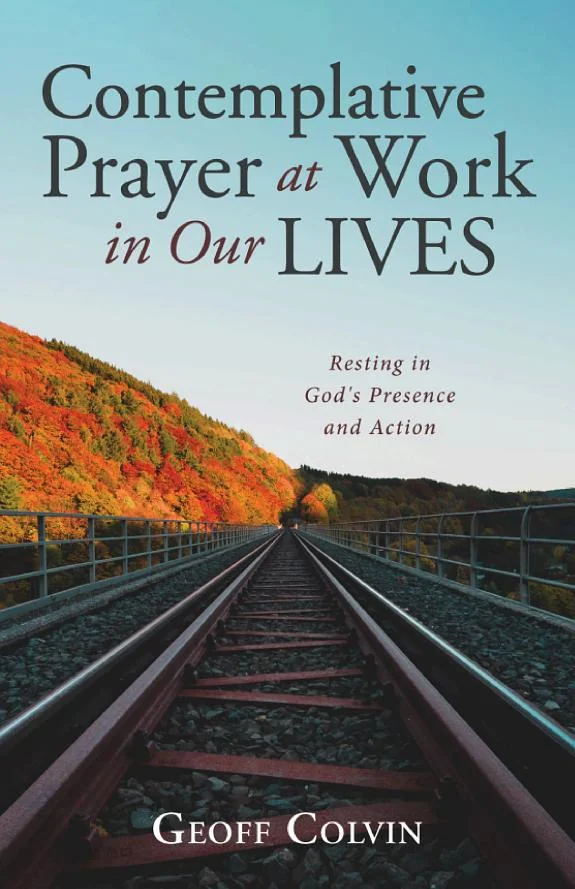
Contemplative Prayer at Work in Our Lives
 80
80

Contemplative Prayer at Work in Our Lives
Geoff Colvin’s *Contemplative Prayer at Work in Our Lives* confronts the common spiritual aridness many Christians encounter. He rightly identifies the dissatisfaction arising from prayer that feels rote rather than relational. The book’s strength lies in its practical, down-to-earth approach, demystifying a form of prayer often perceived as overly complex or exclusive. Colvin’s candid sharing of his own journey lends authenticity. However, while the historical context is touched upon, a deeper engagement with figures like Julian of Norwich or the influence of Eastern Orthodox hesychasm could have further enriched the tradition's breadth. The discussion on 'active waiting' is particularly resonant, offering a tangible method for cultivating presence. It serves as a valuable primer for those seeking to move beyond superficial prayer practices, though it may leave advanced practitioners wanting more nuanced theological or mystical exposition. Colvin offers a compassionate and accessible guide to a richer spiritual life.
📝 Description
80
Geoff Colvin's 2021 book argues that Christian prayer can be more than rote recitation.
Many Christians find traditional prayer methods hollow, leading to a search for deeper divine connection. Geoff Colvin's *Contemplative Prayer at Work in Our Lives* addresses this spiritual malaise. The book suggests that a vibrant prayer life stems not from achieving perfection, but from cultivating an open receptivity to God's presence. This form of prayer is presented as an active engagement, accessible to anyone willing to shift their focus. It is written for individuals who feel their current prayer practices have become stagnant or unsatisfying, and who yearn for a more intimate relationship with God. The work also guides those new to contemplative traditions within Christianity, offering a framework for a less didactic, more experiential approach to prayer. It speaks to the earnest seeker who feels their spiritual life has reached a plateau.
This work draws from the long history of Christian contemplative prayer, a tradition with roots in the early Desert Fathers and Mothers. It emphasizes direct experience of the divine over abstract theology, echoing the sentiments of figures like the anonymous author of *The Cloud of Unknowing*. This lineage highlights a persistent current within Christianity focused on inner transformation through silent communion, moving beyond verbalized petition.
💡 Why Read This Book?
• You will learn a practical method for cultivating 'active waiting,' a technique for intentional receptivity to divine presence, as detailed in Colvin's approach. • You will gain an understanding of 'discerning the spirit' within your prayer life, a concept central to distinguishing genuine spiritual movement from mere distraction. • You will discover how to integrate a deeper prayer practice into the ordinary moments of your day, inspired by the book's focus on making contemplative prayer a lived reality.
⭐ Reader Reviews
Honest opinions from readers who have explored this book.
❓ Frequently Asked Questions
What distinguishes contemplative prayer from other Christian prayer forms?
Contemplative prayer emphasizes direct, experiential union with God, often through silent attention and receptivity, rather than petitionary or devotional forms. It's less about asking for things and more about being present with the divine.
Is contemplative prayer only for monks or spiritual elites?
No, Geoff Colvin's work argues that contemplative prayer is accessible to all Christians. The book focuses on integrating these practices into everyday life, regardless of one's vocational status or perceived spiritual attainment.
What is the historical origin of Christian contemplative prayer?
Its roots trace back to the early Christian hermits and Desert Fathers and Mothers of the 3rd and 4th centuries, who sought direct experience of God in solitude and silence.
How does one practice 'active waiting' as described in the book?
'Active waiting' involves a conscious, gentle turning of one's attention toward God, remaining open and receptive without forcing thoughts or feelings. It’s a posture of humble readiness for divine presence.
Can someone with a busy, secular job practice contemplative prayer?
Yes, the book is specifically designed for laypeople. Colvin suggests that moments of quiet attention can be found even amidst daily responsibilities, transforming ordinary activities into opportunities for spiritual connection.
What does 'discerning the spirit' mean in this context?
It refers to the practice of paying attention to the inner movements of one's heart and mind during prayer, learning to distinguish between distractions, ego-driven desires, and the subtle promptings of the Holy Spirit.
🔮 Key Themes & Symbolism
The Void in Prayer Life
Colvin addresses the pervasive feeling of emptiness that can afflict individuals engaged in Christian prayer. This isn't a critique of faith itself, but of methods that have become mechanical. The 'void' signifies a perceived lack of genuine divine encounter, a spiritual drought experienced by those seeking more than ritual. This theme highlights the book's purpose: to offer a pathway back to a vibrant, felt connection with God, moving beyond mere intellectual assent or habitual recitation.
Active Waiting and Receptivity
Central to the book is the concept of 'active waiting.' This is not passive idleness but a focused, intentional posture of openness to God's presence. It involves quieting the mind's chatter and cultivating a sensitivity to the subtle movements of the spirit. This theme emphasizes that prayer is a two-way communication, requiring receptivity on the part of the practitioner to truly hear and experience the divine, moving beyond self-centered petitions.
Integration into Daily Life
Unlike texts that confine spiritual practice to specific times or places, Colvin's work stresses the integration of contemplative prayer into the fabric of everyday existence. The book explores how moments of quiet attention, mindfulness, and receptivity can be found amidst work, family life, and other secular activities. This theme underscores the idea that the divine is not confined to sacred spaces but is immanent and accessible in all of life's circumstances.
Discerning the Spirit
A crucial element discussed is the ability to 'discern the spirit.' This involves developing an inner awareness to differentiate between genuine spiritual promptings, ego-driven desires, mental noise, and external distractions. Colvin guides readers in cultivating this discernment, enabling them to better recognize and respond to the authentic voice of God within their inner landscape. It's about refining one's spiritual sensitivity.
💬 Memorable Quotes
Direct passages from the work, attributed to the author.
“The common experience is that prayer practice has dried up.”
— This statement captures the central problem the book seeks to address: the widespread feeling of spiritual stagnation and the loss of vitality in personal prayer life among Christians.
“There is a void in their spiritual lives.”
— This highlights the deep sense of lack and disconnection that can arise when traditional prayer methods fail to foster a felt relationship with the divine.
“They want a deeper union with God yet experience estrangement.”
— This paradox captures the struggle of many believers who desire intimacy with God but feel alienated from their current spiritual path.
“The book offers a pathway beyond rote and empty forms of prayer.”
— This signifies the book's practical aim: to provide concrete methods for revitalizing one's prayer life, moving from superficiality to genuine spiritual experience.
💡 Key Ideas
Editorial paraphrase of the work's core concepts — not direct quotes.
Contemplative Prayer at Work in Our Lives suggests prayer is an active engagement.
This paraphrased concept emphasizes that contemplative prayer is not passive resignation but a deliberate, attentive turning towards God.
🌙 Esoteric Significance
Tradition
While framed within Christian practice, the book taps into the broader esoteric currents of direct, unmediated spiritual experience. It aligns with mystical traditions that emphasize interiority and the cultivation of inner awareness as a means of union with the divine. This appeals to Gnostic impulses towards direct knowledge (gnosis) and Hermetic principles of correspondence between the inner and outer worlds, though Colvin grounds these within orthodox Christian understanding.
Symbolism
The primary 'symbol' explored is the concept of 'presence' itself – the felt, immanent reality of God accessible not through dogma but through focused attention. The 'void' can be seen as a symbolic representation of spiritual disconnection, a necessary precursor to seeking deeper communion. The 'active waiting' becomes a symbolic posture, an outward manifestation of an inward orientation towards the divine.
Modern Relevance
Colvin's work speaks to contemporary movements like Christian mindfulness, centering prayer, and the general 'spiritual but not religious' demographic seeking authentic inner experience. It offers a Christian framework for practices that echo mindfulness meditation, resonating with thinkers and practitioners who explore the intersection of psychology, neuroscience, and contemplative practice, such as those involved with the Mind & Life Institute.
👥 Who Should Read This Book
• Christians experiencing a plateau in their prayer life seeking a more direct, experiential connection with God. • Individuals interested in the historical and practical aspects of Christian mysticism, particularly those drawn to figures from the medieval period. • Seekers looking for accessible methods to cultivate inner peace and spiritual awareness within the context of their daily lives and existing faith tradition.
📜 Historical Context
Published in 2021, Geoff Colvin's *Contemplative Prayer at Work in Our Lives* emerges in an era marked by a resurgence of interest in contemplative spirituality across various traditions, often as a counterpoint to the hyper-connectivity and perceived superficiality of modern life. Its roots lie deep within Christian mysticism, a lineage that includes figures like the anonymous author of *The Cloud of Unknowing* (circa 1370) and later mystics such as Teresa of Ávila and John of the Cross. Colvin's work implicitly engages with the broader movement of contemplative Christianity, which saw significant revitalization in the mid-20th century, partly in response to existentialist thought and the perceived failures of post-war materialism. While not directly engaging with, for instance, Thomas Merton's influential writings on the topic, Colvin’s book shares Merton’s concern for making contemplative practice accessible to the modern layperson. The reception of such works often highlights a tension between academic theological discourse and the practical needs of spiritual seekers.
📔 Journal Prompts
The 'void' in prayer life: Assess its presence and potential sources.
Reflections on 'active waiting': How does this posture feel in practice?
Moments of perceived divine presence: Document instances of felt connection.
Discerning the spirit: Analyze inner movements during prayer.
Integrating contemplative prayer into work: Identify specific opportunities.
🗂️ Glossary
Contemplative Prayer
A form of Christian prayer focused on developing intimacy and union with God through silent attention, receptivity, and a passive awareness of God's presence.
Active Waiting
A practice of intentional receptivity, where one gently turns their attention towards God, remaining open and alert without forcing thoughts or feelings.
The Void
A term used to describe the spiritual emptiness or lack of felt connection that can arise when traditional prayer practices become routine or unsatisfying.
Discerning the Spirit
The process of becoming aware of and distinguishing between different inner movements – divine promptings, egoic desires, distractions – during prayer and spiritual practice.
Presence
The felt sense of God's immanent reality, accessible through focused attention and receptivity, rather than through intellectual understanding alone.
Rote Prayer
Prayer performed out of habit or routine, often lacking genuine engagement or heartfelt intention, leading to a sense of emptiness.
Estrangement
A feeling of distance or alienation from one's spiritual path or from God, often resulting from unsatisfying prayer experiences.
This book appears in 1 collection
🔮 Readers Also Liked
Browse all →






From the “Contemplative Prayer” Collection
View all →








More Free Mysticism & Contemplation Books
View all →