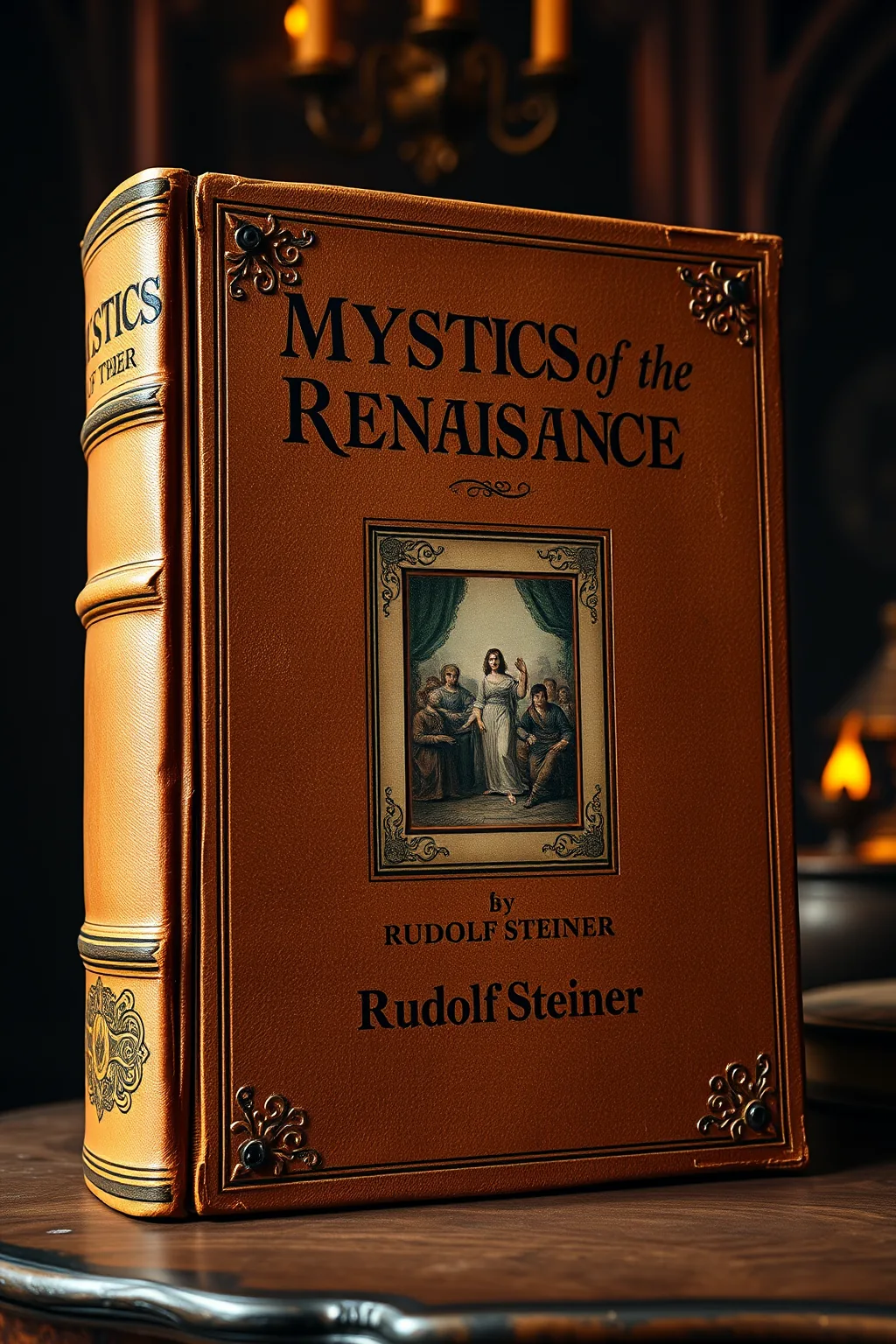
Mystics of the Renaissance
 82
82

Mystics of the Renaissance



Rudolf Steiner's 'Mystics of the Renaissance' is an indispensable guide for the discerning seeker. Steiner masterfully dissects the esoteric underpinnings of figures like Eckhart, Cusa, and Boehme, revealing their profound spiritual insights not as historical footnotes but as living spiritual energies. His lucid prose unveils the hidden symbolism and visionary experiences that fueled their work, demonstrating a unique ability to translate complex metaphysical concepts into accessible wisdom. This collection is a treasure trove for anyone interested in the lineage of Western esotericism, offering a deep dive into the contemplative and alchemical streams that continue to flow through our modern world. A truly illuminating work.
📝 Description
82
Rudolf Steiner's 1909 'Mystics of the Renaissance' examines spiritual forces in the era.
Rudolf Steiner's work 'Mystics of the Renaissance,' first published in 1909, analyzes key figures from the Renaissance through an esoteric lens. Steiner focuses on individuals like Meister Eckhart, Johannes Tauler, Paracelsus, and Giordano Bruno, viewing them not just as historical personalities but as channels for spiritual energies. He argues that their intense inner lives, expressed through symbolism and direct spiritual experience, influenced the intellectual currents of their time and foreshadowed later scientific and philosophical developments.
The book invites readers to recognize the underlying spiritual dynamics of this period. Steiner suggests these mystics, engaged in what he terms the 'Great Work,' demonstrate a connection between human consciousness and the cosmos. It presents their pursuits as part of a larger spiritual evolution, offering a path to understanding the soul's search for divine understanding.
In the early 20th century, Rudolf Steiner developed his system of Anthroposophy, a spiritual philosophy aiming to bridge science, art, and religion. 'Mystics of the Renaissance' is an early expression of this work, interpreting historical figures through the lens of spiritual science. Steiner sought to reveal the hidden spiritual impulses driving human history, placing Renaissance mystics within a lineage of direct spiritual experience and cosmic awareness, distinct from purely historical or theological accounts. This approach aligns with broader esoteric traditions that see history as shaped by unseen spiritual forces and individual inner development.
✍️ Author

Rudolf Steiner
Rudolf Steiner was an Austrian philosopher, esotericist, and social reformer, founder of anthroposophy.
Occultist
💡 Why Read This Book?
Uncover the hidden spiritual heritage of the Renaissance. This book reveals how mystics like Eckhart and Boehme were pioneers of inner exploration, their experiences echoing into modern thought. Ideal for seekers of profound wisdom, students of Western esotericism, and practitioners looking to connect with timeless contemplative practices. Discover the living currents of spiritual evolution within these pages.
⭐ Reader Reviews
Honest opinions from readers who have explored this book.
❓ Frequently Asked Questions
Who were the primary mystics discussed in the book?
The book features key figures such as Meister Eckhart, Johannes Tauler, Henry Suso, Paracelsus, Nicholas of Cusa, Jacob Boehme, and Giordano Bruno, exploring their unique spiritual paths and contributions.
What is Rudolf Steiner's perspective on these mystics?
Steiner views them as living embodiments of spiritual evolution, whose inner experiences and teachings anticipated and influenced later currents of modern thought and spiritual development.
Is this book suitable for beginners in mysticism?
While the subject matter is profound, Steiner's accessible yet deep style makes it engaging for those new to esoteric studies, offering a foundational understanding of Renaissance mysticism.
What kind of 'hidden knowledge' does Steiner reveal?
Steiner unveils the esoteric principles, symbolic language, and direct spiritual perceptions that informed these mystics' lives, connecting their inner work to broader cosmic and human evolution.
How does this book relate to modern thought?
Steiner demonstrates how the spiritual insights and methods of these Renaissance mystics laid groundwork for modern philosophical, scientific, and spiritual inquiries, showing their enduring relevance.
🔮 Key Themes & Symbolism
The Inner Alchemy of the Soul
This theme looks at the transformative processes undertaken by Renaissance mystics, viewing their spiritual practices not merely as contemplation but as an active, internal alchemy. Steiner elucidates how figures like Paracelsus and Boehme sought to transmute the base elements of the human soul into higher spiritual substances. It explores the symbolic language and visionary experiences employed to navigate this profound inner journey, highlighting the quest for divine union and the awakening of latent spiritual capacities within the individual.
Cosmic Consciousness and Human Evolution
Steiner posits that these mystics possessed an awareness of a broader cosmic order and its intricate connection to human development. The essays explore how their insights into spiritual hierarchies, celestial influences, and the divine blueprint of existence offered a framework for understanding humanity's place in the universe. This theme emphasizes the idea that their individual spiritual quests were intrinsically linked to the unfolding destiny of humankind, revealing a teleological aspect to spiritual striving.
The Legacy of Contemplative Vision
This theme focuses on the enduring impact of the contemplative traditions championed by figures like Meister Eckhart and his followers. Steiner examines their methods of deep meditation, direct apprehension of spiritual truth, and the articulation of ineffable experiences through symbolic language. It highlights how their spiritual discipline and visionary insights provided a potent counterpoint to the burgeoning materialism of their time and continue to offer a pathway to profound self-knowledge and spiritual awakening for contemporary seekers.
💬 Memorable Quotes
Direct passages from the work, attributed to the author.
“The true mystic does not merely think about God; he becomes God.”
— This powerful statement expresses the goal of mystical aspiration: not intellectual assent but a profound, transformative union where the individual's consciousness merges with the divine essence.
“The spirit is the architect of the material world.”
— This highlights the esoteric principle that consciousness and spiritual forces are the fundamental reality, shaping and directing the tangible, physical realm we perceive.
“Wisdom is not found in books, but in the silence of the soul.”
— This emphasizes the primacy of inner experience and contemplative practice over external knowledge acquisition for attaining true spiritual understanding.
“The veil between worlds is thin for those who seek with pure heart.”
— This suggests that sincere spiritual seeking and inner purity act as keys, diminishing the perceived separation between the material and spiritual dimensions.
“Every human being carries a spark of the divine within.”
— This reflects the core tenet of many mystical traditions, asserting the inherent sacredness and potential for divine realization within every individual soul.
🌙 Esoteric Significance
Tradition
This work is deeply rooted in the Western Esoteric Tradition, specifically drawing from Christian mysticism, Neoplatonism, Hermeticism, and Alchemy. Steiner interprets the Renaissance mystics through an Anthroposophical lens, emphasizing their role as spiritual pioneers whose insights into the nature of consciousness, the cosmos, and human evolution align with esoteric principles of transformation and divine realization.
Symbolism
Steiner masterfully decodes the detailed symbolism employed by these mystics—from the alchemical metaphors of transformation to the cosmological visions of Boehme. He reveals how their symbolic language served as a bridge between the visible and invisible realms, offering pathways to understanding abstract spiritual truths through concrete, evocative imagery and archetypal figures. The symbolism is presented not as mere allegory, but as a direct expression of spiritual realities.
Modern Relevance
The book's modern relevance lies in its powerful assertion that the profound contemplative and visionary experiences of the Renaissance mystics offer timeless wisdom for contemporary seekers. Steiner connects their inner work to the challenges and opportunities of modern life, suggesting that understanding these spiritual lineages can foster individual growth, a deeper connection to nature, and a more holistic worldview in an increasingly fragmented world.
👥 Who Should Read This Book
This informative work is essential for students of Western Esotericism seeking to understand the lineage of spiritual thought from the late Middle Ages through the Renaissance. Scholars of philosophy and religious history will find Steiner's unique interpretations invaluable. Spiritual seekers and practitioners exploring contemplative practices, alchemy, and the nature of consciousness will discover profound inspiration and practical insights. Beginners curious about the mystical dimensions of human experience will find Steiner's accessible yet profound prose a compelling entry point into the world of inner exploration and hidden knowledge.
📜 Historical Context
Published in 1911, Rudolf Steiner's 'Mystics of the Renaissance' emerged during a period of intense intellectual and spiritual ferment. The late 19th and early 20th centuries witnessed a resurgence of interest in esoteric traditions, occultism, and alternative spiritualities, often as a reaction against the perceived materialism and rationalism of the era. Thinkers and artists sought deeper meaning beyond conventional science and religion. Steiner himself was a prominent figure in this milieu, founding Anthroposophy, a spiritual philosophy that bridges science, art, and religion. By examining the Renaissance mystics, Steiner aimed to demonstrate a continuous lineage of spiritual insight and inner development that transcended historical epochs, arguing that their profound experiences were not mere historical relics but vital forces that could inform and inspire contemporary spiritual consciousness and scientific inquiry.
📔 Journal Prompts
Reflect on a moment in your life when you felt a profound connection to something larger than yourself. What was the nature of this experience?
How does Steiner's portrayal of these mystics challenge your understanding of 'history' and 'knowledge'?
Explore the concept of inner alchemy: What 'base elements' within yourself might you wish to transform through spiritual practice?
Consider the symbolic language of a spiritual text or practice you are familiar with. What deeper meanings might it hold?
In what ways do you believe spiritual insights from the past can inform or guide contemporary challenges?
🗂️ Glossary
Anthroposophy
A spiritual philosophy founded by Rudolf Steiner, seeking to connect the spiritual in the human being with the spiritual in the universe through a path of knowledge and inner development.
Esotericism
Teachings or practices that are meant for or understood by a select group of people with specialized knowledge or insight, often concerning spiritual or mystical subjects.
Contemplation
A form of deep, sustained meditation or reflection focused on spiritual truths, divine presence, or profound philosophical ideas, aiming for direct experience.
Alchemy
Historically, a philosophical and proto-scientific tradition concerned with the transmutation of base metals into gold, but more esoterically, the transformation of the soul and spirit towards perfection.
Visionary Experience
Direct apprehension or perception of spiritual realities, archetypes, or higher beings, often characterized by intense imagery and profound symbolic meaning.
This book appears in 3 collections
🔮 Readers Also Liked
Browse all →



More by Rudolf Steiner
All books →



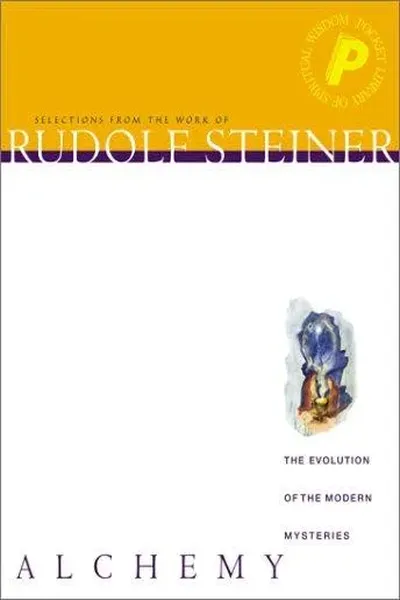
From the “Meditation” Collection
View all →
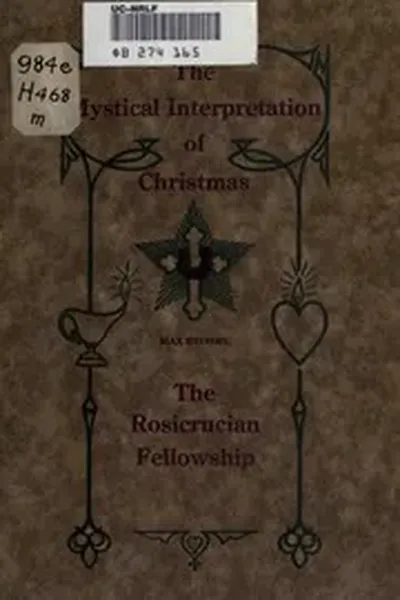

![The mystic oracle, or, The complete fortune-teller and dream book / [F.M. Lupton].](/img/thumb/the-mystic-oracle-or-the-complete-fortune-teller-and-dream-book-f-m-lupton.webp)


More Free Mysticism & Contemplation Books
View all →