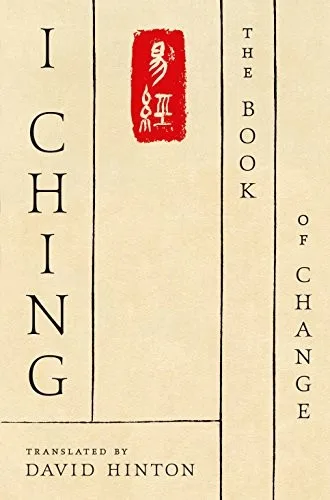
The Original I Ching Oracle

 62
62

The Original I Ching Oracle



Rudolf Ritsema's 'The Original I Ching Oracle' stands as a beacon for those seeking authentic engagement with this venerable oracle. As an editor immersed in the esoteric arts, I find Ritsema's rendition to be particularly potent, stripping away layers of modern misinterpretation to reveal the I Ching's core philosophical and divinatory power. The translation is both scholarly and spiritually resonant, capturing the profound elegance of the original text. This edition is invaluable for its ability to connect practitioners to the I Ching's deep symbolic language, offering not just answers, but a framework for understanding cosmic principles. Highly recommended for serious students of divination and Eastern philosophy.
📝 Description
62
Rudolf Ritsema published 'The Original I Ching Oracle' to present a direct translation of the Zhou Yi.
This book presents Rudolf Ritsema's translation of the Zhou Yi, the foundational text of the I Ching. Ritsema focuses on the original Chinese text, aiming to convey its philosophical and divinatory meanings without extensive modern interpretation. The work details the 64 hexagrams, their associated imagery, and the judgments, providing a close reading of the classical commentary.
The I Ching is presented not just as a tool for divination, but as a system for understanding change and cosmic patterns. It examines the interplay of Yin and Yang, the cycles of nature, and the principles of the Dao. Ritsema's commentary serves to clarify the dense symbolism and the historical context of the text, making it accessible to those interested in its deeper layers.
The book is intended for readers who seek an unadorned encounter with the I Ching's core ideas. It encourages contemplation of the text's wisdom for personal insight and a more ordered approach to life. The aim is to foster a connection with the text's original intent and its enduring relevance.
The I Ching, or 'Book of Changes,' is a central text in Chinese esoteric traditions. Its roots extend back to ancient divination practices, evolving into a complex philosophical system. For centuries, scholars and practitioners have used its hexagrams and associated texts to understand cosmic principles, human affairs, and the nature of change. Texts like this one engage with the I Ching's role as a guide to harmonizing with the Dao, the fundamental order of the universe, and its use in discerning patterns within seemingly chaotic events.
💡 Why Read This Book?
Unravel the intricate tapestry of cosmic change and discover profound insights into life's mysteries. 'The Original I Ching Oracle' offers a direct conduit to ancient wisdom, providing tools for self-reflection, decision-making, and spiritual growth. Ideal for seekers of truth, practitioners of divination, and scholars of Eastern philosophy yearning for authentic understanding.
⭐ Reader Reviews
Honest opinions from readers who have explored this book.
❓ Frequently Asked Questions
What is the I Ching?
The I Ching, or 'Book of Changes,' is an ancient Chinese text used for divination and philosophical contemplation. It consists of 64 hexagrams, each representing a fundamental situation or archetype, and offers guidance on navigating life's transformations.
What makes this translation 'original'?
This edition prioritizes an authentic, unadulterated rendering of the I Ching's core principles and symbolic language, aiming to connect readers directly with its ancient wisdom without excessive modern interpretation.
How can I use the I Ching for divination?
Traditionally, yarrow stalks or coins are used to generate hexagrams. The resulting hexagram and its changing lines are then interpreted using the text's commentary to gain insight into a specific question or situation.
Is prior knowledge of Chinese philosophy required?
While beneficial, prior knowledge is not strictly necessary. Ritsema's work is designed to be accessible, guiding newcomers through the foundational concepts and symbolism of the I Ching.
What is the philosophical significance of the I Ching?
The I Ching is deeply philosophical, exploring themes of change, balance, causality, and the interconnectedness of all phenomena. It encourages a harmonious relationship with the natural order of the universe.
🔮 Key Themes & Symbolism
The Nature of Change and Transformation
At its heart, the I Ching is a profound exploration of constant flux. It teaches that all things are in a state of perpetual transformation, influenced by the dynamic interplay of Yin and Yang. Understanding these cyclical shifts allows one to adapt, to find opportunity in adversity, and to navigate life's inevitable changes with wisdom and grace. This theme emphasizes the impermanence of all phenomena and the wisdom found in embracing the natural flow of existence, rather than resisting it.
The Universal Principles of Yin and Yang
The fundamental duality of Yin (passive, dark, feminine) and Yang (active, light, masculine) is the bedrock of I Ching cosmology. This text illustrates how these opposing yet complementary forces are in constant motion, creating and transforming the world around us. By understanding their balance and interplay within ourselves and in external events, practitioners can achieve harmony, make balanced decisions, and align their actions with the cosmic order. It's a lesson in seeing the interconnectedness of opposites.
Oracular Wisdom and Practical Guidance
Beyond its philosophical depth, the I Ching serves as a potent oracle, offering guidance on specific questions and situations. Each hexagram is a symbolic representation of a particular scenario, providing nuanced insights into potential outcomes and recommended courses of action. This theme highlights the I Ching's practical application as a tool for introspection, ethical decision-making, and spiritual discernment, empowering individuals to face life's challenges with informed awareness.
💬 Memorable Quotes
Direct passages from the work, attributed to the author.
“The superior man understands the signs of the times.”
— This highlights the importance of discernment and foresight, urging individuals to be aware of subtle indicators and trends to make wise decisions.
“When one is sure of his path, he will not be lost.”
— Emphasizes the power of inner conviction and clarity of purpose in navigating life's uncertainties and avoiding misdirection.
“Stillness leads to clarity.”
— Suggests that periods of quiet contemplation and reflection are essential for gaining true understanding and making sound judgments.
“Opposites generate each other.”
— A concise expression of the Yin and Yang principle, illustrating how seemingly contrary forces are interdependent and create one another.
💡 Key Ideas
Editorial paraphrase of the work's core concepts — not direct quotes.
Change is the only constant.
A fundamental tenet of the I Ching, this quote underscores the dynamic nature of reality and the necessity of adaptability for survival and growth.
🌙 Esoteric Significance
Tradition
The I Ching is deeply embedded within the Taoist and Confucian traditions, serving as a bridge between philosophical inquiry and practical divination. Esoterically, it is viewed as a cosmic map, revealing the underlying order and energetic currents of the universe. Its hexagrams are seen not just as symbols of situations, but as archetypal patterns of consciousness and universal forces, guiding the practitioner towards alignment with the Dao.
Symbolism
Key symbols include the unbroken line (Yang) representing heaven, creativity, and strength, and the broken line (Yin) representing earth, receptivity, and yielding. The eight trigrams (combinations of three lines) and the 64 hexagrams (combinations of two trigrams) form a complex symbolic language that describes all possible states of being and change. These symbols are not static but dynamic, representing processes and transformations.
Modern Relevance
In the modern era, the I Ching's relevance transcends its ancient origins. It offers a powerful framework for understanding the complexities of personal and global change, providing tools for mindfulness, ethical decision-making, and navigating uncertainty. Its emphasis on balance, adaptability, and interconnectedness resonates deeply with contemporary seekers of wisdom and holistic living, serving as a timeless guide for personal growth and spiritual development.
👥 Who Should Read This Book
This comprehensive volume is an indispensable resource for a diverse audience. **Beginners** seeking an authentic introduction to the I Ching will find Ritsema's translation accessible and informative. **Scholars** of Eastern philosophy and comparative religion will appreciate its scholarly rigor and depth. **Spiritual seekers** and practitioners of divination will discover a potent tool for self-discovery and guidance. **Anyone** interested in ancient wisdom traditions, cyclical patterns, and the art of harmonizing with the natural flow of life will find profound value within its pages.
📜 Historical Context
The I Ching, or 'Book of Changes,' traces its origins back to ancient China, with roots believed to extend over 3,000 years. Its development spans from early shamanic divination practices and the compilation of philosophical texts during the Western Zhou Dynasty to its later incorporation into the Confucian canon. During the Han Dynasty (206 BCE – 220 CE), the I Ching solidified its position as one of the Five Classics, a central to Chinese education and statecraft. Its influence permeated all aspects of Chinese society, from imperial court decisions and military strategy to personal ethics and artistic expression. Throughout history, numerous scholars and mystics have contributed commentaries, enriching its layers of interpretation. Rudolf Ritsema's work aims to present a version that honors this deep historical and philosophical lineage, connecting modern readers to its enduring legacy.
📔 Journal Prompts
Reflect on a recent significant change in your life. How did the principles of Yin and Yang manifest during this period?
Consider a current challenge you are facing. What hexagram might represent this situation, and what guidance does it offer?
Meditate on the concept of 'emptiness' as described in the I Ching. How can embracing stillness lead to greater clarity in your life?
How can you better align your daily actions with the natural cycles of the universe as suggested by the I Ching?
Explore the archetype of a particular hexagram that speaks to your current personal journey. What lessons does it hold for your growth?
🗂️ Glossary
Hexagram
A symbol composed of six stacked lines, either broken (Yin) or unbroken (Yang). There are 64 unique hexagrams, each representing a specific situation or stage of development in the I Ching.
Trigram
A symbol composed of three stacked lines, either broken (Yin) or unbroken (Yang). There are eight basic trigrams, which are combined to form the 64 hexagrams.
Yin
The feminine, passive, dark, receptive, and yielding principle in Chinese philosophy, often represented by a broken line in the I Ching.
Yang
The masculine, active, light, assertive, and creative principle in Chinese philosophy, often represented by an unbroken line in the I Ching.
Dao (Tao)
The fundamental principle of the universe in Chinese philosophy; the natural order, the Way, or the Path. The I Ching is a guide to understanding and aligning with the Dao.
This book appears in 1 collection
🔮 Readers Also Liked
Browse all →









More by Rudolf Ritsema
All books →

From the “Divination” Collection
View all →




More Free Divination & Tarot Books
View all →