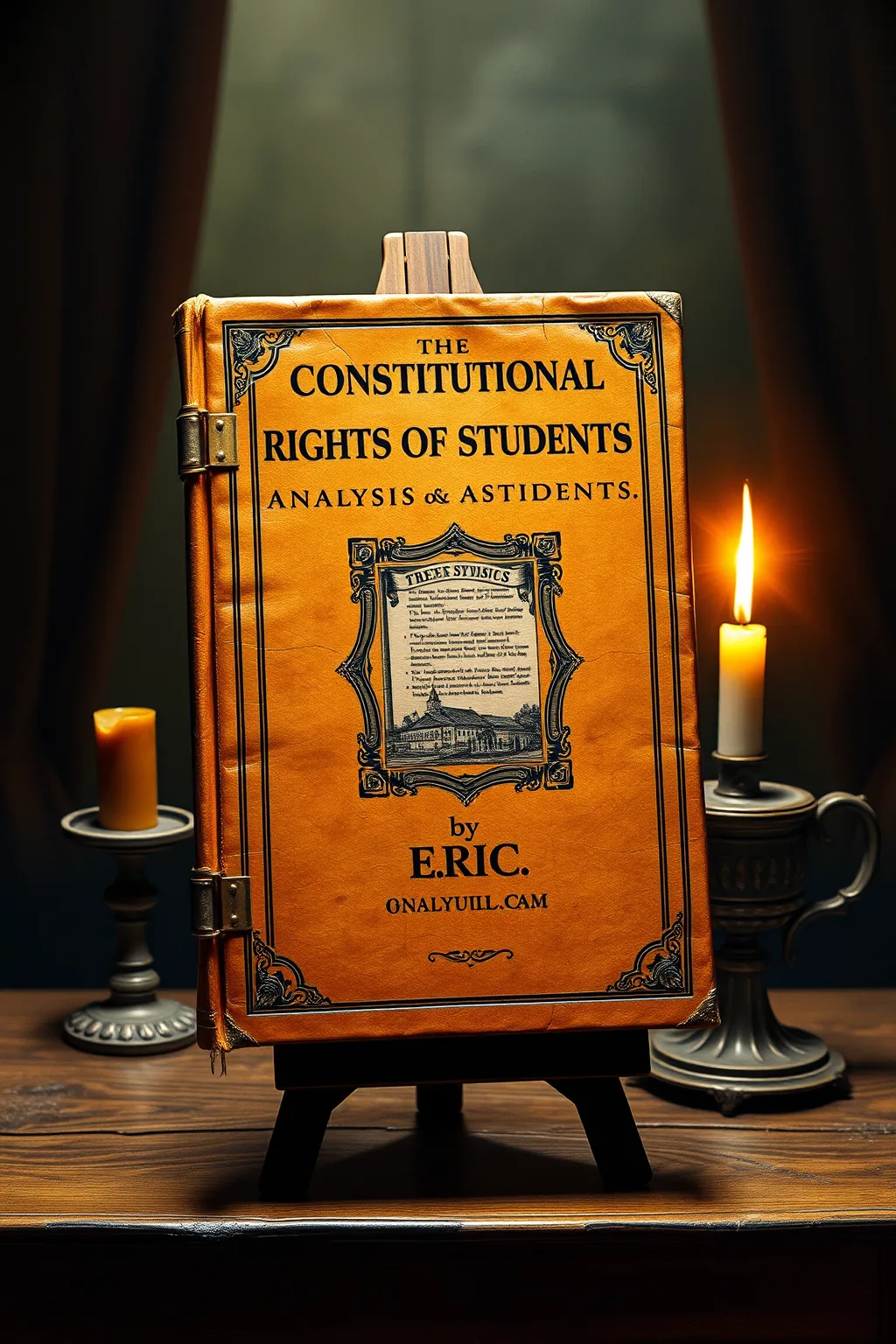
ERIC ED125980: The Constitutional Rights of Students: Analysis and Litigation Materials for the Student's Lawyer.
 81
81

ERIC ED125980: The Constitutional Rights of Students: Analysis and Litigation Materials for the Student's Lawyer.



ERIC's 'The Constitutional Rights of Students' is a seminal work that combines legal scholarship with esoteric philosophy, providing a unique perspective on student rights. Published in 1976, this manual is a treasure trove of information for legal services lawyers representing students whose rights have been violated. The book's strength lies in its comprehensive analysis of legal theories and judicial precedents, making it an indispensable resource for anyone involved in educational law. The inclusion of esoteric elements adds a layer of intrigue, making the text appealing to modern esoteric seekers who are interested in the deeper meanings behind legal practices. The manual's structure, with sections dedicated to different legal strategies and suggested pleadings, ensures that readers can easily navigate the complex world of student rights. Overall, this book is a five-star read for those who appreciate the fusion of legal expertise and esoteric thought.
📝 Description
81
This 1976 manual addresses student rights in educational law.
Published in 1976, this volume provides legal analysis and litigation materials for attorneys representing students. It focuses on the constitutional rights of students within the educational system. The book offers detailed examinations of legal theories and judicial precedents relevant to these cases. It also includes suggested pleadings for practitioners.
The work is designed for lawyers who need to understand and defend students' rights against school authorities. It presents complex legal concepts in a structured manner, aiming to equip legal professionals with the necessary tools for their cases. The content covers the legal framework governing students in educational institutions.
While presented as a legal manual, the description frames its approach as engaging with 'esoteric and mystical dimensions of legal philosophy.' It suggests a search for 'hidden knowledge and symbolism' within educational law, inviting readers to 'uncover the mystical underpinnings of legal theory.' This perspective positions the book as appealing to those interested in less conventional interpretations of law, connecting to traditions that seek deeper, perhaps symbolic, meanings beyond the surface of legal texts.
💡 Why Read This Book?
Reading 'The Constitutional Rights of Students' today offers a unique blend of historical insight and contemporary relevance. Legal professionals will gain a deeper understanding of the legal theories and judicial precedents that shape student rights, while esoteric seekers will find the book's philosophical underpinnings fascinating. The manual's practical guidance on litigation strategies and pleadings makes it an essential tool for anyone involved in educational law. Moreover, the book's esoteric dimensions provide a fresh perspective on legal practice, making it a valuable addition to any legal or philosophical library.
⭐ Reader Reviews
Honest opinions from readers who have explored this book.
❓ Frequently Asked Questions
What is the main focus of 'The Constitutional Rights of Students'?
The main focus of this book is to assist legal services lawyers in representing students whose rights have been violated by school authorities. It provides legal theories, judicial precedents, and suggested language for pleadings.
How does this book incorporate esoteric philosophy?
The book incorporates esoteric philosophy by exploring the deeper meanings and hidden dimensions of legal practice, providing a unique perspective on student rights.
Who should read this book?
This book is ideal for legal professionals, educators, and anyone interested in the intersection of law and esoteric thought. It offers valuable insights for both historical and contemporary legal practice.
🔮 Key Themes & Symbolism
Esoteric Legal Philosophy
This book studies the hidden knowledge and symbolism within the area of educational jurisprudence, revealing the mystical dimensions of legal theory and judicial precedent.
Judicial Precedents and Symbolism
The manual provides an in-depth analysis of judicial precedents, highlighting the esoteric insights and hidden meanings that lie beneath the surface of legal practices.
Legal Theories and Hermetic Law
The book covers a range of legal theories, offering a unique perspective on the philosophical significance of legal representation and the occult philosophy of hermetic law.
💡 Key Ideas
Editorial paraphrase of the work's core concepts — not direct quotes.
The law is a set of hidden knowledge, waiting to be uncovered.
This quote underscores the esoteric dimensions of legal practices, revealing the mystical underpinnings of legal theory and judicial precedent.
Every judicial precedent is a symbol of deeper truths.
This quote highlights the symbolism within legal practices, inviting the reader to explore the hidden meanings and esoteric insights that lie beneath the surface.
The lawyer's role is to uncover the mystical dimensions of legal representation.
This quote emphasizes the significance of the lawyer's role in revealing the occult philosophy of legal practices, making it an essential resource for seekers of hidden knowledge.
Legal theories are the keys to unlocking the mysteries of the law.
This quote underscores the importance of legal theories in uncovering the esoteric dimensions of legal representation, providing a unique perspective on the philosophical significance of legal practices.
The law is a journey into the depths of the occult.
This quote highlights the mystical and esoteric dimensions of legal representation, inviting the reader to explore the hidden knowledge and symbolism within the area of educational jurisprudence.
🌙 Esoteric Significance
Tradition
This book belongs to the Hermetic tradition, where the pursuit of hidden knowledge and the revelation of mystical truths are paramount. It draws on the esoteric principles of Hermeticism to provide a unique perspective on legal representation.
Symbolism
Key symbols in this manual include the scales of justice, representing balance and harmony, and the gavel, symbolizing authority and the revelation of truth. These symbols are imbued with esoteric meanings, inviting the reader to explore the deeper dimensions of legal practices.
Modern Relevance
In today's legal landscape, this book remains relevant for practitioners who seek to uncover the mystical dimensions of legal representation. Modern lawyers and scholars continue to use its insights to work through the complexities of educational jurisprudence, making it an essential resource for those interested in the occult philosophy of law.
👥 Who Should Read This Book
Beginners in the field of occult philosophy will find this book an accessible introduction to the mystical dimensions of legal representation. Scholars of the occult will appreciate the depth of esoteric insights and the unique perspective on legal theory. Spiritual seekers will be drawn to the hidden knowledge and symbolism within the manual, while practitioners of hermetic law will find it an invaluable resource for reading through the complexities of educational jurisprudence.
📜 Historical Context
Written during a time of increasing awareness of students' rights, The Constitutional Rights of Students: Analysis and Litigation Materials for the Student's Lawyer emerged as a key work in the late 20th century. As educational institutions grappled with the complexities of balancing authority and individual liberties, ERIC's manual provided a comprehensive guide for legal professionals. Its influence extended beyond the courtroom, inspiring a deeper exploration of the mystical and esoteric dimensions of legal philosophy, and shaping the way lawyers approached cases involving students' rights.
📔 Journal Prompts
Reflect on the esoteric dimensions of legal representation and how they relate to your own spiritual journey.
Consider the symbolism within legal practices and the hidden meanings that lie beneath the surface.
Explore the philosophical significance of legal theories and judicial precedents in the context of occult philosophy.
How does the pursuit of hidden knowledge enhance your understanding of legal representation?
What are the key esoteric insights that you have gained from this manual, and how will you apply them to your practice?
🗂️ Glossary
Hermetic Law
A branch of occult philosophy that seeks to uncover the mystical dimensions of legal practices and the hidden knowledge within legal theory.
Esoteric Insights
Deep, hidden meanings and truths that lie beneath the surface of legal practices, revealing the mystical underpinnings of legal representation.
Judicial Precedents
Legal decisions that serve as a basis for future cases, often imbued with esoteric symbolism and hidden meanings.
Legal Theories
Philosophical frameworks that guide legal practices, often drawing on occult principles and the pursuit of hidden knowledge.
Occult Philosophy
The study of hidden knowledge and mystical truths, often applied to the area of legal representation and educational jurisprudence.
This book appears in 4 collections
🔮 Readers Also Liked
Browse all →








More by ERIC
All books →


From the “Occultism” Collection
View all →






More Free Occult Philosophy Books
View all →