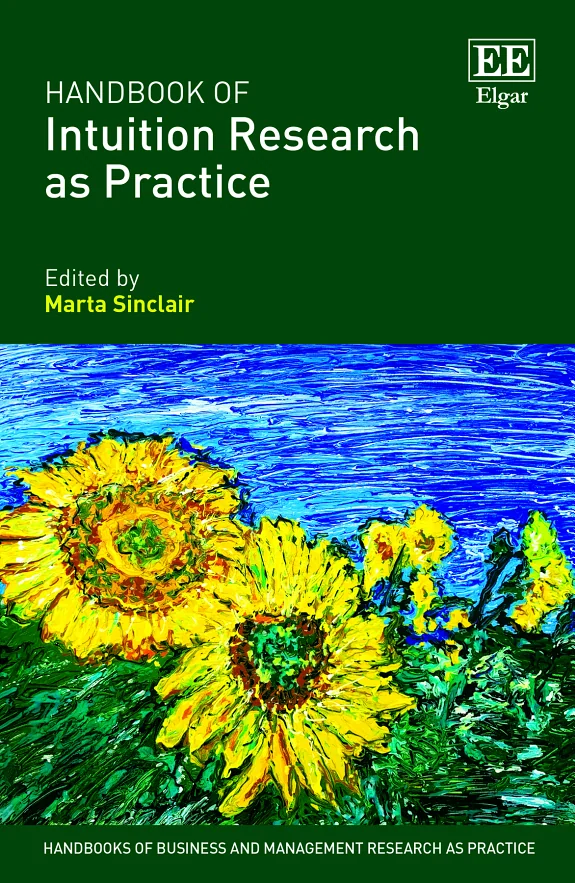
Handbook of Intuition Research as Practice
 72
72

Handbook of Intuition Research as Practice
Marta Sinclair’s compilation, Handbook of Intuition Research as Practice, attempts to bridge the chasm between the nebulous concept of intuition and its tangible application in professional spheres. It succeeds admirably in gathering international perspectives, but the collection’s strength, its diversity, also proves to be its slight weakness, leading to occasional unevenness in depth. A standout contribution is the exploration of intuition within organizational decision-making, moving beyond simplistic notions of gut feelings. However, the section on pedagogical approaches, while promising, could have benefited from more concrete, replicable exercises. Sinclair’s introductory framing effectively sets the stage for a pragmatic examination of a subject often shrouded in mysticism. The verdict: a valuable resource for those seeking to operationalize intuition, despite minor variations in scholarly rigor across its chapters.
📝 Description
72
Published in 2020, Marta Sinclair's handbook structures intuition research as a practical discipline.
This volume examines intuition not as a mystical ability but as a skill that can be researched and developed. It moves beyond anecdotal evidence to establish a framework for understanding and applying intuitive processes. The book gathers contributions from international scholars and practitioners, presenting varied viewpoints on what intuition is and how it can be used.
It targets professionals like business leaders, managers, trainers, and educators who wish to enhance decision-making or develop intuitive skills in others. Academic researchers studying intuition empirically will also find value, as will individuals seeking informed methods to cultivate their own intuition. The work aims to bridge the gap between theoretical discussions and practical application, addressing a need for standardized methodologies in areas like business intuition.
While grounded in empirical research and organizational psychology, this handbook engages with traditions that have long explored intuition. It addresses a lineage of thought, from Jungian psychology's focus on intuition as a primary function to broader spiritual development practices, by seeking to codify and validate these explorations. The work positions intuition within a contemporary framework, suggesting its utility beyond purely spiritual or philosophical contexts and into practical, measurable outcomes.
💡 Why Read This Book?
• Gain actionable frameworks for developing intuition as a measurable skill, informed by research presented in the handbook, offering tools beyond mere speculation. • Understand specific applications of intuition in business and education, referencing case studies and research findings from the book’s international contributors. • Explore methods for empirically studying intuition, providing a research-oriented perspective that differentiates this work from purely anecdotal guides.
⭐ Reader Reviews
Honest opinions from readers who have explored this book.
❓ Frequently Asked Questions
When was the Handbook of Intuition Research as Practice first published?
The Handbook of Intuition Research as Practice was first published on July 31, 2020, reflecting contemporary research and applications in the field.
What is the primary focus of Marta Sinclair's Handbook of Intuition Research?
The handbook focuses on how intuition research can inform practical applications, particularly in business and education, by providing tools and methods for developing intuitive skills.
Who would benefit most from reading this book?
Business leaders, corporate trainers, university educators, and researchers interested in the empirical study and practical development of intuition would find this book highly beneficial.
Does the book offer concrete examples of intuition in practice?
Yes, the handbook provides real-life examples and new research findings to illustrate how intuition can be used efficiently and developed as a skill in various contexts.
What distinguishes this handbook from other books on intuition?
Its distinction lies in its research-based approach and its focus on providing practical, actionable tools and methodologies for developing and applying intuition, rather than solely theoretical or mystical discussions.
Is the Handbook of Intuition Research as Practice suitable for academic study?
Yes, it is designed for academic researchers and educators, offering a concise, digestible format with relevant answers and new research for studying intuition systematically.
🔮 Key Themes & Symbolism
Intuition as a Developable Skill
The book argues against viewing intuition as an innate, unchangeable trait, framing it instead as a cognitive function that can be systematically cultivated. It presents research and practical exercises designed to enhance intuitive awareness and responsiveness. This perspective is crucial for professionals and educators seeking tangible improvements in decision-making and problem-solving capabilities, moving beyond abstract notions of 'gut feeling' to concrete skill-building methodologies.
Research-Informed Practice
A core theme is the integration of empirical research with practical application. The handbook compiles studies and analyses from various disciplines to validate intuitive processes and offer evidence-based strategies. This approach provides a solid foundation for understanding intuition's efficacy, particularly in business contexts where measurable results are paramount, and in academia for developing standardized training modules.
Cross-Cultural Perspectives
The international nature of the contributors highlights the diverse ways intuition is understood and utilized across different cultures and professional environments. This broad perspective enriches the discussion by showcasing varied methodologies and applications, demonstrating that intuitive intelligence is a universal human capacity with context-specific expressions. It challenges a singular, Western-centric view of intuition.
Ethical Intuitive Application
The handbook addresses the ethical considerations inherent in using intuition in professional decision-making. It prompts readers to reflect on potential biases, the responsible integration of intuitive insights with rational analysis, and the importance of transparency when intuition plays a role in outcomes. This theme is vital for establishing trust and accountability in fields that increasingly leverage non-linear thinking.
💬 Memorable Quotes
Direct passages from the work, attributed to the author.
“Intuition offers an additional resource for decision-making, not a replacement for analytical thought.”
— This highlights the book's pragmatic stance, positioning intuition as a complementary tool that enhances, rather than supplants, rational processes in professional settings.
“Developing intuition requires structured practice, not passive waiting.”
— This emphasizes the 'as practice' aspect of the handbook's title, suggesting that intuitive abilities can be actively trained and honed through deliberate exercises and research methodologies.
“Cross-cultural case studies reveal diverse applications of intuitive intelligence.”
— This points to the handbook's international scope, indicating that intuition manifests and is utilized differently across various global contexts, offering a broader understanding.
“The challenge lies in translating intuitive data into actionable business strategies.”
— This captures a central problem the book aims to solve: bridging the gap between subjective intuitive experience and objective, measurable business outcomes.
“Educators need tools to teach intuition as a skill, not just a concept.”
— This underscores the handbook's practical orientation, focusing on the need for pedagogical frameworks that enable the development of intuition in academic and corporate training settings.
🌙 Esoteric Significance
Tradition
While not explicitly tied to a single esoteric lineage like Hermeticism or Gnosticism, the work engages with the broader esoteric tradition's interest in inner knowing and non-rational perception. It attempts to secularize and systematize concepts often found in mystical texts, reframing them within a research paradigm. It departs from purely mystical traditions by demanding empirical validation and structured practice, making it accessible to a secular audience while acknowledging the deep human drive to access intuitive wisdom.
Symbolism
The handbook doesn't focus on traditional esoteric symbols. Instead, its 'symbols' are conceptual: 'intuition as practice' represents the shift from passive reception to active cultivation, while 'research methodology' symbolizes the attempt to bring scientific rigor to subjective experience. 'International collaboration' signifies the universal, yet culturally nuanced, nature of intuitive intelligence, moving beyond single-origin interpretations.
Modern Relevance
This work is highly relevant to contemporary fields like positive psychology, behavioral economics, and organizational development, which increasingly explore the role of non-cognitive factors in human performance. Thinkers and practitioners in areas such as mindfulness-based interventions, design thinking, and leadership development draw upon similar frameworks for understanding and enhancing intuitive capacities in individuals and groups.
👥 Who Should Read This Book
• Business leaders and managers seeking to integrate intuitive decision-making into strategic planning and operational efficiency, moving beyond purely data-driven approaches. • Corporate trainers and university educators looking for evidence-based methodologies and practical tools to develop intuitive skills in their students and employees. • Academic researchers in psychology, organizational behavior, and cognitive science interested in the empirical study of intuition and its practical implications.
📜 Historical Context
Published in 2020, Handbook of Intuition Research as Practice arrived at a moment when intuition, long relegated to the fringes of business and psychology, was gaining wider acceptance, partly due to the influence of thinkers like Daniel Kahneman whose work on System 1 (intuitive) and System 2 (analytical) thinking gained prominence in the late 20th and early 21st centuries. The book emerged from a growing academic interest in non-rational cognition, building upon earlier research in organizational behavior and cognitive science. It sought to address a practical deficit identified by professionals and educators who, while acknowledging intuition's value, lacked standardized methods for its development and application. Unlike purely philosophical or esoteric texts, Sinclair's work aimed for an empirically grounded approach, contrasting with the more mystical traditions prevalent in earlier explorations of inner knowing. Its international scope also reflected a globalizing business environment and a desire to capture diverse perspectives on intuitive practice.
📔 Journal Prompts
Reflect on the concept of 'intuition as practice' and its implications for your professional development.
Analyze a recent decision using the 'intuition research' framework presented in the handbook.
Consider the 'cross-cultural perspectives' on intuition and how they might inform your own approach.
Identify one ethical consideration related to 'intuition research' that is most relevant to your context.
How can the distinction between 'intuition as a resource' versus a replacement for analysis be applied to a current challenge?
🗂️ Glossary
Intuition Research
The systematic, empirical study of intuitive processes, aiming to understand their mechanisms, validity, and applications in various domains, particularly professional settings.
Intuition as Practice
A framework that views intuition not as a fixed trait but as a skill that can be developed, honed, and applied through deliberate methods and structured exercises.
Organizational Intuition
The application of intuitive insights and decision-making within business and corporate environments to enhance strategy, problem-solving, and leadership effectiveness.
Pedagogical Approaches
Methods and strategies employed in teaching and training, specifically concerning how to effectively develop and cultivate intuitive abilities in learners.
Cognitive Function
Refers to intuition as a mental process related to thinking, perception, and decision-making, amenable to study within cognitive science frameworks.
Actionable Strategies
Practical, implementable techniques and plans derived from research findings, designed to translate theoretical understanding of intuition into real-world results.
Empirical Validation
The process of confirming or supporting theoretical claims or practical applications through observable evidence and systematic research methods.
This book appears in 1 collection
🔮 Readers Also Liked
Browse all →








From the “Intuition Development” Collection
View all →






More Free Occult Philosophy Books
View all →