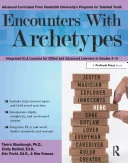
Encounters With Archetypes
 80
80

Encounters With Archetypes
Tamra Stambaugh, Emily Mofield, and Eric Fecht's "Encounters With Archetypes" presents a structured pedagogical approach to a concept often relegated to speculative discourse. Its strength lies in its academic rigor, directly aligning with Common Core standards and offering a tangible framework for educators. The unit's focus on "encounters"—how students actively engage with archetypal patterns—is a refreshing departure from purely theoretical explorations. However, the heavy emphasis on academic standards, while beneficial for classroom application, can sometimes overshadow the inherent mystique and personal resonance of archetypal study. The section detailing the "Hero's Journey" as a prime example of an archetypal encounter, while clear and functional, feels somewhat constrained by its educational mandate. The work successfully bridges academic language arts instruction with symbolic analysis, though it may leave those seeking purely esoteric immersion wanting more evocative exploration.
📝 Description
80
Published in 2021, Encounters With Archetypes frames archetype study through individual interaction with universal patterns.
This academic unit, developed by Vanderbilt University's Programs for Talented Youth, approaches archetypes by focusing on how individuals "encounter" these universal patterns. It integrates Common Core State Standards with accelerated content for advanced learners. The unit is designed for educators and students in advanced language arts programs, especially within gifted education.
It provides structured methods for analyzing symbolic representation and narrative structures. This makes it useful for curriculum design and classroom use in secondary education. The "encounter" model suggests that understanding archetypes requires active engagement, emphasizing pattern recognition, symbol analysis, and motif identification. These are presented as tools to build sophisticated language arts skills within the Common Core framework.
While framed academically, the study of archetypes connects to broader esoteric traditions that examine universal symbols and their influence on human consciousness. Carl Jung's analytical psychology, a significant influence on archetype theory, itself draws from myth, religion, and comparative mythology. This unit's focus on "encounters" with these patterns can be seen as a modern pedagogical interpretation of how individuals engage with the collective unconscious and its symbolic language, a concept explored across various esoteric paths seeking to understand deeper psychological and spiritual structures.
💡 Why Read This Book?
• Gain a structured methodology for analyzing archetypes through "encounters," a concept pioneered by Vanderbilt University's Programs for Talented Youth, offering a unique pedagogical lens. • Understand how to apply sophisticated language arts skills, including pattern recognition and symbol analysis, to universal motifs as outlined in the unit's Common Core-aligned framework. • Explore specific archetypal patterns like the "Hero's Journey" within an academic context, providing concrete examples for curriculum development or advanced student projects.
⭐ Reader Reviews
Honest opinions from readers who have explored this book.
❓ Frequently Asked Questions
What is the primary pedagogical approach of Encounters With Archetypes?
The book employs an "encounter" model, framing the study of archetypes as an active engagement process. Developed by Vanderbilt University's Programs for Talented Youth, it aligns with Common Core State Standards for language arts.
When was Encounters With Archetypes first published?
The unit was first published on September 9, 2021, reflecting contemporary approaches to curriculum development in advanced learning programs.
Who are the authors of Encounters With Archetypes?
The authors are Tamra Stambaugh, Emily Mofield, and Eric Fecht. Stambaugh is notably associated with Vanderbilt University's Programs for Talented Youth.
What academic standards does this unit address?
The unit is specifically aligned to the Common Core State Standards, focusing on developing sophisticated skills in language arts through the analysis of archetypes and symbols.
What is the central concept distinguishing this work?
The core distinction is the "encounter" concept, which shifts the focus from passive learning about archetypes to active student engagement with their patterns, symbols, and motifs.
What kind of content does the unit feature?
It features accelerated content, creative products, differentiated tasks, engaging activities, and models for in-depth analysis, all designed to enhance language arts skills.
🔮 Key Themes & Symbolism
Archetypal Encounters
This theme centers on the unit's core innovation: viewing archetypes not as static concepts but as dynamic forces encountered by individuals. The work posits that understanding emerges from this interaction, moving beyond mere recognition to active engagement with patterns, symbols, and motifs. This approach encourages students to see archetypal influences in literature and life as direct engagements, fostering deeper analytical skills within a structured educational context.
Language Arts Skill Development
A primary objective is the enhancement of language arts proficiency. Through the lens of archetypal encounters, students develop skills in textual analysis, critical thinking, and creative expression. The unit provides concrete methods for identifying and interpreting symbolic language and narrative structures, aligning with Common Core State Standards and preparing students for complex academic tasks. The focus is on building sophisticated analytical abilities.
Pattern Recognition and Symbolism
The unit emphasizes the systematic identification and interpretation of recurring patterns, symbols, and motifs inherent in archetypal study. It equips students with tools to dissect narratives and cultural expressions, finding the underlying universal structures. This analytical framework allows for a deeper appreciation of how these elements function, providing a method for understanding the symbolic language that shapes human experience and artistic creation.
Curriculum Integration
Designed for educators, this theme addresses the practical application of archetypal study within an academic setting. The unit's structure, including differentiated tasks and creative products, is built for integration into existing language arts curricula, particularly in programs for talented youth. It offers a framework for delivering accelerated content that is both engaging and academically rigorous, meeting established educational standards.
💬 Memorable Quotes
Direct passages from the work, attributed to the author.
“Through the lens of encounter, students will examine the patterns, symbols, and motifs associated with archetypes.”
— This statement captures the unit's central pedagogical strategy. It highlights the active, engagement-based approach to learning about archetypes, emphasizing the analytical examination of their constituent elements.
“Encounters With Archetypes integrates the study of archetypes with the concept of encounters.”
— This is the foundational premise of the work, defining its unique approach. It signals a departure from purely theoretical discussions towards a more interactive and applied understanding of archetypal concepts.
“This unit, developed by Vanderbilt University's Programs for Talented Youth, is aligned to the Common Core State Standards.”
— This factual statement grounds the unit within a specific academic context and institutional origin. It emphasizes its adherence to established educational benchmarks, particularly in language arts.
“Students will examine the patterns, symbols, and motifs associated with archetypes.”
— This highlights the specific analytical components students are expected to engage with. It breaks down the study of archetypes into tangible elements that can be identified and interpreted.
💡 Key Ideas
Editorial paraphrase of the work's core concepts — not direct quotes.
The unit... features accelerated content, creative products, differentiated tasks, engaging activities, and the use of in-depth analysis models.
This quote outlines the complex nature of the educational unit. It underscores the commitment to providing a comprehensive and adaptable learning experience that caters to advanced students and diverse learning styles.
🌙 Esoteric Significance
Tradition
While not explicitly tied to a single esoteric lineage, "Encounters With Archetypes" draws heavily on Jungian psychology's framework of archetypes. It translates these psychological constructs into an educational model, bridging academic psychology and symbolic studies. Its departure lies in its pedagogical framing rather than its thematic content, making archetypal concepts accessible through structured learning rather than solely through intuitive or mystical experience.
Symbolism
The work focuses on the analysis of universal symbols and motifs that represent archetypal patterns. Key symbols explored implicitly include those found in the "Hero's Journey," such as the Threshold, the Mentor, and the Shadow. These are examined not just for their narrative function but as recurring symbolic representations of fundamental human psychological dynamics and developmental stages.
Modern Relevance
Contemporary thinkers in fields ranging from comparative literature and mythology to modern depth psychology and even certain streams of consciousness studies can find value in this unit's structured approach. It provides a methodological foundation for exploring archetypal influences in media, art, and personal development, making complex symbolic analysis relevant for current cultural and psychological discourse.
👥 Who Should Read This Book
• Educators seeking to integrate archetypal analysis into secondary language arts curricula, particularly within gifted programs, will find a Common Core-aligned framework. • Advanced students of literature and mythology interested in a structured, analytical approach to understanding universal patterns and symbols in narratives. • Curriculum developers looking for methodologies to foster critical thinking and creative expression through the study of symbolic structures and motifs.
📜 Historical Context
Published in 2021, "Encounters With Archetypes" emerges from the established pedagogical tradition of Vanderbilt University's Programs for Talented Youth. This era in education saw a growing emphasis on interdisciplinary studies and the application of analytical frameworks to complex subjects. The unit's alignment with Common Core State Standards places it directly within contemporary educational policy debates in the United States. While not directly engaging with opposing schools of thought in esoteric studies, its academic rigor and structured approach differentiate it from more speculative or purely experiential methods of exploring archetypes. Its development reflects a broader trend toward making complex symbolic analysis accessible and measurable within secondary education, contrasting with earlier, less standardized approaches to myth and symbol study that might have been prevalent in the mid-20th century, for example, through the work of Joseph Campbell.
📔 Journal Prompts
Reflect on a personal "encounter" with the archetype of the Mentor, identifying its symbolic manifestations.
Analyze the common symbols present in the "Hero's Journey" as presented in the unit.
Consider how the concept of "pattern recognition" applies to identifying archetypes in everyday life.
Describe an instance where you recognized a motif that seemed universally significant.
How does the "encounter" model differ from passive observation when studying archetypes?
🗂️ Glossary
Archetype
Universal, archaic patterns and images that derive from the collective unconscious and are the psychic conditions of man's spiritual development. Often manifested in myths, dreams, and art.
Encounter
In this context, an active engagement or interaction with an archetype, its symbols, or motifs, rather than passive observation or theoretical study.
Pattern
A recurring characteristic or event; in this unit, referring to the predictable structures and forms associated with archetypes in narratives and human experience.
Symbol
An object, word, or image that represents something else, typically a more abstract idea or concept, often carrying multiple layers of meaning within archetypal contexts.
Motif
A recurring element, subject, or idea in a literary, artistic, or symbolic work, often contributing to the overall theme or symbolic meaning.
Common Core State Standards
An educational initiative providing a common set of K-12 English-language arts and mathematics standards for most US states, focusing on rigor and college/career readiness.
Vanderbilt University's Programs for Talented Youth
An academic program associated with Vanderbilt University, known for developing advanced curricula and educational models for gifted students.
This book appears in 1 collection
🔮 Readers Also Liked
Browse all →









From the “Archetypes” Collection
View all →






More Free Occult Philosophy Books
View all →