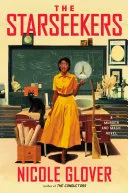
The Starseekers
 78
78

The Starseekers
Nicole Glover's The Starseekers dares to ask what if the Space Race was fueled by more than just scientific ambition. By weaving magic into the fabric of the 1960s, Glover presents a compelling alternative history where arcane knowledge is as critical as calculus. The character of Cynthia Rhodes, a hidden orchestrator of magical support for space missions, is particularly well-drawn, embodying the intellectual rigor of the era's scientists alongside a secret mastery of the occult. While the integration of magic into historical events is handled with impressive detail, the pacing occasionally falters in the mid-section, becoming slightly bogged down in explaining the mechanics of this new magical-scientific paradigm. However, a particularly striking sequence involving a lunar ritual designed to counter Soviet magical interference powerfully illustrates the novel's unique premise. The Starseekers offers a fresh and imaginative take on a well-trodden historical period, making it a compelling read for those seeking speculative fiction with intellectual depth.
📝 Description
78
Nicole Glover's The Starseekers imagines the 1960s Space Race influenced by arcane arts.
The Starseekers is set during the 1960s, a period of intense technological competition. This novel proposes that the race to the Moon involved more than just scientific advancement; it suggests a reality where occult practices and advanced mathematics intersect. The story follows Cynthia Rhodes, a brilliant individual whose work in celestial mechanics is understood through mystical interpretations, not just scientific ones. The book posits that forces outside conventional understanding shaped humanity's drive for space exploration, merging historical ambition with supernatural elements.
This novel is suited for readers interested in the overlap of history, speculative fiction, and occult studies. It is for those who look beyond standard historical accounts and are drawn to narratives about hidden influences on major events. If you enjoy stories that reimagine well-known historical periods with magical elements or ponder the unseen forces that may guide global affairs, The Starseekers provides a distinct viewpoint. The author builds a world with attention to detail, featuring complex characters within unusual situations, especially for those interested in the 1960s and its cultural atmosphere.
The 1960s form the novel's setting, a decade marked by the US-Soviet rivalry for spaceflight dominance. While this era saw significant scientific progress, The Starseekers adds a dimension of magic. It reframes the Space Race as a hidden magical struggle alongside its technological contest. The narrative considers how ancient knowledge and newly discovered arcane principles might have been utilized with rocket science and orbital mechanics.
The Starseekers fits within a tradition of esoteric fiction that reinterprets historical events through occult or mystical frameworks. It echoes works that explore hidden histories and secret societies influencing world affairs, similar to certain strains of conspiracy fiction or alternative history narratives that incorporate magical or supernatural elements. The novel specifically engages with the idea of celestial mechanics being understood through non-material means, placing it in conversation with Hermetic traditions or astrological concepts that link planetary movements to earthly events.
💡 Why Read This Book?
• Gain insight into how arcane celestial mechanics might have influenced the 1960s Space Race, offering a unique perspective on historical events. • Explore the character of Cynthia Rhodes, a brilliant figure who balances scientific understanding with esoteric practices, challenging traditional notions of historical contributors. • Discover a narrative that blends historical fantasy with occult themes, providing a fresh lens through which to view humanity's quest for the stars.
⭐ Reader Reviews
Honest opinions from readers who have explored this book.
❓ Frequently Asked Questions
What is the connection between The Starseekers and The Conductors series?
The Starseekers is a stand-alone novel set in the same world as Nicole Glover's The Conductors series, allowing readers to explore the broader universe without needing prior knowledge of the earlier books.
When was The Starseekers first published?
The Starseekers was first published on January 6, 2026.
Who is the protagonist of The Starseekers?
The protagonist is Cynthia Rhodes, a brilliant individual whose work in magic is integral to the success of the space race during the 1960s.
What genre does The Starseekers fall into?
The Starseekers is classified as historical fantasy, blending elements of real-world history with magical and speculative fiction.
Does the book focus on actual historical figures or events?
While set against the backdrop of the real 1960s Space Race, the narrative introduces fictional magical elements and characters, re-imagining historical events through an esoteric lens.
Is the magic system in The Starseekers based on any specific real-world traditions?
The book explores 'arcane celestial mechanics,' suggesting a system that integrates astrological principles and esoteric forces, implying a connection to broader occult traditions without being strictly tied to one.
🔮 Key Themes & Symbolism
Hidden Histories of Science
The work excavates the often-unseen influences behind monumental scientific achievements, positing that arcane knowledge played a critical role in the 1960s Space Race. It suggests that figures like Cynthia Rhodes, operating outside conventional scientific institutions, were essential in harnessing cosmic energies for technological advancement. This theme challenges readers to consider that historical progress may be shaped by forces not recorded in standard scientific journals, inviting a re-evaluation of past breakthroughs through an esoteric lens.
Arcane Celestial Mechanics
This theme centers on the novel's unique system of understanding and manipulating space through magical means. It contrasts with empirical science, proposing that astrological alignments, elemental forces, and channeled energies can influence celestial bodies and journeys. The book explores how this esoteric framework was integrated into the practicalities of the Space Race, suggesting a hidden layer of operation where rituals and enchantments complemented rocket science, making the cosmos accessible through mystical as well as technological pathways.
The Dual Nature of Progress
The Starseekers examines the duality inherent in human progress, particularly during the competitive era of the 1960s. It presents the Space Race as a stage for both scientific innovation and clandestine magical conflict. The narrative explores how the drive for advancement can manifest through both rational and mystical means, often intertwined. This theme highlights the idea that humanity's reach for the stars was not a singular, unified effort but a complex interplay of competing scientific methodologies and hidden esoteric agendas.
The Power of Unseen Knowledge
This theme underscores the significance of knowledge that exists outside mainstream recognition. The Starseekers champions the contributions of individuals like Cynthia Rhodes, whose understanding of esoteric principles allowed them to influence major historical events. It suggests that true progress often relies on unconventional wisdom and hidden traditions, which can be more potent than overt scientific endeavors. The novel invites readers to acknowledge the potential impact of occult practices and forgotten lore on worldly affairs.
💬 Memorable Quotes
Direct passages from the work, attributed to the author.
“Science gave us the rockets, but magic gave us the courage to aim them true.”
— This highlights the synergistic relationship between science and magic in the book's narrative. It suggests that while technology provides the means, occult knowledge and belief systems offer the underlying confidence and direction for ambitious endeavors like space exploration.
“Some equations are written in numbers, others in starlight.”
— This memorable line directly contrasts scientific calculation with mystical insight. It suggests that the universe operates on multiple levels of understanding, and that esoteric knowledge provides access to truths not revealed by mathematics alone.
💡 Key Ideas
Editorial paraphrase of the work's core concepts — not direct quotes.
The stars didn't just guide us; they were pathways we could build.
This quote expresses the novel's core premise: that celestial bodies are not merely objects of observation but can be actively influenced or navigated through esoteric means, representing a fundamental departure from purely scientific understanding of space.
Cynthia Rhodes understood that the void between worlds was not empty, but teeming with potential.
This paraphrased concept emphasizes the esoteric view of space presented in the book. It contrasts with a scientific vacuum, suggesting that the cosmos is alive with unseen energies and possibilities that can be tapped into through magical practice.
The competition for the Moon was not just about who got there first, but who understood its true resonance.
This quote points to a deeper, mystical competition underlying the historical Space Race. It implies that achieving dominance in space involved not only technological superiority but also an understanding of celestial or lunar energies and their arcane significance.
🌙 Esoteric Significance
Tradition
The work fits within a modern esoteric lineage that synthesizes Hermetic principles with Theosophical ideas about cosmic evolution and hidden knowledge. It draws upon the Hermetic maxim 'As Above, So Below,' applying it to space exploration, suggesting that celestial events and terrestrial achievements are intrinsically linked. While not strictly Kabbalistic, it shares a focus on symbolic correspondences and the power of understanding hidden structures. The novel departs from older traditions by directly integrating these concepts into a technologically driven historical period, making esoteric knowledge an active participant in worldly affairs.
Symbolism
Central to the symbolism is the Moon itself, representing not just a physical destination but an ancient source of magical power and a locus of cosmic influence. Stars function as both navigational points and conduits for arcane energy, their 'starlight' containing equations beyond human mathematics. The concept of 'arcane celestial mechanics' symbolizes the integration of the rational and mystical, suggesting that the universe can be understood and manipulated through both scientific and esoteric means, blurring the lines between objective reality and subjective magical perception.
Modern Relevance
Contemporary thinkers and practitioners in fields like 'magical realism' and speculative fiction draw inspiration from works like The Starseekers. Its approach to integrating esoteric systems into historical narratives appeals to modern explorations of consciousness and reality. For practitioners of modern magical traditions that incorporate astrological or cosmic elements, the book offers imaginative interpretations of how such forces might interact with technological advancement. It speaks to a current desire to find deeper, often mystical, meanings within scientific progress and historical events.
👥 Who Should Read This Book
• Aspiring authors of historical fantasy seeking to blend real-world events with speculative elements, particularly those interested in the 1960s. • Readers fascinated by the Space Race who are curious about alternative narratives that incorporate occult or magical influences. • Enthusiasts of esoteric studies interested in fictional explorations of concepts like arcane celestial mechanics and the hidden roles of mystical knowledge in history.
📜 Historical Context
The Starseekers emerges from a rich vein of speculative fiction that re-imagines historical turning points, particularly the mid-20th century Cold War era. The 1960s, dominated by the intense rivalry between the USA and USSR in the Space Race, provided fertile ground for narratives exploring hidden influences. While figures like Wernher von Braun were pushing the boundaries of rocketry, this novel posits an unseen parallel effort. It draws on the historical context of burgeoning interest in parapsychology and fringe sciences that characterized parts of the post-war period, though it diverges by presenting a more integrated and functional system of magic. The work implicitly engages with the broader tradition of alternate history, similar to Philip K. Dick's explorations of reality, but grounds its speculation in esoteric rather than purely technological or political shifts. Its publication in 2026 places it in a contemporary landscape where audiences are increasingly receptive to genre-bending narratives that question established historical accounts.
📔 Journal Prompts
Cynthia Rhodes's understanding of arcane celestial mechanics.
The integration of magic into the 1960s Space Race.
The dual nature of progress as depicted in the narrative.
The symbolism of the Moon in the context of esoteric pursuits.
The potential for hidden knowledge to influence historical events.
🗂️ Glossary
Arcane Celestial Mechanics
A fictional system of understanding and manipulating cosmic bodies and spaceflight through magical means, integrating astrological principles and esoteric forces with scientific endeavors.
Space Race
The historical competition between the United States and the Soviet Union during the mid-20th century to achieve superior spaceflight capability, a key backdrop for the novel's events.
Cynthia Rhodes
A central character in The Starseekers, depicted as a brilliant individual whose expertise lies in esoteric arts crucial for the success of the space program.
Esoteric
Relating to or accessible only by a select group of people initiated into special knowledge, often concerning mystical or supernatural subjects.
Starlight Equations
A metaphorical concept representing truths or principles of the universe that can only be understood through esoteric or mystical insight, rather than conventional mathematics.
Cosmic Resonance
The idea that celestial bodies possess inherent energies or influences that can be perceived and interacted with through occult or magical means.
The Conductors
A series of books by Nicole Glover, within whose world The Starseekers is set, suggesting a larger narrative universe.