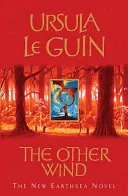
Elementals

 71
71

Elementals
Carmen Guerrero's "Elementals" offers a stark vision of ecological stewardship and cosmic responsibility. The premise—ancient beings attempting to mend a scarred Earth after humanity's exodus—is compelling, immediately setting a melancholic yet determined tone. I found the central debate among the Elementals regarding the potential existence of their kind on new colonies particularly engaging. It’s a subtle yet potent exploration of whether consciousness and purpose are tied to a singular origin or can adapt and manifest elsewhere. The strength lies in its conceptual depth and the quiet power of its ecological allegory. However, the narrative sometimes feels overly focused on its philosophical framework, occasionally overshadowing character development. A passage discussing the 'memory of soil' as a repository for past damage felt particularly evocative, highlighting the book's unique speculative biology. Guerrero's work asks difficult questions about legacy and adaptation, presenting a thoughtful, if occasionally abstract, vision of planetary redemption.
📝 Description
71
Carmen Guerrero's Elementals, published in August 2013, imagines a future where ecological restoration is the sole purpose of sentient beings.
Elementals is set in a far future where humans have left Earth. The story focuses on beings known as Elementals, whose task is to repair damaged planets. Their work is complicated by an internal conflict: the question of whether other Elementals exist and might return to colonized worlds. This debate prompts a deeper consideration of duty, ecological memory, and what constitutes a home.
The book is written for readers who enjoy speculative fiction with philosophical depth. It appeals to those interested in environmentalism, post-humanism, and fundamental questions about existence and what we leave behind. Readers who like science fiction that incorporates speculative biology and planetary science will find much to consider.
Guerrero's novel draws on perennial esoteric traditions concerning elemental beings. These traditions often link specific entities to planetary forces and natural energies. The Elementals' mission to 'undo damage' reflects a concept of natural law focused on environmental repair, suggesting a connection to older ideas about the earth's inherent systems and the beings that might interact with them.
💡 Why Read This Book?
• Understand the concept of planetary 'memory' as explored through the Elementals' mission to undo damage, offering a unique perspective on ecological restoration beyond human intervention. • Engage with the philosophical debate on whether elemental consciousness is planet-bound or transferable, as the Elementals question the existence of 'other Elementals' on new colonies. • Contemplate the long-term consequences of humanity's actions, framed by the Elementals' efforts to heal Earth centuries after its abandonment.
⭐ Reader Reviews
Honest opinions from readers who have explored this book.
❓ Frequently Asked Questions
When was Carmen Guerrero's Elementals first published?
Carmen Guerrero's "Elementals" was first published in August 2013, positioning it within contemporary discussions of environmental science fiction and speculative futures.
What is the primary mission of the Elementals in the book?
The Elementals' primary mission is to undo the ecological damage left on Earth after humanity's departure, acting as planetary caretakers and restorers.
What is the main conflict among the Elementals?
The central conflict arises when one Elemental suggests the possibility of other Elementals existing on newly colonized planets and proposes bringing them back to Earth, a notion opposed by others who fear disaster.
What themes does Elementals explore?
The book explores themes of ecological responsibility, planetary legacy, the nature of consciousness, adaptation, and the consequences of past actions on future worlds.
Is Elementals considered a science fiction or fantasy novel?
Elementals blends elements of science fiction, particularly speculative fiction and planetary narratives, with a touch of fantasy through its depiction of elemental beings.
What is the significance of the year 2013 in relation to this book?
The year 2013 marks the initial publication of "Elementals" by Carmen Guerrero, placing its conceptual origins within the early 21st century's growing environmental consciousness.
🔮 Key Themes & Symbolism
Ecological Restoration and Responsibility
The narrative centers on the Elementals' long-term project of healing Earth, a planet abandoned by humanity. This theme looks at the profound responsibility that sentient beings hold for their environment, even in the absence of the original inhabitants. Guerrero posits a future where restoration is not a temporary fix but an ongoing, multi-generational mission, exploring the deep-seated 'damage' left behind and the persistent efforts required to mend it.
The Nature of Elemental Consciousness
A core question explored is whether the Elementals are intrinsically tied to Earth or if their consciousness and purpose can manifest on other colonized worlds. This raises profound philosophical inquiries into the essence of being and whether life-form purpose is planetary or universal. The debate among the Elementals about 'other Elementals' highlights differing views on adaptation, origin, and the potential for emergent intelligence.
Legacy and Intergenerational Impact
The book examines the enduring legacy of humanity's actions, not just on Earth but also on the new planets they have colonized. The Elementals' mission is, in part, a response to this legacy. The discussion about potentially reintroducing Elementals to Earth, or the implications of their existence elsewhere, forces a consideration of how past decisions create future responsibilities and the long arc of cause and effect across millennia.
Home and Belonging
With humanity having left Earth behind, the concept of 'home' becomes complex. For the Elementals, Earth is their charge, their origin, and their purpose. The potential existence of similar beings on new, colonized worlds challenges the notion of a singular home or origin point. This theme questions where true belonging lies—in a specific place, a shared purpose, or an inherent nature.
💬 Memorable Quotes
Direct passages from the work, attributed to the author.
“The memory of soil holds the scars of centuries.”
— This phrase captures the idea that the Earth itself retains a form of memory, recording the environmental impact of past civilizations and natural events, which the Elementals must contend with.
“Are we born of Earth, or are we born of the task?”
— This question highlights the central philosophical dilemma for the Elementals: whether their identity and purpose stem from their planetary origin or from the mission they are assigned.
“Disaster is often just change misunderstood.”
— This suggests that the fear of the unknown, particularly the potential return of Elementals to Earth, might be rooted in a lack of understanding rather than an inherent danger.
“New worlds breathe different air, but do they sing the same song?”
— This evocative question probes whether the fundamental energies or 'songs' of elemental beings are universal, or if they are intrinsically tied to specific planetary environments.
“To leave is to forget, but to return is to remember.”
— This concept contrasts humanity's abandonment of Earth with the Elementals' persistent connection, suggesting that returning to a place, or acknowledging its past, is an act of profound remembrance.
🌙 Esoteric Significance
Tradition
Elementals draws upon ancient traditions concerning elemental spirits—Gnomes, Undines, Sylphs, and Salamanders—often associated with earth, water, air, and fire respectively. While not strictly adhering to a single lineage like Paracelsian or Theosophical lore, it reinterprets these beings as active agents of planetary ecological balance. The work positions itself within a modern esoteric framework that views nature as imbued with consciousness and purpose, extending these concepts to a cosmic scale.
Symbolism
The primary symbolism revolves around the Elementals themselves, representing the inherent life force and restorative capacity of a planet. Earth, as a setting, symbolizes a wounded but resilient entity. The 'damage' inflicted by humanity is a symbol of disconnection and imbalance, while the Elementals' mission represents a return to natural order and harmony. The concept of 'other Elementals' on new planets can symbolize the universal nature of these life forces or the potential for adaptation and new manifestation.
Modern Relevance
In contemporary esoteric thought, "Elementals" speaks to movements focused on Earth-based spirituality, ecological activism, and animism. Thinkers and practitioners interested in re-enchanting the natural world and recognizing the consciousness inherent in non-human entities find traces of their beliefs in Guerrero's work. It informs discussions within eco-shamanism and planetary consciousness circles, offering a narrative framework for understanding our deep connection to Earth and the potential for non-human intelligence to guide its healing.
👥 Who Should Read This Book
• Students of speculative fiction interested in environmental themes and post-humanist narratives, who will find a unique exploration of planetary stewardship. • Esoteric practitioners seeking to understand modern interpretations of elemental beings beyond traditional folklore, exploring their role in ecological balance. • Readers fascinated by philosophical science fiction that poses questions about consciousness, legacy, and the long-term impact of civilization on planetary systems.
📜 Historical Context
Carmen Guerrero's "Elementals," published in 2013, arrived during a period of intense global focus on climate change and environmental ethics. The preceding decades had seen the rise of ecocriticism in literary studies and a surge in science fiction narratives grappling with ecological collapse, such as Kim Stanley Robinson's Mars trilogy which began in the 1990s. Guerrero's work can be seen as contributing to this stream, offering a unique perspective through the lens of non-human custodianship. While not directly engaging with a specific contemporary author in a public debate, the book's premise carries the broader philosophical currents of post-humanism and speculative environmentalism that were gaining traction. Its reception, while not marked by any specific event like a ban or major prize, reflects the growing interest in narratives that explore humanity's relationship with its planet beyond anthropocentric viewpoints.
📔 Journal Prompts
The Elementals' mission to undo damage, reflect on a perceived planetary imbalance you have witnessed.
Consider the "memory of soil" concept and how it might apply to a place of personal significance.
If Elementals can exist on multiple planets, what does this suggest about the nature of consciousness?
Explore the tension between being 'born of Earth' versus 'born of the task' for your own life's purpose.
Reflect on the idea that 'Disaster is often just change misunderstood' in relation to a personal or societal challenge.
🗂️ Glossary
Elementals
Beings described in the book as tasked with the restoration and maintenance of ecological balance on Earth and potentially other planets. They represent a form of planetary consciousness or guardianship.
Undoing Damage
The core mission of the Elementals, referring to the process of healing and restoring Earth's ecosystems after severe environmental degradation caused by humanity.
Other Elementals
A speculative concept within the book suggesting that beings similar to Earth's Elementals might exist or have manifested on other planets colonized by humans.
Colonized Plants
Refers to planets that humanity has settled and established new societies upon after abandoning Earth.
Memory of Soil
An interpretation of the book's concept that the Earth's physical composition, particularly its soil, retains an imprint or 'memory' of past events and ecological conditions.
Task
In the context of the Elementals, this refers to their assigned mission of ecological restoration, which is central to their identity and purpose.
New Beginnings
The concept of humanity establishing itself on new planets after leaving Earth, representing a fresh start but also carrying the potential for repeating past mistakes.
This book appears in 1 collection
🔮 Readers Also Liked
Browse all →








From the “Elementals” Collection
View all →







More Free Occult Philosophy Books
View all →