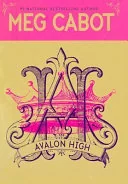
Avalon High
 71
71

Avalon High
Meg Cabot's "Avalon High" approaches the well-trodden ground of Arthurian legend with a high school setting, a premise that could easily falter but largely succeeds due to Cabot's knack for character voice. The reincarnation angle is handled with a light touch, making Ellie's dawning awareness of her past life as Guinevere feel more like an intriguing mystery than a heavy mystical burden. The adaptation of familiar characters into recognizable teenage archetypes—the golden boy quarterback as Arthur, the enigmatic teacher as Merlin—is one of the book's primary strengths. However, the pacing occasionally drags, particularly in the middle sections where the romantic entanglements take precedence over the unfolding mythic drama. A notable moment is Ellie's gradual realization of the parallels between her own experiences and Guinevere's, a concept that allows for a fresh interpretation of the ancient tale. While the conclusion offers a satisfying resolution for the immediate plot, the overarching sense of destiny feels somewhat underdeveloped, a missed opportunity for deeper exploration. Despite these minor points, "Avalon High" offers an accessible and engaging entry into the Arthurian mythos for a new generation.
📝 Description
71
Meg Cabot's Avalon High, published in 2005, reimagines Arthurian legend in a contemporary American high school.
Ellie, the protagonist of Meg Cabot's 2005 novel Avalon High, discovers she is the reincarnation of Guinevere. The story places the familiar figures of King Arthur, Merlin, and the Knights of the Round Table into the setting of modern adolescence. Cabot's adaptation explores themes of destiny, loyalty, and the personal struggles of finding one's identity.
The book translates classic Arthurian myths into situations that resonate with a younger readership. It appeals to young adult readers new to Arthurian lore and those who enjoy familiar legends retold in a modern style. Fans of paranormal romance, high school fiction, and magical realism will find the narrative engaging. The story centers on character development and interpersonal dynamics, with a subtle presence of magic and fate.
Published in 2005, Avalon High arrived during a period of renewed popular interest in Arthurian myth. This era saw many retellings across media, reflecting a fascination with medieval romance and heroism. The book also tapped into the growing young adult genre that blended fantasy elements with realistic settings. Its release coincided with an expanding audience for paranormal and fantasy narratives integrated into everyday life.
💡 Why Read This Book?
• Gain a unique perspective on the Arthurian legend, experiencing the tales of King Arthur and Guinevere through the lens of modern high school dynamics, as seen in the reincarnation of Guinevere into Ellie. • Explore the concept of destiny as it plays out in contemporary life, observing how past lives and predetermined roles influence present choices and relationships within the school setting. • Discover how classic mythological figures are reimagined for a young adult audience, appreciating the blend of historical archetypes with relatable teenage experiences and challenges.
⭐ Reader Reviews
Honest opinions from readers who have explored this book.
❓ Frequently Asked Questions
Is Avalon High part of a series?
Yes, "Avalon High" is the first book in a series by Meg Cabot, published in 2005. Subsequent books continue to explore the themes and characters introduced in this initial installment.
Who are the main characters in Avalon High?
The central character is Ellie, a high school student who discovers she is the reincarnation of Guinevere. Other key figures include the reincarnated Arthur, who is the popular quarterback, and the reincarnated Merlin, portrayed as a wise teacher.
What is the central theme of Avalon High?
The central theme is the reincarnation of Arthurian figures into a modern high school setting, exploring destiny, self-discovery, and the challenges of recognizing and fulfilling one's fated role.
What makes Avalon High's take on Arthurian legend unique?
Its uniqueness lies in transplanting the epic Arthurian narrative into a contemporary American high school. This adaptation grounds the legendary figures and their relationships in relatable adolescent experiences and challenges.
When was Avalon High first published?
Avalon High was first published in 2005, placing it within a period of popular young adult literature that often blended fantasy and paranormal elements with realistic settings.
What age group is Avalon High recommended for?
The book is primarily recommended for young adult readers, typically ages 12 and up, who enjoy fantasy, romance, and retellings of classic myths.
🔮 Key Themes & Symbolism
Reincarnation and Destiny
The novel posits that legendary figures, including Guinevere and Arthur, are reborn in contemporary times, specifically within the halls of Avalon High. This reincarnation concept serves as the primary engine for the plot, suggesting that destiny is not a fixed point but a recurring pattern that individuals must navigate. Ellie's journey is one of recognizing her past life and understanding how those ancient roles influence her present relationships and choices, particularly her connection with the reincarnated Arthur. The narrative explores whether people are bound by their past lives or if they have agency to forge new paths.
Modern Myth Adaptation
Avalon High offers a compelling example of how classic myths can be adapted for contemporary audiences, particularly young adults. The epic scope of the Arthurian legends is distilled into the microcosm of high school life, where the struggles for power, loyalty, and love are re-enacted. The series translates the medieval courtly dramas and chivalric quests into relatable adolescent scenarios, such as navigating social hierarchies, dealing with romantic entanglements, and facing peer pressure. This approach makes ancient archetypes accessible and relevant to a modern readership unfamiliar with the original tales.
Self-Discovery and Identity
Central to Ellie's experience is the process of self-discovery and the formation of identity. As she grapples with the revelations about her past life as Guinevere, she must reconcile this extraordinary knowledge with her ordinary teenage existence. The novel explores the internal conflict of understanding one's place in the world when faced with a predetermined, albeit forgotten, destiny. Ellie's journey highlights the challenges of accepting who you are, especially when that identity is tied to historical figures and epic narratives, questioning whether one can truly escape or must embrace their perceived fate.
Friendship and Loyalty
The themes of friendship and loyalty, paramount in the original Arthurian legends, are re-examined within the context of high school social dynamics. Ellie's relationships with her friends are tested as she uncovers her past life and its implications. The novel explores how loyalty is demonstrated in modern friendships, contrasting with the more formal bonds of medieval knighthood. The dynamics between characters, particularly Ellie's evolving friendships and romantic interests, underscore the enduring importance of trust and allegiance, even in a secular, contemporary setting.
💬 Memorable Quotes
Direct passages from the work, attributed to the author.
“The history teacher, Mr. Mort, seemed to know more about ancient legends than any educator had a right to.”
— This highlights the presence of the Merlin archetype within the story. Mr. Mort's unusual knowledge and his role as a guide point to the underlying magical and legendary framework supporting the contemporary narrative.
“The football field, normally a place of simple competition, now seemed charged with an ancient, unspoken rivalry.”
— This reflects how the mundane setting of the high school is imbued with the elements of the legendary past, suggesting that the reincarnated Knights of the Round Table are still subconsciously playing out their historical roles.
💡 Key Ideas
Editorial paraphrase of the work's core concepts — not direct quotes.
Ellie felt a strange pull toward the new student, a feeling that transcended typical high school crushes.
This quote captures the essence of the reincarnation theme, suggesting that the connection between Ellie and the reincarnated Arthur is not merely superficial attraction but a deeper, fated bond rooted in their past lives.
She was just Ellie, a regular girl, but sometimes she felt the weight of a queen's crown upon her head.
This paraphrase illustrates Ellie's internal conflict between her ordinary teenage identity and the extraordinary, fated role she is discovering, embodying the novel's exploration of self-discovery and destiny.
Accepting her past felt like the first step toward understanding her future, a future that felt both terrifying and inevitable.
This paraphrased sentiment expresses Ellie's struggle with her revealed identity and the daunting prospect of fulfilling a destiny tied to her past life as Guinevere, emphasizing the theme of confronting one's fate.
🌙 Esoteric Significance
Tradition
While "Avalon High" is not a treatise on a specific esoteric tradition, it draws heavily on the popular archetypes and narratives associated with the Arthurian legend, which itself has roots in pre-Christian Celtic mythology and later Christianized chivalric romance. The concept of reincarnation, central to the book, finds parallels in traditions like Theosophy and certain Eastern philosophies, though Cabot's treatment is more narrative-driven than doctrinal. The work can be seen as a secularized interpretation of cyclical time and the persistence of spirit through successive lives, making myth accessible without explicit religious or occult frameworks.
Symbolism
The series prominently features the Sword in the Stone as a symbol of rightful leadership and destiny, a motif that recurs in the modern setting. The character of Merlin, the wise mentor figure, symbolizes hidden knowledge and guidance, acting as a catalyst for the protagonist's awakening. Guinevere's reincarnation into Ellie represents the enduring feminine archetype and the complexities of love, loyalty, and power across different eras. These symbols are not presented through a formal esoteric lexicon but are integrated into the plot to drive the narrative and explore themes of fate and identity.
Modern Relevance
In contemporary popular culture, "Avalon High" contributes to the ongoing trend of myth retellings that make ancient stories relevant to new generations. Its approach to reincarnation and destiny aligns with a broader cultural interest in spirituality that often moves beyond traditional religious structures. While not directly cited by academic occultists, the book's success demonstrates a widespread audience engagement with themes of past lives, soul connections, and preordained paths, reflecting a modern spiritual seeking that prioritizes personal narrative and relatable archetypes.
👥 Who Should Read This Book
• Young adult readers interested in fantasy and romance who are new to Arthurian legends, seeking an accessible entry point into classic tales. • Fans of Meg Cabot's previous works, particularly those who enjoy her blend of contemporary settings with supernatural or magical elements. • Students of comparative mythology or literature looking for modern adaptations of medieval epics that explore themes of destiny and reincarnation in a relatable, high school context.
📜 Historical Context
Meg Cabot's "Avalon High," released in 2005, emerged during a flourishing period for young adult literature that embraced paranormal and fantasy elements within realistic settings. This era saw a notable resurgence of interest in classic myths and legends, with authors frequently reinterpreting them for contemporary audiences. "Avalon High" participates in this trend by modernizing the Arthurian cycle, a narrative that has seen numerous adaptations since its medieval origins. The early 2000s were marked by the success of authors like Stephenie Meyer and Cassandra Clare, who similarly blended supernatural themes with adolescent experiences. While not directly engaging with academic occultism, the book taps into a popular cultural fascination with reincarnation and destiny, themes that resonated widely. Its reception was largely positive within the YA community, reinforcing the market's appetite for familiar stories dressed in modern garb.
📔 Journal Prompts
Ellie's dawning awareness of her past life as Guinevere.
The reincarnated Merlin's role as a guide within the high school.
The significance of the football field as a modern arena for legendary conflicts.
Arthur's transformation from legendary king to high school quarterback.
The contrast between ancient loyalties and modern friendships.
🗂️ Glossary
Arthurian Legend
A body of medieval literature and romance concerning King Arthur, his knights (like Lancelot and Galahad), the Knights of the Round Table, and the magical elements surrounding them, such as the sword Excalibur and the quest for the Holy Grail.
Reincarnation
The philosophical or religious concept that the non-physical essence of a living being begins a new life in a different physical form or body after biological death. In Avalon High, characters are reborn into modern times.
Guinevere
The legendary queen consort of King Arthur and wife of King Arthur, often depicted as a central figure in the Arthurian romance, known for her beauty and her tragic love affair with Lancelot.
Arthur
The legendary king of Britain, celebrated in myth and legend as a symbol of chivalry and kingship. His story often involves his rise to power, his reign with the Knights of the Round Table, and his eventual demise.
Merlin
A legendary enchanter and prophet who advised King Arthur. He is typically portrayed as a powerful sorcerer, a figure of wisdom, and a manipulator of fate, often acting as a mentor or guide.
Destiny
The events that will necessarily happen to a particular person or thing in the future; a predetermined course of events. In Avalon High, characters grapple with their fated roles from past lives.
Archetype
A recurring symbol or motif in literature, art, or mythology that represents universal patterns of human nature. The characters in Avalon High are modern interpretations of Arthurian archetypes.
🔮 Readers Also Liked
Browse all →









More by Meg Cabot
All books →





More Free Occult Philosophy Books
View all →