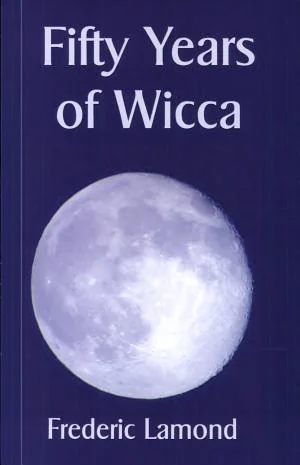
Fifty Years of Wicca
 73
73

Fifty Years of Wicca
Frederic Lamond's "Fifty Years of Wicca" presents a candid, if sometimes understated, memoir of a life dedicated to a specific magical path. Lamond’s position as an initiate of Gerald Gardner’s Bricket Wood coven places him at the heart of early Gardnerian Wicca, and his reflections on its evolution are invaluable. A particular strength lies in his nuanced portrayal of personal adaptation within a coven structure, avoiding the hagiography that can plague such accounts. However, the book occasionally lacks the incisive analysis one might expect from a historical overview, focusing more on personal experience than broader societal impact. His description of the challenges and triumphs of maintaining magical practice through decades of change offers a tangible sense of commitment. This work is a valuable, if uneven, chronicle for those seeking the lived experience of a Wiccan elder.
📝 Description
73
Frederic Lamond joined Gerald Gardner's Bricket Wood coven in 1958.
Frederic Lamond's Fifty Years of Wicca recounts his direct experience with the evolution of modern witchcraft, beginning with his initiation into Gerald Gardner's Bricket Wood coven in the late 1950s. He details his decades of practice within Gardnerian Wicca, noting adaptations and personal contributions he made to the tradition over time. The book offers a firsthand perspective on the development of a significant stream of contemporary Paganism, grounded in the author's personal involvement.
This work is best suited for readers already familiar with Wicca and its history, especially its Gardnerian roots. It provides historical context for practitioners and offers personal testimony for scholars of Western Esotericism. Those seeking a purely academic overview may find its personal nature prominent, while readers looking for extensive ritualistic detail might find it less focused on that aspect. The book appeals to those who value personal reflection within a magical context.
This book documents a specific lineage within modern Western Esotericism, tracing the development of Wicca from its post-World War II resurgence. It situates Gardnerian Wicca as a key influence on subsequent Neo-Pagan movements. Lamond's account offers a practitioner's view of how magical traditions are transmitted, adapted, and evolve through lived experience and communal practice.
💡 Why Read This Book?
• Gain direct insight into the Bricket Wood coven's early practices, offering a unique perspective unavailable in generalized histories of Wicca. • Understand Lamond's personal journey of adaptation and innovation within Gardnerian Wicca, illustrating how magical traditions evolve through individual experience. • Learn about the historical spread of Wicca to the USA through the eyes of a witness, providing concrete details on its early international development.
⭐ Reader Reviews
Honest opinions from readers who have explored this book.
❓ Frequently Asked Questions
What is the significance of the Bricket Wood coven mentioned in "Fifty Years of Wicca"?
The Bricket Wood coven, which Frederic Lamond joined in the 1950s, is historically significant as one of Gerald Gardner's earliest and most influential Wiccan covens, forming a nucleus for the development and dissemination of Gardnerian Wicca.
Who was Gerald Gardner in relation to Frederic Lamond's work?
Gerald Gardner was the founder of Gardnerian Wicca and initiated Frederic Lamond into his Bricket Wood coven. Lamond's book serves as a personal testament to Gardner's legacy and the tradition he established.
When was "Fifty Years of Wicca" first published?
Frederic Lamond's "Fifty Years of Wicca" was first published in 2004, reflecting on his half-century of experience with the Gardnerian Wiccan tradition.
Does the book discuss the spread of Wicca to the USA?
Yes, "Fifty Years of Wicca" touches upon the significant events that shaped the rise of Wicca in both the UK and the USA, drawing from Lamond's personal observations and experiences.
What does Frederic Lamond mean by 'adapting and innovating' within Wicca?
Lamond's 'adapting and innovating' refers to his personal evolution of practice and belief within the Gardnerian framework over fifty years, suggesting that Wicca is a living tradition capable of change and personal interpretation.
Is this book suitable for someone new to Wicca?
While it offers historical context, the book assumes some familiarity with Wiccan terminology and concepts. It is best suited for those with a foundational interest who wish to explore the personal history of a key figure.
🔮 Key Themes & Symbolism
Personal Coven Experience
Lamond details his half-century immersion in the Bricket Wood coven, offering a granular look at initiation, coven dynamics, and the transmission of knowledge within Gardnerian Wicca. He recounts specific events and personal reflections that illustrate the challenges and rewards of sustained practice. This theme underscores how personal relationships and shared ritual shape magical identity and community, providing an intimate perspective on the lived reality of early organized Witchcraft.
Adaptation and Innovation
A central theme is Lamond's evolution within Wicca, highlighting his personal adaptations and innovations to the Gardnerian tradition. This exploration moves beyond static dogma, presenting Wicca as a living, dynamic path responsive to individual experience and changing times. His willingness to modify practices while maintaining core tenets reflects a pragmatic approach to magical work, demonstrating how traditions persist through thoughtful evolution rather than rigid adherence.
Witness to History
Lamond positions himself as a direct witness to important moments in Wicca's history, from its nascent stages in the UK to its spread across the USA. He recounts observations of significant events that shaped the religion's public perception and internal development. This theme provides an invaluable historical anchor, offering a ground-level perspective on the cultural and social forces that influenced Wicca's growth and recognition during the latter half of the 20th century.
The Role of the Elder
The book implicitly explores the role of the magical elder through Lamond's own journey. His fifty years of practice culminate in a reflective narrative that shares wisdom gained over decades. This theme speaks to the importance of mentorship, continuity, and the passing down of tradition, emphasizing the value of accumulated experience in understanding and perpetuating esoteric paths. It offers insights into how practitioners mature within their chosen spiritual frameworks.
💬 Memorable Quotes
Direct passages from the work, attributed to the author.
“Initiate of Gerald Gardner's Bricket Wood coven in the 50s and 60s.”
— This concise statement anchors Lamond's authority and historical perspective, placing him directly within the foundational period of Gardnerian Wicca and establishing his credentials as a primary source.
“Witness to many of the significant events that have shaped the rise of Wicca.”
— This highlights the book's value as a historical document, positioning Lamond as an observer of key developments that propelled Wicca from a fringe movement to a recognized spiritual path.
“Adapting and innovating along the way.”
— This phrase points to the dynamic nature of Lamond's practice, suggesting that his fifty years involved personal growth and modification of tradition, rather than simple adherence to established dogma.
“What it means to be a Wiccan in the 21st century.”
— This indicates the book's contemporary relevance, suggesting Lamond reflects on how Wiccan principles and practices continue to manifest and evolve in the modern era, informed by his extensive historical experience.
“Fifty years following the path of Gardnerian Wicca.”
— This emphasizes the longevity and depth of Lamond's commitment, framing his narrative as a sustained exploration and lived experience of a specific esoteric tradition.
🌙 Esoteric Significance
Tradition
This work is firmly rooted in the Gardnerian tradition of Wicca, a lineage tracing back to Gerald Gardner's alleged initiation and subsequent formation of covens in post-war Britain. It fits within the broader stream of Western Esotericism, specifically its magical and polytheistic branches. Lamond's narrative departs from purely historical or anthropological accounts by offering an insider's perspective on the lived experience and personal evolution within this specific magical path, emphasizing practice and adaptation.
Symbolism
While not overtly focused on symbolic analysis, the book implicitly engages with core Wiccan symbolism through Lamond's personal practice. Concepts like initiation, the witch's altar, and the structure of the coven itself function as potent symbols of spiritual rebirth, sacred space, and communal endeavor. The continuity of practice over fifty years, including Lamond's personal innovations, suggests symbols of enduring tradition and personal transformation within the Gardnerian framework.
Modern Relevance
Lamond's reflections continue to inform contemporary Gardnerian practitioners and scholars of contemporary Paganism. His emphasis on personal adaptation within tradition offers a model for modern witches seeking to balance heritage with individual expression. Thinkers interested in the evolution of magical orders and the transmission of esoteric knowledge find value in his firsthand account of Wicca's formative decades and its subsequent global spread.
👥 Who Should Read This Book
• Dedicated students of Gardnerian Wicca seeking historical context directly from a long-term practitioner. • Scholars of Western Esotericism and Neo-Paganism interested in primary source material on Wicca's development. • Individuals curious about the personal testimonies and lived experiences of those who shaped modern magical traditions.
📜 Historical Context
Published in 2004, "Fifty Years of Wicca" emerged during a period of increased academic and popular interest in modern Paganism. Frederic Lamond's work documents the trajectory of Gardnerian Wicca, a tradition significantly shaped by Gerald Gardner in the mid-20th century. Lamond's firsthand account places him within the lineage of early practitioners, contemporaries of figures like Doreen Valiente and Monique Wilson. His involvement with the Bricket Wood coven, active from the late 1940s, provides a crucial perspective on the coven's early structure and rituals. The rise of Gardnerian Wicca coincided with, and influenced, other nascent Neo-Pagan movements, though its hierarchical structure and specific initiation protocols set it apart. While not directly engaging with censorship or specific reception events by name, Lamond’s narrative implicitly addresses the cultural climate that gradually shifted from outright dismissal to scholarly curiosity regarding Witchcraft.
📔 Journal Prompts
Lamond's fifty years of practice: What personal adaptations might enrich your own path?
Reflections on initiation within the Bricket Wood coven: How does this inform your understanding of spiritual commitment?
The rise of Wicca in the UK and USA: Consider the external factors influencing its growth.
Personal innovation within a tradition: How can you respectfully adapt established practices?
The role of the elder: What wisdom can be gleaned from long-term practitioners like Lamond?
🗂️ Glossary
Gardnerian Wicca
A specific tradition of modern Witchcraft founded by Gerald Gardner, characterized by its emphasis on initiation, coven structure, and specific ritual forms.
Bricket Wood Coven
One of the earliest and most influential Wiccan covens established by Gerald Gardner in England, serving as a key incubator for Gardnerian practices and beliefs.
Initiate
An individual who has undergone a formal ritual of admission into a specific spiritual or magical tradition, signifying acceptance and commitment.
Coven
A group of witches, typically comprising a leader (High Priestess or High Priest) and members, who meet for ritual and practice.
Neo-Paganism
A broad category of modern religious movements that draw inspiration from historical Pagan traditions, often incorporating elements of nature worship, magic, and polytheism.
Esotericism
Systems of thought and practice concerned with hidden knowledge, spiritual insight, and mystical experience, often distinct from mainstream religious or philosophical traditions.
High Priesthood
In Wicca, the primary leadership roles within a coven, typically held by a High Priestess and/or High Priest, responsible for leading rituals and guiding the group.
This book appears in 1 collection
🔮 Readers Also Liked
Browse all →









From the “Wicca” Collection
View all →








More Free Occult Philosophy Books
View all →




![Emanations of Lordly Grace [Al-Fuyudat al-Rabbaniyya]](/img/thumb/emanations-of-lordly-grace-al-fuyudat-al-rabbaniyya-ismail-muhammad-said-al-qadiri-216185.webp)