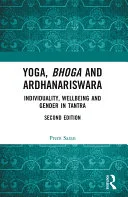
Yoga, Bhoga and Ardhanariswara
 73
73

Yoga, Bhoga and Ardhanariswara
Prem Saran’s *Yoga, Bhoga and Ardhanariswara* offers a distinctive approach by viewing ancient Indic Tantric traditions through the combined lenses of Indology, anthropology, and personal practice. The author’s insider-yet-analytical stance is evident, particularly when discussing concepts like 'bhoga,' moving beyond simplistic translations to explore its experiential dimensions within Tantric frameworks. The analysis of the 'mandala' as a cultural trope, not solely a ritualistic tool, provides a fresh perspective on its pervasive influence in South Asian regions. However, the book’s dense academic prose, while precise, can sometimes obscure the more mystical aspects it aims to illuminate. A more direct engagement with specific textual lineages or a clearer demarcation between scholarly interpretation and personal gnosis would have strengthened its impact. Nevertheless, it remains a valuable contribution for those seeking an academically rigorous yet experientially informed exploration of Tantra.
📝 Description
73
Prem Saran interprets Tantric traditions from Hinduism and Buddhism, tracing their 15-century origins.
This work offers a social-scientific interpretation of Tantric traditions within Hinduism and Buddhism, with roots extending back approximately 15 centuries. The author approaches these traditions with a self-reflexive perspective, drawing on his background as an Indologist, anthropologist, mystic, and practitioner. This analytical framework is valuable for scholars of religious studies, anthropology, and South Asian cultures. Practitioners of yoga and Tantra will also find a deeper understanding of the historical and cultural foundations of their practices.
The book places its analysis within the wider context of Indic thought, focusing on Tantra. It acknowledges the complex development of these practices and philosophies across South Asia, particularly in regions like Nepal, and their growth alongside other Indic philosophical currents. The discussion centers on themes such as 'bhoga' (enjoyment or experience), the nature of individuality within Indic philosophies, and the role of disciplined well-being. The symbolism and function of the 'mandala' are also examined, not merely as ritual diagrams but as significant elements in South Asian cultural expression.
The book engages with Tantra, a tradition that developed within the broader spectrum of Indic thought. Tantric practices, which emerged over a millennium ago, are examined through a lens that bridges academic study and personal practice. This approach situates the work within a lineage of scholarship that considers the lived experience and philosophical underpinnings of esoteric traditions, particularly as they evolved across South Asia.
💡 Why Read This Book?
• Understand the concept of 'bhoga' beyond simple enjoyment, as explored through a 15-century-old Tantric lens, revealing its role in disciplined well-being. • Gain insight into the 'mandala' not just as a spiritual diagram but as a recurring cultural trope across South Asian regions, as analyzed in the book's socio-scientific framework. • Appreciate the unique perspective offered by an Indologist, anthropologist, and practitioner, providing an empathetic yet critical examination of Hindu and Buddhist Tantra.
⭐ Reader Reviews
Honest opinions from readers who have explored this book.
❓ Frequently Asked Questions
What is the historical period covered by Yoga, Bhoga and Ardhanariswara?
The book focuses on Hindu and Buddhist Tantric traditions dating back approximately 15 centuries, examining their evolution and manifestations within South Asian cultural contexts.
What does 'bhoga' signify in the context of this book?
The work interprets 'bhoga' not merely as pleasure or enjoyment, but as a complex concept related to experience and disciplined well-being within the framework of Indic traditions.
How does the book approach the concept of the mandala?
It examines the 'mandala' as a significant cultural trope and its diverse manifestations across South Asian regions, extending its analysis beyond purely ritualistic or symbolic interpretations.
What is the author's background and how does it inform the book?
Author Prem Saran approaches the subject with a multi-faceted perspective, drawing on his expertise as an Indologist, anthropologist, mystic, and practitioner of the cult.
Which regions are specifically discussed in relation to Tantric traditions?
The book highlights the manifestations of Tantric traditions and concepts like the mandala in South Asian regions, with a specific mention of Nepal.
What is the primary analytical framework used in the book?
The book employs a social-scientific interpretation, combining academic rigor with an insider's empathy and self-reflexive study of Hindu and Buddhist Tantra.
🔮 Key Themes & Symbolism
Mandala as Trope
The work analyzes the 'mandala' not exclusively as a sacred diagram for meditation or ritual, but as a pervasive cultural trope. It explores how this symbolic structure manifests across various South Asian regions, influencing art, architecture, and philosophical conceptualizations. This perspective moves beyond the purely esoteric to understand the mandala's broader social and cultural resonance within the 15-century context of Indic traditions.
Indic Individuality and Yoga
This theme investigates how Indic philosophies, particularly within the context of yoga, shape conceptions of the self and individuality. It moves beyond Western notions of the isolated ego to explore a more fluid, interconnected, and context-dependent understanding of the individual. The discussion considers how practices like yoga contribute to this unique formation of selfhood within historical Hindu and Buddhist traditions.
The Concept of Bhoga
The book offers a nuanced interpretation of 'bhoga,' a term often simplified to mean enjoyment or pleasure. Within the Tantric framework discussed, 'bhoga' is explored as a more complex experiential dimension, intricately linked with disciplined well-being and spiritual practice. It examines how engaging with experience, rather than renouncing it, can be a path within these traditions.
Disciplined Well-being
Central to the study is the idea of 'disciplined well-being,' which emerges from the synthesis of yogic practices and concepts like 'bhoga.' This theme explores how Tantric traditions offer frameworks for cultivating a balanced and integrated state of being, not through asceticism alone, but through a mindful engagement with life's experiences and internal states.
💬 Memorable Quotes
Direct passages from the work, attributed to the author.
“The work includes a discussion of non-modern Indic themes: mandala as a trope and its manifestations in South Asian regions such as Nepal; yoga and Indic individuality; the concept of bhoga; disciplined wellbeing; gender...”
— This blurb excerpt highlights the book's multi-faceted approach, signaling its intent to analyze Tantric traditions through specific cultural and philosophical lenses, moving beyond simplistic definitions.
“A self-reflexive study approached with an insider’s empathy and the perspective of an Indologist, anthropologist, mystic and practitioner of the cult.”
— This statement underscores the unique methodology employed, blending academic scholarship with personal experience to provide a holistic and deeply informed examination of the subject matter.
“This book offers a social–scientific interpretation of the Hindu and Buddhist traditions of Tantra dating back 15 centuries.”
— This foundational statement clearly articulates the book's core objective: to apply social science methodologies to the study of ancient Tantric practices, establishing its academic and analytical rigor.
“It is a self-reflexive study...”
— The emphasis on self-reflexivity suggests an awareness of the researcher's own positionality and potential biases when engaging with complex spiritual traditions, fostering a more honest and critical inquiry.
“The work includes a discussion of non-modern Indic themes...”
— This phrasing indicates a focus on understanding traditional Indic thought systems on their own terms, rather than through the imposition of modern or Western conceptual frameworks.
🌙 Esoteric Significance
Tradition
The work engages with the esoteric traditions of Hindu and Buddhist Tantra, lineages that have historically explored non-dualistic philosophies, complex cosmologies, and transformative practices. It positions itself within the broader spectrum of Indic spiritual thought, offering an interpretation that acknowledges the mystical and practical dimensions often central to these traditions, while analyzing them through a socio-scientific framework.
Symbolism
A key symbol discussed is the 'mandala,' interpreted not only as a cosmological map or meditative tool but as a recurring cultural trope across South Asia. The book also implicitly engages with the symbolism of 'Ardhanariswara,' the composite half-male, half-female deity representing divine unity and the integration of opposites, a potent symbol within Shaivism that speaks to Tantric ideas of wholeness and balance.
Modern Relevance
Contemporary thinkers and practitioners exploring embodied spirituality, comparative mysticism, and the cultural anthropology of religion may find resonance in Saran's work. His approach to 'bhoga' and 'disciplined well-being' offers a nuanced perspective for modern yoga and meditation practitioners seeking to understand the roots of their disciplines beyond superficial interpretations. The book contributes to ongoing discussions about authentic engagement with Eastern spiritual traditions.
👥 Who Should Read This Book
• Academic researchers in religious studies, anthropology, and South Asian cultural history seeking a socio-scientific analysis of Tantric traditions. • Yoga and Tantra practitioners interested in a scholarly yet empathetic exploration of the historical and philosophical underpinnings of their practices, particularly concerning concepts like 'bhoga'. • Students of comparative religion who wish to understand the development and regional manifestations of Indic spiritual thought, including the role of symbols like the 'mandala'.
📜 Historical Context
Published in 2017, *Yoga, Bhoga and Ardhanariswara* engages with Tantric traditions that have a history spanning roughly 15 centuries. This places it within a contemporary scholarly landscape that increasingly values interdisciplinary approaches to religion and spirituality. The author’s background as an Indologist and anthropologist situates the work within established academic fields, while his practitioner status connects it to a lineage of scholars who bridge textual analysis with lived experience, a practice seen in figures like Mircea Eliade, though often with different theoretical underpinnings. The book implicitly addresses the ongoing academic and popular interest in Tantra, a subject that has seen fluctuating receptions, from sensationalism to serious academic inquiry. While not directly engaging with a specific contemporary debate or censorship event, its focus on 'non-modern Indic themes' suggests a scholarly current seeking to understand these traditions apart from Western appropriations or misinterpretations.
📔 Journal Prompts
The concept of 'bhoga' within Tantric traditions: how does your understanding of experience align with or diverge from this interpretation?
Reflecting on the 'mandala' as a cultural trope: identify instances where symbolic structures shape societal understanding beyond their intended spiritual use.
Consider the notion of 'Indic individuality' as presented in the work; how does it differ from Western concepts of selfhood?
Analyze the relationship between disciplined well-being and the engagement with experience ('bhoga') as discussed in the book.
Explore the author's self-reflexive approach: what are the benefits and challenges of studying a tradition from both an insider and outsider perspective?
🗂️ Glossary
Tantra
A complex and diverse body of spiritual traditions originating in India, found within Hinduism, Buddhism, and Jainism, characterized by esoteric rituals, meditation, and philosophical systems aimed at liberation or spiritual transformation.
Bhoga
A Sanskrit term often translated as enjoyment, pleasure, or experience. In Tantric contexts, it can refer to the mindful engagement with the world and its sensory experiences as a path to spiritual realization, rather than mere indulgence.
Mandala
A geometric configuration of symbols, often circular, used in various Indic traditions as a representation of the cosmos, a tool for meditation, or a ritualistic diagram. The book also explores its function as a cultural trope.
Ardhanariswara
A composite and androgynous deity in Hinduism, depicted as half-male and half-female, symbolizing the synthesis of masculine and feminine energies and the non-dual nature of reality.
Indologist
A scholar specializing in the history, languages, literature, and cultures of India and the Indian subcontinent.
Anthropologist
A scholar who studies human societies and their development, focusing on cultural, social, and historical aspects of human life.
Indic individuality
A concept referring to the understanding of selfhood as shaped by traditions originating in the Indian subcontinent, often emphasizing interconnectedness and contextuality over isolated ego.