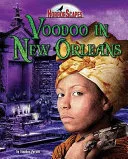
Voodoo in New Orleans
 83
83

Voodoo in New Orleans
Stephen Person’s *Voodoo in New Orleans* attempts to demystify a spiritual practice often shrouded in folklore and sensationalism. The book’s strength lies in its focus on Marie Laveau, presenting her not as a caricature but as a central, influential figure in the development of New Orleans Vodou. Person meticulously details her alleged abilities to commune with spirits and enact potent spells, grounding these descriptions in historical accounts and local lore. A limitation, however, is the occasional reliance on anecdotal evidence, which, while colorful, can blur the lines between historical fact and legend. The exploration of Laveau's 1881 death and the subsequent pilgrimage to her tomb offers a particularly compelling glimpse into the enduring reverence for her legacy. While the work provides a valuable historical overview, a deeper engagement with the theological underpinnings of Vodou would have further enriched its analysis. Still, it serves as a solid, if sometimes impressionistic, introduction to a complex spiritual tradition.
📝 Description
83
Stephen Person's 1998 book examines Vodou in New Orleans, focusing on Marie Laveau.
Stephen Person's Voodoo in New Orleans details the development of Haitian Vodou within the specific cultural environment of New Orleans. The book centers on the life and practices of Marie Laveau, a significant figure who influenced how Vodou was understood and practiced in the American South. Person moves past sensationalized accounts to offer a clearer picture of the spiritual system, its adherents, and its lasting impact.
This work is for readers interested in American religious history, especially African diasporic religions. It will appeal to students of comparative religion, those studying esoteric traditions, and anyone curious about New Orleans' spiritual life. Individuals seeking to grasp the historical background and cultural significance of Vodou, distinct from common misunderstandings, will find this a useful text.
The book places Vodou within the complex social and historical setting of 19th-century New Orleans. This era saw a mix of African, French, Spanish, and Caribbean influences, fostering syncretic religious expressions. The text touches on societal conditions that enabled figures like Marie Laveau to gain prominence, working within and sometimes against the social structures of the time. The early 20th century brought increased academic and public attention, often marked by apprehension and misinterpretation.
This book sits within the study of African diasporic religions, specifically examining how Vodou adapted and persisted in the United States. It addresses the syncretic blending of African spiritual traditions with Catholicism, a common feature in esoteric practices that arise from cultural exchange. The focus on the role of priestesses and the use of ritual for spiritual and practical aims connects it to broader traditions of folk magic and spiritual leadership found across various esoteric lineages.
💡 Why Read This Book?
• Understand the historical context of Vodou in 19th-century New Orleans, learning how its practices intertwined with the city's unique cultural fusion, a detail crucial for grasping its early development. • Gain insight into the life and influence of Marie Laveau, a specific historical figure whose role as a priestess and community leader is central to the book's narrative. • Explore the syncretic nature of New Orleans Vodou, recognizing how elements of African spiritual traditions blended with Catholicism, a key concept for understanding diasporic religious forms.
⭐ Reader Reviews
Honest opinions from readers who have explored this book.
❓ Frequently Asked Questions
When was Stephen Person's *Voodoo in New Orleans* first published?
Stephen Person's *Voodoo in New Orleans* was first published on August 1, 2010, making it a relatively modern examination of historical Vodou practices.
What is the primary focus of *Voodoo in New Orleans*?
The book primarily focuses on the life and practices of Marie Laveau, a prominent New Orleans voodoo priestess, and how her influence shaped the understanding and practice of Vodou in the city.
Does the book present a sensationalized view of Vodou?
While acknowledging popular perceptions, the book aims for a more nuanced understanding of Vodou, moving beyond sensationalism to explore its historical and cultural context in New Orleans.
What historical period does *Voodoo in New Orleans* cover?
The book delves into the complex social and historical environment of 19th-century New Orleans, the era in which Marie Laveau was most active and influential.
Who was Marie Laveau according to Stephen Person's book?
According to the book, Marie Laveau was a powerful voodoo priestess in New Orleans, believed by many to possess the ability to communicate with spirits and cast spells, wielding significant community influence.
What makes New Orleans Vodou distinct?
New Orleans Vodou is presented as distinct due to its syncretic nature, blending African spiritual traditions with elements of Catholicism, influenced by the city's unique cultural melting pot.
🔮 Key Themes & Symbolism
Marie Laveau's Influence
The work centers on the formidable presence of Marie Laveau, portraying her as a central figure whose mastery of Vodou rituals and perceived spiritual powers profoundly impacted 19th-century New Orleans. Person examines her role not just as a priestess but as a community leader and influencer, reading through the social and spiritual field of her time. The book details her alleged abilities in spellcasting and spirit communication, drawing from historical accounts and local folklore to build a picture of her enduring legacy and the reverence she commanded.
Syncretism in Practice
A core theme is the syncretic nature of Vodou as practiced in New Orleans. The book illustrates how African spiritual traditions fused with elements of Roman Catholicism, a common phenomenon in diasporic religions influenced by colonial histories. This blending created a unique spiritual expression, incorporating Catholic saints and rituals alongside traditional African deities and practices, reflecting the complex cultural exchange within the city.
Spirit Communication and Ritual
The book explores the fundamental Vodou concepts of communicating with spirits and the efficacy of ritual. It details how practitioners, particularly Marie Laveau, utilized ceremonies and specific practices to connect with the spirit world, seeking guidance, healing, or other forms of spiritual intervention. The emphasis is on the belief in the tangible power of these rituals and the practitioner's ability to mediate between the mundane and the spiritual realms.
Perception vs. Reality
Person addresses the often-sensationalized public perception of Vodou, contrasting it with the lived reality of its practitioners. The work seeks to provide a more grounded and historical account, differentiating between popular myths and the actual spiritual and social functions Vodou served within its community. This theme underscores the importance of understanding esoteric traditions through their historical and cultural contexts rather than solely through external, often fearful, interpretations.
💬 Memorable Quotes
Direct passages from the work, attributed to the author.
“Marie Laveau, a voodoo priestess thought to have the power to contact spirits and cast spells.”
— This foundational description highlights Laveau's perceived abilities, positioning her as a key intermediary between the human and spiritual worlds within the context of New Orleans Vodou.
“The confluence of African, French, Spanish, and Caribbean influences created a fertile ground for syncretic religious expression.”
— This highlights the historical and cultural environment of New Orleans as crucial for the development and unique character of its Vodou practices, emphasizing the blend of diverse traditions.
“The work chronicles the life and practices of Marie Laveau, a key figure whose influence shaped the perception and reality of Vodou.”
— This emphasizes Laveau's central role not just in practicing Vodou but in defining how the religion was understood and experienced, both by its adherents and by the wider society.
“Vodou in New Orleans offers a detailed examination of Haitian Vodou as it manifested and evolved within the unique cultural field of New Orleans.”
— This frames the book as a study of a specific regional manifestation of Vodou, acknowledging its origins while focusing on its adaptation and transformation within a distinct American urban setting.
“It moves beyond sensationalism to present a more nuanced understanding of the spiritual system, its practitioners, and its enduring legacy.”
— This statement of intent suggests the book aims to provide a scholarly yet accessible account, correcting common misconceptions and offering a deeper appreciation for Vodou's complexity.
🌙 Esoteric Significance
Tradition
While Vodou has roots in West African Vodun, its manifestation in New Orleans, as detailed in Person's work, represents a distinct syncretic tradition. It draws heavily from Haitian Vodou but is uniquely shaped by the specific cultural milieu of Louisiana, blending with Catholic practices and local folk beliefs. This makes it a fascinating case study in religious adaptation and syncretism, fitting within the broader study of African diasporic religions and their evolution outside of direct African influence.
Symbolism
Key symbols often encountered in New Orleans Vodou include the cross, representing the Catholic influence, often integrated with more traditional African symbols. The serpent is another potent motif, frequently associated with healing, protection, and primal spiritual energy. Ritual objects, such as veves (sacred designs drawn on the floor), and the use of specific colors and offerings play crucial roles in invoking and appeasing spirits, acting as focal points for spiritual power and communication.
Modern Relevance
Contemporary practitioners and scholars of African diasporic religions continue to draw on historical accounts of New Orleans Vodou. Thinkers exploring themes of cultural resilience, religious syncretism, and the historical agency of marginalized communities often reference figures like Marie Laveau. Modern spiritual seekers interested in Vodou or related practices often look to these historical texts to understand the tradition's roots and its evolution, appreciating its enduring spiritual power and cultural significance.
👥 Who Should Read This Book
• Students of comparative religion and African diasporic traditions: They will gain a specific, historically grounded understanding of how Vodou developed and was practiced in a unique American urban setting. • Researchers of American folklore and occult history: This book offers insights into a specific, often misunderstood, spiritual practice and its key historical figures, like Marie Laveau. • Readers interested in New Orleans history and culture: The work provides a lens through which to view the city's complex social fabric, spiritual life, and the enduring influence of its diverse cultural heritage.
📜 Historical Context
Stephen Person’s *Voodoo in New Orleans* emerges from a late 20th and early 21st-century academic and popular interest in African diasporic religions, seeking to provide a more grounded historical perspective. The 19th century, the primary period examined, was marked by intense cultural exchange and social stratification in New Orleans. This era saw the development of syncretic religious practices, notably Vodou, which blended West African spiritual traditions with Catholicism, a direct result of the complex colonial history and the enslaved population’s efforts to maintain their spiritual heritage. The work implicitly engages with earlier, often sensationalized, accounts of Vodou, such as those found in early 20th-century pulp fiction and sensationalist journalism, which frequently portrayed practitioners as malevolent figures. Key contemporaries in the study of American folk religions and African-American history were producing scholarship that began to unpack these traditions, though often from afar. The reception of Vodou itself was largely one of fear and suspicion from the dominant white society, leading to periods of attempted suppression and persistent misunderstanding.
📔 Journal Prompts
Marie Laveau's methods for spirit communication and their historical context.
The impact of New Orleans' unique cultural fusion on Vodou's development.
Syncretism in religious practices: how African traditions merged with Catholicism.
The role of ritual in connecting with the spirit world as depicted in the text.
Analyzing the public perception versus the lived reality of Vodou practitioners.
🗂️ Glossary
Vodou
A spiritual practice originating in Haiti, with roots in West African Vodun, that involves the worship of spirits (Loa) and often syncretizes with Catholic saints and rituals.
Marie Laveau
A prominent and influential voodoo priestess in 19th-century New Orleans, renowned for her spiritual powers, healing abilities, and community influence.
Syncretism
The merging of different religions, cultures, or schools of thought, often seen in diasporic religions where indigenous beliefs blend with those of colonizing or dominant cultures.
Priestess/Priest (Houngan/Mambo)
Individuals who lead Vodou ceremonies, act as intermediaries with spirits, and provide spiritual guidance, healing, and counsel to their communities.
Spirit Communication
The practice within Vodou of interacting with spiritual entities, such as Loa or the spirits of ancestors, for guidance, healing, or other purposes.
Ritual
A set of actions performed according to a prescribed order, used in Vodou ceremonies to honor spirits, invoke their presence, and achieve specific spiritual or worldly outcomes.
Veve
Sacred symbolic designs drawn on the ground or floor, typically with cornmeal or other powders, used in Vodou ceremonies to invoke and represent specific spirits (Loa).