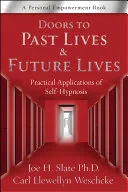
Doors to Past Lives & Future Lives
 82
82

Doors to Past Lives & Future Lives
Slate and Weschcke's 'Doors to Past Lives & Future Lives' presents a refreshingly direct manual for self-administered regression. Unlike many esoteric texts that rely on abstract theory, this work provides concrete steps. The emphasis on 'do-it-yourself' hypnosis, a concept Weschcke, a significant figure in the modern occult revival and founder of Llewellyn Worldwide, championed, is its primary strength. It demystifies a practice often shrouded in mystique. However, the book occasionally leans into overly optimistic claims about the immediate efficacy of regression for all issues, which might set unrealistic expectations for some readers. The section detailing the 'scientifically tested methods' for regression, while detailed, could benefit from more explicit discussion of potential psychological pitfalls or ethical considerations for unsupported self-practice. Ultimately, it's a functional guide for the earnestly curious, offering a structured pathway rather than a definitive revelation.
📝 Description
82
Joe H. Slate and Carl Llewellyn Weschcke published 'Doors to Past Lives & Future Lives' in December 2011.
This book presents a self-guided method for individuals to use hypnosis for personal exploration of past and future lives. It details a technique for conducting one's own past-life regressions, suggesting that accessing this information can foster deeper self-awareness, increase confidence, and improve life management. The authors propose that personal identity extends beyond a single existence, and through guided self-hypnotic induction, readers can access impressions or memories from prior incarnations.
The text is for those interested in reincarnation and what the authors call 'collective wisdom' from previous lives. It offers tools for personal development, particularly for those who see self-hypnosis as a way to overcome fears, build self-worth, and find life direction. The book is also relevant for practitioners of alternative healing or individuals exploring spirituality outside traditional religious paths. The authors frame this process not as fantasy, but as a method for retrieving stored information that can offer insights.
Emerging from the mid-20th century interest in altered states of consciousness and therapeutic hypnosis, Slate and Weschcke developed a DIY approach to past-life regression. This democratized techniques often found in clinical settings or esoteric circles. It aligns with a broader trend toward self-empowerment and personalized spirituality, offering a way to access perceived memories from previous existences outside established religious or therapeutic frameworks.
💡 Why Read This Book?
• Learn specific self-hypnosis techniques for accessing potential past-life experiences, as detailed in the step-by-step guide, offering a practical skill for introspection. • Understand how Dr. Joe H. Slate's methodology aims to unlock 'collective wisdom' from prior existences to foster personal growth and overcome specific fears. • Explore the role of Carl Llewellyn Weschcke's vision in democratizing esoteric practices, providing a DIY approach to regression accessible beyond traditional therapeutic settings.
⭐ Reader Reviews
Honest opinions from readers who have explored this book.
❓ Frequently Asked Questions
What is the primary goal of 'Doors to Past Lives & Future Lives'?
The book aims to empower individuals to access their past life experiences through self-hypnosis, thereby gaining self-understanding, mastering fears, and enhancing self-worth for present-day life direction.
Who are the authors of 'Doors to Past Lives & Future Lives'?
The authors are Dr. Joe H. Slate, who developed the regression techniques, and Carl Llewellyn Weschcke, a key figure in modern occult publishing and founder of Llewellyn Worldwide.
What is 'collective wisdom' as described in the book?
The authors interpret 'collective wisdom' as the accumulated knowledge and experience from all past life incarnations of an individual, accessible through focused self-hypnotic regression.
Is this book for beginners in hypnosis?
Yes, the book is designed as a do-it-yourself guide, providing step-by-step instructions for individuals to conduct their own past-life regressions without needing an external hypnotherapist.
When was 'Doors to Past Lives & Future Lives' first published?
The book was first published on December 8, 2011, offering a contemporary approach to exploring past life regression.
Does the book claim scientific backing for past life regression?
Yes, the authors present their methods as 'scientifically tested,' suggesting a basis in empirical observation and reproducible results within the context of psychological exploration.
🔮 Key Themes & Symbolism
Self-Directed Regression
The core of the book lies in its 'do-it-yourself' approach to past-life regression. Slate and Weschcke provide explicit instructions for individuals to guide themselves into hypnotic states conducive to recalling previous existences. This empowers the reader, positioning them as the active agent in their exploration rather than a passive recipient of therapy, aligning with a trend towards personal sovereignty in spiritual and psychological practices.
Wisdom of Past Incarnations
The text posits that each individual carries the accumulated knowledge and experiential data from all their past lives. This 'collective wisdom' is presented as an accessible resource for resolving present-day issues. By tapping into this vast storehouse, readers are encouraged to find answers to current dilemmas, understand recurring patterns, and accelerate personal evolution.
Hypnosis for Self-Mastery
Beyond regression, the book frames hypnosis as a tool for comprehensive self-mastery. It details how to use self-hypnotic techniques to confront and conquer fears, build self-worth, and achieve a greater sense of control over one's life. This application of hypnosis extends beyond mere memory recall into practical psychological and emotional regulation.
Bridging Esoteric and Practical
Slate and Weschcke aim to bridge the gap between esoteric concepts like reincarnation and tangible, actionable self-help. They present regression not as a purely spiritual or mystical pursuit, but as a scientifically informed method for psychological insight and personal development. This practical application makes the exploration of past lives accessible and relevant to contemporary life challenges.
💬 Memorable Quotes
Direct passages from the work, attributed to the author.
“You have the ability to access the collective wisdom of all your past life experiences.”
— This statement is the foundational premise of the book, asserting that personal history extends beyond a single lifespan and that this extensive record is an accessible resource.
“By tapping into this immense storehouse of knowledge through self-hypnosis, you will gain direction, mastery over your fears, a greater sense of self-worth—and the power to take charge of your life.”
— This captures the promised benefits of the regression techniques. It highlights the practical, empowering outcomes the authors believe readers can achieve by engaging with their past-life material.
“Dr. Joe H. Slate and Carl Llewellyn Weschcke put a unique do-it-yourself spin on hypnosis.”
— This describes the book's distinctive methodology, emphasizing its accessible, self-guided nature for practicing hypnosis and past-life regression outside of a clinical setting.
“Teaching you step by step how to conduct your own past-life regression using powerful, scientifically tested methods.”
— This highlights the instructional aspect of the book, focusing on the systematic, empirically-grounded approach advocated by the authors for personal exploration.
💡 Key Ideas
Editorial paraphrase of the work's core concepts — not direct quotes.
Unlocking present-day potential through understanding past patterns.
This concisely summarizes the core therapeutic concept: that insights gained from past-life recall can directly resolve current life obstacles and enhance future possibilities.
🌙 Esoteric Significance
Tradition
The work draws from the broader Western Esoteric tradition's interest in reincarnation and the soul's journey, particularly as popularized in the New Age movement of the late 20th century. It departs from more structured Theosophical or Kabbalistic frameworks by offering a direct, experiential, and self-guided method, prioritizing personal discovery over adherence to established dogma.
Symbolism
While not heavily symbolic in its presentation, the 'door' itself serves as a potent metaphor for accessing hidden domains of consciousness and past experiences. The concept of 'collective wisdom' implies an Akashic-like record, a mystical repository of all knowledge, accessible through altered states. The regression process itself symbolizes a journey inward and backward through time.
Modern Relevance
This book's emphasis on self-directed psychological tools aligns with contemporary trends in mindfulness, self-therapy, and personal growth. Its practical, step-by-step approach speaks to modern digital-age consumers accustomed to readily available information and DIY solutions. Concepts of tapping into inner resources and past experiences for present well-being are echoed in current therapeutic modalities and popular wellness practices.
👥 Who Should Read This Book
• Individuals interested in reincarnation and past-life regression who prefer a self-guided approach rather than seeking a therapist. • Personal development enthusiasts looking for practical, albeit unconventional, methods to overcome fears and boost self-esteem. • Explorers of consciousness and altered states who want to understand how hypnosis can be used for introspection and self-discovery.
📜 Historical Context
Published in 2011, 'Doors to Past Lives & Future Lives' arrived during a period of sustained interest in alternative spirituality and self-help methodologies. The mid-20th century saw figures like Dr. Ian Stevenson rigorously investigating claims of reincarnation, while therapists like Milton H. Erickson advanced the field of clinical hypnosis. Slate and Weschcke, however, specifically targeted a lay audience with a do-it-yourself manual. Weschcke, as the founder of Llewellyn Worldwide, was instrumental in popularizing occult and New Age literature, making texts like this widely accessible. This book can be seen as an evolution of earlier works on psychic exploration and regression, adapting them for a generation seeking direct experience and personal empowerment through accessible techniques, often bypassing traditional institutions.
📔 Journal Prompts
Past-life regression techniques outlined by Slate and Weschcke: what impressions or memories arise when you attempt to visualize a 'door' to another time?
The concept of 'collective wisdom': reflect on a recurring challenge in your life and consider if it relates to patterns from a past existence.
Mastery over fears: journal about a fear that feels deeply ingrained and explore how accessing its potential origin might diminish its power.
Self-worth development: how can understanding past capabilities or roles, as suggested by regression, enhance your present sense of value?
Personal direction: consider how insights from a hypothetical past life could inform your current life path or future aspirations.
🗂️ Glossary
Past-Life Regression
A technique using hypnosis to guide an individual to recall or re-experience events and sensations from previous lifetimes they are believed to have lived.
Self-Hypnosis
The practice of inducing a hypnotic state in oneself, typically for therapeutic purposes, self-improvement, or exploring consciousness.
Collective Wisdom
The authors' concept referring to the accumulated knowledge, experiences, and insights from all of an individual's past life incarnations.
Do-It-Yourself (DIY) Hypnosis
A methodology that enables individuals to perform hypnotic practices, such as regression, on themselves without the direct supervision of a trained therapist.
Self-Worth
The inherent value and esteem an individual holds for themselves, which the book suggests can be enhanced through understanding past-life experiences.
Direction (Life Direction)
The sense of purpose and clarity regarding one's life path, which the book suggests can be gained by accessing insights from past lives.
Scientifically Tested Methods
Techniques presented by the authors as having undergone empirical validation or demonstrating reproducible results within the context of psychological exploration and regression.