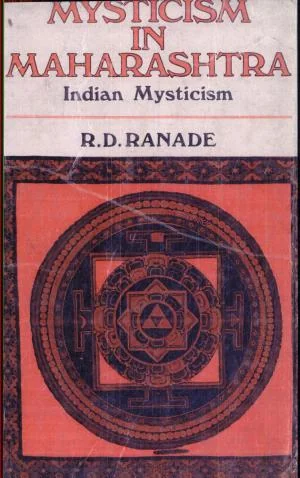
Mysticism in Maharashtra
 72
72

Mysticism in Maharashtra
R. D. Ranade's "Mysticism in Maharashtra" presents a robust comparative analysis, moving beyond hagiography to dissect the philosophical underpinnings of a vital spiritual lineage. Its strength lies in the systematic breakdown of the teachings of figures like Jnanesvara and Tukarama, situating them within a broader Indian mystical framework. The work's clarity in distinguishing between different modes of spiritual expression is commendable. However, its academic tone, while precise, can sometimes feel dense for the uninitiated reader, occasionally obscuring the very devotional fervor it seeks to explain. A passage discussing the concept of *varkari* (a religious sect in Maharashtra) as a vehicle for mystical experience offers a particularly concrete example of Ranade's analytical approach. Ultimately, the book serves as an essential, if demanding, reference for understanding a significant chapter in Indian spirituality.
📝 Description
72
R. D. Ranade's 1982 book examines the devotional and philosophical currents of mysticism in medieval Maharashtra.
First published in 1982, R. D. Ranade's study offers a detailed look at mystical traditions in medieval India, concentrating on the devotional and philosophical streams that began in the Maharashtra region. The author meticulously analyzes the spiritual writings and teachings of important figures, comparing their distinct ways of approaching the divine. This book is for serious students of comparative mysticism, scholars of Indian philosophy and religion, and anyone interested in the rich history of devotional movements, known as Bhakti, in South Asia. It provides an academic yet accessible overview of spiritual thought, going beyond simple biographies.
Ranade's work appeared in the late 20th century, a time when academic interest in Indian spiritual traditions was growing. He places the insights of Maharashtra's saints within the wider context of medieval Indian religious thought. This period saw the influence of Vedanta philosophies and the emergence of vernacular devotional poetry. The text discusses concepts like bhakti (devotion) and jnana (knowledge), as well as the role of the guru. It differentiates various kinds of mystical experience and expression, organizing the approaches of figures such as Jnanesvara, Namadeva, Ekanatha, and Tukarama to show the different paths to spiritual realization.
This book is situated within the broader study of Indian devotional mysticism, particularly the Varkari tradition of Maharashtra. This tradition emphasizes personal experience of the divine through *bhakti*, often expressed in vernacular poetry and song. Ranade connects these specific regional expressions to larger philosophical currents within Hinduism, such as Vedanta, and to the universal human quest for spiritual understanding. It examines how these saints developed unique paths to realizing the divine, often outside of formal religious structures.
💡 Why Read This Book?
• Gain a structured understanding of the distinct mystical paths of figures like Jnanesvara and Namadeva, differentiating their approaches to spiritual realization as detailed in the comparative analysis. • Explore the historical development of devotional practices in Maharashtra, understanding the intellectual milieu that shaped these saints' lives and teachings, as framed within the medieval Indian religious landscape. • Grasp core concepts such as *bhakti* and *jnana* through the lens of specific saints' lives and writings, learning how these ideas were embodied and expressed in their spiritual journeys.
⭐ Reader Reviews
Honest opinions from readers who have explored this book.
❓ Frequently Asked Questions
What is the primary focus of Mysticism in Maharashtra by R. D. Ranade?
The book primarily analyzes and evaluates the mystical trends in medieval Indian literature, with a specific emphasis on the spiritual writings and devotional practices of the saints from the Maharashtra region.
Which key mystics are discussed in the book?
Ranade discusses prominent figures such as Ramananda, Kabir, Gauranga, Jnanesvara, Namadeva, Ekanatha, Tukarama, and Ramadasa, among others.
What is the original publication year of Mysticism in Maharashtra?
The book was first published in 1982, making it a significant academic contribution to the study of Indian mysticism in the late 20th century.
What is the academic approach of R. D. Ranade in this work?
Ranade employs a comparative mysticism approach, evaluating the spiritual heaven introduced into Indian thought by various writers and saints, drawing striking parallels and distinctions.
Does the book cover different types of mysticism?
Yes, the book aims to cover all types of mysticism known to exist, providing a comprehensive survey through the lens of medieval Indian saints and their writings.
What historical period does Mysticism in Maharashtra primarily cover?
The book focuses on the medieval period of Indian history, examining the spiritual and philosophical trends that emerged and flourished during that era.
🔮 Key Themes & Symbolism
Comparative Mystical Analysis
Ranade's work excels in its comparative method, dissecting the spiritual philosophies of diverse medieval Indian saints. He meticulously contrasts the approaches of figures like Jnanesvara, who emphasized *jnana* (knowledge), with those of Namadeva, known for his profound *bhakti* (devotion). This analytical framework allows for a nuanced understanding of the spectrum of mystical experience, moving beyond generalized notions of spirituality to pinpoint specific theological and experiential differences within the rich Indian tradition. The book evaluates how each mystic contributed to the spiritual landscape, creating a detailed map of devotional thought.
The Saints of Maharashtra
A central pillar of the book is its dedicated focus on the spiritual luminaries from Maharashtra. Saints such as Ekanatha, Tukarama, and Ramadasa are presented not merely as historical figures but as profound philosophical and devotional voices. Ranade explores their unique contributions to Marathi literature and their impact on the religious consciousness of the region. The work highlights how their teachings, often delivered in vernacular poetry, made complex spiritual ideas accessible, fostering a widespread devotional movement.
Paths to Spiritual Realization
The book delineates various paths through which mystics sought union with the divine. It examines the interplay of *bhakti* (devotion), *jnana* (knowledge), and *karma* (action) in their spiritual journeys. Ranade analyzes how different saints prioritized these elements, offering distinct models for achieving spiritual enlightenment. This exploration provides readers with insight into the many-sided nature of spiritual practice and the diverse methodologies employed by mystics to attain their ultimate goals.
Medieval Indian Spiritual Landscape
Ranade situates the mystical traditions of Maharashtra within the broader context of medieval Indian thought. He acknowledges influences from established philosophical schools while highlighting the revolutionary impact of the Bhakti movement. The work charts the evolution of spiritual expression during a period marked by significant social and religious changes. By examining figures like Ramananda and Kabir, who transcended regional boundaries, the book illustrates the interconnectedness of spiritual currents across India.
💬 Memorable Quotes
Direct passages from the work, attributed to the author.
“The spiritual heaven introduced into Indian thought by the writers such as Ramananda, Kabir, Gauranga, Jnanesvara, Namadeva, Ekanatha, Tukarama, Ramadasa and others.”
— This statement expresses the book's scope, highlighting how Ranade views these medieval Indian mystics as architects of a profound spiritual and philosophical reorientation, enriching the Indian intellectual tradition with their unique visions.
“The list exhausts all types of mysticism that are known to exist.”
— Ranade posits that through the study of these selected saints, the full spectrum of human mystical experience and expression is covered, suggesting a comprehensive typology of spiritual paths within the Indian context.
“The book is rather a study of comparative mysticism.”
— This indicates that the author's primary aim is not merely descriptive but analytical, seeking to draw parallels and contrasts between the spiritual methodologies and philosophies of different mystics to understand their unique contributions.
“We get a fair idea of the spiritual heaven introduced into Indian thought.”
— This phrase suggests that the book offers readers a clear conception of the elevated spiritual and philosophical realms conceptualized and articulated by the mystics under examination.
“draws striking parall[els]”
— This implies that Ranade identifies significant commonalities and correspondences between the teachings and experiences of various mystics, which are crucial for his comparative analysis.
🌙 Esoteric Significance
Tradition
While not strictly within a Western esoteric lineage like Hermeticism or Kabbalah, "Mysticism in Maharashtra" engages with traditions deeply rooted in Indian spiritual philosophy, particularly the Sant Mat and Varkari Sampradaya. These traditions, while devotional in nature, contain profound metaphysical and yogic elements that align with broader esoteric concerns regarding consciousness, the divine, and the path to liberation. Ranade's work bridges the gap between academic religious studies and the esoteric pursuit of inner knowledge by dissecting the practical spiritual methodologies employed by these saints.
Symbolism
The text implicitly engages with symbolism prevalent in Maharashtrian mysticism, such as the *Vithoba* deity as a focal point for devotion, representing the divine presence in the world. The concept of *namasmarana* (remembrance of God's name) itself functions as a potent meditative symbol. Furthermore, the journey of the *Varkari* pilgrims to Pandharpur is a symbolic representation of the soul's pilgrimage towards spiritual union, a motif found across many esoteric traditions.
Modern Relevance
Contemporary seekers interested in embodied spirituality, non-dual philosophies, and the power of devotional practice find resonance in the teachings of saints like Jnanesvara and Tukarama, as presented by Ranade. Thinkers and practitioners exploring mindful living, the role of poetry in spiritual practice, and the integration of inner and outer life draw inspiration from this lineage. The work remains relevant for those studying the evolution of consciousness and the diverse expressions of the divine impulse in human culture.
👥 Who Should Read This Book
• Students of comparative religion and philosophy: They will benefit from Ranade's systematic analysis of diverse mystical expressions and their philosophical underpinnings, gaining a nuanced understanding of Indian spiritual thought. • Devotees and practitioners of Indian spiritual traditions: Readers seeking to deepen their knowledge of the Varkari Sampradaya and the lives and teachings of Maharashtrian saints like Jnanesvara and Tukarama will find valuable scholarly context. • Researchers in medieval Indian history and literature: This work provides essential insights into the intellectual and cultural milieu of medieval Maharashtra, detailing the impact of spiritual leaders on society and vernacular literature.
📜 Historical Context
R. D. Ranade's "Mysticism in Maharashtra," first published in 1982, emerged during a period when academic interest in Indian religious history, particularly the Bhakti movement, was well-established. The study sits within a lineage of scholarship that sought to understand the philosophical underpinnings of vernacular devotional traditions. The era saw comparative studies of religion gain traction, and Ranade's work contributes by examining the specific spiritual field of Maharashtra. It follows in the wake of scholars who explored figures like Kabir and Guru Nanak, placing the Maharashtrian saints within a broader pan-Indian context. The book's meticulous analysis offers a counterpoint to more purely devotional or hagiographical accounts, providing a critical scholarly perspective on figures who profoundly shaped religious thought and practice in medieval India, a period already rich with Vedanta and other established philosophical schools.
📔 Journal Prompts
Jnanesvara's interpretation of the Bhagavad Gita, as explored in the text, and its relation to personal understanding.
The concept of *bhakti* as embodied by Namadeva, and its potential application in daily life.
Tukarama's emphasis on humility and the vernacular expression of spiritual truths.
The distinct methodologies of spiritual realization presented for Ekanatha versus Ramadasa.
Reflecting on the notion of a 'spiritual heaven' introduced by these medieval mystics.
🗂️ Glossary
Bhakti
A devotional movement and spiritual path in Hinduism emphasizing intense love and devotion to a personal God, central to the teachings of many saints discussed.
Jnana
Sanskrit for 'knowledge,' referring to spiritual wisdom and insight, often contrasted with or integrated into devotional practices in Indian mysticism.
Varkari Sampradaya
A prominent Vaishnava devotional tradition in Maharashtra, centered on the worship of Vithoba, known for its egalitarianism and emphasis on pilgrimage and devotional singing.
Namasmarana
The practice of remembering or chanting the name of God, a core meditative and devotional technique employed by many Indian mystics.
Pandharpur
The holy town in Maharashtra that serves as the primary pilgrimage destination for the Varkari Sampradaya, dedicated to the deity Vithoba.
Sant Mat
A spiritual path or tradition that emphasizes the teachings of the saints (sants) and aims for spiritual liberation through meditation, devotion, and ethical living.
Dnyaneshwari
A famous commentary on the Bhagavad Gita written by the saint Dnyaneshwar (Jnanesvara) in Marathi, a foundational text for Maharashtrian spirituality.
🔮 Readers Also Liked
Browse all →









More Free Occult Philosophy Books
View all →