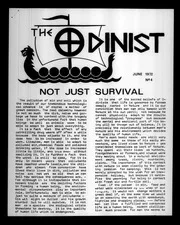
Miasmatic prescribing
 73
73

Miasmatic prescribing
Subrata Kumar Banerjea’s Miasmatic Prescribing attempts to untangle the deeper energetic currents that underlie chronic disease, moving beyond the superficial symptom picture. The book’s strength lies in its detailed exploration of miasmatic theory, presenting it as a vital diagnostic lens for practitioners facing stubborn cases. Banerjea guides the reader through the historical development of this concept, showing how it informs the selection of remedies when standard approaches falter. A significant limitation, however, is the advanced nature of the material; newcomers to homeopathy will find themselves lost in its specialized jargon and theoretical depth. The discussion on the 'Syphilitic Miasm' in Chapter 4, for instance, while intricate, requires considerable prior knowledge to fully appreciate its practical application. This work is best suited for experienced homeopaths seeking to refine their understanding of chronic pathology.
📝 Description
73
Subrata Kumar Banerjea's 2001 book, Miasmatic Prescribing, details a specialized homeopathic diagnostic framework.
Published in 2001, Miasmatic Prescribing by Subrata Kumar Banerjea introduces a specific method for homeopathic diagnosis and treatment. The book centers on the miasmatic layer of illness, a concept vital for addressing chronic conditions that do not respond to standard homeopathic care. Banerjea views miasms as more than just sicknesses; he describes them as deep energetic patterns that shape an individual's health and overall life course.
This work is aimed at experienced homeopathic practitioners and students who already understand classical homeopathy. It is particularly useful for those who have faced difficult cases where traditional repertorization and materia medica study have fallen short. Readers who wish to gain a deeper insight into the origins of chronic diseases, go beyond simple symptom matching in energetic medicine, and improve their diagnostic skills will find this book valuable. It addresses how to identify and manage these miasmatic influences for more effective treatment outcomes.
Banerjea's work builds upon the Hahnemannian tradition of homeopathy, specifically the theory of miasms as developed by Hahnemann, Kent, and Boenninghausen. Published in the early 21st century, it reflects a growing interest in deeper energetic understandings within homeopathic practice. The book offers a structured way to apply miasmatic theory to challenging cases, moving beyond symptom-based approaches to consider the underlying energetic constitution of the patient.
💡 Why Read This Book?
• Gain a deeper understanding of chronic disease etiology by studying Banerjea's detailed exposition of the miasmatic layer, a concept first explored by Hahnemann. • Refine diagnostic skills for complex cases by learning to identify specific energetic patterns beyond superficial symptoms, as detailed in the chapters on miasmatic classification. • Enhance your therapeutic approach by understanding how to select remedies based on miasmatic totality, a method that builds upon the foundational principles outlined in Samuel Hahnemann's Organon of the Art of Healing.
⭐ Reader Reviews
Honest opinions from readers who have explored this book.
❓ Frequently Asked Questions
What is the primary focus of Miasmatic Prescribing by Subrata Kumar Banerjea?
The book's primary focus is on a specialized homeopathic approach to diagnosis and treatment centered on miasmatic layers of disease, aiming to address chronic ailments that resist conventional remedies.
Who is the intended audience for Miasmatic Prescribing?
It is intended for advanced homeopathic practitioners and students who have a strong grasp of classical homeopathy and seek to deepen their understanding of chronic disease.
When was Miasmatic Prescribing first published?
Miasmatic Prescribing was first published in 2001, placing it within the early 21st-century discourse on homeopathic theory and practice.
What historical homeopathic concepts does the book build upon?
The book builds upon foundational homeopathic concepts, particularly the miasmatic theory, which was significantly developed by Samuel Hahnemann and later theorists like James Tyler Kent.
Does the book offer practical advice for homeopaths?
Yes, it offers practical guidance for homeopaths on identifying and managing miasmatic influences to select more accurate simillimums in chronic and complex cases.
How does this work differ from standard homeopathic texts?
It differs by focusing intensely on the energetic and underlying miasmatic layers of disease, offering a specialized lens for diagnosis rather than relying solely on symptom matching.
🔮 Key Themes & Symbolism
Miasmatic Layering
The book posits that chronic disease manifests in distinct energetic layers, with miasms forming the deepest and most influential strata. Banerjea argues that understanding these specific miasmatic patterns, such as the Psora, Syphilis, and Sycosis, is paramount for effective treatment. He illustrates how these inherited or acquired energetic predispositions shape an individual's susceptibility and the manifestation of their ailments, moving beyond a simple symptom-based approach to a more fundamental energetic diagnosis.
Evolution of Miasm Theory
Banerjea traces the historical development of miasmatic theory, acknowledging Samuel Hahnemann's foundational work and the subsequent elaborations by figures like James Tyler Kent. This section provides context for his own contributions, situating his specific approach within the broader homeopathic tradition. It highlights how the understanding of miasms has evolved, adapting to new clinical observations and theoretical refinements over time.
Advanced Repertorization
Miasmatic Prescribing emphasizes that while repertorization is a crucial tool, it must be guided by a deep understanding of the miasmatic background of the case. The book suggests that certain remedies, or specific potencies and methods of prescribing them, become clearer when viewed through the lens of the dominant miasm. This encourages practitioners to look beyond mere symptom correlation to the underlying energetic disturbance.
Energetic Etiology of Chronic Disease
A central theme is the energetic origin of chronic illness. Banerjea proposes that miasms represent fundamental energetic disturbances that predispose individuals to long-term health issues. By identifying and addressing these deep-seated miasmatic influences, practitioners can work towards a more complete and lasting cure, rather than merely suppressing symptoms. This perspective aligns with the vitalistic underpinnings of homeopathy.
💬 Memorable Quotes
Direct passages from the work, attributed to the author.
“The miasm is the foundation upon which the superstructure of chronic disease is built.”
— This statement highlights the book's core thesis: that miasmatic influences are the fundamental energetic causes of chronic illnesses, serving as the base upon which all subsequent symptoms and pathologies develop.
“To treat the chronic case effectively, one must first identify the prevailing miasm.”
— This emphasizes the diagnostic priority placed on understanding the miasmatic layer before attempting to select a remedy, suggesting that accurate miasmatic identification is a prerequisite for successful homeopathic treatment of chronic conditions.
“The Syphilitic miasm presents unique challenges requiring specific diagnostic acumen.”
— This highlights the complexity of treating the Syphilitic miasm specifically, implying that it demands specialized knowledge and diagnostic skills from the homeopath due to its distinct energetic signature and manifestation.
💡 Key Ideas
Editorial paraphrase of the work's core concepts — not direct quotes.
Hahnemann's discovery of miasms was a monumental step in understanding the chronic disease process.
This quote acknowledges the historical significance of Samuel Hahnemann's work on miasms, positioning it as a central advancement in the homeopathic understanding of long-term pathological conditions.
Beyond symptom-matching lies the deeper energetic truth of the patient's constitution.
This paraphrased concept suggests that true homeopathic healing requires looking beyond the immediate physical and mental symptoms to the deeper energetic patterns and constitutional miasmatic influences affecting the patient.
🌙 Esoteric Significance
Tradition
Miasmatic Prescribing sits firmly within the Western Esoteric tradition, specifically aligned with the vitalistic and energetic philosophies underpinning homeopathy. It draws directly from the lineage initiated by Samuel Hahnemann, who himself was influenced by Hermetic principles concerning the interconnectedness of the microcosm and macrocosm. The concept of miasms as energetic patterns echoes Gnostic ideas of underlying corruptions or forces that influence physical manifestation, extending the understanding of disease beyond purely material causes.
Symbolism
While not overtly symbolic in the manner of alchemical texts, the miasms themselves function as profound symbolic representations of deep-seated energetic disturbances. Psora symbolizes the primal itch or deficiency, Sycosis the unnatural growth or excess, and Syphilis the destructive or perverted force. These are not merely disease states but archetypal energetic patterns that, when understood, offer insight into the individual's core energetic imbalance and life trajectory.
Modern Relevance
Contemporary homeopathic practitioners, especially those focusing on chronic disease and deeper energetic patterns, continue to draw on the principles elaborated in Miasmatic Prescribing. Thinkers and practitioners who explore concepts like 'layers of healing' or 'vital force disruption' find Banerjea's framework a valuable resource. The work remains relevant for those seeking to move beyond superficial symptomology in their practice, aligning with a modern resurgence of interest in holistic and energetically-based healing modalities.
👥 Who Should Read This Book
• Advanced homeopathic practitioners seeking to deepen their diagnostic capabilities for complex and chronic cases by understanding miasmatic influences. • Students of homeopathy with a strong foundation in classical principles who wish to explore the energetic etiology of disease beyond symptom-based prescribing. • Holistic health researchers interested in the historical development and application of energetic medicine theories within the context of homeopathy, particularly Hahnemannian concepts.
📜 Historical Context
Published in 2001, Subrata Kumar Banerjea's Miasmatic Prescribing emerged during a period of continued scholarly engagement with the foundational principles of homeopathy, particularly Samuel Hahnemann's theories on chronic disease. The early 21st century saw a resurgence of interest in classical homeopathic texts and methodologies, often in contrast to more contemporary, symptom-focused approaches. Banerjea’s work positioned itself within this lineage, building upon the extensive miasmatic theories developed by Hahnemann and later by James Tyler Kent. While not a period marked by widespread censorship of homeopathic literature, the intellectual currents favored deeper exploration of energetic concepts. Contemporary homeopathic authors like Rajan Sankaran were also exploring complex layers of disease, creating a diverse field of theoretical development within the field.
📔 Journal Prompts
Reflection on the foundational role of miasms in chronic disease, as detailed by Banerjea.
Consider how the concept of the Syphilitic miasm might manifest in a patient's constitutional picture.
Analyze the historical evolution of miasm theory from Hahnemann to contemporary interpretations.
Explore the practical implications of prioritizing miasmatic diagnosis over superficial symptom matching in a case.
How does understanding energetic layers, as discussed in the book, alter your perception of healing?
🗂️ Glossary
Miasm
In homeopathy, a fundamental, often inherited, energetic disturbance or pattern that underlies chronic disease and predisposes an individual to specific ailments.
Psora
Considered the primary or most ancient miasm, often associated with deficiency, itching, and a general state of ill-health stemming from a lack of vital force.
Sycosis
A miasm associated with unnatural growths, excesses, and conditions arising from suppressed gonorrhea; characterized by a sense of fullness and infiltration.
Syphilis
A miasm associated with destruction, perversion, and dissolution; characterized by acute inflammation, decay, and a tendency towards violence and mental disturbances.
Simillimum
The homeopathic remedy that most closely matches the totality of the patient's symptoms and underlying energetic state.
Vital Force
The animating principle or life energy that homeopathy believes maintains health and is disturbed in disease.
Repertorization
The process of using a homeopathic repertory (an index of symptoms and their corresponding remedies) to find potential remedies for a patient's condition.
🔮 Readers Also Liked
Browse all →








More Free Occult Philosophy Books
View all →