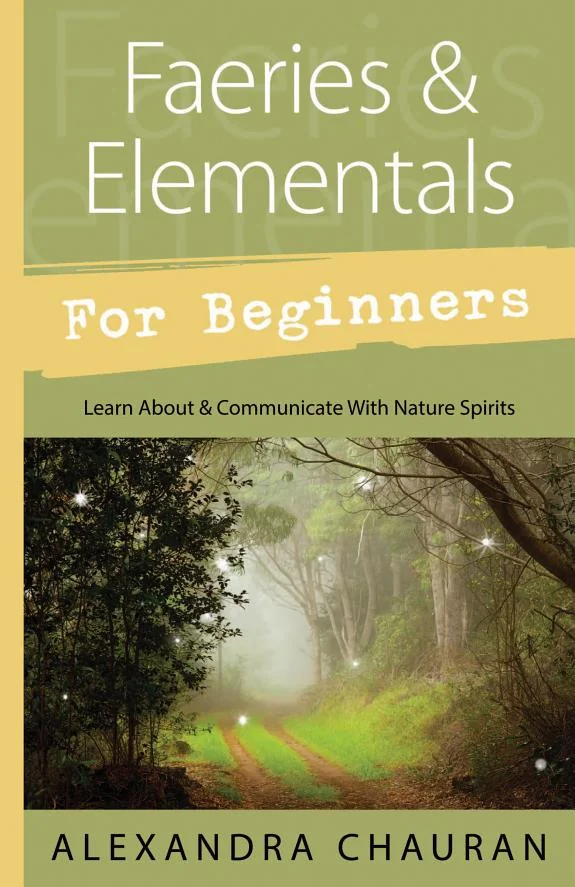
Faeries & Elementals for Beginners
 83
83

Faeries & Elementals for Beginners
Alexandra Chauran’s Faeries & Elementals for Beginners offers a straightforward entry point into a subject often shrouded in romanticized myth. The book's strength lies in its grounded, actionable advice, moving past ethereal descriptions to provide concrete steps for readers. Chauran’s approach avoids the overly esoteric jargon that can alienate newcomers, focusing instead on practical engagement with nature spirits. A notable passage details the creation of specific offerings, emphasizing the energetic exchange involved in building rapport with elementals. However, the book’s primary limitation is its brevity; while ideal for absolute beginners, those with prior experience in nature magic or animism might find its scope somewhat limited. It could benefit from deeper exploration into the varied traditions of fae lore across different cultures. Nevertheless, for its intended audience, it serves as a clear, encouraging first step.
📝 Description
83
Alexandra Chauran's 2013 book offers practical methods for connecting with nature spirits.
Faeries & Elementals for Beginners introduces readers to nature spirits, often called fae or elementals, not just as folklore but as active forces in the natural world. The book guides individuals new to these studies, whether driven by curiosity or a spiritual inclination, toward tangible ways of connecting with these beings. It is particularly useful for those wishing to enhance their home, garden, or personal space through interaction with nature spirits. The text also appeals to readers interested in animistic viewpoints and spirituality rooted in nature.
Chauran focuses on the four classical elements—Earth, Air, Fire, and Water—and the distinct beings associated with each. The book does not treat elementals as mere symbols but as individual entities. It details practical methods for cultivating environments that welcome these spirits, fostering a reciprocal connection through respect, offerings, and focused intention. Readers will learn to recognize the energetic qualities of different places and how to perceive them.
Published in 2013, this book appeared during a resurgence of interest in practical magic and animism within contemporary Pagan movements. This period saw a demand for guides that simplified complex esoteric ideas. Chauran's approach contrasts with older, more academic or folklore-focused texts by prioritizing direct, personal engagement with nature spirits. This aligns with a broader shift toward experiential spirituality that gained momentum in the early 2000s.
💡 Why Read This Book?
• Learn specific techniques for identifying and inviting faeries and elementals into your personal space, directly addressing the 'how-to' aspect missing from purely theoretical texts, as detailed in the chapters on home and garden attraction. • Gain a practical understanding of the four classical elements (Earth, Air, Fire, Water) as sentient forces and their associated nature spirits, moving beyond abstract concepts to actionable knowledge for daily life. • Develop a respectful framework for interacting with the fae and elementals, emphasizing energetic exchange and clear intention, as outlined in the guidance on safe interaction and befriending these beings.
⭐ Reader Reviews
Honest opinions from readers who have explored this book.
❓ Frequently Asked Questions
What are the four classical elements discussed in 'Faeries & Elementals for Beginners'?
The book identifies the four classical elements as Earth, Air, Fire, and Water. Each element is presented as having associated nature spirits, or elementals, with distinct characteristics and roles within the natural world.
How can I attract faeries and elementals to my home according to Alexandra Chauran?
Chauran suggests creating welcoming environments by offering specific items like clear water, natural sweets, or shiny objects, and maintaining a respectful, positive energetic space in your home and garden.
Is 'Faeries & Elementals for Beginners' suitable for someone with no prior knowledge?
Yes, the book is specifically designed for beginners. It uses clear language and provides step-by-step instructions, avoiding complex esoteric jargon to make the subject accessible.
What is the publication year of 'Faeries & Elementals for Beginners'?
The first edition of 'Faeries & Elementals for Beginners' by Alexandra Chauran was published on November 8, 2013.
Does the book explain how to safely interact with faeries and elementals?
Yes, the guide includes instructions for safe interaction. It emphasizes approaching these beings with respect, clear intention, and appropriate energetic boundaries to foster positive relationships.
What types of creatures are covered in this beginner's guide?
The book introduces readers to a variety of nature spirits, including sprites, will-o'-the-wisps, and other beings associated with the classical elements, providing practical insights into their nature and how to connect with them.
🔮 Key Themes & Symbolism
Elemental Beings
The work posits that elementals are distinct, sentient beings intrinsically linked to the classical elements: Earth, Air, Fire, and Water. It moves beyond symbolic interpretation to present them as active participants in the natural world, each possessing unique characteristics and energetic signatures. The book guides readers in recognizing these signatures and understanding the elemental's role in maintaining natural balance, offering practical methods for identifying their presence in specific environments.
Attracting Nature Spirits
A central theme is the practical methodology for inviting faeries and elementals into one's life and surroundings. This involves creating energetically conducive spaces, such as gardens or homes, through specific actions like offerings, maintaining cleanliness, and cultivating positive emotional states. The book stresses that attraction is based on mutual energetic resonance and respect, rather than force or demand.
Respectful Interaction
The guide places significant emphasis on the ethical and respectful engagement with fae and elementals. It outlines principles for safe interaction, advising readers to approach these beings with humility, clear intentions, and without entitlement. The concept of befriending these spirits is explored as a reciprocal relationship built on trust and understanding, rather than mere invocation or control.
Animistic Worldview
The book implicitly promotes an animistic perspective, where nature is imbued with spirit and consciousness. By detailing how to perceive and interact with nature spirits, it encourages a deeper connection to the natural world, fostering a sense of partnership with its non-human inhabitants. This perspective shifts the human relationship with nature from one of dominion to one of co-existence.
💬 Memorable Quotes
Direct passages from the work, attributed to the author.
“Discover how to attract faeries and elementals to your home and garden, as well as how to befriend them.”
— This expresses the core promise of the book: actionable advice for fostering relationships with nature spirits, moving from passive observation to active, positive interaction within one's living space.
“Along with step-by-step instructions for safely finding and interacting with these powerful creatures...”
— This emphasizes the book's practical and safety-oriented approach, assuring readers that the guide provides clear, sequential methods for encountering and engaging with fae and elementals responsibly.
“Identify faeries and elementals associated with each of the four classic elements.”
— This points to a key organizational principle of the book, structuring the exploration of nature spirits around the foundational concept of the four classical elements, providing a framework for understanding their diverse nature.
“Explore the magical world where nature spirits dwell”
— This sets the scene, inviting the reader into a realm often considered mythical, and framing the book's content as an exploration of this hidden, yet tangible, magical dimension of nature.
💡 Key Ideas
Editorial paraphrase of the work's core concepts — not direct quotes.
From sprites to will-o'-the-wisps, this practical beginner's guide introduces you to a wide assortment of wild and wondrous creatures.
This quote highlights the book's scope, promising an accessible introduction to diverse nature spirits beyond common folklore, setting the stage for practical engagement with less-understood entities.
🌙 Esoteric Significance
Tradition
This work aligns with contemporary animistic and nature-based spiritual traditions, which draw inspiration from various esoteric currents including Hermeticism (through the concept of 'As Above, So Below' applied to natural forces) and certain interpretations of Theosophy concerning nature elementals. It departs from stricter Hermetic or Kabbalistic systems by focusing on direct, intuitive interaction rather than complex symbolic correspondences or divine hierarchies, emphasizing immanent spirit in nature.
Symbolism
The four classical elements—Earth, Air, Fire, and Water—serve as primary symbolic frameworks. Earth represents stability, grounding, and physical manifestation; Air symbolizes intellect, communication, and movement; Fire signifies passion, transformation, and energy; and Water embodies emotion, intuition, and flow. The book uses these elemental associations to categorize and understand the diverse characteristics and functions of different fae and elemental beings.
Modern Relevance
In contemporary practice, *Faeries & Elementals for Beginners* remains relevant for its clear, accessible approach to nature spirituality. It speaks to modern ecospirituality, eco-witchcraft, and animistic practices that seek to re-establish a direct, respectful connection with the natural world. Thinkers and practitioners focused on re-enchanting the mundane world and fostering biophilia find its practical guidance valuable for cultivating relationships with non-human intelligences.
👥 Who Should Read This Book
• Aspiring practitioners of nature-based spirituality seeking foundational knowledge and practical techniques for connecting with the fae and elementals. • Individuals interested in animism and ecological spirituality who wish to develop a deeper, more interactive relationship with the natural world around them. • Gardeners and homemakers looking to infuse their spaces with positive energy and foster a harmonious relationship with local nature spirits.
📜 Historical Context
Alexandra Chauran’s *Faeries & Elementals for Beginners*, published in 2013, arrived during a significant resurgence of interest in practical occultism and animistic spirituality, often associated with the broader Neo-Pagan and New Age movements. This period saw a growing demand for accessible guides that clarified complex spiritual concepts for a lay audience. Unlike earlier, more academic or folkloric studies of the fae, Chauran’s work emphasizes direct, experiential engagement. It emerged in a landscape populated by authors like Doreen Virtue, who focused on angelic realms, and Scott Cunningham, who advocated for accessible witchcraft. While not engaging directly with academic discourse, the book tapped into a popular desire for tangible spiritual practices, moving beyond theoretical discussions to offer concrete methods for interacting with nature spirits. Its reception was primarily within contemporary Pagan and spiritualist communities seeking practical, nature-based connections.
📔 Journal Prompts
Elemental associations: Reflect on your personal connection to Earth, Air, Fire, and Water.
Home sanctuary for fae: Detail specific offerings or environmental changes you could implement.
Energetic signatures: Consider how you might perceive the presence of nature spirits in your surroundings.
Befriending elementals: Write about the qualities you would cultivate for a respectful relationship.
The role of sprites: Explore the potential impact of these beings on your local environment.
🗂️ Glossary
Elementals
Nature spirits intrinsically linked to the classical elements of Earth, Air, Fire, and Water. They are often considered the animating forces or consciousness within these natural domains.
Fae
A broad term encompassing various supernatural beings from folklore, often including nature spirits, sprites, and other entities associated with the natural world and magical realms.
Sprites
Often associated with air or light, sprites are typically depicted as small, ethereal, and sometimes mischievous nature spirits, embodying the essence of their elemental domain.
Will-o'-the-wisps
Mysterious lights seen over marshes and bogs, often interpreted as mischievous spirits or elementals (sometimes associated with water or fire) that can lead travelers astray.
Classical Elements
The ancient Greek concept of four fundamental substances—Earth, Air, Fire, and Water—believed to constitute all matter and energy, each associated with specific qualities and spiritual forces.
Energetic Signature
The unique vibrational quality or 'feeling' associated with a place, being, or object, which, according to the book, can help in identifying the presence of different types of nature spirits.
Offerings
Gifts or symbolic items presented to nature spirits as a sign of respect and gratitude, intended to build rapport and foster a positive energetic exchange.
This book appears in 2 collections
🔮 Readers Also Liked
Browse all →








From the “Elementals” Collection
View all →





More Free Occult Philosophy Books
View all →