Dogma and Ritual of High Magic. Book II
 61
61

Dogma and Ritual of High Magic. Book II


Isolde Whitaker, Sacred Texts Editor: Eliphas Levi's 'Dogma and Ritual of High Magic: Book II' remains an indispensable cornerstone for any serious student of Western esotericism. Building upon the foundational principles laid out in Book I, this volume plunges deeper into the practical application and theoretical underpinnings of high magic. Levi's prose, though rooted in 19th-century occultism, possesses an enduring power, offering profound insights into the nature of will, symbolism, and the divine. Its strength lies in its comprehensive approach, bridging theoretical dogma with tangible ritualistic practice. This book is essential for practitioners seeking to refine their understanding and for scholars wishing to grasp the evolution of magical thought.
📝 Description
61
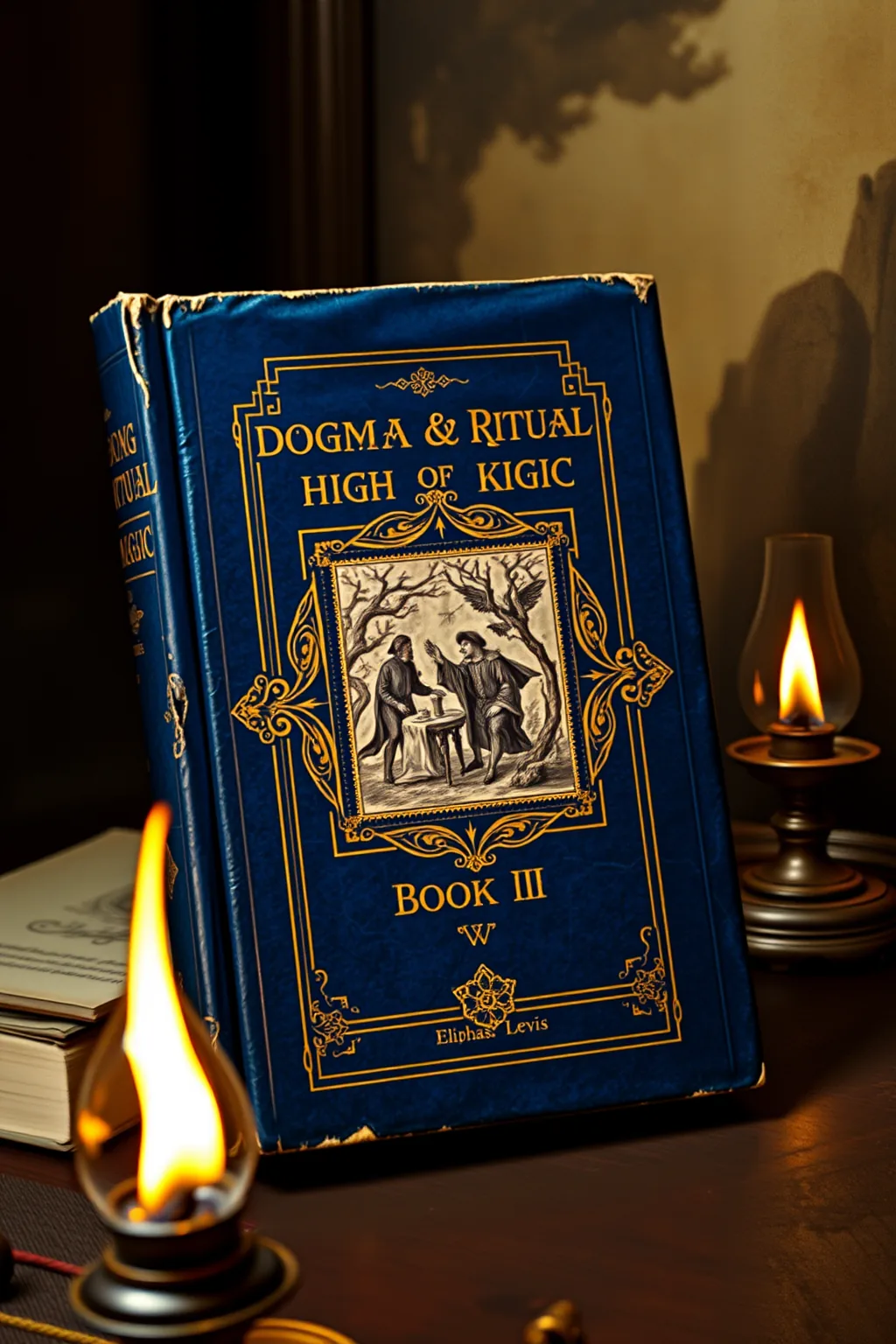
Eliphas Levi published 'Dogma and Ritual of High Magic: Book II' in 1856, focusing on ceremonial practices.
This second volume of Eliphas Levi's work on magic details the practical applications of occult principles. Levi examines the symbolic language used in magical traditions, connecting the human experience to cosmic forces. He explains the correspondences between the small scale of individual existence and the vastness of the universe, and how divine intent shapes the material world. The book is not a simple guide but a serious text for those dedicated to studying the Hermetic arts. It aims to deepen the practitioner's grasp of sacred practices and spiritual initiation.
Levi's writing addresses the serious student of occultism, particularly those interested in ceremonial magic and gnosis. He lays out a system for understanding the relationships between different planes of existence and the tools and rituals employed in high magic. The text encourages a transformation in how one views reality, guiding the reader toward a higher level of spiritual understanding through structured practice and theoretical knowledge.
Published in 1856, 'Dogma and Ritual of High Magic: Book II' is a key text within 19th-century occult revivalism. It builds upon the theoretical framework established in Book I, offering detailed explanations of magical operations and their underlying philosophy. Levi's work draws from Kabbalah, Hermeticism, and other Western esoteric traditions, attempting to synthesize them into a coherent system. This volume specifically addresses the practical execution of magic, emphasizing the importance of ritual, symbolism, and the practitioner's will in achieving desired results.
💡 Why Read This Book?
Unravel the intricate tapestry of Western esotericism. 'Dogma and Ritual of High Magic: Book II' offers a profound exploration of ceremonial magic, divine symbolism, and the power of focused will. Ideal for dedicated students of occult philosophy, practicing magicians, and academic researchers seeking to understand the historical and philosophical foundations of magical traditions. Discover hidden knowledge and elevate your spiritual understanding.
⭐ Reader Reviews
Honest opinions from readers who have explored this book.
❓ Frequently Asked Questions
What distinguishes Book II from Book I of 'Dogma and Ritual of High Magic'?
While Book I lays the theoretical groundwork of magical dogma, Book II delves into the practical application and ritualistic execution of these principles. It explores the 'how-to' of ceremonial magic, expanding on the symbolic language introduced in the first volume.
Is this book suitable for beginners in magic?
This book is best suited for those with a foundational understanding of occult concepts or who have already studied Book I. While comprehensive, its depth and complexity may be overwhelming for absolute novices.
What specific magical traditions does Levi reference?
Levi draws heavily from Hermeticism, Kabbalah, Gnosticism, and Templarism, synthesizing them into his unique system of high magic. He also incorporates elements from ancient Egyptian and Greek mysteries.
What is the role of symbolism in Levi's magic?
Symbolism is paramount. Levi posits that the universe is a grand symbolic language. Understanding and manipulating these symbols through ritual is key to influencing the higher planes and achieving magical effects.
Can this book be read online for free?
Yes, foundational works like 'Dogma and Ritual of High Magic' by Eliphas Levi are often available for free online through various public domain archives and digital libraries dedicated to esoteric literature.
🔮 Key Themes & Symbolism
The Dynamics of Will and Manifestation
Levi expounds on the potent force of human will, not as a mere desire, but as a directed, disciplined energy capable of shaping reality. He elucidates how aligned intention, coupled with precise ritualistic action and symbolic invocation, can bridge the gap between the ethereal and the material. This theme explores the magician's role as a conduit, channeling cosmic forces through focused will to achieve specific outcomes, emphasizing the ethical responsibilities that accompany such power.
The Universal Language of Divine Symbolism
This volume is a deep dive into the symbolic lexicon of the universe. Levi argues that all spiritual and occult knowledge is encoded in symbols, from ancient hieroglyphs to the Tarot and the Kabbalistic Tree of Life. He meticulously dissects these symbols, revealing their interconnectedness and their power to unlock hidden truths. Understanding this divine language is presented as the fundamental key to comprehending the cosmos and one's place within it.
The Art and Science of Ceremonial Ritual
Levi provides an in-depth exploration of ceremonial magic, detailing the structure, purpose, and efficacy of various rituals. He stresses that ritual is not mere theatre but a scientifically structured process designed to invoke specific intelligences, harmonize planetary influences, and achieve profound states of consciousness. This theme covers the importance of sacred space, divine names, incantations, and the precise choreography required for successful magical operations.
💬 Memorable Quotes
Direct passages from the work, attributed to the author.
“To know, to dare, to will, and to keep silence.”
— These four cardinal virtues of the adept represent the essential pillars of magical practice: knowledge acquisition, courageous action, focused intent, and discretion.
“Magic is the science of the secrets of nature.”
— This defines magic not as superstition, but as a profound, systematic study of the hidden laws governing the universe and the ability to work with them.
“The key to everything is the understanding of the divine Tetragrammaton.”
— This highlights the central importance of the four-letter Hebrew name of God (YHVH) as a symbolic representation of divine creative power and cosmic order.
“Every man carries within him the potential for the divine.”
— This speaks to the inherent divinity within humanity, suggesting that through self-knowledge and magical practice, one can realize their true, elevated nature.
💡 Key Ideas
Editorial paraphrase of the work's core concepts — not direct quotes.
The visible is only the shadow of the invisible.
This quote captures Levi's core tenet that the material world is a reflection of higher, unseen realities, urging the reader to look beyond the surface.
🌙 Esoteric Significance
Tradition
Levi's work is a monumental synthesis of Western Esoteric Traditions, primarily drawing from Hermeticism, Kabbalah, and Gnosticism. He sought to unify these seemingly disparate streams of ancient wisdom into a singular, coherent system of 'high magic.' This tradition emphasizes the interconnectedness of all things, the divine spark within humanity, and the potential for spiritual ascent through knowledge, will, and ritualistic practice, forming a core part of modern occult thought.
Symbolism
The book is a veritable encyclopedia of esoteric symbolism, dissecting everything from the Tarot and alchemical imagery to astrological correspondences and Hebrew letters. Levi posits that symbols are the language of the divine and the keys to unlocking cosmic truths. He explains how these symbols, when understood and consciously employed in ritual, can act as potent agents for transformation and manifestation, connecting the practitioner to higher planes of existence.
Modern Relevance
Despite its 19th-century origins, Levi's 'Dogma and Ritual' remains profoundly relevant. Modern practitioners of magic, Western esotericism, and even those interested in comparative religion find immense value in its structured approach to will, symbolism, and ritual. Its emphasis on disciplined practice, ethical considerations, and the pursuit of gnosis continues to inspire seekers who wish to explore the deeper dimensions of consciousness and the universe.
👥 Who Should Read This Book
This profound text is essential for dedicated students of Western Esotericism, particularly those drawn to Hermeticism and Kabbalistic philosophy. Practicing magicians and occultists will find invaluable insights into ceremonial ritual, the dynamics of will, and the interpretation of esoteric symbolism. Scholars of religious studies and history will appreciate its comprehensive overview of occult thought during the 19th century. While challenging, it's a rewarding read for serious seekers yearning for a deeper, more structured understanding of the arcane arts and their philosophical underpinnings.
📜 Historical Context
Published in the mid-19th century, 'Dogma and Ritual of High Magic' emerged during a fervent period of occult revival in Europe. The Victorian era, with its scientific advancements and burgeoning spiritualism, paradoxically fueled a deep fascination with mysticism and the esoteric. Eliphas Levi, a charismatic and influential figure, synthesized disparate occult traditions – Hermeticism, Kabbalah, Gnosticism, and Freemasonry – into a coherent system of high magic. His work provided a much-needed intellectual framework for practitioners, distinguishing 'high magic' from sorcery and presenting it as a serious, philosophical path to spiritual enlightenment. This book resonated with a generation seeking meaning beyond the material and influenced countless subsequent occult authors and movements.
📔 Journal Prompts
Reflect on a personal symbol that holds deep meaning for you. How might Levi's approach to symbolism inform its interpretation?
Consider a personal goal. How could the concept of 'will' as described by Levi be applied to achieve it?
What are the ethical considerations for a practitioner of high magic, as suggested by Levi's emphasis on 'dogma'?
Analyze a common ritual or ceremony (religious or secular) through the lens of Levi's principles of symbolic action.
How does Levi's concept of the 'visible as a shadow of the invisible' resonate with your own experiences or beliefs?
🗂️ Glossary
Thelema
A Greek word meaning 'will.' In Levi's context, it refers to the divine will and the individual's capacity to align with and manifest it through disciplined magical practice.
Kabbalah
A complex system of Jewish mysticism that explores the nature of God, the creation of the universe, and the relationship between the divine and humanity, often represented through the Tree of Life.
Hermeticism
An ancient philosophical and religious tradition based on the writings attributed to Hermes Trismegistus, emphasizing the unity of all things and the potential for human spiritual enlightenment.
Invocation
The act of calling upon a divine or spiritual entity, or a specific force, through ritual and focused intent, with the aim of inviting its presence or influence.
Microcosm/Macrocosm
The principle that the human being (microcosm) is a reflection of the universe (macrocosm), and that understanding the smaller reflects understanding the larger, and vice versa.
This book appears in 3 collections
🔮 Readers Also Liked
Browse all →








More by Eliphas Eliphas Levi
All books →

From the “Ritual Magic” Collection
View all →






More Free Magic & Ritual Books
View all →