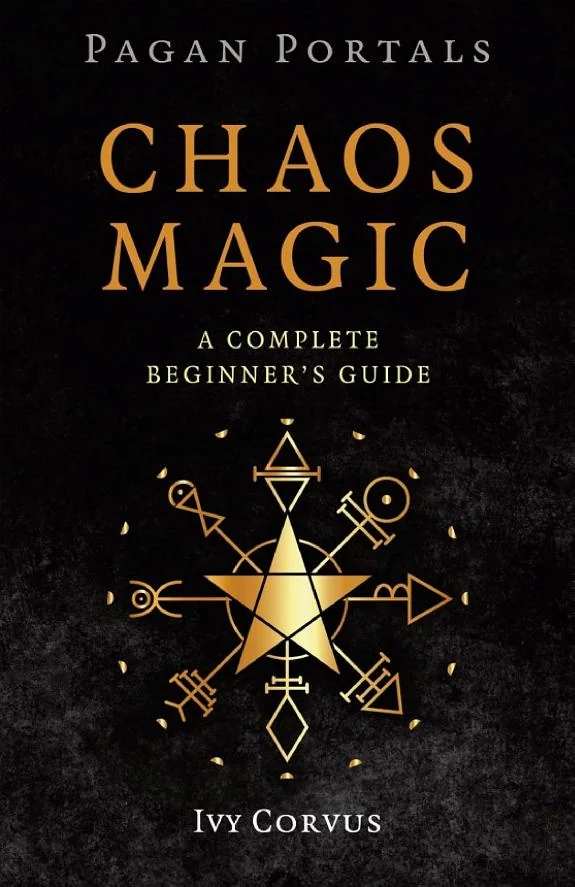
Pagan Portals - Chaos Magic
 80
80

Pagan Portals - Chaos Magic
Ivy Corvus's Pagan Portals - Chaos Magic provides a clear, two-part framework for newcomers to the often-unruly landscape of chaos magic. The initial theoretical section effectively outlines the philosophical underpinnings, emphasizing the psychological mechanics of belief manipulation and altered states. Corvus’s explanation of gnosis, particularly its role in bypassing the conscious mind’s censorship, is quite precise. However, the book occasionally leans towards a didactic tone that, while beneficial for beginners, might feel slightly prescriptive for those already familiar with the broader discourse of postmodern occultism. A particular strength lies in the practical exercises presented in Part Two, which, while not entirely novel, are clearly delineated and actionable. The limitation is the book's recency, 2026, which means it cannot engage with the very latest developments or digital-age adaptations of chaos magic. Overall, it serves as a competent, if somewhat conventional, entry point into the practice.
📝 Description
80
Ivy Corvus's Pagan Portals - Chaos Magic, published in 2026, provides a structured introduction to chaos magic.
This book offers a structured pathway into the philosophies and practices of chaos magic. It divides its content into theoretical foundations and practical applications, serving as a guide for those new to this dynamic magical system. The aim is to equip readers with the knowledge needed to manipulate belief and intention for tangible changes in their lives.
Aspiring chaos magicians seeking a systematic understanding of its core principles will find this text particularly useful. It is suited for individuals interested in shedding limiting beliefs, exploring altered states of consciousness, and achieving gnosis. The book appeals to those who favor a practical, results-driven approach to their magical studies.
The work focuses on belief as a pliable instrument for shaping perception and reality. It details methods for inducing altered states, known as gnosis, which are key to effective spellcasting. The importance of freeing the mind from ingrained beliefs that might impede magical results is also stressed, encouraging adaptability in sigil creation and ritual design.
Chaos magic originated in the United Kingdom during the late 1970s. It distinguished itself from older magical systems by emphasizing practical results rather than strict adherence to dogma or mythology. Figures like Peter J. Carroll and Ray Sherwin were key in its early days, promoting experimentation and psychological methods. Pagan Portals - Chaos Magic connects with this history, acting as a contemporary primer on the principles that have developed since chaos magic's inception.
💡 Why Read This Book?
• You will learn to intentionally utilize altered states of consciousness, a core practice within chaos magic, by following the specific techniques outlined for achieving gnosis, allowing for more direct interaction with your subconscious. • You will gain practical methods for deconditioning limiting beliefs, a foundational concept in chaos magic, enabling you to adopt new paradigms that support your magical aims, as detailed in Part One. • You will understand how to apply the principles of belief and intention to concrete magical operations, moving beyond theoretical knowledge to practical, reality-shaping actions as demonstrated in Part Two of the book.
⭐ Reader Reviews
Honest opinions from readers who have explored this book.
❓ Frequently Asked Questions
What is the primary difference between the theory and praxis sections in Pagan Portals - Chaos Magic?
Part One, 'Theory,' establishes the philosophical groundwork of chaos magic, focusing on concepts like belief, intention, and altered states. Part Two, 'Praxis,' translates these theories into actionable techniques and practical exercises for readers to implement in their magical work.
Is this book suitable for absolute beginners with no prior occult knowledge?
Yes, the book is structured as a primer, designed to introduce fundamental chaos magic principles clearly. It avoids overly academic jargon, making it accessible for those new to esoteric studies and seeking practical magical methods.
What is 'gnosis' as explained in Ivy Corvus's book?
Gnosis, in the context of chaos magic as presented in the book, refers to an altered state of consciousness where the conscious mind's critical faculties are temporarily suspended, allowing for direct influence on the subconscious and the magical act.
How does chaos magic differ from traditional magical systems?
Chaos magic, as explored in the book, prioritizes results and the practitioner's belief system over adherence to fixed dogmas or mythologies, unlike many traditional systems that rely on established pantheons or ritual structures.
When was Pagan Portals - Chaos Magic first published?
The book 'Pagan Portals - Chaos Magic' by Ivy Corvus was first published on January 27, 2026, positioning it as a contemporary guide to the practice.
Does the book offer specific examples of sigil creation?
While the blurb details the process of harnessing intention and creativity, it implies that practical applications, likely including sigil creation, are covered in Part Two, 'Praxis,' offering concrete methods for visualization and manifestation.
🔮 Key Themes & Symbolism
Belief as a Tool
The book posits that belief is not a static conviction but a malleable instrument for magical practice. It explores how consciously adopting and discarding beliefs, even temporarily, allows practitioners to influence their perception of reality and effect change. This principle underpins the chaos magic approach, moving away from dogma towards pragmatic application of psychological states for magical outcomes.
Altered States and Gnosis
Central to chaos magic is the concept of entering altered states of consciousness, often termed 'gnosis.' This book explains how to achieve these states by disrupting normal consciousness, allowing the practitioner's intent to bypass the critical factor of the mind. Various methods are discussed for inducing these states, crucial for potent magical workings and direct subconscious communication.
Deconditioning the Mind
A significant focus is placed on identifying and dismantling limiting beliefs inherited from societal conditioning or personal experience. The book guides readers through processes designed to liberate the mind from these constraints, creating a more flexible and receptive mental landscape. This mental freedom is presented as essential for effective magical practice and personal transformation.
Praxis and Visualization
The practical section of the book, 'Praxis,' translates abstract concepts into tangible magical operations. It emphasizes the power of visualization and creative intention to manifest desired outcomes. Readers are provided with structured exercises designed to integrate theoretical knowledge into effective spellcasting and reality manipulation techniques.
💬 Memorable Quotes
Direct passages from the work, attributed to the author.
“Harness the power of intention, belief, and creativity to shape your reality.”
— This expresses the core philosophy that magical results stem not from external forces alone, but from the practitioner's internal tools: focused will, adopted beliefs, and imaginative capacity.
“Decondition your mind, remove limiting beliefs.”
— This highlights the critical internal work required in chaos magic, suggesting that personal psychological barriers are primary obstacles to magical efficacy and personal growth.
“Enter altered states of consciousness, achieve gnosis.”
— This points to the indispensable role of non-ordinary states of mind in chaos magic, framing gnosis as the key to unlocking deeper potentials and influencing the subtle realms.
“The book is divided into two parts - Theory and Praxis.”
— This structural division indicates a methodical approach, ensuring readers first grasp the foundational principles before engaging with practical, hands-on magical techniques.
💡 Key Ideas
Editorial paraphrase of the work's core concepts — not direct quotes.
Visualize and create your reality with chaos magic!
This statement serves as an empowering invitation, summarizing the book's promise: that chaos magic offers a direct method for manifesting personal desires through focused mental effort.
🌙 Esoteric Significance
Tradition
Chaos magic, as presented in this work, departs significantly from traditional esoteric lineages like Hermeticism or Kabbalah by rejecting fixed systems and mythologies. It aligns more with post-modern occultism, focusing on psychological manipulation and subjective experience rather than adherence to ancient texts or deities. Its lineage is one of rebellion and synthesis, drawing inspiration from diverse sources but prioritizing pragmatic efficacy and individual gnosis.
Symbolism
While chaos magic is intentionally paradigm-agnostic, this book likely utilizes symbols as conceptual anchors for intention. For instance, the concept of 'gnosis' itself functions as a symbol for the state of altered consciousness. Furthermore, the act of 'deconditioning' can be symbolized by breaking chains or shedding restrictive garments, representing freedom from mental limitations that impede magical work.
Modern Relevance
The principles explored in this book remain highly relevant in contemporary esoteric practice. Thinkers and practitioners in fields like digital magic, neopaganism, and psychological occultism continue to draw upon chaos magic's emphasis on belief manipulation and subjective experience. Its flexible framework makes it adaptable to modern contexts, influencing online magical communities and individual practitioners seeking personalized spiritual paths.
👥 Who Should Read This Book
• Aspiring practitioners of chaos magic seeking a structured introduction to its core principles and practical applications. • Individuals interested in psychological approaches to magic and self-transformation, particularly those looking to overcome limiting beliefs and explore altered states. • Students of comparative occultism interested in understanding a significant modern magical movement that prioritizes results over dogma.
📜 Historical Context
The emergence of chaos magic in the late 1970s, particularly within UK occult circles, represented a radical departure from established magical traditions. Influenced by post-modernism, cybernetics, and quantum physics, figures like Peter J. Carroll and Ray Sherwin championed a results-oriented, paradigm-agnostic approach. Unlike the rigid structures of Golden Dawn-derived traditions or the specific mythos of Wicca, chaos magic emphasized personal experimentation and the belief that belief itself was a tool. This liberation from dogma allowed for rapid innovation and the integration of diverse techniques, from ceremonial magic to performance art. The publication of seminal texts like Carroll's 'Liber Null' and 'Psychonaut' challenged the status quo, sparking debate and drawing criticism from more conservative occultists who viewed its flexibility as a lack of seriousness. Ivy Corvus's 2026 work, 'Pagan Portals - Chaos Magic,' arrives in a landscape already shaped by these developments, offering a contemporary synthesis for a new generation.
📔 Journal Prompts
Chaos magic's emphasis on deconditioning: what beliefs do you currently hold that might hinder your magical goals?
The concept of gnosis: describe a personal experience that felt like an altered state of consciousness.
Belief as a tool: experiment with adopting a temporary belief for one day and note any perceived changes in your reality.
Visualization practice: create a sigil for a specific, achievable goal and document the visualization process.
Theories of reality shaping: how does the concept of 'creating your reality' align with or challenge your current worldview?
🗂️ Glossary
Chaos Magic
A contemporary magical practice characterized by its rejection of fixed beliefs and dogmas, emphasizing experimentation, pragmatism, and the practitioner's subjective belief system.
Gnosis
An altered state of consciousness characterized by a temporary suspension of the critical factor of the mind, facilitating direct access to the subconscious for magical purposes.
Deconditioning
The process of identifying and releasing limiting beliefs, societal conditioning, and psychological barriers that may impede magical efficacy or personal growth.
Sigil
A symbol created to represent a magical intention, charged with energy, and often used in chaos magic to imprint desires onto the subconscious.
Praxis
The practical application or implementation of theoretical knowledge; in this context, the actual performance of magical techniques and rituals.
Belief
In chaos magic, belief is viewed as a malleable tool or a temporary paradigm adopted for the purpose of achieving a desired magical outcome.
Altered State of Consciousness
Any mental state significantly different from the ordinary waking state, often induced through techniques like meditation, trance, or sensory alteration.
This book appears in 1 collection
🔮 Readers Also Liked
Browse all →









From the “Chaos Magic” Collection
View all →








More Free Magic & Ritual Books
View all →