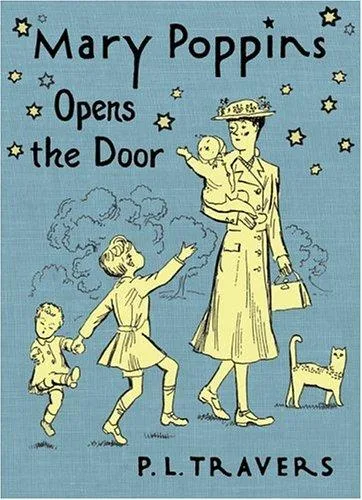
Mary Poppins

 78
78

Mary Poppins
Pamela Lyndon Travers's Mary Poppins, while ostensibly a children's story, offers a fascinating study in the presentation of the numinous within the domestic sphere. The nanny's arrival, heralded by the East Wind, immediately signals a disruption of the ordinary, a motif Travers handles with remarkable subtlety. Her interactions with Jane and Michael, particularly the episode involving Mr. Banks's misplaced kite string, reveal a profound understanding of how the intangible can anchor the real. The book's strength lies in its unsentimental portrayal of magic; it's not a fairy godmother's intervention but a matter-of-fact, albeit extraordinary, aspect of existence. A limitation, perhaps for modern readers, is the occasionally rigid adherence to social norms of the era, which Mary Poppins sometimes upholds even as she bends the rules of physics. Nonetheless, the narrative's core remains its exploration of the uncanny within the everyday. It's a work that respects the child's capacity for wonder without sacrificing intellectual rigor.
📝 Description
78
Published in 1934, P.L. Travers's Mary Poppins introduced a nanny who arrived on the wind.
Mary Poppins, the stern but wondrous nanny, arrives at the Banks household in London to care for Jane and Michael. Her methods, involving a carpet bag and a parrot-headed umbrella, are far from conventional. She takes the children on extraordinary outings, transforming their ordinary lives into sequences of astonishing events.
The stories challenge the children's understanding of reality and introduce them to a world where the mundane is infused with magic. Mary Poppins herself is a figure of paradox, a strict disciplinarian who simultaneously encourages boundless imagination and wonder. The narrative suggests that true enchantment is found not in escaping life, but in recognizing its hidden magical elements.
While often seen as simple children's fantasy, P.L. Travers's creation contains undertones of ritual and spiritual practice. Mary Poppins acts as a guide, initiating the children into a perception of the world that acknowledges unseen forces and the transformative power of belief. Her arrival and methods align with archetypal figures who bring order to chaos and reveal deeper truths about existence, suggesting a connection to traditions that view the everyday as a potential site for spiritual encounter.
💡 Why Read This Book?
• You will learn how ordinary objects and events, like the Banks family's nursery or Mr. Banks's misplaced kite string, can become conduits for extraordinary experiences, challenging your perception of the mundane. • You will feel the impact of a nanny who is both a disciplinarian and a purveyor of wonder, understanding how authority can coexist with imaginative freedom, as seen in Mary Poppins's methods. • You will gain insight into the symbolic significance of elemental forces, such as the East Wind, and how they function as catalysts for transformation in the narrative's unique blend of realism and fantasy.
⭐ Reader Reviews
Honest opinions from readers who have explored this book.
❓ Frequently Asked Questions
What esoteric traditions influence Mary Poppins?
While not explicitly aligned with a single tradition, Mary Poppins draws on archetypal themes found in Hermeticism and Gnosticism, exploring the interplay between the material world and hidden spiritual forces, and the idea of a higher, guiding intelligence.
When was Mary Poppins first published?
Mary Poppins was first published in 1934, marking its place within the literary landscape of early 20th-century children's fiction.
What does Mary Poppins's parrot-headed umbrella symbolize?
The parrot-headed umbrella can be interpreted as a symbol of guidance and esoteric knowledge. The parrot's ability to speak and mimic suggests communication beyond the ordinary, while the umbrella itself offers protection and transport, akin to a magical vehicle.
Who is P.L. Travers?
Pamela Lyndon Travers was an Australian-born English writer and actress, best known for her series of Mary Poppins books. She was deeply interested in mythology and folklore, which informed her writing.
How does Mary Poppins relate to the concept of the 'anima'?
Mary Poppins can be seen as an embodiment of the anima archetype—the unconscious feminine aspect within the male psyche, representing intuition, imagination, and the bridge between the conscious and unconscious worlds for characters like Mr. Banks.
What is the significance of the Banks family's address?
The address, 17 Cherry Tree Lane, represents a seemingly ordinary, stable locus in London. Its ordinariness serves as a backdrop against which the extraordinary interventions of Mary Poppins create a profound contrast, highlighting the magical potential hidden within the commonplace.
🔮 Key Themes & Symbolism
The Numinous in the Mundane
Mary Poppins's arrival, carried by the East Wind, signifies the intrusion of the numinous into the ordered, often sterile, domestic life of the Banks family at 17 Cherry Tree Lane. The narrative consistently juxtaposes the rigidly conventional world of Mr. Banks with the boundless imaginative possibilities Mary Poppins unlocks for Jane and Michael. This theme explores how enchantment is not an escape from reality but an unveiling of its deeper, magical dimensions, accessible through altered perception and receptivity to the extraordinary.
Archetypal Guidance
Mary Poppins herself functions as an archetypal figure, embodying both stern authority and profound wisdom. Her seemingly arbitrary rules and magical interventions serve a higher purpose, guiding the children (and by extension, the reader) towards self-discovery and a more integrated understanding of life. Her parrot-headed umbrella and carpet bag are not mere props but symbols of her unique ability to traverse dimensions and bestow knowledge, reflecting concepts found in Hermetic traditions where sacred objects facilitate spiritual journeys.
Imagination as a Transformative Force
The book posits imagination not as mere childish fancy but as a potent force capable of reshaping reality. Through Mary Poppins's influence, the ordinary becomes extraordinary: a simple game of hopscotch can lead to a celestial dance, and a misplaced kite string can become a connection to the vastness of the sky. This underscores the esoteric principle that consciousness and perspective are primary, capable of transforming the perceived limitations of the material world.
The Shadow and the Light
Within the Banks household, the narrative subtly explores the interplay between light and shadow, order and chaos. Mr. Banks's rigid adherence to routine represents a form of shadow, while Mary Poppins's magic brings forth the clear aspects of imagination and intuition. The work suggests that true balance is achieved not by suppressing the shadow but by integrating it with the light, allowing for a more complete and harmonious existence.
💬 Memorable Quotes
Direct passages from the work, attributed to the author.
““I’m here this time, and I shall stay till the wind changes,” said Mary Poppins.”
— This statement underscores Mary Poppins's connection to elemental forces, particularly the wind. It positions her not as a typical human employee but as a transient, powerful entity governed by cosmic rhythms, arriving and departing according to unseen, natural laws.
““The wind,” she said, “is not for the purpose of blowing. It is for the purpose of the kite.””
— This redefinition of a natural phenomenon illustrates the book's core theme: perception shapes reality. Mary Poppins reframes the function of the wind, revealing its potential beyond the obvious, suggesting that purpose and meaning are often discovered rather than inherent.
““It is better to be kind than to be right,” said Mrs. Banks.”
— This sentiment, though spoken by Mrs. Banks, reflects a core value that Mary Poppins embodies through her actions. It points towards an esoteric understanding where compassion and empathy are superior guiding principles to rigid adherence to dogma or correctness.
““We are going for a walk,” said Mary Poppins, “and we shall go to the moon.””
— This declaration, delivered with matter-of-fact certainty, captures the extraordinary possibilities Mary Poppins introduces. It challenges the limitations of physical reality, suggesting that the journey to the moon is as accessible as a walk in the park when approached with the right guidance and mindset.
💡 Key Ideas
Editorial paraphrase of the work's core concepts — not direct quotes.
“Open at the top,” said the voice. Mary Poppins tipped her umbrella, and the carpet-bag obediently opened.
This quote exemplifies the inherent magical agency within Mary Poppins's possessions. The carpet-bag's obedience highlights a symbiotic relationship, suggesting that her tools are extensions of her will and possess a life of their own, facilitating the extraordinary.
🌙 Esoteric Significance
Tradition
Mary Poppins speaks to archetypal psychology and elements of Hermeticism, particularly the concept of the 'as above, so below.' While not strictly adhering to any single esoteric lineage, it explores the idea of a higher, guiding consciousness (Mary Poppins herself) influencing the material world and individual development. It aligns with traditions that view magic as an inherent force within the universe, accessible through specific states of being and perception, rather than solely through ritual.
Symbolism
The parrot-headed umbrella is a potent symbol, representing communication and esoteric knowledge. The parrot’s ability to speak suggests a channel for hidden truths, while the umbrella itself acts as a magical vehicle, capable of navigating different realms, much like a mystic's focus or tool. The East Wind signifies primal forces and change, acting as Mary Poppins's herald and transport, embodying the untamed, spiritual currents that disrupt the mundane.
Modern Relevance
Contemporary practitioners of Jungian psychology often cite Mary Poppins as an illustration of the anima archetype – the unconscious feminine principle that guides and integrates. Additionally, those exploring concepts of manifestation and the power of focused intention find resonance in how Mary Poppins transforms reality through her will and unique perspective, aligning with modern self-help and spiritual growth movements that emphasize inner power.
👥 Who Should Read This Book
• Aspiring practitioners of practical magic who wish to understand how esoteric principles can be integrated into everyday life and domestic settings. • Students of archetypal psychology and mythology seeking concrete examples of the anima figure and guide archetypes within literature. • Comparative religion scholars interested in how folklore and mystical concepts can manifest in seemingly secular narratives, offering insights into universal spiritual themes.
📜 Historical Context
Mary Poppins, first published in 1934, emerged during a vibrant period for children's literature, yet P.L. Travers's creation stood apart. While authors like A.A. Milne were exploring gentle fantasy, Travers introduced a more complex, almost enigmatic, magical figure. Her work coincided with growing interest in mythology and folklore, influenced by figures like Jessie Weston and her own studies in Celtic and other traditions. The novel’s reception was generally positive, though its mix of strict discipline and fantastical occurrences offered a different flavor than the more overtly whimsical tales popular at the time. Unlike the escapist fantasies of some contemporaries, Travers grounded her magic firmly within the domestic sphere, suggesting its presence within the ordinary. The book’s enduring popularity, despite its initial publication date, speaks to its successful integration of adult sensibilities regarding psychology and symbolism within a child-friendly narrative.
📔 Journal Prompts
Mary Poppins's arrival via the East Wind: explore your own 'winds of change.'
The carpet-bag's contents: reflect on the essential tools you carry for your inner journeys.
Mr. Banks's kite string: consider how seemingly lost connections can be rediscovered.
The magic of hopscotch: examine how simple actions can lead to profound experiences.
Mary Poppins's perspective: contemplate the extraordinary hidden within your daily routine.
🗂️ Glossary
East Wind
Symbolic of primal forces, change, and the spiritual realm. In the narrative, it serves as Mary Poppins's mode of arrival and departure, indicating her connection to higher, elemental powers beyond human control.
Carpet Bag
A magical receptacle containing an endless supply of items. It represents the infinite potential of the unconscious mind and the ability to manifest needs and desires through focused intent.
Parrot-headed Umbrella
A symbol of guidance and esoteric communication. The parrot suggests a conduit for hidden knowledge, while the umbrella itself signifies protection and magical transport, bridging the mundane and the extraordinary.
Cherry Tree Lane
The seemingly ordinary London address representing the mundane world. Its conventionality serves as a backdrop that highlights the disruptive and transformative nature of Mary Poppins's presence.
Nanny
Beyond her role as caregiver, Mary Poppins embodies an archetypal figure – a guide who initiates children into deeper realities, balancing discipline with wonder and revealing the magic inherent in existence.
Anima
In Jungian psychology, the unconscious feminine aspect within the male psyche. Mary Poppins can be interpreted as an external manifestation of this archetype, bringing intuition and imagination to the male-dominated sphere of Mr. Banks.
The Banks Family
Representing a typical bourgeois family, their initial adherence to strict routine and emotional distance makes them ripe for the transformative influence of Mary Poppins, illustrating the need for imagination and emotional connection.
🔮 Readers Also Liked
Browse all →








More Free Magic & Ritual Books
View all →