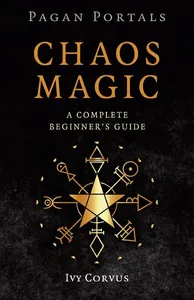
Chaos Magic
 77
77

Chaos Magic
Sam Witt and Matthew Sprange's "Chaos Magic" offers a functional, if somewhat game-centric, introduction to a potent magical theory. Its strength lies in its clear presentation of abstract concepts like gnosis and belief-as-mechanism, making them digestible for a gaming audience. The introduction of "Paths of Chaos" provides a useful, albeit simplified, cartography for exploring the paradigm. However, the book's primary limitation is its grounding within role-playing game mechanics. While this aids accessibility, it can sometimes dilute the philosophical underpinnings and practical applications for those seeking purely magical development outside of a game context. The explanation of channeling primal energy, for instance, is framed through game mechanics that don't fully capture the experiential depth of the practice. The work serves its intended purpose but doesn't fully transcend its origins. It's a competent primer for gamers wanting to explore chaos magic's tenets.
📝 Description
77
Published in 2001, Chaos Magic breaks from rigid magical structures to focus on practitioner will.
This 2001 volume examines the principles and applications of chaos magic, a modern magical system that grew from counterculture and post-occultist traditions. It moves away from strict ceremonial methods, highlighting how a practitioner's intent and belief are the main forces behind magical results. The book builds a way to understand how subjective consciousness can be used to achieve desired outcomes, setting it apart from older, more fixed systems. It specifically targets players and game masters of tabletop role-playing games, offering them ways to incorporate chaos magic into their campaigns. It introduces new game mechanics, character types, and magical items, serving as a practical guide for those seeking a more fluid and experimental magic within their game narratives.
The book traces chaos magic's roots to the late 20th century, influenced by figures like Peter J. Carroll and Ray Sherwin. These individuals aimed to simplify magic, making it more adaptable and accessible. Published in the early 21st century, this work reflects a growing interest in post-occultist ideas and the internet's impact on sharing esoteric knowledge. It represents an early effort to organize these developing practices for a particular audience.
Chaos magic, emerging in the late 20th century, represents a significant departure from older magical traditions. It emphasizes pragmatic results and the individual's belief system over adherence to specific pantheons or complex ritualistic structures. Influenced by figures like Carroll and Sherwin, it sought to demystify occult practices. This book, appearing in 2001, situates itself within this developing field, reflecting a time when esoteric ideas were increasingly disseminated through new technologies. It bridges the gap between theoretical post-occultism and practical application, particularly within a gaming context.
💡 Why Read This Book?
• You will learn how to conceptualize and apply "gnosis" to achieve altered states for magical intent, a core technique detailed within the book's framework. • You will discover specific methods for channeling "primal chaos," understanding how this raw potential is manipulated according to the principles outlined by Witt and Sprange. • You will gain insight into the "Paths of Chaos," exploring the distinct conceptual territories presented as avenues for magical exploration within the text.
⭐ Reader Reviews
Honest opinions from readers who have explored this book.
❓ Frequently Asked Questions
What is the primary focus of "Chaos Magic" by Sam Witt and Matthew Sprange?
The book primarily focuses on introducing chaos magic principles and applications within the context of tabletop role-playing games, providing rules and lore for integrating it into campaigns.
When was "Chaos Magic" first published?
This volume was first published on January 1, 2001, as part of the Encyclopaedia Arcane series.
What are the "Paths of Chaos" mentioned in the book?
The "Paths of Chaos" are conceptual frameworks or avenues of exploration within chaos magic, offering different approaches and specializations for practitioners as presented in the book.
Does the book explain how to achieve altered states of consciousness for magic?
Yes, the book discusses "gnosis," which refers to altered states of consciousness, as a key method for bypassing the conscious mind to implant magical intentions effectively.
Is "Chaos Magic" suitable for readers new to esoteric subjects?
While it aims for accessibility through a gaming lens, the book introduces complex esoteric concepts. Readers new to occultism may find the gaming context a helpful entry point but might benefit from supplementary reading.
What kind of new content does the book offer for game masters?
It introduces new feats, magic items, and character types specifically designed to aid or challenge players engaging with chaos magic within a game campaign.
🔮 Key Themes & Symbolism
Belief as Mechanism
The work emphasizes that in chaos magic, the practitioner's belief and will are the primary engines of magical effect. Unlike systems that rely on predefined divine favor or adherence to strict cosmic laws, chaos magic posits that any system of belief, however temporary or arbitrary, can be employed to achieve results. This flexibility allows practitioners to adopt and discard paradigms as needed, focusing on efficacy over dogma. The book explores how this subjective approach redefines the relationship between the magician and the magical outcome.
Primal Chaos and Gnosis
Central to the book's exposition is the concept of 'primal chaos,' understood as the fundamental, undifferentiated potential from which all reality emerges. The text explains methods for tapping into this chaotic source, often through achieving 'gnosis' – a state of intense focus or altered consciousness that bypasses the rational mind. This allows for the direct implantation of intent, bypassing conventional causality. The book details techniques designed to induce these states for practical magical application within its narrative framework.
Paths of Chaos
The 'Paths of Chaos' represent diverse approaches or specializations within the broader chaos magic paradigm. These are not necessarily fixed traditions but rather conceptual frameworks that practitioners can engage with. The book outlines these paths, offering players and game masters a structured way to understand different facets of chaos magic, from its theoretical underpinnings to its practical manifestations in spellcasting and magical effects. Each path suggests a unique flavor and methodology.
The Game as Magical Laboratory
This volume uniquely frames the practice of chaos magic within the context of a tabletop role-playing game. It treats game mechanics, character creation, and campaign narratives as a 'magical laboratory' where players can experiment with belief and intent in a simulated environment. The book provides concrete game elements like new feats and items to facilitate this, suggesting that the structured play of a game can serve as a powerful tool for exploring magical concepts and their effects.
💬 Memorable Quotes
Direct passages from the work, attributed to the author.
“Chapters devoted to those who dare to tap into this primal energy.”
— This phrase highlights the book's focus on the active practitioner, the 'daredevil' magician willing to engage with the raw, untamed forces of chaos. It suggests the content will explore the courage and specific methodologies required for such a venture.
“Methods used to channel primal chaos.”
— This points to the practical, instructional nature of the book, promising to detail the techniques and processes by which practitioners can access and direct the fundamental chaotic energies that underpin reality.
“Marvels and horrors of the Paths of Chaos.”
— This suggests a balanced exploration of the chaos magic paradigm, acknowledging both the potential for wondrous creation and the risks of dangerous or unsettling outcomes inherent in its practice.
“New feats, magic items and character types are also introduced.”
— This indicates the book's integration of chaos magic principles into a game system, providing tangible in-game elements that allow players and GMs to represent and interact with these magical concepts.
“Aid and hinder the neophyte chaos mage and his static magic counterparts.”
— This implies the book will explore the challenges and advantages faced by beginners in chaos magic, contrasting their methods with more traditional or 'static' magical approaches within the game's context.
🌙 Esoteric Significance
Tradition
Chaos magic, as presented in this work, departs significantly from classical Western Esotericism like Hermeticism or Kabbalism. It eschews fixed hierarchies and dogmatic cosmologies, instead prioritizing a pragmatic, results-oriented approach. While it draws inspiration from various occult traditions, its core tenet is the belief that any system or symbol can be imbued with power through the practitioner's will and focused intent, making it a distinctly modern and adaptive paradigm.
Symbolism
The book's exploration of chaos magic inherently engages with the idea that symbols are fluid and derive power from belief. While specific symbols might not be rigidly defined, the concept of 'primal chaos' itself functions as a potent motif, representing undifferentiated potential. The 'Paths of Chaos' can be seen as symbolic maps, guiding practitioners through different conceptual territories of magical exploration, each potentially holding its own emergent symbolism based on the practitioner's engagement.
Modern Relevance
The principles of chaos magic, emphasizing adaptability, subjective experience, and the power of belief, continue to resonate in contemporary esoteric thought and practice. Thinkers and practitioners exploring digital occultism, post-thelemic witchcraft, and experimental magical techniques often draw upon the foundational ideas codified by early chaos magicians. The work's approach to belief-as-mechanism remains influential in discussions about the efficacy and nature of magic in the 21st century.
👥 Who Should Read This Book
• Tabletop role-playing game enthusiasts seeking to integrate unconventional magic systems into their campaigns. • Players and Game Masters interested in exploring the theoretical underpinnings of chaos magic through a structured, game-based framework. • Individuals curious about modern esoteric paradigms that prioritize belief and personal will over rigid dogma.
📜 Historical Context
Published in 2001, "Chaos Magic" arrived during a period of burgeoning interest in contemporary esoteric movements, fueled by increasing internet connectivity and a growing dissatisfaction with rigid, traditional occult structures. Chaos magic itself, emerging in the late 20th century from figures like Peter J. Carroll and Ray Sherwin, represented a significant departure from established Hermetic or Theosophical lineages. It prioritized results and subjective experience over adherence to specific mythoi or pantheons. While contemporary occult authors like Grant Morrison were exploring similar themes in comics, Witt and Sprange specifically adapted these ideas for the tabletop role-playing game community, making it accessible to a new generation of practitioners and gamers. Its reception was primarily within gaming circles, serving as a foundational text for integrating this flexible magical system into popular fantasy settings.
📔 Journal Prompts
The concept of gnosis and its application in altered states.
Exploring the methods for channeling primal chaos.
Reflecting on the potential marvels and horrors within the Paths of Chaos.
Comparing the effectiveness of 'static magic' versus chaos magic techniques.
Designing a new feat or magic item that embodies a specific chaos magic principle.
🗂️ Glossary
Chaos Magic
A modern magical paradigm emphasizing the practitioner's will and belief as the primary drivers of magical results, often characterized by its flexibility and rejection of rigid dogma.
Primal Chaos
The concept of a fundamental, undifferentiated potential or source from which all reality arises, which chaos magicians seek to tap into and manipulate.
Gnosis
An altered state of consciousness, often achieved through intense focus or inhibition, used in chaos magic to bypass the conscious mind and implant intent directly.
Paths of Chaos
Conceptual frameworks or distinct avenues of exploration within the chaos magic paradigm, offering different approaches and specializations for practitioners.
Neophyte
A beginner or novice, specifically referring to someone new to the practice of chaos magic within the context of the book.
Static Magic
A term used in the book to refer to more traditional or rigidly defined systems of magic, contrasted with the fluid and adaptable nature of chaos magic.
Encyclopaedia Arcane
The series to which this volume belongs, suggesting a structured collection of information on various esoteric subjects, presented here for a gaming audience.