Transcendental Magic
 61
61

Transcendental Magic


Celeste Moreau (Divination & Symbolism Reviewer) — 'Transcendental Magic' remains an undisputed cornerstone of Western esotericism. Eliphas Levi's profound scholarship and unique ability to synthesize diverse mystical traditions are on full display, offering a comprehensive exploration of magical theory and practice. This work is indispensable for anyone serious about understanding the foundational principles of ceremonial magic, Qabalistic cosmology, and the deep symbolism embedded within ancient traditions. Levi's prose, while dense, rewards diligent study with unparalleled esoteric insights. It is an essential text for practitioners and scholars alike seeking to illuminate the hidden architecture of the cosmos and their place within it.
📝 Description
61
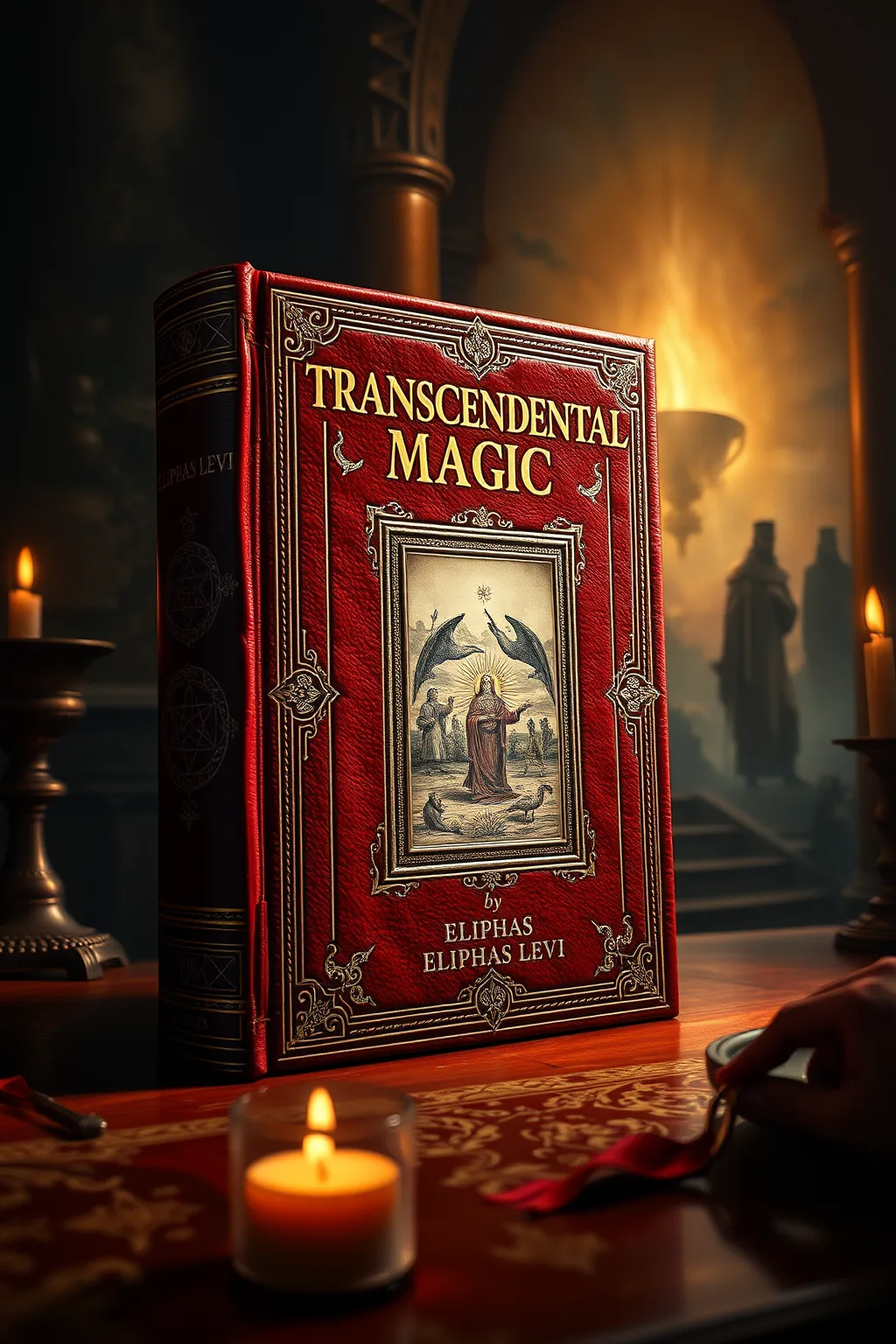
Eliphas Levi published 'Transcendental Magic' in 1856, codifying Western ceremonial magic.
Eliphas Levi's 'Transcendental Magic,' first published in 1856, is a significant work in the history of Western esotericism. The book attempts to systematize occult knowledge, drawing connections between Qabalah, Tarot, alchemy, and ceremonial magic. Levi presents magic not as supernatural trickery, but as a science of universal correspondences and the human will's interaction with divine forces. He argues that understanding these principles allows for a form of spiritual ascent. The text is structured to guide the reader through complex symbolic systems, aiming to illuminate the underlying order of the cosmos.
Levi's approach sought to reconcile religious and mystical traditions with a rational framework, even within the context of magic. He believed that by mastering these arcane sciences, individuals could achieve a greater understanding of themselves and their place in the universe. The book addresses the nature of reality, consciousness, and the forces that shape existence, presenting a vision of interconnectedness that encourages a spiritual perspective beyond the ordinary. It remains a reference point for those interested in the intellectual underpinnings of magical traditions.
Published in the mid-19th century, 'Transcendental Magic' emerged during a period of renewed interest in occultism and spiritualism in Europe. Eliphas Levi synthesized earlier magical traditions, particularly Hermeticism and Qabalistic literature, with contemporary philosophical currents. His work aimed to present magic as a coherent system, distinct from both folk superstition and purely theological dogma. It became a key text for the revival of ceremonial magic, influencing subsequent generations of occultists who sought to understand the symbolic language and theoretical framework of Western esotericism.
💡 Why Read This Book?
Unravel the mysteries of the universe and unlock your inner potential. 'Transcendental Magic' offers a profound exploration of ancient esoteric wisdom, revealing the interconnectedness of all things. Ideal for spiritual seekers, occult scholars, and practitioners aiming to deepen their understanding of ritual, symbolism, and the hidden laws of existence. This book is a gateway to a richer, more enlightened perspective.
⭐ Reader Reviews
Honest opinions from readers who have explored this book.
❓ Frequently Asked Questions
What is the primary focus of 'Transcendental Magic'?
The book primarily focuses on the theory and practice of ceremonial magic, exploring its philosophical underpinnings, Qabalistic principles, and symbolic language, aiming to guide the reader towards spiritual enlightenment and cosmic understanding.
Is this book suitable for beginners in magic?
While comprehensive, 'Transcendental Magic' is intellectually demanding. Beginners may find it challenging but rewarding with dedicated study. It's best approached by those with a foundational interest in esoteric philosophy or a willingness to delve deeply.
What role does the Qabalah play in the book?
The Qabalah forms a central framework for Levi's magical system, providing a map of divine emanation and human consciousness. He meticulously integrates its principles into his explanations of magic, symbolism, and spiritual evolution.
What kind of magic does Levi discuss?
Levi discusses ceremonial magic, emphasizing its ethical and philosophical dimensions. He views magic as a divine science, a means of aligning human will with universal forces for spiritual growth and transformation, not mere conjuration.
How influential has 'Transcendental Magic' been?
This work is considered one of the most influential texts in modern occultism, profoundly shaping the Golden Dawn, Thelema, and various other magical orders and traditions worldwide. Its impact is immeasurable.
🔮 Key Themes & Symbolism
The Art of Magic as Divine Science
Levi posits magic not as mere trickery or superstition, but as a profound and universal science, a divinely ordained art of harmonizing the human will with the cosmic order. He argues that true magic lies in understanding and wielding the subtle energies that permeate the universe, enabling the practitioner to achieve spiritual perfection and influence the material world through alignment with higher principles. This perspective elevates magic from a mere practice to a path of philosophical inquiry and spiritual discipline, demanding rigorous study, moral rectitude, and deep contemplation of universal laws.
Qabalistic Symbolism and the Tree of Life
The Qabalah, particularly the Tree of Life, serves as the central symbolic map within 'Transcendental Magic.' Levi meticulously decodes the intricate relationships between the Sephiroth and the paths, revealing them as archetypal expressions of divine emanation and the structure of consciousness. He illustrates how these Qabalistic concepts are mirrored in various ancient traditions, from Tarot imagery to alchemical processes, providing a unified language for understanding the hidden workings of both the macrocosm and the microcosm. This theme emphasizes the power of symbolism to unlock profound truths.
The Doctrine of Correspondences
A core part of Levi's philosophy is the doctrine of correspondences – the belief that everything in the universe is interconnected and reflects divine patterns. He argues that the macrocosm (the universe) is mirrored in the microcosm (humanity), and that by understanding these relationships, one can gain mastery over both internal and external realities. This principle underpins his approach to ritual, divination, and the interpretation of symbols, suggesting that by manipulating the appropriate correspondences, the magician can effect desired transformations and achieve spiritual ascent.
💬 Memorable Quotes
Direct passages from the work, attributed to the author.
“The greatest secret of magic is the art of manifestation.”
— This highlights magic's core function: bringing forth latent potential or desired outcomes into tangible reality through focused will and understanding of cosmic laws.
“Ignorance is the source of all evil.”
— Levi emphasizes that true malevolence or suffering stems not from inherent wickedness but from a lack of understanding of universal principles and one's place within them.
“The magician is the mirror of God.”
— This profound statement suggests the ideal magician embodies divine qualities, acting as a conduit or reflection of the Creator's will and power through their actions and understanding.
“The universe is a book written in the language of symbols.”
— This underscores Levi's belief in the symbolic nature of reality, advocating for the study of signs and symbols as the key to deciphering the universe's hidden truths and divine messages.
“Love is the universal agent of magic.”
— This points to the transformative power of divine love and compassionate intent as the most potent and ethical force available to the magician for positive influence and creation.
🌙 Esoteric Significance
Tradition
Levi's work is deeply rooted in Western Esotericism, drawing heavily from Hermeticism, Kabbalah, Gnosticism, and Neoplatonism. He synthesized these diverse streams into a comprehensive system of ceremonial magic, aiming to reconcile apparent contradictions and present a unified, philosophical understanding of the occult sciences. His approach emphasizes the divine nature of magic and its potential for spiritual evolution.
Symbolism
Symbolism is paramount in 'Transcendental Magic.' Levi meticulously analyzes key symbols such as the Pentagram, the Hexagram, the Caduceus, and the figures of the Tarot. He reveals how these symbols are not arbitrary but potent representations of cosmic forces, divine attributes, and psychological states, acting as keys to unlock deeper spiritual understanding and facilitate magical operations through their inherent meaning and power.
Modern Relevance
Despite its historical origins, 'Transcendental Magic' remains highly relevant. Its exploration of consciousness, symbolism, and the interconnectedness of the universe appeals to contemporary interest in mindfulness, personal growth, and the search for meaning. The book offers a robust philosophical framework for understanding the human condition and the potential for spiritual transformation, making it a vital resource for modern seekers and practitioners.
👥 Who Should Read This Book
This foundational text is indispensable for serious students of Western Esotericism, occult philosophy, and ceremonial magic. Beginners with a strong intellectual curiosity and dedication will find it a challenging yet immensely rewarding introduction to complex magical theory and Qabalistic principles. Scholars of religious studies and comparative mythology will appreciate Levi's synthesis of diverse traditions. Experienced practitioners will find new depths of understanding and practical insights into ritual efficacy, symbolic interpretation, and the ethical application of magical forces. Ultimately, 'Transcendental Magic' is for anyone seeking to transcend the ordinary and explore the profound mysteries of existence.
📜 Historical Context
Written during the intellectual ferment of 19th-century Europe, 'Transcendental Magic' emerged from a period marked by a resurgence of interest in occultism, spiritualism, and ancient wisdom traditions. Following the Enlightenment's emphasis on reason, many thinkers began to explore the mystical and irrational realms. Eliphas Lévi, a French occultist, synthesized Kabbalistic lore, Hermeticism, alchemy, and Christian mysticism into a coherent system of magic. His work provided a crucial bridge between earlier esoteric traditions and the occult revival that would profoundly influence organizations like the Hermetic Order of the Golden Dawn and later esoteric movements, shaping the field of modern Western occultism.
📔 Journal Prompts
Reflect on the concept of magic as a divine science. How does this differ from common perceptions, and what ethical responsibilities does it imply?
Choose one key symbol discussed by Levi (e.g., Pentagram, Hexagram) and journal about its potential meanings and personal resonance.
Consider the doctrine of correspondences. How might you observe these connections in your daily life, and how could understanding them aid your personal growth?
Levi emphasizes knowledge as the antidote to suffering. How has a lack of understanding impacted your life, and what steps can you take to cultivate greater wisdom?
Meditate on the idea of the magician as a 'mirror of God.' What qualities would such a mirror possess, and how can one strive to embody them?
🗂️ Glossary
Qabalah
A complex system of Jewish mysticism that deals with the nature of God, the creation of the universe, and the relationship between the divine and the human, often represented by the Tree of Life.
Sephiroth
The ten divine emanations or attributes of God within Qabalistic cosmology, forming the structure of the Tree of Life and representing stages of creation and consciousness.
Hermeticism
A philosophical and religious tradition based primarily upon writings attributed to Hermes Trismegistus, emphasizing esoteric knowledge, the divine nature of reality, and the pursuit of spiritual enlightenment.
Pentagram
A five-pointed star, often used in magic and symbolism to represent the four elements (earth, air, fire, water) and the spirit, or the human form.
Macrocosm/Microcosm
The concept that the universe (macrocosm) is reflected in the individual human being (microcosm), and vice versa, suggesting a fundamental interconnectedness between all levels of existence.
This book appears in 2 collections
🔮 Readers Also Liked
Browse all →






More by Eliphas Eliphas Levi
All books →

From the “Ritual Magic” Collection
View all →




More Free Magic & Ritual Books
View all →





![Faust: a Tragedy [part 1], Translated from the German of Goethe](/img/thumb/faust-a-tragedy-part-1-translated-from-the-german-of-goethe-goethe-johann-wolfgang-von.webp)
