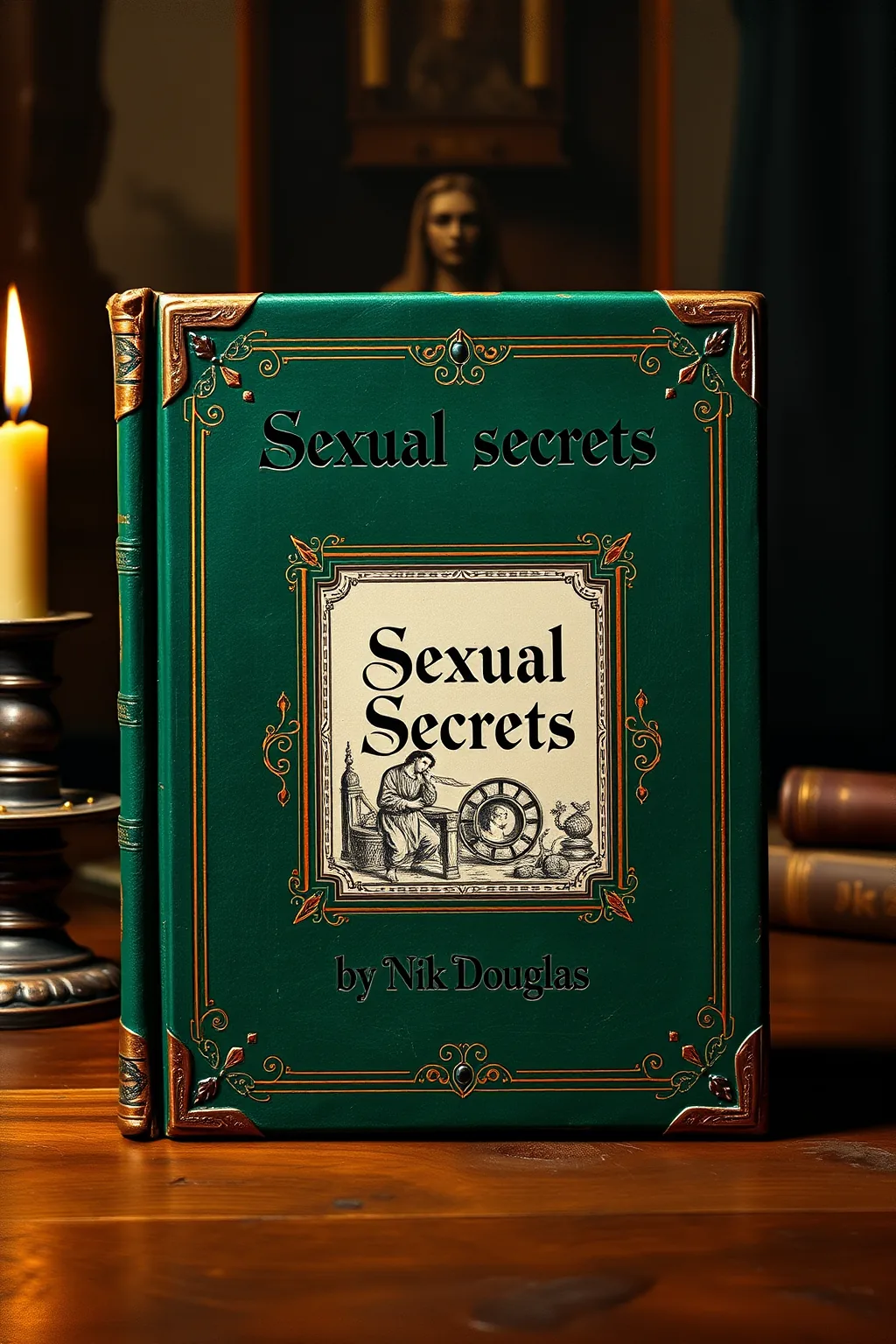
Sexual secrets
 82
82

Sexual secrets
Douglas and Slinger's 'Sexual Secrets' stands out for its encyclopedic scope, a feat of ethnographic and theological cataloging that meticulously traces the sacredness of sex across cultures. The sheer volume of visual and textual material presented, from Mesopotamian fertility goddesses to alchemical diagrams, is impressive. However, the book's strength in breadth occasionally becomes a limitation in depth. While it presents a vast array of traditions, the analysis can sometimes feel more descriptive than deeply interpretive, leaving the reader to connect the dots on the more subtle spiritual implications. A particularly striking example is the detailed exposition of the Hindu Tantric practices, which, while informative, sometimes lacks the nuanced understanding of lived experience that a practitioner might offer. Despite this, the work remains a vital resource for anyone seeking to understand the historical and cross-cultural reverence for sexual energy. It is a foundational text for appreciating the divine in the corporeal.
📝 Description
82
Published in 1986, 'Sexual Secrets' cataloged global traditions of sacred sexuality.
'Sexual Secrets' by Nik Douglas and Penny Slinger is an extensive study of human sexuality across world mythologies, religions, and esoteric practices. The book systematically gathers and examines visual and textual records of sexual union, fertility rituals, and divine eroticism from various cultures. It synthesizes information from ancient Tantric scriptures, Greek myths, shamanic customs, and alchemical symbols to present a cohesive view of sexual energy's sacredness. This work offers a scholarly, yet accessible, look at how human reproduction and desire have been understood and ritualized throughout history.
This book is suited for dedicated students of comparative religion, mythology, and occult studies. It will interest those who explore the connections between spirituality and human sexuality, particularly individuals aiming to grasp the archetypal and symbolic aspects of eroticism beyond modern, often secular, views. Academics in art history, anthropology, and religious studies will find its analysis of texts and images useful. It is also for practitioners of tantric or ritual traditions seeking a historical and cross-cultural foundation for their understanding.
Released in the mid-1980s, 'Sexual Secrets' emerged during a period of renewed interest in ancient fertility cults and hidden knowledge, following the counterculture movements of the preceding decades. The book built on the academic work of scholars like Mircea Eliade and Joseph Campbell, but specifically focused on the sacred dimensions of sex. Unlike the broader discussions of sexual liberation from the 1960s and 70s, Douglas and Slinger's work distinguished itself through its detailed compilation of sacred sexuality, often drawing from less common texts and visual materials within esoteric traditions.
💡 Why Read This Book?
• Understand the concept of 'cosmic sex' as presented through diverse historical and religious traditions, offering a framework for viewing sexual union as a spiritual act, as detailed in the book's analysis of various creation myths. • Explore the visual symbolism of divine eroticism, learning to interpret motifs like the lingam and yoni or alchemical union of opposites, which represent fundamental creative forces across cultures documented since the 1986 publication. • Gain insights into pre-modern perspectives on fertility rites and sacred sexuality, moving beyond contemporary secular views to appreciate the spiritual and ritualistic dimensions that Nik Douglas and Penny Slinger meticulously documented.
⭐ Reader Reviews
Honest opinions from readers who have explored this book.
❓ Frequently Asked Questions
What specific cultures and traditions does 'Sexual Secrets' examine regarding sexuality?
'Sexual Secrets' examines a broad spectrum, including ancient Mesopotamian, Greek, Egyptian, and Indian traditions (particularly Tantra), as well as alchemical symbolism and shamanic practices. The book, first published in 1986, seeks to illustrate universal themes.
Is 'Sexual Secrets' a practical guide to sexual practices?
No, it is primarily an academic and symbolic exploration. While it documents historical practices, it does not offer step-by-step instructions for modern practitioners. Its focus is on understanding the meaning and representation of sacred sexuality across cultures.
What is the significance of the lingam and yoni discussed in the book?
The book interprets the lingam (phallus) and yoni (vulva) as potent symbols representing the union of masculine and feminine divine principles, the cosmic creative force, and the generative power of the universe, as seen in Hindu iconography.
When was 'Sexual Secrets' originally published?
'Sexual Secrets' was first published in 1986, marking its place within late 20th-century scholarship on comparative religion and esoteric studies.
Who are the authors, Nik Douglas and Penny Slinger?
Nik Douglas and Penny Slinger are researchers and artists who collaborated on 'Sexual Secrets.' Their work often intersects art, mythology, and esoteric traditions, with Slinger being a noted visual artist whose work frequently explores themes of sexuality and the subconscious.
Does the book discuss alchemical concepts related to sexuality?
Yes, 'Sexual Secrets' explores alchemical symbolism, interpreting the 'Great Work' and the union of opposites within alchemy as metaphorical representations of spiritual and sexual integration, a concept present in esoteric literature for centuries.
🔮 Key Themes & Symbolism
Sacred Union Archetypes
The work meticulously documents how sexual union is portrayed not merely as a biological act but as a fundamental principle of creation and spiritual realization across diverse mythologies. It highlights divine couples, androgynous deities, and the cosmic significance attributed to procreative forces. Examples range from the hieros gamos in ancient Near Eastern cults to the symbolic union of elements in Western alchemy, presenting sexuality as a conduit for divine manifestation and cosmic order.
Tantric and Yogic Sexuality
A significant portion of the book is dedicated to the complex traditions of Tantra, particularly from India. It looks at the philosophical underpinnings of Tantric practices, viewing sexual energy (kundalini) as a potent force for spiritual awakening. The book explores the symbolic language of Tantra, including the veneration of the lingam and yoni, and the goal of transcending dualities through controlled cultivation of sexual energy, offering an academic perspective on these ancient paths.
Erotic Symbolism in Art and Religion
Douglas and Slinger analyze the pervasive presence of erotic imagery within religious art and iconography globally. From fertility goddesses to explicit depictions of sexual acts in temple carvings, the book argues these are not mere titillation but hold profound spiritual and cosmological meanings related to life, death, rebirth, and the integration of primal forces. It presents a visual lexicon of divine desire.
The Alchemy of Eros
The book draws parallels between alchemical processes and the transformation of sexual energy. It interprets alchemical texts and symbols, such as the union of Sol and Luna or the Rebis, as metaphors for the integration of opposing forces within the human psyche and the potential for spiritual transmutation through the controlled harnessing of sexual vitality.
💬 Memorable Quotes
Direct passages from the work, attributed to the author.
“Sacred sexuality is a path to transcendence.”
— This interpretation reflects the book's central argument that by understanding and ritualizing sexual energy, individuals can achieve altered states of consciousness and spiritual realization, moving beyond the purely physical aspects of desire.
“Mythology offers a blueprint for divine eroticism.”
— This captures the essence of how Douglas and Slinger use myths and religious narratives from various cultures to illustrate the sacred and archetypal dimensions of human sexuality, presenting them as guides to understanding its spiritual potential.
“Visual traditions reveal the sacredness of fertility.”
— This interpretation highlights the book's reliance on art and iconography to demonstrate how different societies have visually encoded the divine power associated with reproduction and the life cycle, often through explicit or symbolic imagery.
💡 Key Ideas
Editorial paraphrase of the work's core concepts — not direct quotes.
The union of opposites is the key to creation.
This paraphrased concept captures the recurring theme that the integration of masculine and feminine, or other dualistic forces, is fundamental to the generative power seen in both the cosmos and within spiritual disciplines.
Ancient practices viewed sexual energy as a cosmic force.
This paraphrased idea underscores the book's exploration of how historical cultures perceived sexual energy not just as a personal drive but as a fundamental, universal power integral to the functioning of the cosmos and spiritual disciplines.
🌙 Esoteric Significance
Tradition
The work primarily aligns with comparative esoteric studies, drawing from a wide array of traditions rather than a single lineage. It engages with Hermetic principles of correspondence (as above, so below), Gnostic ideas of divine creative forces, and Eastern traditions like Tantra and Yoga. It positions sacred sexuality as a universal current flowing through many esoteric paths, emphasizing the integration of the corporeal and the spiritual, a concept central to many mystical philosophies.
Symbolism
Key symbols explored include the lingam and yoni, representing the divine masculine and feminine union and the primordial creative force in Hindu traditions. The alchemical union of opposites (e.g., Sol and Luna) is presented as a metaphor for integrating psychological and spiritual energies. The hieros gamos, or sacred marriage, signifies cosmic unity and the divine generative power, seen across various ancient mythologies and rituals.
Modern Relevance
Contemporary thinkers and practitioners in fields like somatic psychology, neo-Tantra, and modern paganism often reference 'Sexual Secrets' for its foundational documentation of cross-cultural sacred sexuality. It informs contemporary discussions on reclaiming the spiritual dimensions of eroticism and understanding archetypal sexual energies. Its comprehensive cataloging remains a valuable resource for those seeking to integrate ancient wisdom with modern therapeutic or spiritual practices.
👥 Who Should Read This Book
• Students of Comparative Religion and Mythology: Those seeking to understand the diverse ways sexuality has been integrated into spiritual belief systems and cosmologies worldwide. • Art Historians and Symbolism Enthusiasts: Individuals interested in interpreting erotic and fertility imagery across global art forms and understanding their symbolic, rather than purely literal, significance. • Practitioners of Esoteric Paths: Those exploring traditions like Tantra, alchemy, or Western esotericism who wish to understand the historical and cross-cultural context of sacred sexuality and its role in spiritual development.
📜 Historical Context
Published in 1986, 'Sexual Secrets' emerged during a period of burgeoning academic interest in previously marginalized spiritual traditions and the anthropology of religion. Following the cultural shifts of the 1960s and 70s, there was a growing scholarly appetite for understanding the esoteric dimensions of human experience, including sexuality, beyond Freudian or purely sociological lenses. Nik Douglas and Penny Slinger’s work built upon the foundations laid by scholars like Mircea Eliade, who explored the concept of the sacred, and Joseph Campbell, known for his comparative mythology. However, 'Sexual Secrets' distinguished itself by focusing intensely on the erotic and reproductive symbolism inherent in global spiritual systems, offering a comprehensive catalog that predated much of the widespread popular engagement with practices like Tantra. Its detailed visual documentation provided a counterpoint to more theoretical or less illustrated works, solidifying its place as a significant reference in the study of comparative religion and esoteric sexuality.
📔 Journal Prompts
The representation of the divine couple across cultures.
Personal interpretation of the lingam and yoni symbolism.
Reflections on alchemical union as a metaphor for integration.
Connecting mythological narratives of fertility to personal understanding.
The role of sacred sex in spiritual transcendence as depicted in Tantra.
🗂️ Glossary
Lingam
In Hindu traditions, the lingam is an abstract or aniconic representation of the god Shiva, often depicted as a pillar or cylinder, symbolizing divine generative energy and the cosmic creative force.
Yoni
The yoni is a representation of the vulva or female genital organ, often paired with the lingam. It symbolizes the divine feminine, the womb, and the source from which all creation springs.
Hieros Gamos
A ritualistic or symbolic sacred marriage, particularly between a divine couple or a deity and a human representative, representing cosmic union, fertility, and the integration of divine energies.
Kundalini
In Tantric and Yogic traditions, Kundalini is a primal cosmic energy often depicted as a coiled serpent at the base of the spine, believed to be awakened and raised through spiritual practices for enlightenment.
Alchemical Union
In alchemy, this refers to the symbolic or literal merging of opposing elements or principles (e.g., masculine/feminine, Sol/Luna) to achieve transformation and create the philosopher's stone or elixir.
Cosmic Sex
The concept that sexual union can mirror or participate in the generative forces of the universe, leading to spiritual realization and a connection with divine creative power.
Fertility Rites
Rituals and ceremonies performed to ensure the fertility of the land, crops, livestock, and humans, often involving symbolic or actual sexual acts and veneration of procreative deities.
🔮 Readers Also Liked
Browse all →








More Free Occult Philosophy Books
View all →