Wicca
 71
71

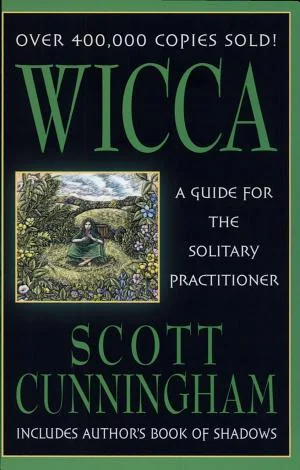
Wicca
Scott Cunningham’s "Wicca" remains a foundational text for many entering the Craft, and for good reason. Its strength lies in its direct, unpretentious approach, particularly in its detailed guidance for the solitary practitioner. Cunningham simplifies complex ritual elements, making them seem achievable without the need for established covens. He presents a vision of Wicca that is accessible and personal. However, this very accessibility can be a double-edged sword. The book's 1989 publication date means some of its interpretations and recommended practices feel somewhat dated compared to contemporary, more nuanced scholarship and diverse contemporary Wiccan expressions. While the passage detailing the casting of a circle for solitary ritual is remarkably clear, it offers a singular perspective that doesn't always account for the evolution of practice. It's a solid entry point, but not the final word.
Cunningham's "Wicca" is an essential primer for the solo seeker, though experienced practitioners may find its scope limited.
📝 Description
71
Scott Cunningham's 1989 book "Wicca" demystified the religion for solitary practitioners.
Scott Cunningham's "Wicca," first published in 1989, offers a clear introduction to an Earth-centered spiritual path. It moves past sensationalized views to explain Wiccan beliefs and practices, focusing on core principles for modern followers. The book is particularly aimed at individuals practicing alone, providing the necessary knowledge and ritual structures for personal spiritual growth within a Wiccan context.
Those interested in Earth-based spirituality, paganism, or alternative religious traditions will find this a useful starting point. Cunningham's work aimed to make Wicca more accessible, distinguishing itself by emphasizing personal spiritual experience rather than strict dogma. It was written during a time of growing interest in neo-paganism and witchcraft.
Published in 1989, Cunningham's "Wicca" followed earlier codifications of modern witchcraft by figures like Gerald Gardner and Doreen Valiente. It emerged during a period of increasing interest in neo-paganism. Cunningham's intent was to democratize Wiccan practice, making it available to a wider audience seeking spiritual paths outside mainstream religions. His approach stressed personal experience and accessible explanations of concepts like nature worship and the divine duality.
💡 Why Read This Book?
• Gain a foundational understanding of Wicca's core tenets, including the concept of the God and Goddess, as presented in Cunningham's accessible 1989 guide, allowing for self-directed spiritual exploration. • Learn practical solitary ritual techniques, such as circle casting, as described in detail within the book, empowering you to create sacred space independently. • Understand the significance of the Wheel of the Year, a key concept explained by Cunningham, providing a framework for connecting with seasonal cycles and festivals.
⭐ Reader Reviews
Honest opinions from readers who have explored this book.
❓ Frequently Asked Questions
What is the primary focus of Scott Cunningham's 'Wicca'?
The book's primary focus is to outline the basic theory and practice of Wicca for the solitary practitioner. It details exercises and rituals designed for individuals who wish to explore this Earth-oriented religion on their own.
When was Scott Cunningham's 'Wicca' first published?
Scott Cunningham's 'Wicca' was first published in 1989, making it one of the seminal introductory texts for a generation exploring neo-paganism.
Is Scott Cunningham's 'Wicca' suitable for beginners?
Yes, the book is widely considered an excellent starting point for beginners interested in Wicca, particularly those who intend to practice solitarily. Cunningham's clear language and practical approach make complex concepts approachable.
What are some key concepts covered in 'Wicca' by Scott Cunningham?
Key concepts include the reverence for nature, the divine as immanent in both male and female forms (God and Goddess), the Wheel of the Year (seasonal festivals), and the ethical principle of the Wiccan Rede ('An it harm none, do what ye will').
Does the book 'Wicca' by Scott Cunningham require group participation?
No, the book is specifically designed for the solitary practitioner. While it discusses the potential for group practice (covens), its exercises and rituals are tailored for individuals working alone.
What historical period does Cunningham's 'Wicca' reflect?
The book reflects the late 20th-century resurgence of interest in Paganism and witchcraft. Published in 1989, it captures a specific moment in the popularization and academic study of modern Wicca.
🔮 Key Themes & Symbolism
Solitary Practice Empowerment
Cunningham emphasizes that a fulfilling Wiccan path can be walked alone. The book provides practical tools—meditations, rituals, and explanations of correspondences—specifically for individuals. This theme empowers readers by demonstrating that access to esoteric knowledge and spiritual connection doesn't necessitate membership in a formal group, fostering self-reliance and personal spiritual authority.
Immanent Divinity & Nature Reverence
A central tenet explored is the immanence of the divine within all aspects of nature. Cunningham presents Wicca as a religion that honors the sacredness of the Earth, its cycles, and its inhabitants. This perspective encourages a deep connection to the natural world, viewing it not as separate from the divine, but as its manifestation, fostering ecological awareness alongside spiritual growth.
The Wheel of the Year
The book meticulously details the eight major festivals of the Wheel of the Year, from Samhain to Yule. It explains their historical roots and symbolic significance within the Wiccan tradition. This theme provides a cyclical framework for spiritual practice, aligning personal and communal energies with the natural rhythms of the planet and the changing seasons.
Ethical Framework: The Wiccan Rede
Cunningham presents the Wiccan Rede, particularly the maxim 'An it harm none, do what ye will,' as a core part of ethical conduct. This principle guides practitioners in understanding personal responsibility and the interconnectedness of actions. It frames magical practice and daily life within a framework of non-harm, emphasizing conscious choice and its consequences within a spiritual context.
💬 Memorable Quotes
Direct passages from the work, attributed to the author.
“The Wiccan faith is the witchcraft of the wise.”
— This concise statement frames Wicca not as mere superstition, but as a path of wisdom and informed practice, suggesting a depth of knowledge and understanding accessible through its traditions.
“The God and Goddess are within you.”
— This highlights the immanent nature of the divine in Wicca, suggesting that spiritual power and connection are not external forces but reside within the individual practitioner.
“Cast the circle to create a sacred space.”
— This represents the practical instruction within the book, emphasizing the ritual act of defining a protected, consecrated area for magical or spiritual work.
💡 Key Ideas
Editorial paraphrase of the work's core concepts — not direct quotes.
The core of Wicca is reverence for nature.
This paraphrased concept underscores the book's central theme: that the Earth itself is sacred, and the spiritual path involves honoring its cycles, elements, and life forms.
The purpose of magic is to effect change in conformity with Will.
This paraphrased concept points to the practical application of Wiccan belief, defining magic as a focused act of will intended to bring about desired outcomes in alignment with one's spiritual intentions.
🌙 Esoteric Significance
Tradition
Cunningham's work fits within the broad umbrella of modern Western Esotericism, specifically the Neo-Pagan and Wiccan traditions. While drawing on older magical concepts, it departs from strictly Hermetic or Kabbalistic lineages by centering an Earth-based theology with a dualistic (God/Goddess) pantheon. Its emphasis on immanence and nature reverence aligns with certain strands of Romanticism and animistic thought, making it a distinct branch within the esoteric landscape.
Symbolism
The pentacle, often depicted with the five points representing spirit and the four elements, is a primary symbol of protection and balance in Wicca, as detailed in the book. The Chalice symbolizes the Goddess, the element of Water, and intuition, often used in rituals to receive divine energy. The Athame, a ritual knife, represents the element of Fire and directed Will, used for cutting energetic cords and directing magical force.
Modern Relevance
Cunningham's accessible approach to solitary Wicca continues to influence contemporary Pagan and Witchcraft communities. Modern authors and online resources frequently cite his work as a starting point. His emphasis on nature spirituality and ethical practice appeals to current ecological concerns and the desire for personalized, non-dogmatic spiritual paths, making his 1989 text still relevant for newcomers.
👥 Who Should Read This Book
• Individuals new to Earth-based spirituality seeking a clear, practical introduction to Wiccan beliefs and solitary ritual practices, as laid out by Cunningham. • Those interested in comparative religion or the history of modern esoteric movements, wanting to understand the development of Wicca in the late 20th century. • Practitioners who prefer a self-directed spiritual path and are looking for foundational techniques for personal ritual, meditation, and connecting with seasonal cycles.
📜 Historical Context
Scott Cunningham’s "Wicca" arrived in 1989, a period when neo-paganism was rapidly gaining visibility beyond niche circles. Following the foundational works of Gerald Gardner in the mid-20th century and the subsequent contributions of authors like Doreen Valiente, Cunningham's book emerged as a key text for the burgeoning population of solitary practitioners. The intellectual climate was shifting, with increased interest in alternative spiritualities and a growing critique of traditional religious structures. While Gardnerian Wicca often emphasized coven structure, Cunningham's work tapped into a desire for more accessible, personal practice, distinguishing itself from the more group-oriented traditions. The reception was largely positive among those seeking introductory material, though some academic circles and older practitioners might have viewed its simplified approach as less rigorous than earlier, more historically complex accounts of witchcraft.
📔 Journal Prompts
The concept of the Wiccan Rede, 'An it harm none, do what ye will,' and its application in modern life.
Personal reflections on the symbolism of the Wheel of the Year and its relevance to your current experiences.
Meditations on the immanent divine, exploring the God and Goddess within.
Practical application of circle casting for creating personal sacred space.
Your understanding of nature reverence as a spiritual practice, inspired by Cunningham's core themes.
🗂️ Glossary
Wicca
An Earth-centered religion and spiritual path that typically venerates a God and Goddess and observes seasonal festivals, often emphasizing nature reverence and ethical conduct.
Solitary Practitioner
An individual who practices Wicca or other spiritual paths independently, without belonging to a formal group or coven.
Wiccan Rede
The ethical code central to Wicca, most famously articulated as 'An it harm none, do what ye will,' guiding practitioners' actions and intentions.
Wheel of the Year
The cycle of eight seasonal festivals observed in many Wiccan traditions, including Samhain, Yule, Imbolc, Ostara, Beltane, Litha, Lughnasadh, and Mabon.
Casting the Circle
A ritual practice used to create a sacred, protected space for magical or spiritual work, often by invoking elemental or divine energies.
Athame
A ritual knife, typically double-edged and often made of metal, used primarily for directing magical energy and symbolically cutting energetic connections, not for physical cutting.
Goddess
In Wicca, one of the two primary deities, often associated with the Moon, the Earth, fertility, intuition, and the receptive principle.
This book appears in 2 collections
🔮 Readers Also Liked
Browse all →








From the “Wicca” Collection
View all →






More Free Occult Philosophy Books
View all →