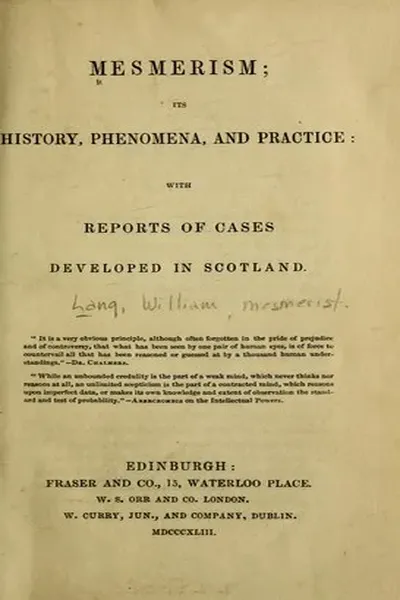
The Djinn Falls in Love and Other Stories
 71
71

The Djinn Falls in Love and Other Stories
Jared Shurin and Mahvesh Murad's *The Djinn Falls in Love and Other Stories* offers a compelling, if uneven, exploration of beings often reduced to lamp-bound servants. The collection shines when it moves beyond predictable tropes, presenting Djinn as integral parts of the modern world – a taxi driver, a presence in a song. The story 'The Djinn Falls in Love' itself, a title piece that suggests a delicate emotional arc, promises a unique angle. However, the anthology occasionally succumbs to a familiar supernatural narrative structure, where the Djinn's presence feels more like a plot device than an intrinsic element of the world. A notable strength is the sheer variety of voices, spanning international authors and offering fresh perspectives on ancient lore. While the collection introduces a fascinating concept of Djinn inhabiting everyday spaces, a stronger editorial hand could have pruned weaker narratives and elevated the truly innovative pieces. This anthology is a valuable, if not always perfect, addition to the literature of supernatural entities, particularly for those seeking Djinn beyond the confines of genies.
📝 Description
71
Jared Shurin and Mahvesh Murad's 2017 anthology gathers new and established writers to explore Djinn.
The Djinn Falls in Love and Other Stories collects narratives focused on Djinn, supernatural beings from pre-Islamic Arabian folklore. The anthology presents these entities not as simple spirits, but as complex figures capable of kindness, cruelty, and companionship. Writers in this collection interpret Djinn through various cultural and literary lenses, moving beyond common depictions to show their influence in dreams, daily life, and hidden human experiences.
This book is for readers interested in folklore, mythology, and supernatural fiction, especially those drawn to beings that exist between the human and the otherworldly. It will also appeal to those studying comparative religion and literature who seek different cultural views on Djinn lore. Fiction fans who enjoy imaginative stories about desire, power, and the strange will find much to appreciate. Those curious about ancient spirits and how they appear in modern art and literature will find this collection rich with material.
Djinn, also known as Jinn or Genies, have a deep history in literature and theology, appearing first in pre-Islamic Arabian poetry and later in the Quran. By the medieval era, they were central characters in works like the *One Thousand and One Nights*, often depicted as powerful beings controlled by magic. This anthology engages with that history by featuring contemporary stories that build on or challenge traditional views. The idea of Djinn as both dangerous and helpful entities has persisted for centuries, shaping Arabic, Persian, and Islamic cultures and influencing Western occult traditions and fantasy literature.
💡 Why Read This Book?
• Gain a nuanced understanding of Djinn beyond common stereotypes, as exemplified by stories where they appear as ordinary figures in urban settings. • Explore diverse cultural interpretations of these powerful beings, drawing on narratives from international writers that challenge traditional folklore. • Discover how the concept of Djinn can be used as a literary device to explore the hidden aspects of human consciousness and desire, as seen in tales touching upon dreams and personal transformation.
⭐ Reader Reviews
Honest opinions from readers who have explored this book.
❓ Frequently Asked Questions
What is the origin of the Djinn in folklore?
Djinn originate from pre-Islamic Arabian folklore and theology, appearing in early poetry and later extensively in the Quran. They are depicted as supernatural beings made of smokeless fire, existing between the human and angelic realms.
Are the stories in 'The Djinn Falls in Love' all new?
The collection features a mix of new and classic tales, bringing together contemporary interpretations with established narratives concerning the Djinn.
What kind of beings are Djinn according to the book?
The book portrays Djinn as complex entities, capable of being fierce, fiery, tormenting, saving, monstrous, or even like childhood friends, existing in both hidden and mundane spaces.
Who are some of the authors featured in this collection?
The collection includes works from bestselling, award-winning, and breakthrough international writers, showcasing a broad spectrum of literary talent.
Does this book focus on the 'genie in a bottle' trope?
While the book acknowledges traditional Djinn lore, it actively moves beyond the common 'genie in a bottle' trope to explore Djinn in more diverse and unexpected contexts, including urban environments and personal dreams.
What is the publication date for 'The Djinn Falls in Love and Other Stories'?
The book was first published on March 1, 2025.
🔮 Key Themes & Symbolism
The Djinn's Dual Nature
The anthology consistently explores the Djinn's capacity for both immense good and terrifying destruction. Stories depict them as saviors of souls and tormentors, reflecting ancient beliefs where these beings were not inherently evil but powerful forces capable of acting according to their own complex motivations. This duality challenges simplistic notions of supernatural entities, presenting them as mirror images of human potential for both creation and ruin, often appearing in liminal states or moments of crisis.
Djinn in the Mundane World
A central theme is the integration of Djinn into contemporary, everyday life. They are found not just in ancient texts or hidden realms but on street corners, behind taxi wheels, and within the fabric of music and literature. This subverts expectations, suggesting that these powerful beings are interwoven with our reality, observing and interacting in subtle, often unnoticed ways, acting as metaphors for the unseen forces that shape human experience.
Love and Desire of the Djinn
The titular story, 'The Djinn Falls in Love,' and other narratives explore the capacity for Djinn to experience profound emotions, particularly love and desire. This departs from portrayals of Djinn as purely elemental or demonic, attributing them a complex inner emotional life. This theme allows for examinations of cross-species or cross-dimensional relationships, and how such desires might manifest and impact both the Djinn and the humans they encounter.
Djinn as Metaphor
Across the collection, Djinn serve as potent metaphors for the unknown, the subconscious, and primal urges. They represent that which is hidden beneath the surface of everyday life – our dreams, fears, and hidden desires. Their presence often signifies a confrontation with the uncanny or the repressed aspects of the self. By embodying these intangible forces, the Djinn in these stories become vehicles for exploring the deeper, often darker, currents of human psychology.
💬 Memorable Quotes
Direct passages from the work, attributed to the author.
“They are monsters, saviours, victims, childhood friends.”
— This phrase captures the anthology's core aim: to present Djinn not as a monolithic evil, but as many-sided beings with a spectrum of roles and impacts on human lives, mirroring the complexities of human nature itself.
“Hiding in our shadows, in our dreams, under our skins.”
— This interpretation highlights the Djinn's pervasive presence, suggesting they are not external but intimately connected to our inner lives and subconscious states, representing hidden aspects of ourselves or external forces that influence us deeply.
“On street corners, behind the wheel of a taxi, in the chorus, between the pages of books.”
— This vividly illustrates the concept of Djinn inhabiting the mundane world, explaining their supernatural nature by placing them in ordinary, relatable settings, challenging readers to consider the extraordinary lurking within the everyday.
“Eavesdropping and exploring; tormenting us, saving our souls.”
— This captures the active, often ambivalent, relationship between Djinn and humans. It emphasizes their agency and the varied consequences of their interactions, ranging from profound spiritual salvation to psychological distress.
“Every language.”
— This simple yet powerful statement suggests the universal nature of the Djinn's influence and presence, implying that their stories and impact transcend cultural and linguistic barriers, forming a global range of folklore and experience.
🌙 Esoteric Significance
Tradition
The Djinn have a complex relationship with esoteric traditions. While not strictly Hermetic, Gnostic, or Kabbalistic, they occupy a space in Islamic mysticism and folklore that intersects with broader concepts of spirit worlds and elemental beings found in Western esotericism. Within Islamic Sufism, for instance, there's a recognition of subtle bodies and unseen realms, which can accommodate the existence of Djinn. This collection taps into this lineage by presenting Djinn as beings that bridge the material and spiritual planes, offering a lens through which to explore the hidden dimensions of reality often contemplated in esoteric studies.
Symbolism
In many traditions, Djinn symbolize the untamed, the elemental forces of nature, and the subconscious. Their creation from 'smokeless fire' connects them to primal energy and transformation. They can represent the hidden desires and fears that lurk beneath the surface of human consciousness, akin to the shadow self in Jungian psychology. Their ability to shap up into various forms also makes them symbols of illusion, deception, or the mutable nature of reality, challenging fixed perceptions and inviting deeper inquiry into what constitutes 'real'.
Modern Relevance
Contemporary thinkers and practitioners in fields like comparative mythology, postcolonial literature, and even certain branches of occultism draw on the detailed symbolism of Djinn. Scholars of folklore continue to analyze their evolving narratives, while fiction writers use them to explore themes of otherness, cultural identity, and the supernatural in modern settings. Some modern magical practices that draw from diverse global spiritualities might also incorporate Djinn, viewing them as powerful intermediaries or elemental forces to be understood and, cautiously, engaged with.
👥 Who Should Read This Book
• Readers of comparative mythology and folklore interested in the origins and evolution of supernatural beings, particularly those from Arabian and Islamic traditions. • Fiction enthusiasts seeking diverse literary voices and imaginative explorations of the uncanny, who appreciate stories that blend the supernatural with everyday life. • Students of religious studies or cultural history looking to understand the role of Djinn in Islamic cultures and their broader influence on global storytelling and belief systems.
📜 Historical Context
The Djinn, deeply rooted in pre-Islamic Arabian mythology and later integrated into Islamic theology, have a history spanning over a millennium. Early mentions appear in ancient Arabian poetry, and they were later elaborated upon in texts like the Quran, where they are described as beings created from 'fire without smoke.' By the medieval Islamic Golden Age, particularly from the 9th century onwards, Djinn became central figures in popular literature, most famously in *One Thousand and One Nights*. These tales often depicted Djinn as powerful, capricious entities bound by sorcery, serving human masters. This anthology engages with this rich heritage, presenting contemporary interpretations that build upon or deliberately subvert these traditional portrayals. While figures like the djinn have parallels in other mythologies, their specific theological and literary development within the Islamic world, and their subsequent influence on global folklore, mark them as distinct. The collection reflects a modern fascination with these beings, moving beyond the genie-in-a-bottle cliché popularized in Western adaptations, and engaging with their more complex, often unsettling, origins.
📔 Journal Prompts
The presence of Djinn on street corners, as described in the anthology.
Djinn as saviours and tormentors, and the implications of this duality.
The concept of Djinn hiding 'under our skins'.
A specific story's depiction of a Djinn falling in love.
Djinn appearing in dreams and their symbolic meaning.
🗂️ Glossary
Djinn
Supernatural creatures originating from pre-Islamic Arabian folklore and Islamic theology, believed to be made of smokeless fire. They are often portrayed as possessing free will and existing between the human and angelic realms.
Ifrit
A powerful type of Djinn, often depicted as monstrous, malevolent, and associated with fire and the underworld. They are considered among the most formidable of the Djinn classes.
Marid
Another class of Djinn, often described as powerful, rebellious, and associated with water or the sea. They are sometimes depicted as more cunning or proud than Ifrit.
Shaytan
Often translated as 'demon' or 'devil,' Shaytan can refer to rebellious Djinn or fallen angels who oppose divine will. In some contexts, it is used interchangeably with Djinn, particularly those who are malevolent.
Jahiliyyah
The 'Age of Ignorance,' referring to the period of Arabian history before the advent of Islam. Many pre-Islamic beliefs and practices, including those surrounding Djinn, originated during this era.
Tawhid
The Islamic concept of divine oneness, asserting the absolute uniqueness and singularity of God (Allah). This theological concept is crucial for understanding the Djinn's place within Islamic cosmology, as they are creatures subordinate to God.
Smokeless Fire
The material from which Djinn are believed to be created, as mentioned in Islamic tradition. This concept suggests a fiery, energetic, yet ethereal nature, distinct from physical fire.
This book appears in 1 collection
🔮 Readers Also Liked
Browse all →








From the “Djinn” Collection
View all →







More Free Occult Philosophy Books
View all →