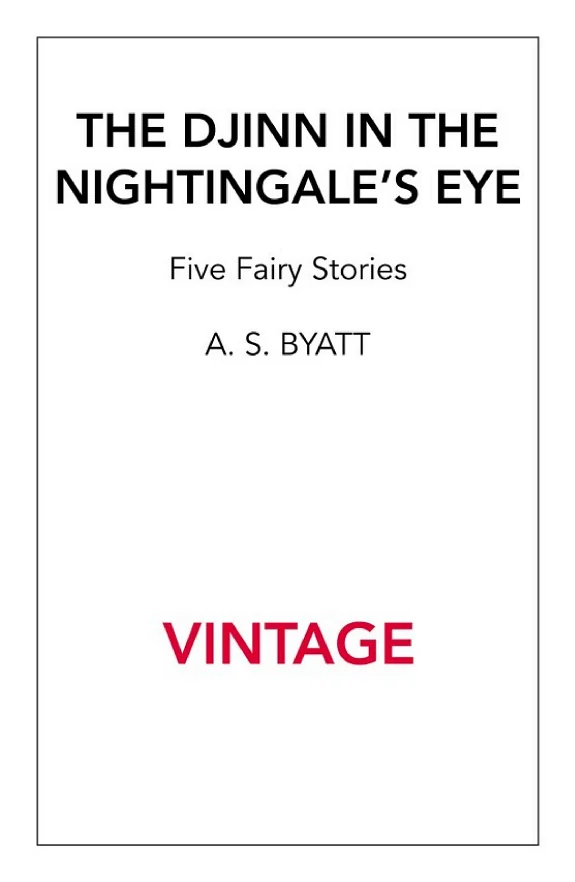
The Djinn In The Nightingale's Eye
 75
75

The Djinn In The Nightingale's Eye
A.S. Byatt’s collection, "The Djinn and the Nightingale's Eye," offers a potent distillation of her skill in reimagining myth. The title story, a potent exploration of desire and the supernatural, is its undeniable centerpiece, providing the source material for the recent film adaptation. Byatt excels at imbuing ancient forms with a sophisticated, modern sensibility, particularly in her detailed prose and the psychological depth she grants her characters, even within the confines of fable. However, the anthology’s strength—its variety—also presents a minor challenge; the shift in tone and setting between the five distinct tales can feel abrupt at times, requiring the reader to readjust their engagement with each new narrative. The inclusion of "The Glass Coffin" alongside the more overtly fantastical tales provides a welcome, grounded counterpoint. This collection serves as a compelling reminder of the enduring power of well-told stories.
📝 Description
75
A.S. Byatt's 1994 collection revisits ancient storytelling structures.
This volume gathers five tales by A.S. Byatt, showcasing her engagement with mythic structures and folkloric traditions. The stories are set in medieval and Middle Eastern locations, examining themes of transformation, desire, and the nature of storytelling. The titular story, which inspired the 2022 film "Three Thousand Years of Longing," stands as a central piece, alongside "The Glass Coffin" and "Gode's Tale." Byatt's work often connects with literary history, echoing a Gothic and Romantic interest in folk tales. Her approach frequently leans toward intricate psychological and mythological exploration. The collection is for readers who appreciate literary fiction rooted in mythology and folklore, and who enjoy how classic narrative forms are reinterpreted. Scholars of comparative literature, fantasy, and cultural studies will find ample material for analysis. Readers seeking stories that blend historical settings with fantastical elements will also find satisfaction.
Byatt's tales draw from a long lineage of oral and written storytelling, connecting with traditions that explore the supernatural and the human subconscious. The djinn, as figures from pre-Islamic Arabian folklore, represent forces beyond ordinary human control, often intertwined with human wishes. This taps into a broader esoteric interest in beings that mediate between the human and divine or elemental planes. The 'Nightingale's Eye' concept suggests a specific, perhaps mystical, point of perception or insight, linking the uncanny with the mundane world. The collection examines how narratives themselves can shape reality and perception, a common theme in esoteric thought.
💡 Why Read This Book?
• Gain insight into the literary roots of the film "Three Thousand Years of Longing" by engaging directly with A.S. Byatt's original 2018 novella, "The Djinn and the Nightingale's Eye," and understanding its narrative construction. • Explore the symbolic interplay between mythical beings and human aspiration through Byatt's intricate prose, particularly how djinn function as catalysts for self-discovery and transformation. • Appreciate the literary reimagining of medieval and Middle Eastern folklore, as seen in tales like "The Glass Coffin," offering a unique perspective on classic narrative structures and their thematic resonance.
⭐ Reader Reviews
Honest opinions from readers who have explored this book.
❓ Frequently Asked Questions
What is the origin of the story that inspired "Three Thousand Years of Longing"?
The story "The Djinn and the Nightingale's Eye" by A. S. Byatt, first published in 2018, is the direct inspiration for the 2022 film "Three Thousand Years of Longing."
What are the main themes explored in A.S. Byatt's "The Djinn and the Nightingale's Eye"?
The collection explores themes of storytelling, desire, transformation, the nature of reality, and the intersection of the mythical and the human, often set against medieval and Middle Eastern backdrops.
Are the stories in this collection connected?
While each story is distinct, they are connected by Byatt's narrative style, her engagement with folklore and myth, and their shared exploration of deep human desires and the consequences of their fulfillment.
What is the significance of the Djinn in the title story?
In the title story, the Djinn represents a powerful, ancient force that becomes intertwined with human existence, embodying both great potential and immense danger, and serving as a catalyst for the protagonist's journey.
Does this book contain fairy tales?
Yes, "The Djinn and the Nightingale's Eye" features five fairy tales and fables, including "The Glass Coffin" and "Gode's Tale," all retold with A. S. Byatt's distinctive literary voice.
When was "The Djinn and the Nightingale's Eye" first published?
The collection "The Djinn and the Nightingale's Eye" by A. S. Byatt was first published on October 26, 2018.
🔮 Key Themes & Symbolism
Mythic Beings and Human Desire
The collection looks at the complex relationship between humanity and supernatural entities, particularly djinn. These beings, often depicted in pre-Islamic Arabian folklore, serve as potent symbols of unleashed power and the fulfillment of deep-seated human desires. Byatt explores how the presence of such entities can irrevocably alter human lives, forcing characters to confront their own longings and the often-unforeseen consequences of their wishes, mirroring ancient cautionary tales and their enduring relevance.
The Nature of Storytelling
Across these tales, Byatt examines the very act of storytelling—its power to shape reality, preserve memory, and offer understanding. Whether through ancient fables or personal narratives, stories function as a vital medium for interpreting the world and the self. The collection implicitly questions the boundaries between myth and history, fiction and truth, suggesting that the stories we tell ourselves and others are fundamental to our existence and our perception of the magical.
Transformation and Revelation
Many of the stories feature characters undergoing significant transformations, often catalyzed by encounters with the extraordinary or the revelation of hidden truths. This metamorphosis can be literal or psychological, reflecting an inner shift prompted by external events. The 'Nightingale's Eye' itself suggests a moment of acute clarity or a profound, almost painful, perception that leads to a new understanding of self and surroundings.
The Exotic and the Familiar
Byatt frequently employs settings with medieval and Middle Eastern atmospheres, drawing on the allure of the exotic. This juxtaposition of the unfamiliar with deeply human emotions and desires creates a unique narrative space. The stories explore how encounters with different cultures and mythologies can illuminate aspects of the reader's own world, challenging preconceived notions and revealing universal truths within specific, richly imagined contexts.
💬 Memorable Quotes
Direct passages from the work, attributed to the author.
“She found that the more she looked, the more she saw.”
— This simple observation speaks to the power of focused attention and perception. It suggests that true understanding and appreciation come not just from seeing, but from actively looking, implying that the world holds less-obvious layers revealed to those who engage with it intently.
“The Djinn was a creature of smoke and fire, of ancient desires and unimaginable power.”
— This description captures the essence of the Djinn as presented in folklore and Byatt's interpretation. It highlights their elemental nature and their connection to primal human urges, positioning them as forces far beyond ordinary human comprehension or control.
“Fairy tales are true, in their way. They are maps of the human heart.”
— This interpretation underscores Byatt's belief in the enduring wisdom of folklore. It posits that despite their fantastical elements, fairy tales offer clear insights into universal human experiences, emotions, and psychological landscapes.
“She lived in the story, and the story lived in her.”
— This phrase captures the immersive quality of powerful narratives. It suggests a symbiotic relationship where the story shapes the individual's reality and identity, while the individual's experience gives life and meaning to the narrative.
💡 Key Ideas
Editorial paraphrase of the work's core concepts — not direct quotes.
The glass coffin held not death, but a suspended, waiting life.
This quote from "The Glass Coffin" reinterprets a classic fairy tale motif. It shifts the focus from a finality of death to a state of potential, suggesting a period of stasis or anticipation before a new beginning or revelation.
🌙 Esoteric Significance
Tradition
While not strictly adhering to a single esoteric lineage, Byatt's work draws heavily from the universal archetypes found in comparative mythology and folklore, which often intersect with Hermetic, Gnostic, and Sufi traditions. The djinn, central to Islamic mythology and folklore, are often seen as elemental beings possessing free will, capable of both good and evil, aligning with concepts of intermediary spiritual beings found across various mystical systems. The collection explores the interaction between the human and the 'otherworldly,' a common theme in esoteric thought concerning the unseen realms.
Symbolism
The Djinn themselves are potent symbols of primal forces, hidden desires, and the unpredictable nature of power. The 'Nightingale's Eye' can be interpreted as a symbol of acute perception, a rare and precious insight into the workings of the universe or the self, perhaps alluding to the Gnostic concept of gnosis or a Sufi unveiling. The 'Glass Coffin' motif, often found in fairy tales, symbolizes a state of suspended animation or illusion, a liminal space between life and death, or ignorance and enlightenment.
Modern Relevance
Contemporary interest in mythology, comparative religion, and psychological archetypes keeps Byatt's work relevant. Thinkers and practitioners exploring Jungian psychology, the power of narrative therapy, or modern paganism's engagement with folklore find resonance in her explorations of mythic structures. The collection's focus on the transformative power of stories and encounters with the numinous speaks to a modern search for meaning beyond the purely material, echoing the interests of various contemporary spiritual and philosophical movements.
👥 Who Should Read This Book
• Students of Comparative Mythology: Those analyzing cross-cultural myths and folklore will find rich source material in Byatt's meticulously crafted tales, particularly concerning Middle Eastern narratives. • Literary Scholars of Fairy Tales: Readers interested in the evolution and reinterpretation of classic fairy tale structures will benefit from Byatt's sophisticated literary approach to the genre. • Enthusiasts of Magical Realism and Mythic Fiction: Individuals drawn to stories that blend the mundane with the magical, exploring the wide implications of supernatural encounters, will appreciate the thematic depth and evocative prose.
📜 Historical Context
A.S. Byatt's "The Djinn and the Nightingale's Eye," published in 2018, emerged in a literary landscape where the reinterpretation of fairy tales and myths had already been a significant trend, notably championed by authors like Angela Carter in the late 20th century. Byatt's approach, however, often carries a more academic and structurally intricate sensibility, engaging with the historical roots of these narratives. The collection draws upon a long tradition of medieval romances and Middle Eastern folklore, periods rich with allegorical storytelling and the exploration of the supernatural. While not directly engaging with a specific contemporary intellectual current like post-structuralism in an overt way, Byatt's work participates in a broader cultural dialogue about narrative authority and the enduring power of archetypal stories. The reception of her work, including this collection, generally highlights her erudition and sophisticated prose, distinguishing her from more overtly experimental or politically charged retellings.
📔 Journal Prompts
The Djinn's nature as a being of 'smoke and fire,' and its connection to ancient desires.
The symbolic weight of the 'Nightingale's Eye' as a point of perception or revelation.
The narrative function of the 'Glass Coffin' in stories of suspended life or illusion.
A character's transformation prompted by an encounter with the supernatural.
The interplay between historical settings and fantastical elements in shaping a story's meaning.
🗂️ Glossary
Djinn
Supernatural creatures originating in pre-Islamic Arabian mythology, often depicted as beings of smokeless fire, possessing free will and capable of influencing human affairs, sometimes benevolent, sometimes malevolent.
Fable
A short story, typically with animals as characters, conveying a moral. Byatt's use extends to human characters and more complex moral or philosophical insights.
Folklore
The traditional beliefs, customs, and stories of a community, passed through the generations by word of mouth. Byatt draws on various global folkloric traditions.
Archetype
A recurring symbol, character, or motif in literature and mythology that represents universal patterns of human nature or experience.
Medieval Setting
Refers to the historical period in Europe between the fall of the Western Roman Empire (c. 5th century) and the Renaissance (c. 15th century). Byatt uses such settings to evoke a sense of historical distance and mythic resonance.
Middle Eastern Settings
Locations within the regions historically encompassing Western Asia and North Africa, often associated with rich traditions of storytelling, mythology (including djinn), and historical empires.
Gode's Tale
A specific story included in the collection, referencing Breton folklore concerning a 'Naie des Trepasses' (Maid of the Dead), showcasing Byatt's engagement with diverse European folk traditions.
This book appears in 1 collection
🔮 Readers Also Liked
Browse all →







From the “Djinn” Collection
View all →







More Free Occult Philosophy Books
View all →