Diário de um mago

 76
76

Diário de um mago
Paulo Coelho's *Diário de um mago* presents a raw, unvarnished account of his spiritual training, offering a stark contrast to the allegorical style of his more famous novels. The book’s strength lies in its unpretentious honesty, detailing the grueling discipline and profound self-doubt that accompany true spiritual apprenticeship. Coelho doesn't shy away from the less glamorous aspects of his quest, particularly the demanding regimen set by his unnamed spiritual mentor. However, this very directness can sometimes feel repetitive, especially when describing the repetitive nature of certain exercises. A passage detailing the arduous nature of the ‘pilgrimage’ to meet his master, marked by physical hardship and mental fatigue, truly captures the essence of committed spiritual pursuit. The work ultimately serves as a compelling, if occasionally stark, reminder that the path to enlightenment is paved with dedication and personal sacrifice. It’s a valuable addition for those seeking the author’s personal spiritual genesis.
📝 Description
76
Paulo Coelho published 'Diário de um mago' in 2022, detailing a spiritual quest to confront a teacher.
Paulo Coelho's 'Diário de um mago' (The Diary of a Magus) recounts a personal spiritual pilgrimage undertaken by the author. Published in 2022, the book details his experience confronting a spiritual teacher and beginning a path of self-discovery. It functions as a personal account of spiritual awakening rather than a fictional story. The work is suited for readers engaged with their spiritual path, particularly those interested in personal growth and the practical use of mystical principles. It addresses individuals who want to understand the difficulties and satisfactions of a life committed to spiritual discipline and esoteric knowledge. Readers familiar with Coelho's 'The Alchemist' will find a more introspective and direct presentation of his personal philosophy. This book emerges in a time rich with personal spirituality and self-help literature, but it distinguishes itself by anchoring its lessons in a specific, documented spiritual journey. It can be seen as a modern illustration of enduring spiritual traditions.
This work aligns with traditions that emphasize personal transformation through disciplined practice and the pursuit of inner wisdom. It touches on concepts found in various spiritual paths that focus on cultivating awareness and aligning oneself with universal forces. The book's focus on a master-disciple relationship and the development of personal power through inner work resonates with lineages that view magic as an internal science and a means to reshape one's reality, rather than external manipulation.
💡 Why Read This Book?
• Gain insight into the personal spiritual discipline required for true self-mastery, as exemplified by the rigorous training described in the book during Coelho's pilgrimage. • Understand the author's philosophy on the nature of miracles and how they are achieved through focused intent and spiritual alignment, a concept explored throughout his journey. • Experience a direct account of confronting spiritual doubt and the practical methods employed to overcome it, as detailed in the narrative of his tutelage.
⭐ Reader Reviews
Honest opinions from readers who have explored this book.
❓ Frequently Asked Questions
When was Paulo Coelho's *Diário de um mago* first published?
Paulo Coelho's *Diário de um mago* was first published in 2022, offering a more recent perspective on his spiritual journey.
What is the primary focus of *Diário de um mago*?
The book focuses on Paulo Coelho's personal spiritual training and his pilgrimage to meet a spiritual teacher, detailing his experiences and the lessons learned during this transformative period.
Is *Diário de um mago* a novel like *The Alchemist*?
No, *Diário de um mago* is primarily a non-fiction account of Paulo Coelho's own spiritual journey and training, rather than an allegorical novel.
What kind of spiritual path does the book describe?
It describes a path of discipline, self-awareness, and the practical application of esoteric principles aimed at achieving spiritual mastery and inner transformation.
Who was Paulo Coelho's spiritual teacher mentioned in the book?
The book refers to a spiritual teacher who guided Coelho through intense training, though the teacher remains unnamed, emphasizing the personal and internal nature of the guidance received.
Does the book discuss magic in a supernatural sense?
Coelho presents magic in *Diário de um mago* not as supernatural trickery, but as the power to alter one's reality through inner change and alignment with universal energies.
🔮 Key Themes & Symbolism
Spiritual Discipline and Training
The work extensively details the rigorous and often demanding training Coelho underwent under a spiritual master. This includes repetitive exercises, physical hardships, and mental challenges designed to break down ego and foster profound self-awareness. It emphasizes that spiritual growth is not passive but requires active, consistent effort and dedication, moving beyond mere intellectual understanding to embodied practice. The narrative illustrates how discipline becomes a tool for transmuting ordinary experience into sacred opportunity.
The Nature of Miracles
Coelho explores the concept of miracles not as violations of natural law, but as outcomes of deep spiritual alignment and focused intention. The book suggests that by understanding and working with universal energies, individuals can manifest changes in their reality. This perspective frames personal transformation as the primary miracle, enabling one to perceive and interact with the world in a fundamentally different, more empowered way. It challenges the reader to reconsider their own perceived limitations.
Confronting Doubt and Fear
A significant aspect of the narrative is the author's internal struggle with doubt, fear, and the temptation to abandon his path. The spiritual training presented is as much about mental fortitude as it is about esoteric knowledge. Coelho illustrates how confronting these internal obstacles directly, rather than avoiding them, is crucial for spiritual progress. The book provides a candid look at the psychological challenges inherent in deep spiritual work and the strategies for overcoming them.
The Pilgrimage of Self-Discovery
The journey described is a literal and metaphorical pilgrimage. It symbolizes the arduous path individuals undertake in search of deeper meaning and self-understanding. The physical challenges of the journey mirror the internal struggles and transformations required. This theme highlights that the path itself, with all its difficulties, is as significant as the destination, serving as the crucible for spiritual evolution and personal revelation.
💬 Memorable Quotes
Direct passages from the work, attributed to the author.
“The path to the divine is often paved with the ordinary.”
— This concept suggests that spiritual enlightenment is not found in extraordinary events alone, but through the mindful and sacred engagement with everyday life and tasks.
“True magic lies in changing oneself, not the world.”
— This highlights the book's focus on internal transformation as the primary means to influence one's reality, positing that genuine power comes from self-mastery.
“Doubt is the heaviest burden on the spiritual path.”
— This interpretation emphasizes the psychological struggle inherent in spiritual growth, where internal uncertainty can impede progress more than external obstacles.
“The greatest miracles are born from the greatest faith.”
— This reflects the idea that profound belief and unwavering conviction are essential catalysts for experiencing or manifesting extraordinary outcomes.
💡 Key Ideas
Editorial paraphrase of the work's core concepts — not direct quotes.
Discipline is the bridge between intention and accomplishment.
This paraphrased concept underscores the importance of consistent practice and structured effort in realizing one's spiritual goals and intentions.
🌙 Esoteric Significance
Tradition
The work aligns broadly with modern esoteric traditions that emphasize personal transformation and the practical application of spiritual principles for everyday life. It draws from a lineage that seeks to explain spiritual practices, making them accessible beyond formal religious or occult orders. While not strictly adhering to a single lineage like Hermeticism or Gnosticism, it echoes their emphasis on inner gnosis and the potential for individuals to achieve a higher state of consciousness through dedicated practice.
Symbolism
The 'pilgrimage' itself serves as a potent symbol of the soul's journey toward enlightenment. The spiritual teacher acts as a guide or Hierophant, representing the transmission of sacred knowledge. The rigorous exercises and challenges symbolize the alchemical process of purification and refinement, transforming the mundane aspects of the self into spiritual gold. These symbols collectively point towards an inner quest for self-realization.
Modern Relevance
In contemporary times, *Diário de um mago* remains relevant for individuals exploring non-traditional spiritual paths and seeking practical guidance for personal growth. Its emphasis on self-discipline and the power of intention appeals to proponents of manifestation techniques and mindfulness practices. Thinkers and practitioners in fields like positive psychology and life coaching often find parallels in Coelho's narrative of overcoming limitations and realizing one's potential.
👥 Who Should Read This Book
• Aspiring spiritual practitioners seeking concrete examples of dedication and discipline on the path to self-mastery. • Readers interested in Paulo Coelho's personal philosophical and spiritual development beyond his fictional narratives. • Individuals exploring the intersection of everyday life and esoteric principles, looking for relatable accounts of spiritual challenges.
📜 Historical Context
Paulo Coelho's literary career gained global momentum in the late 20th century, particularly with the international success of *The Alchemist* in 1988. While *Diário de um mago* was published in 2022, it reflects on experiences likely rooted in his earlier spiritual explorations. This period saw a surge in popular interest in New Age spirituality and self-help literature, often drawing from Eastern philosophies and Western esoteric traditions. Coelho's work entered a landscape already populated by figures like Shirley MacLaine, whose spiritual memoirs also found large audiences. However, Coelho distinguished himself by blending allegorical storytelling with a more personal, almost confessional tone in his later works. The reception of his books has been varied; while immensely popular, they have also faced criticism from some literary circles for their simplicity, though their accessibility has undeniably fostered a widespread engagement with spiritual themes for millions, influencing a generation's approach to personal growth literature.
📔 Journal Prompts
The arduous nature of the pilgrimage described in the book.
The specific spiritual exercises mandated by the unnamed teacher.
Moments of profound doubt experienced during the training.
The author's evolving understanding of 'magic' throughout his journey.
The role of faith versus discipline in achieving spiritual goals.
🗂️ Glossary
Magus
An ancient Persian term for a priest, magician, or seer. In a broader sense, it refers to someone possessing profound wisdom and esoteric knowledge, often associated with spiritual mastery.
Pilgrimage
A journey undertaken for religious or spiritual reasons, often to a sacred place. In this context, it also symbolizes a profound personal quest for enlightenment and self-discovery.
Spiritual Teacher
An individual who guides others on their spiritual path, imparting wisdom, discipline, and insights necessary for growth and transformation.
Self-Mastery
The state of achieving control over one's own thoughts, emotions, actions, and desires through discipline and self-awareness.
Intention
A focused aim or purpose; in esoteric contexts, the conscious direction of will and energy towards a specific outcome or transformation.
Esoteric
Intended for or likely to be understood by only a small number of people with a specialized knowledge or interest; relating to mystical or secret matters.
Transmutation
The process of changing from one form or state to another. In spiritual terms, it often refers to transforming lower or mundane aspects of the self into higher, spiritual qualities.
🔮 Readers Also Liked
Browse all →









More by Paulo Coelho
All books →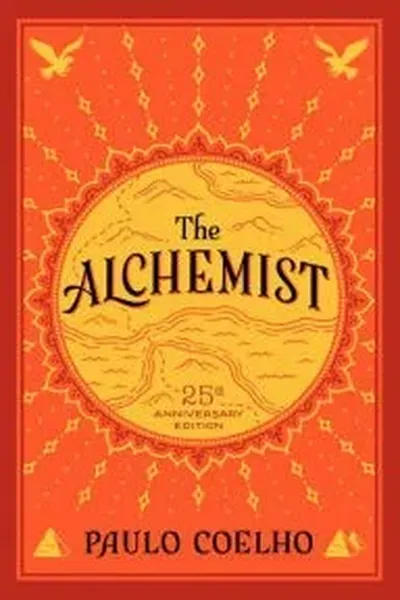





More Free Spiritual Development Books
View all →