Chakras for Beginners
 71
71

Chakras for Beginners
Crystal Smith’s "Chakras for Beginners" attempts to translate the intricate system of Indian chakra philosophy into readily digestible advice for the uninitiated. The book's primary strength lies in its clear, unpretentious language, stripping away much of the Sanskrit jargon that can intimidate newcomers. Smith’s explanation of the Crown Chakra (Sahasrara) and its connection to higher consciousness, for example, is particularly well-articulated for a beginner's text. However, the work occasionally falters by oversimplifying complex spiritual concepts, potentially leading to a superficial understanding. While it offers practical exercises, the depth of insight into the energetic interplay between chakras feels somewhat limited. It serves as a functional starting point, but readers seeking profound esoteric exploration might need to look elsewhere. Ultimately, it's a serviceable primer for those dipping their toes into energy work.
📝 Description
71
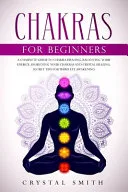
Crystal Smith's Chakras for Beginners, published in 2019, introduces the seven primary chakras.
This 2019 book offers an introduction to the seven primary chakras, energy centers that are understood to affect physical, emotional, and spiritual states. Smith aims to make these concepts from Indian traditions accessible to a Western audience. The text covers the location, colors, and characteristics of each chakra, from the Root (Muladhara) to the Crown (Sahasrara).
The book is written for those new to energy work, meditation, or esoteric ideas. It addresses common issues like stress, anxiety, and feelings of imbalance. Readers seeking tools for mental clarity, emotional balance, and a stronger sense of connection will find its direct approach useful. It serves as a starting point for anyone interested in applying spiritual concepts to daily life.
The concept of chakras originates from ancient Indian Tantric traditions, with early mentions in texts like the Upanishads and later detailed in yogic literature. Western interest grew in the late 19th and early 20th centuries through figures who introduced Indian spiritual ideas. 'Chakras for Beginners' adapts these complex ideas for modern wellness and New Age spirituality movements.
💡 Why Read This Book?
• You will learn to identify the specific energetic and emotional correlations of each of the seven chakras, including the Heart Chakra (Anahata), enabling a more nuanced understanding of your internal state. • You will gain practical techniques, such as guided visualizations for the Solar Plexus Chakra (Manipura), to actively work towards balancing your energy centers and fostering personal power. • You will discover the historical roots of chakra philosophy, understanding its journey from ancient Indian traditions to its place in modern esoteric thought, contextualizing its relevance since its first publication in 2019.
⭐ Reader Reviews
Honest opinions from readers who have explored this book.
❓ Frequently Asked Questions
What are the seven main chakras discussed in "Chakras for Beginners"?
The book details the seven primary chakras: Muladhara (Root), Svadhisthana (Sacral), Manipura (Solar Plexus), Anahata (Heart), Vishuddha (Throat), Ajna (Third Eye), and Sahasrara (Crown). Each is associated with specific colors, locations, and functions within the subtle body.
How does "Chakras for Beginners" suggest balancing energy centers?
Smith proposes various methods including meditation, visualization exercises, affirmations, and mindful breathing. The book guides readers on how to direct energy and awareness to specific chakras to promote harmony and well-being.
Is this book suitable for someone completely new to spirituality?
Yes, the book is explicitly designed for beginners, using clear language and avoiding complex terminology. It provides a foundational understanding of chakras for individuals with no prior knowledge of esoteric concepts.
When was "Chakras for Beginners" first published?
The book by Crystal Smith was first published on August 24, 2019, making it a contemporary guide to chakra principles.
What benefits can one expect from reading "Chakras for Beginners"?
Readers can expect to gain clarity of mind, improved emotional regulation, and a better understanding of how energy centers influence physical health and overall life satisfaction, according to the book's premise.
Does the book explain the Sanskrit names of the chakras?
Yes, "Chakras for Beginners" introduces the Sanskrit names alongside their common English translations, such as Muladhara for the Root Chakra, providing a more complete introduction to the subject.
🔮 Key Themes & Symbolism
The Seven Primary Chakras
The core of the work focuses on the seven major energy centers within the subtle body, as understood in ancient Indian traditions. Each chakra, from the grounding Muladhara (Root) to the transcendent Sahasrara (Crown), is presented with its unique energetic signature, color symbolism, and influence on physical and emotional states. The book details how imbalances in these centers, such as a blocked Vishuddha (Throat Chakra) affecting communication, can manifest in daily life and how focused attention can facilitate healing.
Energy Balancing Techniques
Smith provides accessible methods for readers to consciously work with their energetic system. These include guided meditations, visualization practices aimed at specific chakras like the Anahata (Heart Chakra), and the use of affirmations to reinforce positive energy flow. The emphasis is on practical application, empowering individuals to take an active role in cultivating inner harmony and addressing issues like anxiety or lack of confidence.
Mind-Body Connection
The book underscores the intrinsic link between one's energetic state and physical/mental well-being. It explores how stagnant or imbalanced energy in chakras such as Manipura (Solar Plexus) can correlate with issues of self-esteem and digestion, while a vibrant Ajna (Third Eye) is linked to intuition and mental clarity. This holistic perspective encourages readers to view health as an integrated energetic, emotional, and physical experience.
Introduction to Esoteric Concepts
For newcomers, "Chakras for Beginners" serves as an entry point into broader esoteric and metaphysical concepts. It introduces the idea of a subtle energy body and the influence of unseen forces on everyday life. By clarifying chakras, Smith opens the door for readers to explore further into related fields like yoga philosophy, mindfulness, and alternative healing modalities, framing these ancient ideas within a modern self-help context.
💬 Memorable Quotes
Direct passages from the work, attributed to the author.
“Awakening each chakra can improve every aspect of your life.”
— This statement captures the book's central promise: that by understanding and balancing the subtle energy centers, individuals can achieve holistic well-being across all domains of their existence.
“The Root Chakra (Muladhara) grounds you to the Earth.”
— This highlights the fundamental function of the Muladhara chakra, emphasizing its role in providing stability, security, and a connection to the physical world, which is essential for overall energetic health.
“The Heart Chakra (Anahata) is the center of love and compassion.”
— This succinctly defines the core essence of the Anahata chakra, pointing to its an important role in emotional connection, empathy, and interpersonal relationships.
“Your energy system influences your sleep and well-being.”
— This interpretation emphasizes the practical impact of the chakra system, suggesting that energetic imbalances can directly contribute to common issues like sleep disturbances and general malaise.
💡 Key Ideas
Editorial paraphrase of the work's core concepts — not direct quotes.
Positive energy starts with a clearer mind.
This paraphrased concept suggests that mental clarity is a prerequisite for generating and experiencing positive energy, linking cognitive state directly to energetic vitality.
🌙 Esoteric Significance
Tradition
The work draws heavily from the Tantric traditions of India, specifically the yogic concept of chakras as energy centers within the subtle body. While acknowledging its Indian origins, "Chakras for Beginners" adapts these concepts for a Western esoteric audience, fitting within the broader New Age movement that often synthesizes various spiritual traditions. It departs from strict traditional interpretations by focusing on therapeutic and self-improvement applications rather than ritualistic or purely spiritual liberation.
Symbolism
Central symbols include the colors associated with each chakra: red for the grounding Root Chakra (Muladhara), green for the loving Heart Chakra (Anahata), and violet for the spiritual Crown Chakra (Sahasrara). The lotus flower, with its varying number of petals corresponding to each chakra, is another key motif representing spiritual unfolding. These symbols serve as visual anchors, aiding in meditation and helping practitioners connect with the specific energetic qualities of each center.
Modern Relevance
Smith's book appeals to contemporary mindfulness and wellness practices, influencing practitioners of yoga, meditation, and energy healing. It provides a foundational understanding for individuals exploring modalities like Reiki, crystal healing, and somatic experiencing, which often incorporate or acknowledge chakra concepts. The accessible approach makes it a stepping stone for those interested in modern esoteric thought and the integration of spiritual well-being into daily life.
👥 Who Should Read This Book
• Individuals new to esoteric concepts and energy work seeking a clear, non-intimidating introduction to the chakra system. • Those experiencing stress, anxiety, or physical discomfort who are looking for self-help tools to improve their overall sense of well-being. • Students of comparative spirituality or comparative religion interested in understanding how ancient Indian concepts have been adapted for modern Western audiences.
📜 Historical Context
Published in 2019, Crystal Smith's "Chakras for Beginners" arrives amidst a burgeoning Western interest in mindfulness, yoga, and Eastern spiritual practices. The popularization of chakras in the West gained significant traction in the late 19th and early 20th centuries, largely through figures like Helena Blavatsky and the Theosophical Society, who integrated Indian spiritual concepts into Western esoteric thought. This period saw a surge of interest in Indian philosophy, sometimes leading to syncretic interpretations distinct from their original contexts. Smith's work enters this lineage, presenting chakra theory in a format accessible to a contemporary audience already familiar with New Age wellness trends. Unlike earlier, more academic or strictly religious interpretations, Smith’s approach focuses on self-help and personal development, reflecting a broader cultural shift towards experiential spirituality. This aligns with a general trend where ancient spiritual systems are often adapted for secular or therapeutic applications, sometimes diverging from the strictures of their originating traditions.
📔 Journal Prompts
The Root Chakra (Muladhara)'s connection to security.
Visualizing energy flow through the Sacral Chakra (Svadhisthana).
Balancing the Heart Chakra (Anahata) through compassion.
Expressing oneself via the Throat Chakra (Vishuddha).
The role of the Third Eye Chakra (Ajna) in intuition.
🗂️ Glossary
Chakra
A Sanskrit term meaning 'wheel' or 'vortex.' In esoteric traditions, chakras are understood as centers of subtle energy located along the spine, influencing physical, emotional, and spiritual well-being.
Muladhara
The Sanskrit name for the Root Chakra, located at the base of the spine. It is associated with grounding, security, and survival instincts.
Anahata
The Sanskrit name for the Heart Chakra, located in the center of the chest. It governs love, compassion, empathy, and emotional balance.
Subtle Body
A non-physical dimension of the human body, composed of energy channels (nadis) and centers (chakras), believed to interact with the physical body.
Energy Imbalance
A state where the flow of subtle energy within the chakras or nadis is disrupted, believed to manifest as physical, emotional, or mental distress.
Sahasrara
The Sanskrit name for the Crown Chakra, located at the top of the head. It is associated with spiritual connection, consciousness, and enlightenment.
Visualization
A mental technique involving the creation of vivid images in the mind's eye, often used in meditation and energy work to direct intention and influence the subtle body.