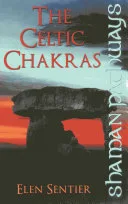
Shaman Pathways - The Celtic Chakras
 80
80

Shaman Pathways - The Celtic Chakras
Elen Sentier's Shaman Pathways presents a compelling argument for an indigenous Celtic chakra system, a concept often overlooked in favour of Eastern models. The book's strength lies in its imaginative synthesis of myth and energetic theory, particularly its exploration of Arianrhod's Spinning Towers as a metaphor for spiritual development. Sentier’s work is commendable for its attempt to reclaim a Western esoteric heritage. However, the text occasionally lacks the rigorous academic citation one might expect when making such significant historical claims, sometimes leaving the reader to infer connections. A particular point of interest is the discussion of The Cauldron, which Sentier interprets as representing a nexus of transformative energy. While the ambition is admirable, the evidence presented, though evocative, might not satisfy staunch historical sceptics. Despite this, it offers a valuable perspective for those seeking alternative frameworks for spiritual understanding. It is a unique contribution to Western esoteric literature.
📝 Description
80
Elen Sentier's 2018 book connects Celtic lore to energy centers, challenging Eastern chakra exclusivity.
Shaman Pathways - The Celtic Chakras argues that the concept of energy centers, often associated with Eastern philosophies, has deep roots in Western esoteric traditions, specifically Celtic and Gaelic mythologies. Sentier traces these ideas back to pre-Christian societies, suggesting a sophisticated indigenous energetic cosmology that predates or developed independently of Eastern models. The book reinterprets ancient myths and stories as maps of spiritual and energetic anatomy, illustrating the function and location of these Western energy centers.
This work is for those interested in comparative esoteric studies and Western mystery traditions, especially individuals drawn to Celtic heritage. It will appeal to energy work practitioners seeking broader perspectives beyond commonly taught systems and anyone curious about the hidden meanings within ancient European stories. Sentier engages with figures like Arianrhod and concepts from Gaelic poems to build her case for a distinct Western understanding of energetic pathways.
This book situates itself within the study of Western mystery traditions, challenging the common assumption that chakra systems are solely an Eastern import. Sentier proposes an indigenous European lineage for understanding spiritual and energetic anatomy, drawing parallels with global mystery traditions. By examining Celtic and Gaelic lore, she suggests a sophisticated, pre-Christian energetic cosmology that existed alongside or independently of Eastern influences, offering a distinct perspective on the history of esoteric thought.
💡 Why Read This Book?
• You will learn to identify and work with the Celtic chakra system, a distinct energetic model rooted in British Isles mythology, offering a unique alternative to Eastern energy paradigms. • Gain insight into specific Celtic myths like Arianrhod's Spinning Towers and The Cauldron, understanding them as symbolic maps of spiritual awakening as presented by Elen Sentier. • Discover the historical argument for indigenous Western chakra concepts, challenging the common assumption that these ideas are solely Eastern in origin, supported by the book's 2012 publication date.
⭐ Reader Reviews
Honest opinions from readers who have explored this book.
❓ Frequently Asked Questions
What is the main argument of Shaman Pathways - The Celtic Chakras?
The book argues that ancient Celtic cultures possessed their own system of energy centers, akin to chakras, deeply embedded in their myths and stories, rather than this concept being exclusively Eastern.
Who is Elen Sentier?
Elen Sentier is an author and practitioner known for her work exploring Western esoteric traditions, particularly shamanism and indigenous spiritual practices of the British Isles. Shaman Pathways was first published in 2012.
What Celtic myths are discussed in relation to chakras?
The book specifically references the lore of Arianrhod and her Spinning Towers, as well as the Gaelic poem The Cauldron, interpreting them as representations of Celtic energetic principles.
Is this book suitable for beginners in esoteric studies?
Yes, it is suitable for beginners interested in Western esoteric history and comparative spirituality, offering an accessible entry into Celtic-themed energy work.
When was Shaman Pathways - The Celtic Chakras first published?
The book was first published on December 31, 2012, making it a relatively contemporary exploration of ancient themes.
How does this book differ from books on Indian chakras?
It differs by focusing exclusively on the indigenous spiritual heritage of the British Isles, reinterpreting ancient stories through the lens of energy centers, rather than discussing the more widely known Sanskrit-based chakra system.
🔮 Key Themes & Symbolism
Indigenous Western Energy Systems
This theme centers on the book's central thesis: the existence of a sophisticated chakra-like energy system within the ancient Celtic traditions of the British Isles. Sentier argues against the sole attribution of chakra concepts to Eastern cultures, positing that Celtic myths and stories contain encoded knowledge of spiritual anatomy. The work aims to reawaken an understanding of these indigenous pathways, suggesting they were known to hunter-gatherer ancestors and their spiritual leaders, offering a parallel to but distinct from, other global energy models. The book seeks to reconnect readers with this forgotten Western heritage.
Mythology as Energetic Cartography
Sentier employs ancient Celtic narratives as a framework for understanding the body's energy centers. Figures like Arianrhod and the imagery within The Cauldron are presented not merely as folklore, but as symbolic maps detailing spiritual and energetic pathways. This perspective treats myths as sophisticated repositories of wisdom regarding consciousness and energetic flow. The book guides readers to reinterpret these stories, revealing how they can inform personal spiritual development and energetic healing by understanding the 'spinning towers' and 'cauldrons' as metaphors for internal states and transformations.
Reclaiming Celtic Spiritual Heritage
A significant aspect of the book is its role in reclaiming and revitalizing the spiritual legacy of the Celtic peoples. It challenges the perception that Western cultures lack their own profound esoteric traditions, offering 'Shaman Pathways' as evidence of a rich, ancient energetic cosmology. By linking contemporary spiritual seeking with ancestral wisdom, the book encourages readers, particularly those with Celtic ancestry or affinity, to connect with a deeper, indigenous spiritual lineage. This theme emphasizes the importance of understanding our own cultural roots in the context of global spiritual knowledge.
Shamanic Connection to Nature and Spirit
The 'Shaman Pathways' title itself points to a connection with shamanic practices and the natural world, intrinsic to ancient Celtic life. The book suggests that the knowledge of these energy centers was held by spirit keepers and shamanic figures who guided their communities. It explores how this understanding facilitated a deep connection between humans, the land, and the spirit world. The work implies that by understanding the Celtic chakras, individuals can cultivate a more integrated relationship with nature and enhance their intuitive and spiritual capacities, echoing ancestral shamanic ways.
💬 Memorable Quotes
Direct passages from the work, attributed to the author.
“The chakras are found throughout the mystery traditions all over the world, well known to our hunter-gather ancestors and the spirit keepers who led them.”
— This statement frames the concept of energy centers as a universal human inheritance, emphasizing their ancient roots and connection to shamanic practices in pre-historic societies, including those of the Western tradition.
“This book leads you through the lore of Arianrhod and her Spinning Towers, the riddling Gaelic poem The Cauldron”
— This indicates the book's methodology: using specific, evocative pieces of Celtic mythology, like Arianrhod's lore and The Cauldron, as narrative guides to understanding the proposed Celtic chakra system.
“We've largely forgotten our ancient Celtic chakra heritage”
— This highlights the book's primary objective: to bring to light and reintroduce a specific, yet neglected, aspect of Western esoteric history and practice connected to Celtic spirituality.
“some people think there is no concept of chakras in the western tradition but this is not the case.”
— This directly addresses a common misconception, asserting the existence of indigenous Western analogues to Eastern chakra systems and positioning the book as a corrective work.
“They are hidden deep in the ancient stories and myths of Britain.”
— This emphasizes that the knowledge of Celtic energy centers is not lost but rather encoded within the cultural narratives of the region, requiring interpretation to be revealed.
🌙 Esoteric Significance
Tradition
This work fits within the broader lineage of Western Esotericism, specifically drawing from Celtic shamanism and indigenous European spiritual practices. It departs from more common traditions like Hermeticism or Kabbalah by focusing on a distinct, geographically and culturally specific energetic model. Sentier's approach attempts to revitalize an ancestral shamanic understanding of the body and spirit, distinct from, yet analogous to, Eastern chakra systems. It aligns with a contemporary trend in esoteric studies to explore and reclaim localized, pre-Christian spiritual traditions.
Symbolism
Key symbols include Arianrhod's Spinning Towers, interpreted as representing cycles of spiritual transformation and the ascent through different energetic states. The Cauldron, a prominent symbol in Celtic mythology, is presented as a nexus of power and transformation, symbolizing a spiritual crucible where energies are transmuted. These symbols function as archetypal representations of internal energetic processes, akin to how lotuses represent chakras in Eastern traditions, offering a visual and narrative language for Western energetic concepts.
Modern Relevance
Contemporary practitioners of Celtic Reconstructionist Paganism and individuals interested in animistic or shamanic paths often draw inspiration from works like Sentier's. It appeals to modern therapeutic approaches that seek to integrate mind, body, and spirit through ancestral narratives. Thinkers exploring indigenous psychologies and comparative cosmology may find its reinterpretation of myth valuable for understanding diverse spiritual frameworks beyond mainstream traditions.
👥 Who Should Read This Book
• Individuals interested in Celtic mythology and spirituality seeking to understand its deeper energetic and shamanic dimensions. • Practitioners of energy work or alternative healing modalities looking to expand their knowledge beyond common Eastern-based systems. • Students of Western Esotericism and comparative religion researching indigenous spiritual traditions and their potential for modern application.
📜 Historical Context
Published in 2012, Elen Sentier's 'Shaman Pathways' emerged during a period of renewed interest in Western esotericism and indigenous spiritualities, often as a counterpoint to the dominant influence of Eastern philosophies. While figures like Dion Fortune explored Celtic themes in the early 20th century, Sentier's work specifically targeted the concept of indigenous energy centers, challenging the widespread assumption that chakra theory was exclusively an import from India. The book's approach can be seen as part of a broader resurgence of interest in pre-Christian European spiritualities, aligning with movements that sought to recover ancestral wisdom. It engaged with the existing discourse on comparative spirituality, offering a distinct perspective that prioritized the recovery of a specific, localized esoteric heritage over universalist claims, differentiating it from the more syncretic approaches often found in Theosophy or New Age movements.
📔 Journal Prompts
Arianrhod's Spinning Towers as a metaphor for personal spiritual ascent.
The transformative potential represented by The Cauldron in Gaelic lore.
Connecting ancestral Celtic myths to personal energetic experiences.
Identifying parallels between Celtic and other chakra systems.
The role of spirit keepers in ancient Celtic societies.
🗂️ Glossary
Arianrhod
A complex figure in Welsh mythology, often associated with the moon, fate, and a celestial 'Silver Wheel' or 'Spinning Towers', interpreted in the book as a representation of spiritual energy centers or cycles.
The Cauldron
A significant symbol in Celtic mythology, often associated with transformation, rebirth, inspiration, and abundance. Sentier interprets its lore as relating to energetic processes and spiritual alchemy.
Celtic Chakras
The term used in this book to describe indigenous energy centers believed to have existed within ancient Celtic cultures, distinct from but analogous to the Indian chakra system.
Spirit Keepers
Individuals in ancient or indigenous societies believed to hold knowledge of the spiritual world and act as intermediaries or guides, identified by Sentier as keepers of the Celtic chakra wisdom.
Hunter-Gatherer Ancestors
Refers to the early human societies that subsisted on hunting and gathering, presented in the book as having possessed an intuitive understanding of energy systems.
Mystery Traditions
Esoteric or religious traditions characterized by secret teachings and initiation rites, often involving symbolic interpretations of cosmology and the human psyche. The book posits Celtic traditions as one such lineage.
Gaelic Lore
The body of myths, legends, and stories originating from the Gaelic peoples of Ireland, Scotland, and the Isle of Man, used by Sentier to illustrate Celtic energetic concepts.