Saint Francis of Assisi
 83
83

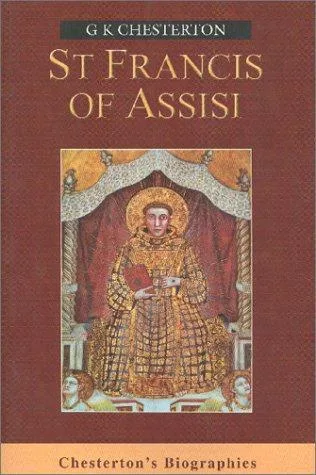
Saint Francis of Assisi
Chesterton's portrait of Saint Francis is less a biography and more a philosophical treatise projected onto the saint's life. The strength lies in Chesterton's unique ability to illuminate Francis's radicalism through paradox, framing his poverty not as asceticism but as a form of spiritual exuberance. The author's interpretation of Francis's relationship with nature, particularly his seeming kinship with creatures, is rendered with Chesterton's signature imaginative flair. However, the book occasionally falters by prioritizing Chesterton's own theological and philosophical arguments over a strictly biographical narrative. For instance, the extended discussion on Francis's embrace of "Lady Poverty" sometimes overshadows the historical details of his life. A particularly striking passage is Chesterton's contemplation of Francis's joy amidst hardship, which he connects to a deeper, almost cosmic, optimism. Ultimately, it's a compelling, if idiosyncratic, study of a saint through the prism of a brilliant mind.
📝 Description
83
G.K. Chesterton wrote "Saint Francis of Assisi" in 1923, arguing Francis defied materialist values.
Published in 1923, G.K. Chesterton's "Saint Francis of Assisi" is less a traditional saint's life and more a philosophical inquiry into the friar's radical embrace of poverty and his connection to nature and God. Chesterton portrays Francis as a figure who challenged the conventions of his time through profound, almost mystical, devotion. The book posits that Francis's life represented a clear rejection of materialism, proposing an alternative path to spiritual fulfillment. Chesterton applies his signature wit and complex prose to uncover the core of Franciscan spirituality.
This work appeals to readers interested in the intersection of faith, philosophy, and literature. It is for those who appreciate theological biography viewed through a distinct literary perspective, rather than a simple historical chronicle. Readers familiar with Chesterton's style, which often features paradox and sharp observation, will find much to consider. The book also speaks to those who examine the lives of saints not only for their religious importance but for their philosophical statements on poverty, joy, and the presence of the divine in creation.
Chesterton's examination of Saint Francis emerges from a 20th-century milieu where interest in medieval mysticism and alternative worldviews was growing. Amidst a culture increasingly defined by industrialization and material progress, figures like Chesterton sought spiritual antidotes in historical exemplars. Francis's radical detachment from worldly goods and his perceived communion with all creation offered a potent counter-narrative to the era's dominant secular and economic trends. The book places Francis within this tradition of seeking spiritual truth outside conventional societal structures.
💡 Why Read This Book?
• Learn about the concept of "Lady Poverty" (Sorella Povertà) as Chesterton interprets it, understanding poverty as a chosen spiritual liberator rather than mere deprivation. • Grasp Chesterton's perspective on Saint Francis's "Canticle of the Creatures," seeing it not just as a poem but as a theological statement about divine immanence in the natural world. • Understand the historical context of 1923, and how Chesterton used Francis's life to critique the materialist trends of the early 20th century.
⭐ Reader Reviews
Honest opinions from readers who have explored this book.
❓ Frequently Asked Questions
When was G.K. Chesterton's book on Saint Francis of Assisi first published?
G.K. Chesterton's "Saint Francis of Assisi" was first published in 1923, offering a philosophical interpretation of the saint's life.
What is Chesterton's main thesis regarding Saint Francis's poverty?
Chesterton argues that Francis's embrace of poverty, personified as "Lady Poverty," was a radical act of spiritual freedom and detachment, not mere self-denial.
How does Chesterton interpret Saint Francis's relationship with nature?
Chesterton views Francis's connection to nature, as expressed in the "Canticle of the Creatures," as a profound theological insight into the inherent goodness and divine presence within all creation.
Is this book a traditional biography of Saint Francis?
No, Chesterton's work is more of a philosophical and spiritual exploration, using Francis's life as a lens to examine themes of faith, poverty, and joy, rather than a strict historical account.
What literary style can I expect from Chesterton's "Saint Francis of Assisi"?
Readers can expect Chesterton's characteristic style: witty, paradoxical, filled with sharp observations, and deeply philosophical arguments woven into narrative.
Who would benefit most from reading this book?
Readers interested in theological biography, Chesterton's distinctive prose, and explorations of spirituality that question materialist values would find this book particularly engaging.
🔮 Key Themes & Symbolism
Radical Poverty
Chesterton frames Francis's embrace of poverty not as a mere absence of wealth, but as an active, chosen spiritual path. He personifies poverty as "Lady Poverty" (Sorella Povertà), a divine companion that liberates Francis from worldly attachments. This concept challenges conventional notions of success and fulfillment, positioning extreme material detachment as a pathway to spiritual freedom and ecstatic joy. The work explores how this radical stance allowed Francis a unique perspective on God's creation, unburdened by material concerns.
Divine Immanence in Nature
The book emphasizes Francis's profound connection to the natural world, viewing it not as a separate entity but as a direct manifestation of the divine. Chesterton interprets the "Canticle of the Creatures" as a theological document, highlighting Francis's perception of the sun, moon, stars, and animals as brothers and sisters, all reflecting God's glory. This perspective suggests an esoteric understanding of creation where the material world is imbued with spiritual significance and serves as a pathway to divine communion.
The Joyful Ascetic
Chesterton presents a Saint Francis who embodies a paradoxical blend of extreme asceticism and unbridled joy. Far from being somber or self-flagellating, Francis's renunciation of worldly comforts is depicted as the source of his immense happiness. This joy stems from his absolute faith and his perceived union with God, finding delight in the simplest elements of existence. The work suggests that true spiritual attainment leads not to misery, but to an effervescent celebration of life.
Rejection of Materialism
Published in 1923, the book implicitly critiques the growing materialism of the modern era. Chesterton uses Francis's life, lived in radical poverty centuries earlier, as a potent counter-example to the pursuit of wealth and status. Francis's deliberate embrace of the destitute and his rejection of societal norms are presented as a vital spiritual alternative. This theme positions the saint as a timeless figure whose example offers a profound challenge to consumerist and secular values prevalent then and now.
💬 Memorable Quotes
Direct passages from the work, attributed to the author.
“He was the first Socialist of Italy.”
— Chesterton uses this provocative statement to highlight Francis's radical redistribution of wealth and status, aligning him with a primitive, almost proto-socialist ideal through his dedication to the poor and his rejection of private property.
“Joy is the infallible sign of the presence of God.”
— This interpretation emphasizes Chesterton's view that Francis's profound happiness, even amidst hardship and poverty, was direct evidence of his spiritual connection and divine favor, a key indicator of true sanctity.
“The world is a great poem.”
— This metaphor captures Chesterton's understanding of Francis's view of creation, suggesting that the natural world is not merely physical but a divinely authored text, full of meaning and beauty for those who can perceive it.
“He was the best of the troubadours, the best of the knights, the best of the monks.”
— Chesterton suggests Francis embodied the highest ideals of multiple societal roles—poet, warrior, and religious figure—synthesizing these diverse archetypes into a unique spiritual exemplar.
💡 Key Ideas
Editorial paraphrase of the work's core concepts — not direct quotes.
To him poverty was not a tragedy, but a bride.
This quote directly addresses Chesterton's personification of poverty as 'Sorella Povertà' (Sister Poverty), illustrating how Francis actively embraced destitution as a spiritual partner, not a misfortune.
🌙 Esoteric Significance
Tradition
While not strictly adhering to a single esoteric lineage, Chesterton's interpretation of Francis aligns with Christian Neoplatonism and certain Gnostic principles emphasizing the spiritual nature of reality and the liberation from material constraints. Francis's radical poverty can be seen as a form of spiritual detachment akin to practices found in various mystical traditions seeking union with the divine through the negation of the ego and worldly possessions.
Symbolism
The key symbols explored include "Lady Poverty" (Sorella Povertà), representing an active spiritual principle rather than an absence, and the natural elements in the "Canticle of the Creatures." These elements—sun, moon, stars, water, fire, earth—are imbued with divine presence, signifying an immanent, panentheistic aspect within a Christian framework, where creation itself is a divine utterance.
Modern Relevance
Contemporary thinkers and movements interested in eco-spirituality, voluntary simplicity, and critiques of consumerism find resonance in Chesterton's portrayal. Francis's radical embrace of nature and his rejection of material accumulation are frequently cited by environmental activists and those advocating for sustainable living, drawing parallels to modern ecological consciousness and the search for meaning beyond materialism.
👥 Who Should Read This Book
• Students of comparative religion and hagiography seeking a philosophical lens on sainthood, particularly those interested in the esoteric dimensions of Christian mysticism. • Readers of G.K. Chesterton interested in his mix of wit, paradox, and theological argument applied to historical figures. • Individuals exploring themes of voluntary poverty, ecological spirituality, and critiques of materialism who seek historical and philosophical context.
📜 Historical Context
G.K. Chesterton's "Saint Francis of Assisi," released in 1923, arrived during a period of significant intellectual ferment. The early 20th century witnessed a widespread questioning of rationalism and materialism, with a concurrent surge in interest in mysticism and alternative spiritualities, exemplified by figures like Rudolf Steiner and the Theosophical Society. Chesterton, a prominent Catholic apologist, engaged with this milieu by presenting Francis as a spiritual counter-figure to the age's perceived secular drift. The book was published in an era where literary biography often served as a vehicle for philosophical commentary, a trend that also saw works like H.G. Wells' "A Short History of the World" (1922) attempting grand narrative syntheses. While not facing direct censorship, Chesterton's work implicitly challenged prevailing Darwinian and materialist interpretations of human existence by championing a saint whose life was rooted in radical faith and divine encounter.
📔 Journal Prompts
The concept of "Lady Poverty" as Francis's chosen bride.
Francis's perception of the "Canticle of the Creatures" as divine communication.
The paradoxical relationship between radical poverty and profound joy.
Francis's role as a counter-cultural figure in his own time.
Chesterton's interpretation of Francis's "socialism."
🗂️ Glossary
Sorella Povertà
Italian for "Sister Poverty." Chesterton personifies poverty as a spiritual companion embraced by Saint Francis, representing a chosen state of voluntary destitution that liberates the soul.
Canticle of the Creatures
A prayer or poem attributed to Saint Francis, celebrating God through his creation, including the sun, moon, stars, wind, water, fire, and earth, as well as creatures like wolves and birds.
Hagiography
A biography of a saint or religious figure, often focusing on miraculous deeds and spiritual virtues. Chesterton's work departs from traditional hagiography by emphasizing philosophical interpretation.
Asceticism
A practice of severe self-discipline and abstention from all forms of indulgence, typically for religious or spiritual reasons. Francis's life is often described as ascetic, though Chesterton highlights its joyful aspect.
Immanence
In theology, the idea that God is present in the material world and within creation. Chesterton's interpretation of Francis emphasizes God's immanence through nature.
Troubadour
A composer and performer of Old Occitan lyric poetry during the High Middle Ages. Chesterton likens Francis to a troubadour, highlighting his poetic and joyful spirit.
Socialist
In Chesterton's context, referring to Francis's radical sharing of possessions and identification with the poor, predating modern political socialism but embodying similar principles of communal well-being.
🔮 Readers Also Liked
Browse all →








More by Gilbert Keith Chesterton
All books →





More Free Spiritual Development Books
View all →